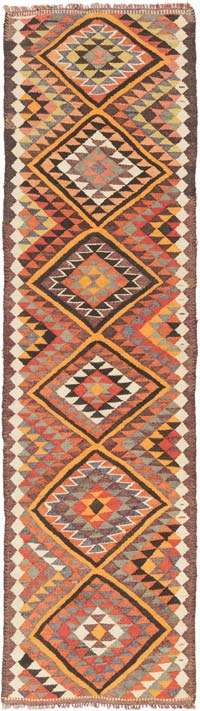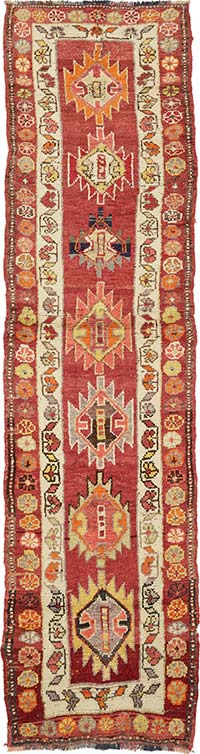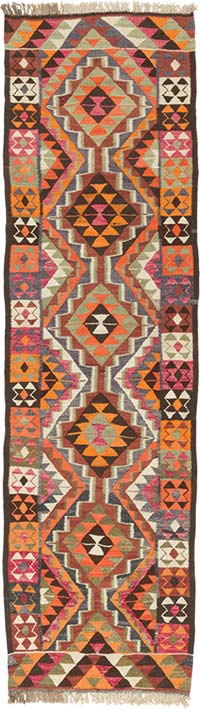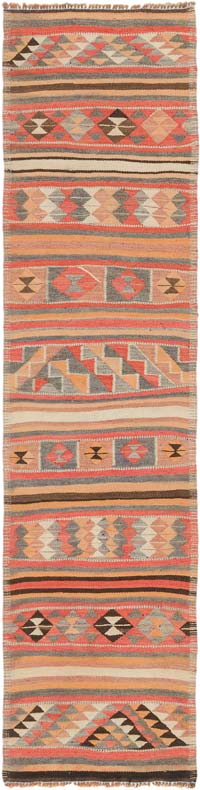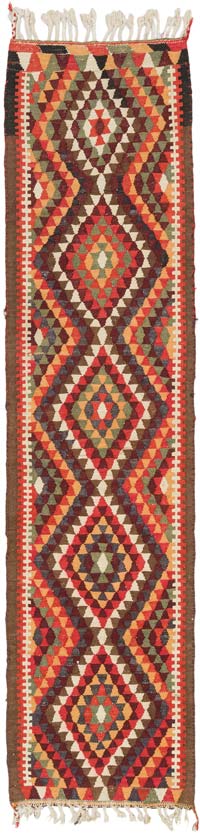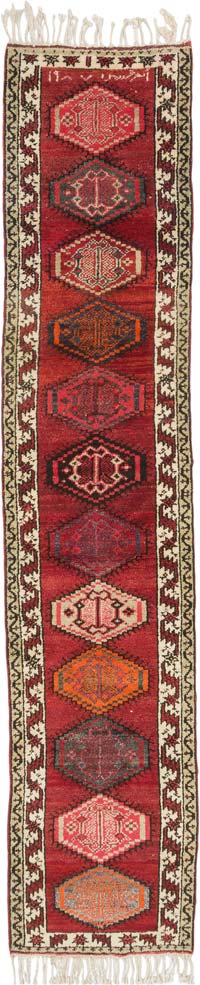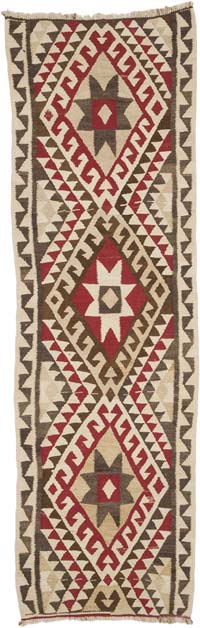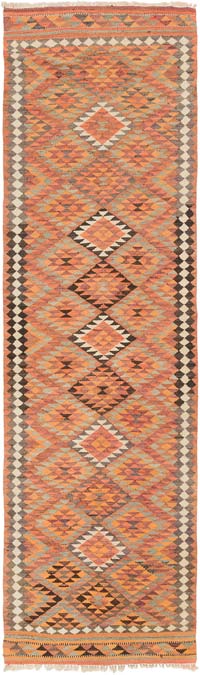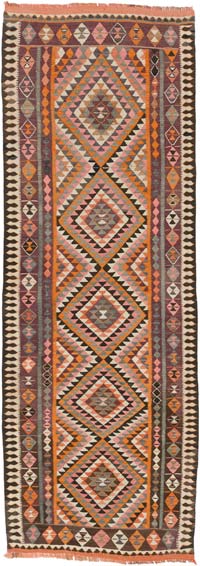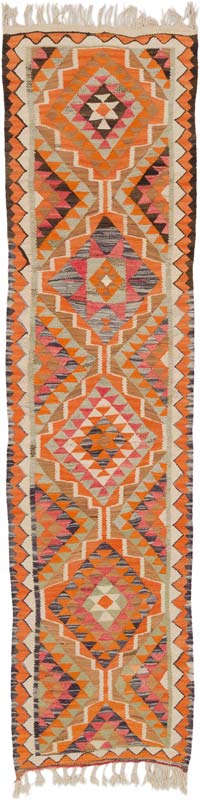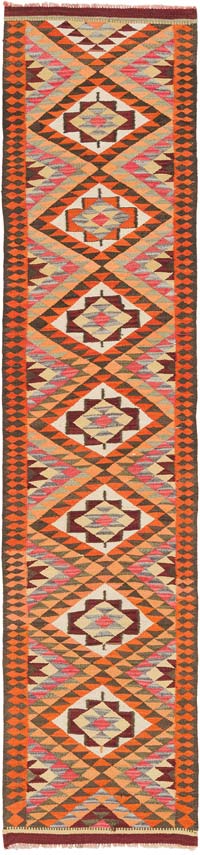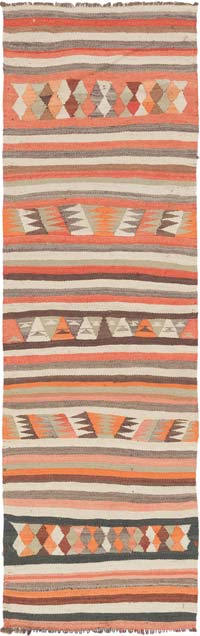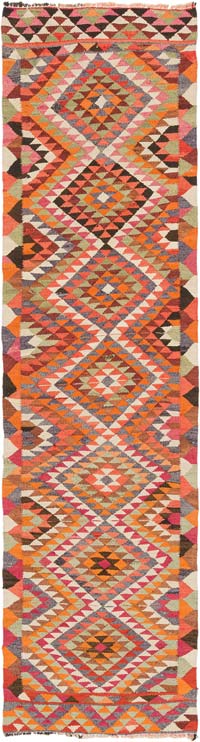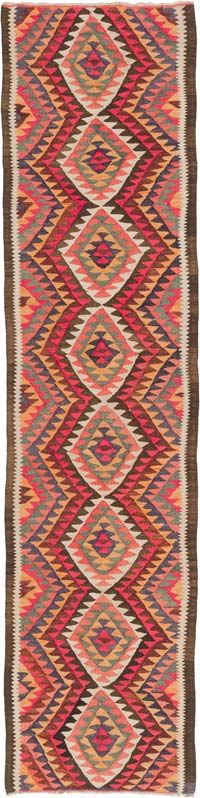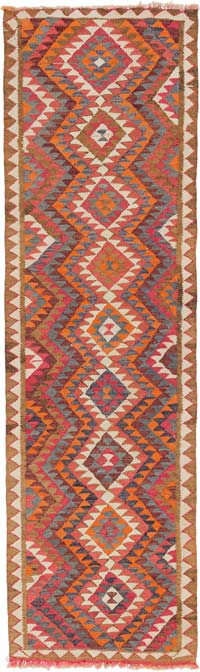
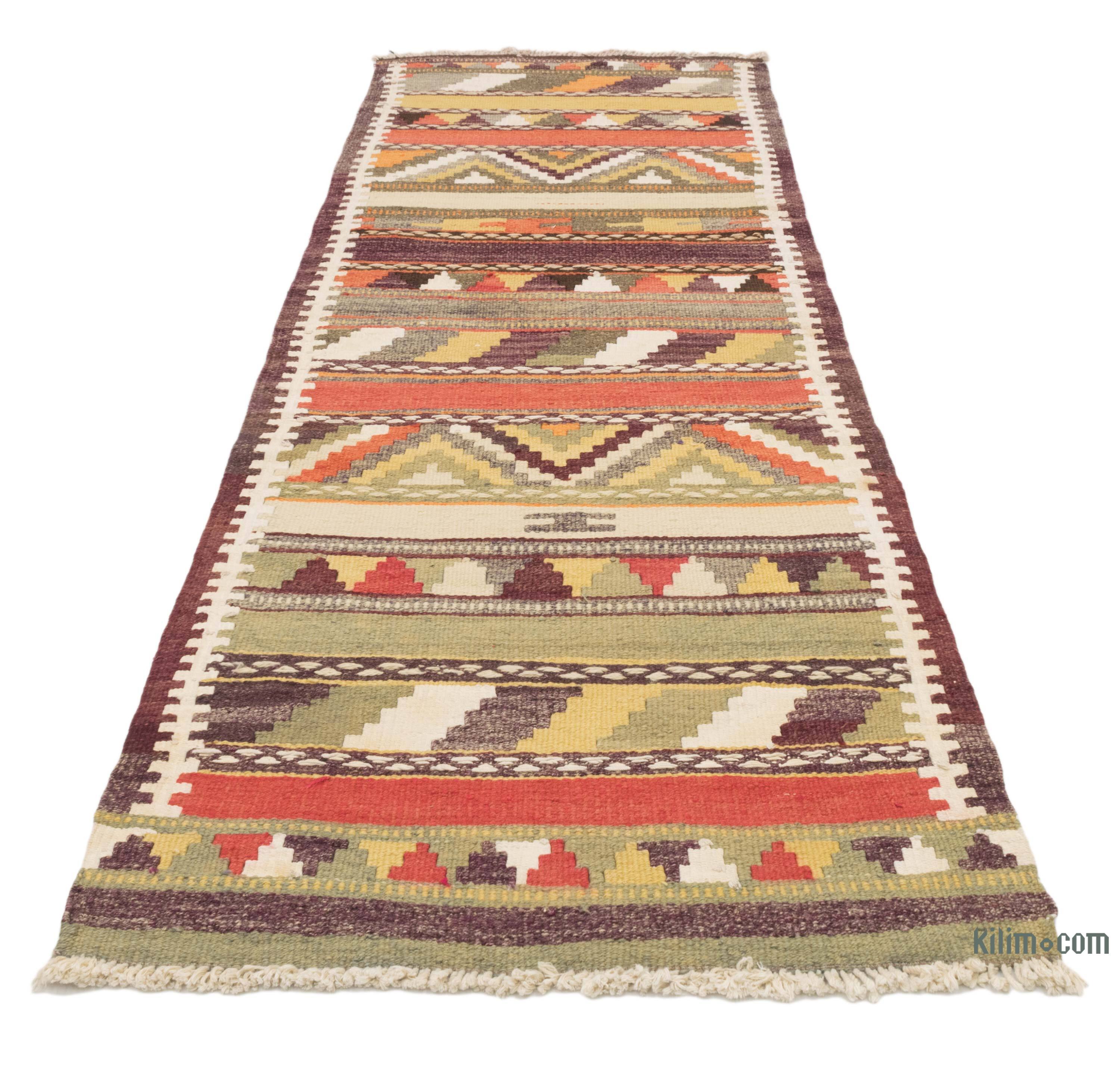

Vintage Tribal Kilim Runner 2' 9" x 8' 2" (33" x 98")
Type:
Kilim RugsCollection:
Tribal RunnersStyle:
TribalID:
K0072110Size:
Material:
- Ships in 2-5 business days
- All of our rugs are professionally cleaned; gentle wear from age and natural irregularities are inherent features of these one-of-a-kind handwoven vintage rugs.
- Only one in stock, handmade, unique
- Free shipping via FedEx Express. Returns & exchanges
- Contact us or add a note to your order if you want us to delay your shipping.
- Request more info if you want this rug shorter or narrower
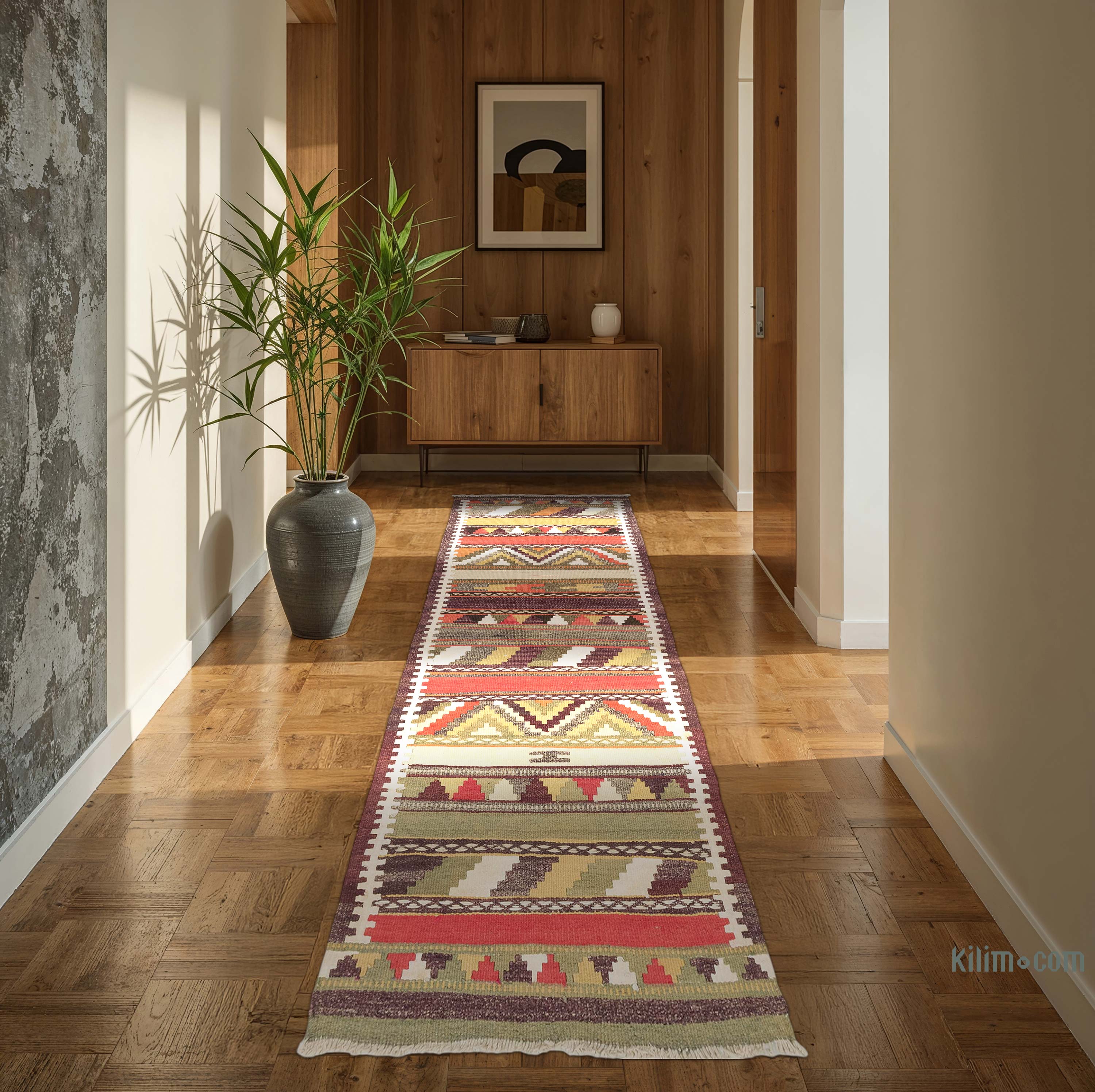
The designs feature a rich array of symbols representing tribal culture and Anatolian motifs, often in the form of medallions, diamonds, and other geometric shapes. These kilim runners are ideal for hallways and narrow spaces, offering a touch of ethnic charm and artisanal quality to any interior.
Herki kilims not only serve as functional floor coverings but also as artistic expressions of tribal identity, making each rug a unique cultural artifact.
Design and Motifs in Detail
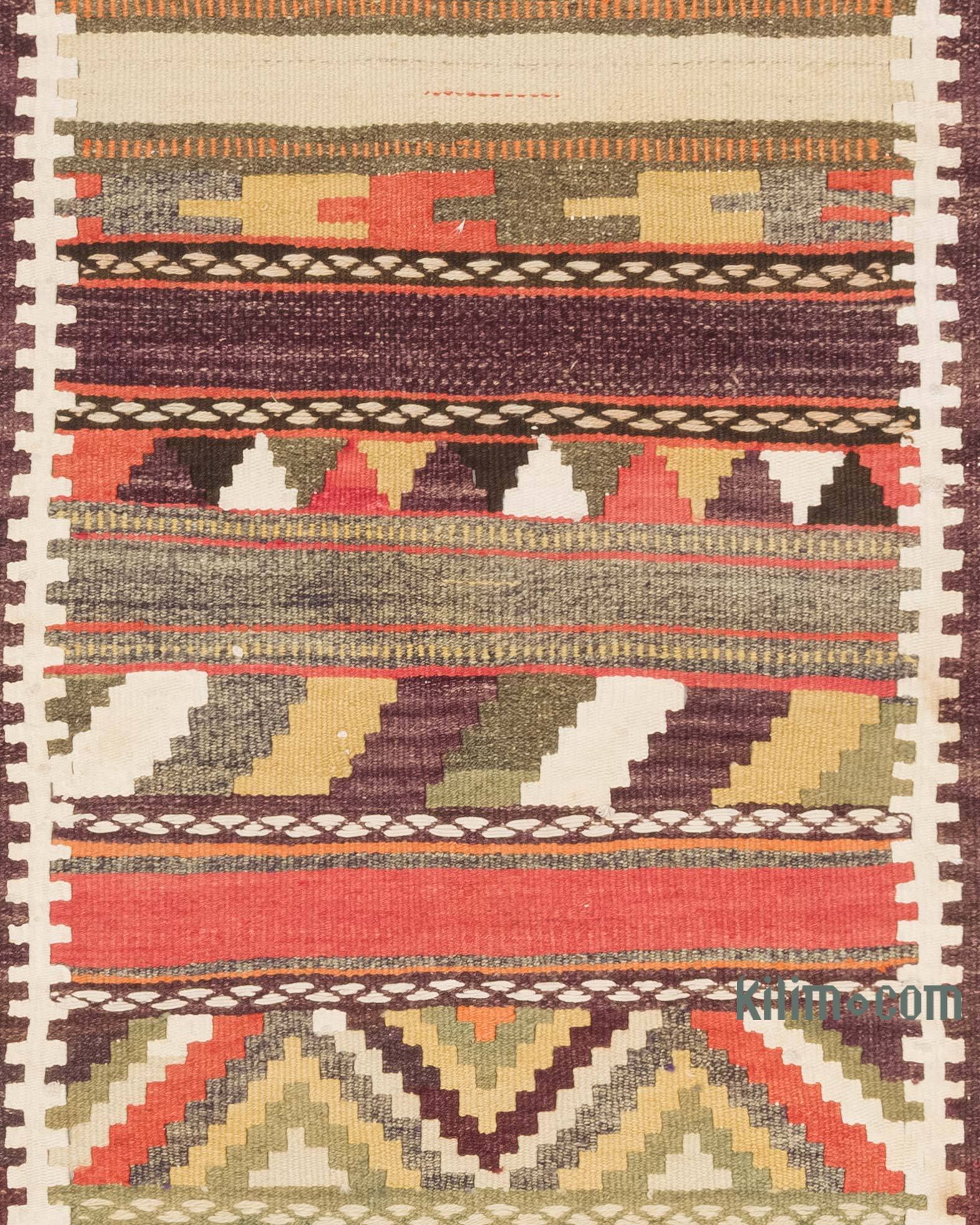
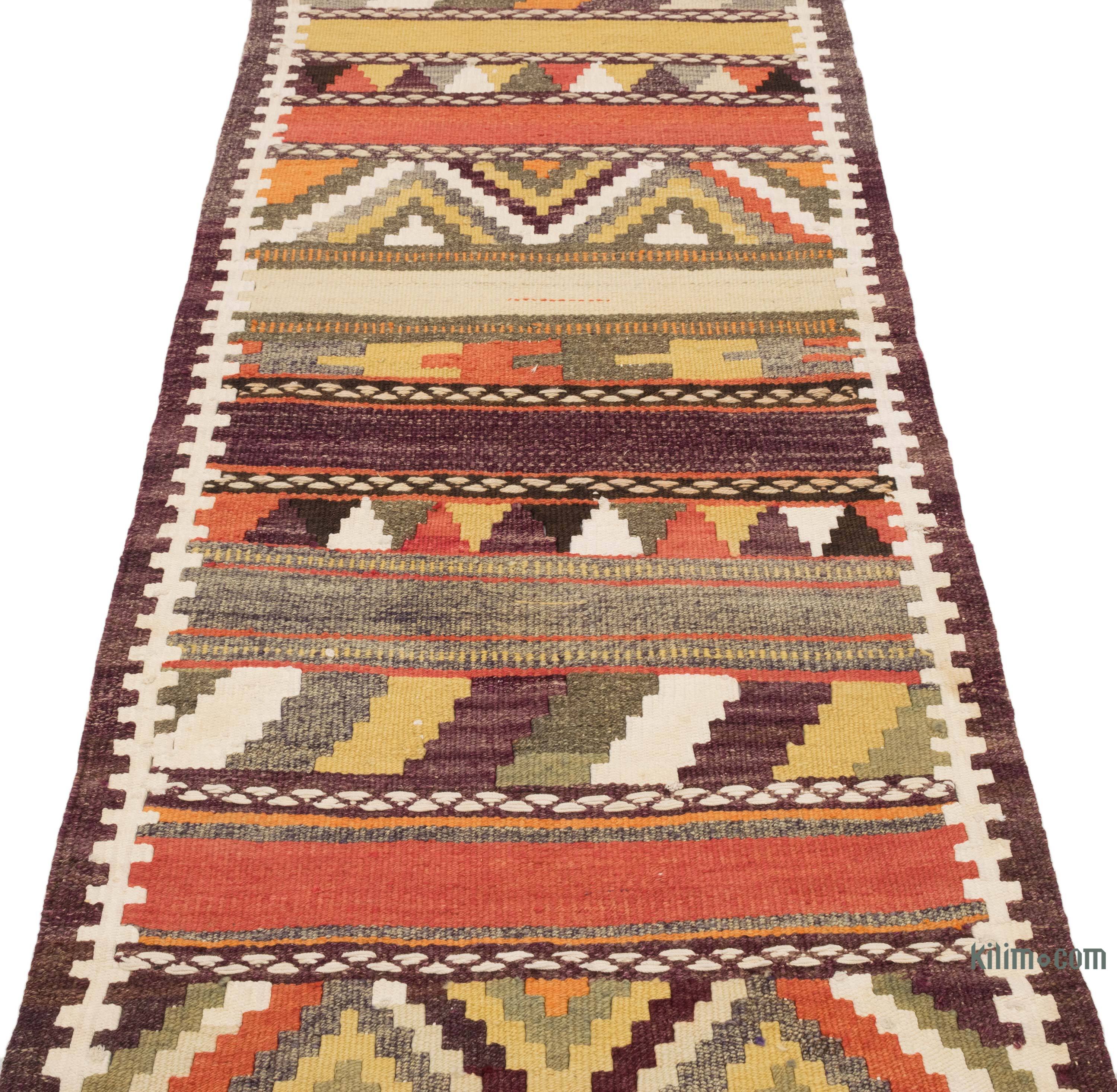
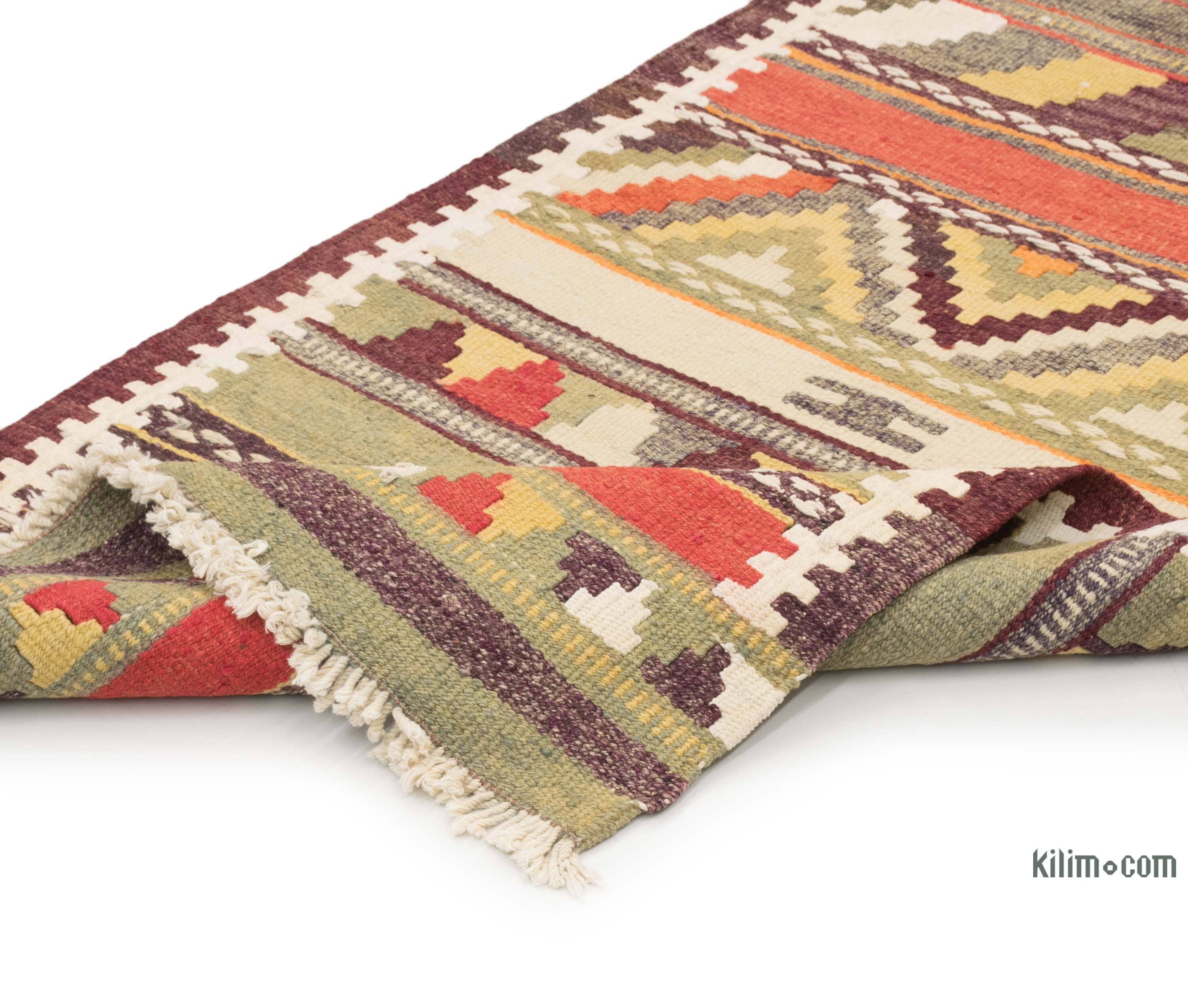
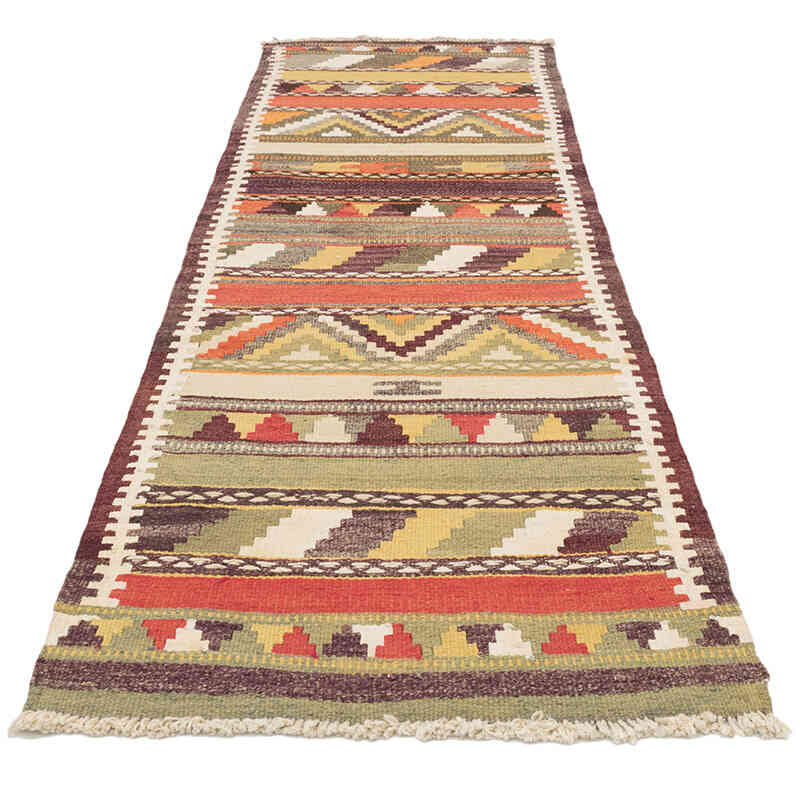
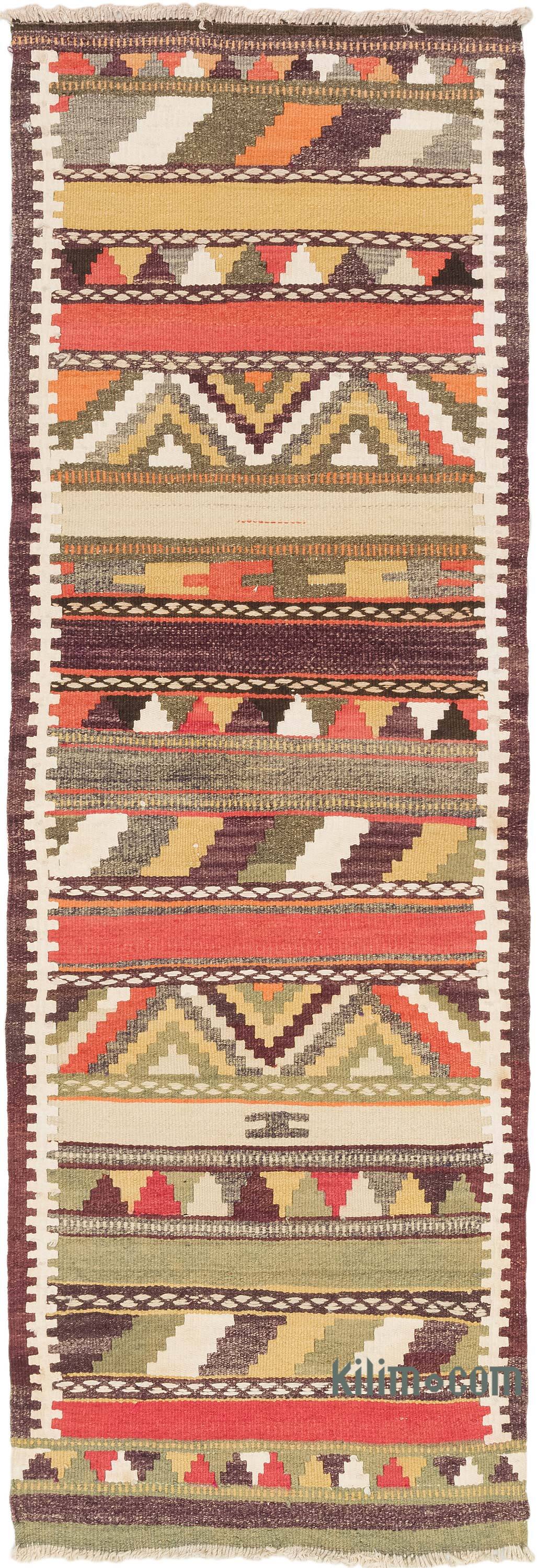
This exquisite kilim rug showcases a vibrant interplay of geometric patterns and earth-tone colors. Zigzag lines and stepped motifs dominate the design, highlighted by bands of smaller jagged shapes resembling stylized hills or mountain ranges. These geometric forms create a dynamic rhythm across the rug's length, evoking movement and balance.
- Zigzag and stepped patterns: Traditionally symbolize water, life’s flow, and energy in Anatolian weaving culture. These patterns suggest the continual cycle of nature and resilience.
- Triangles and repeated triangular shapes: Represent protection and fertility. Often linked to female strength and motherhood, they convey nurturing and safeguarding qualities.
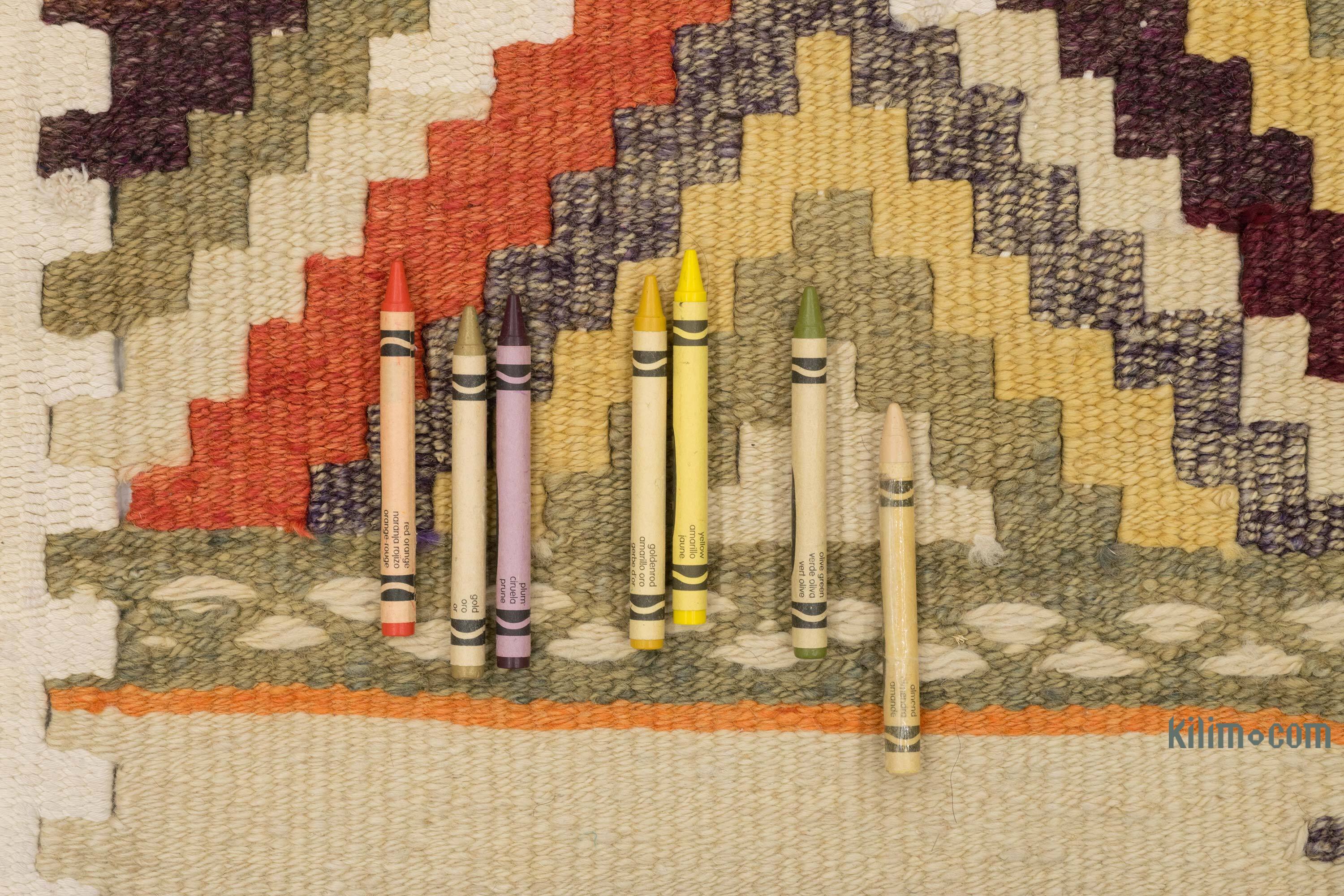
- Color palette: The warm oranges, muted reds, olive greens, deep purples, and creamy whites evoke natural landscapes and harvest seasons, connecting the weaving to the earth and abundance in life.
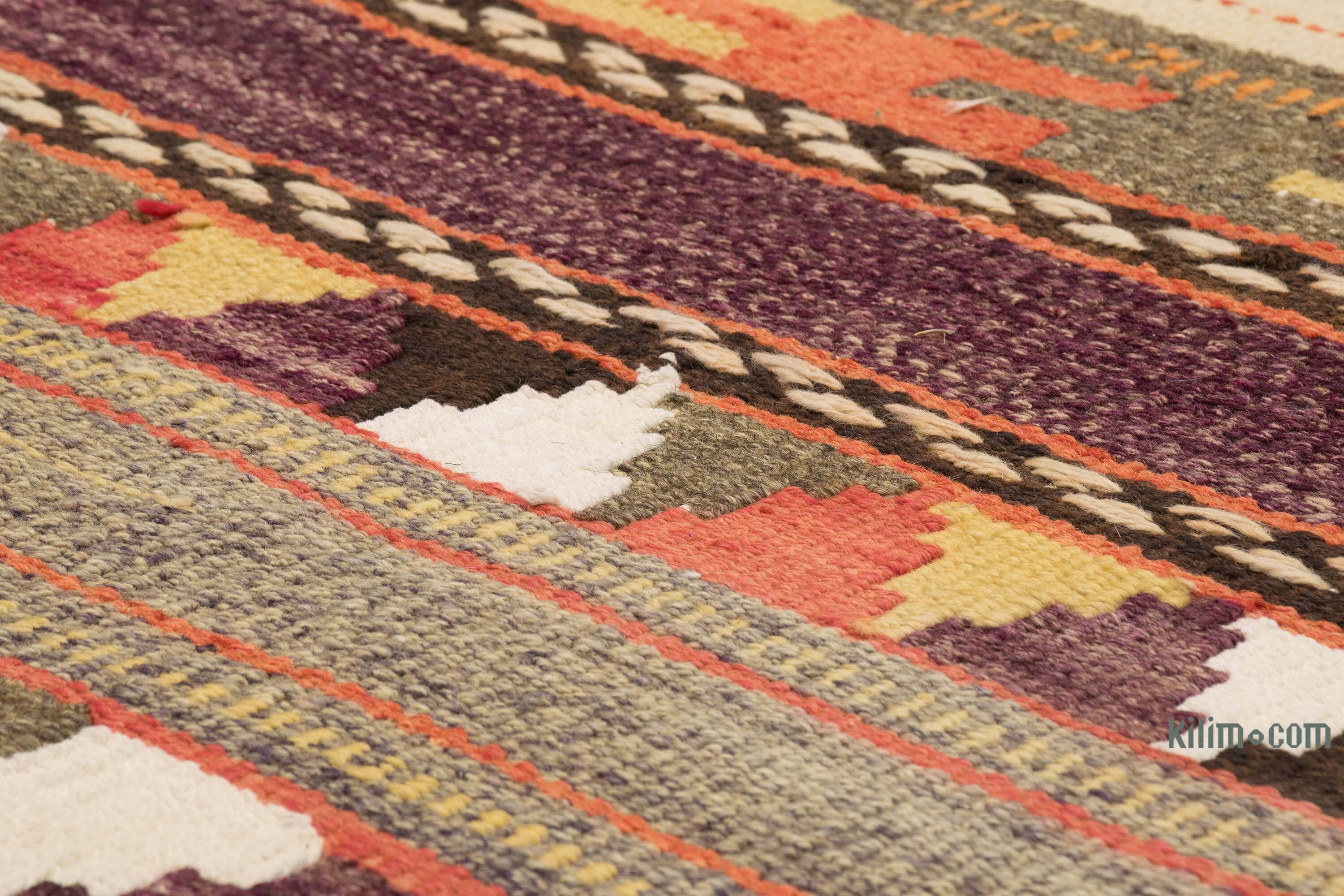
- Border detailing: The intricate chain-like bands that frame the bands signify unity and continuity, underlying the idea of connectedness in community and family.
These motifs are not purely decorative; they embody stories, beliefs, and hopes passed down through generations, inviting a heartfelt connection with the weaver’s cultural heritage. For a deeper exploration of motifs and their meanings, visit Kilim Motifs and Symbols.
Integration with Interior Design Styles
This kilim's versatility shines through its ability to complement a variety of interior aesthetics, making it an ideal choice for diverse settings:
- Bohemian: The eclectic mix of earthy tones and tribal motifs perfectly complements vibrant, layered spaces full of textures and global influences.
- Mid-Century Modern: The rug’s geometric design adds warmth and visual interest against sleek furniture lines and neutral backdrops, creating a striking contrast without overwhelming the room.
- Rustic and Farmhouse: Its natural hues and handmade feel enhance cozy, nature-inspired interiors, grounding spaces in simplicity and authenticity.
- Eclectic Contemporary: The rich patterning supports a curated blend of modern art, vintage finds, and expressive pieces, serving as a unifying textile element.
- Scandinavian: Despite its bold shapes, the muted earth tones fit the minimalist Scandinavian palette perfectly, adding texture and cultural depth while preserving calm and light.
Beyond style, this kilim introduces a tactile dimension and narrative richness that energizes any floor or wall it graces. It’s an artistic statement piece that reconnects interiors with tradition and nature’s timeless patterns.
Rolling Up
- The rug’s geometric zigzag and stepped motifs symbolize life, protection, and resilience drawn from ancient Anatolian weaving traditions.
- Earthy, warm colors reflect the natural landscape, creating a harmonious and grounded atmosphere.
- Its adaptable design complements varied interior styles, from bohemian to contemporary, enhancing both visual and emotional connection.
- Embedding cultural storytelling and symbolism, the rug enriches spaces with depth beyond its surface beauty.
- Explore more about the motifs and their meanings at Kilim Motifs and Symbols.
Colors may appear slightly different across various monitors due to screen settings device differences, and external lighting conditions. If color accuracy is important for your space, we recommend viewing the rug on multiple devices or contacting us for a detailed color description. We can provide detailed photos and references using Sherwin-Williams, Benjamin Moore, Pantone, or even Crayola crayons.
You can also visualize most of our products in your own room with AR (augmented reality) on an iPhone or iPad.
Return Policy
Need a rug pad? We recommend RugPadUSA