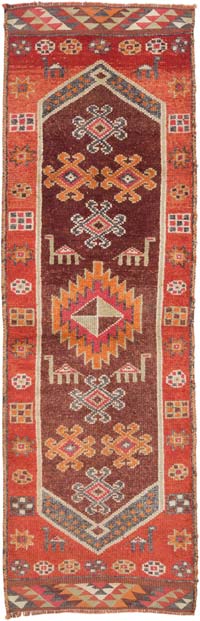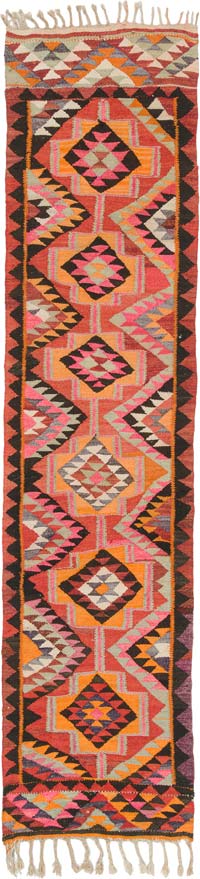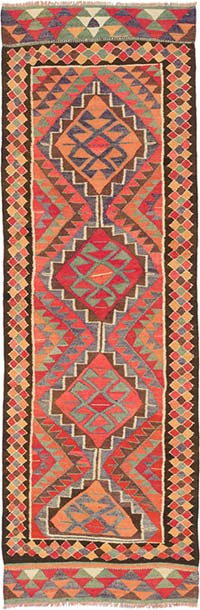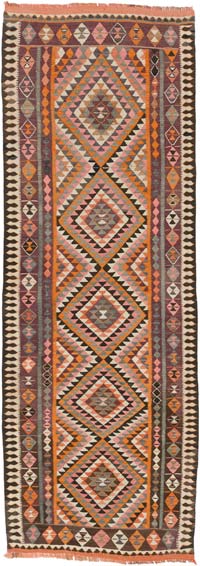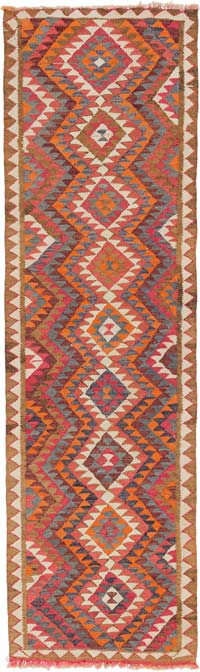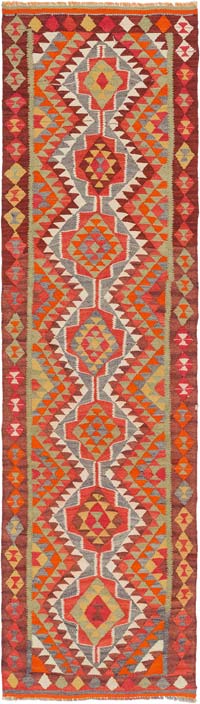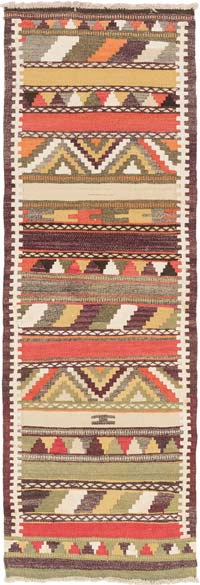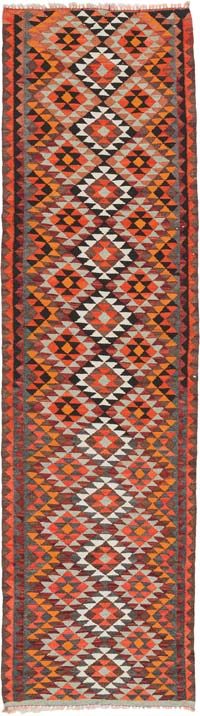




Vintage Tribal Kilim Runner 2' 9" x 11' (33" x 132")
Type:
Kilim RugsCollection:
Tribal Runners, ClearanceStyle:
TribalID:
K0072155Size:
Material:
- Ships in 2-5 business days
- All of our rugs are professionally cleaned; gentle wear from age and natural irregularities are inherent features of these one-of-a-kind handwoven vintage rugs.
- Only one in stock, handmade, unique
- Free shipping via FedEx Express. Returns & exchanges
- Contact us or add a note to your order if you want us to delay your shipping.
- Request more info if you want this rug shorter or narrower
The designs feature a rich array of symbols representing tribal culture and Anatolian motifs, often in the form of medallions, diamonds, and other geometric shapes. These kilim runners are ideal for hallways and narrow spaces, offering a touch of ethnic charm and artisanal quality to any interior.
Herki kilims not only serve as functional floor coverings but also as artistic expressions of tribal identity, making each rug a unique cultural artifact.
Detailed Design and Motif Description
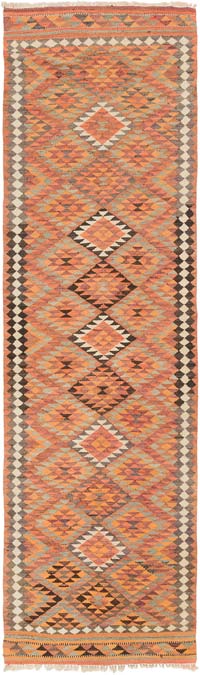
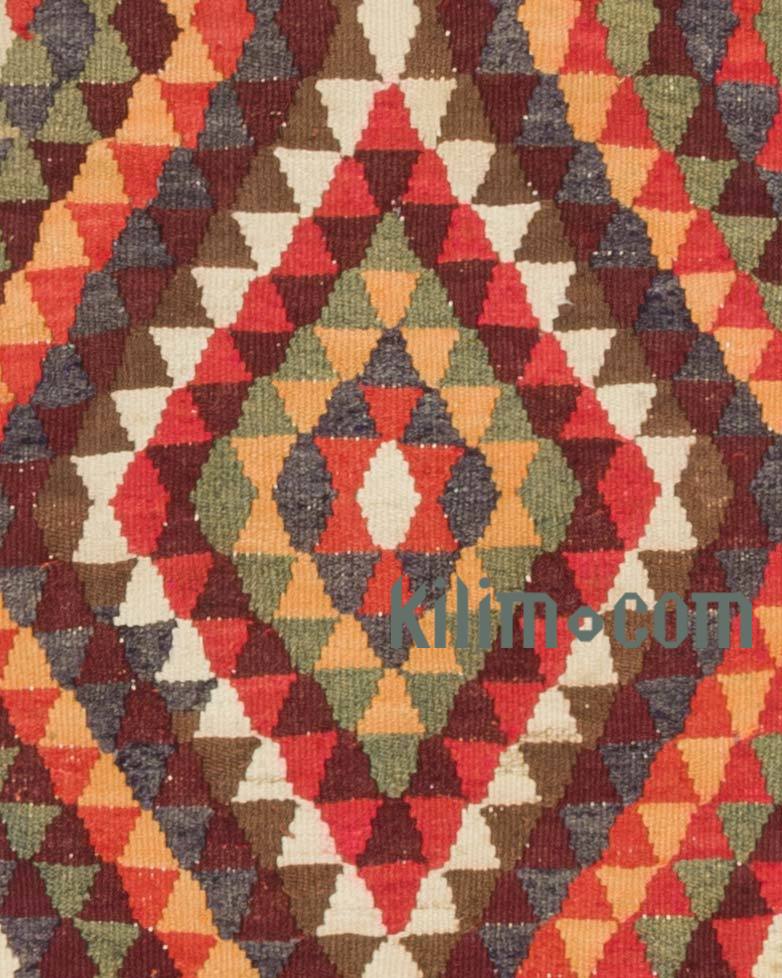
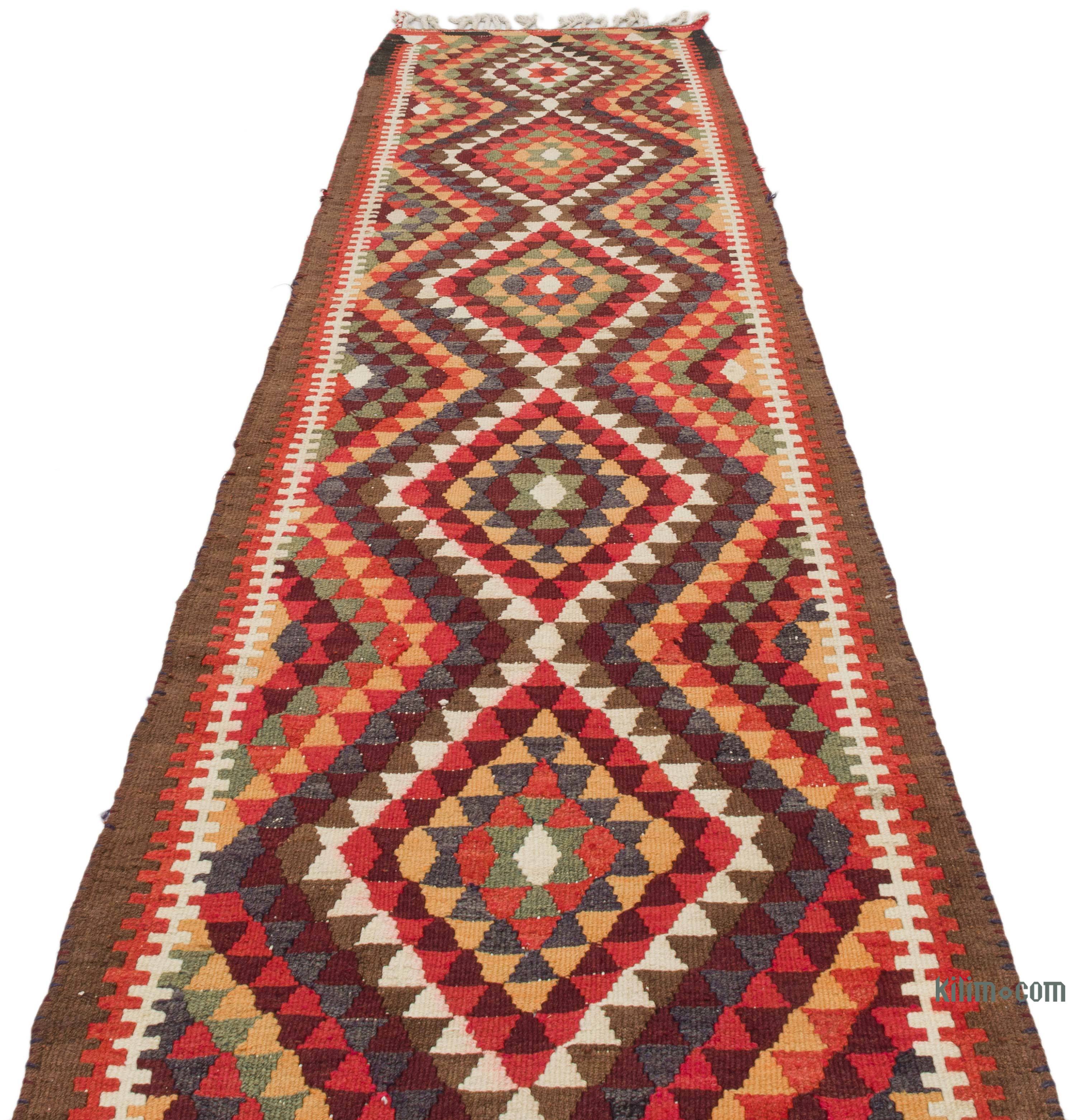
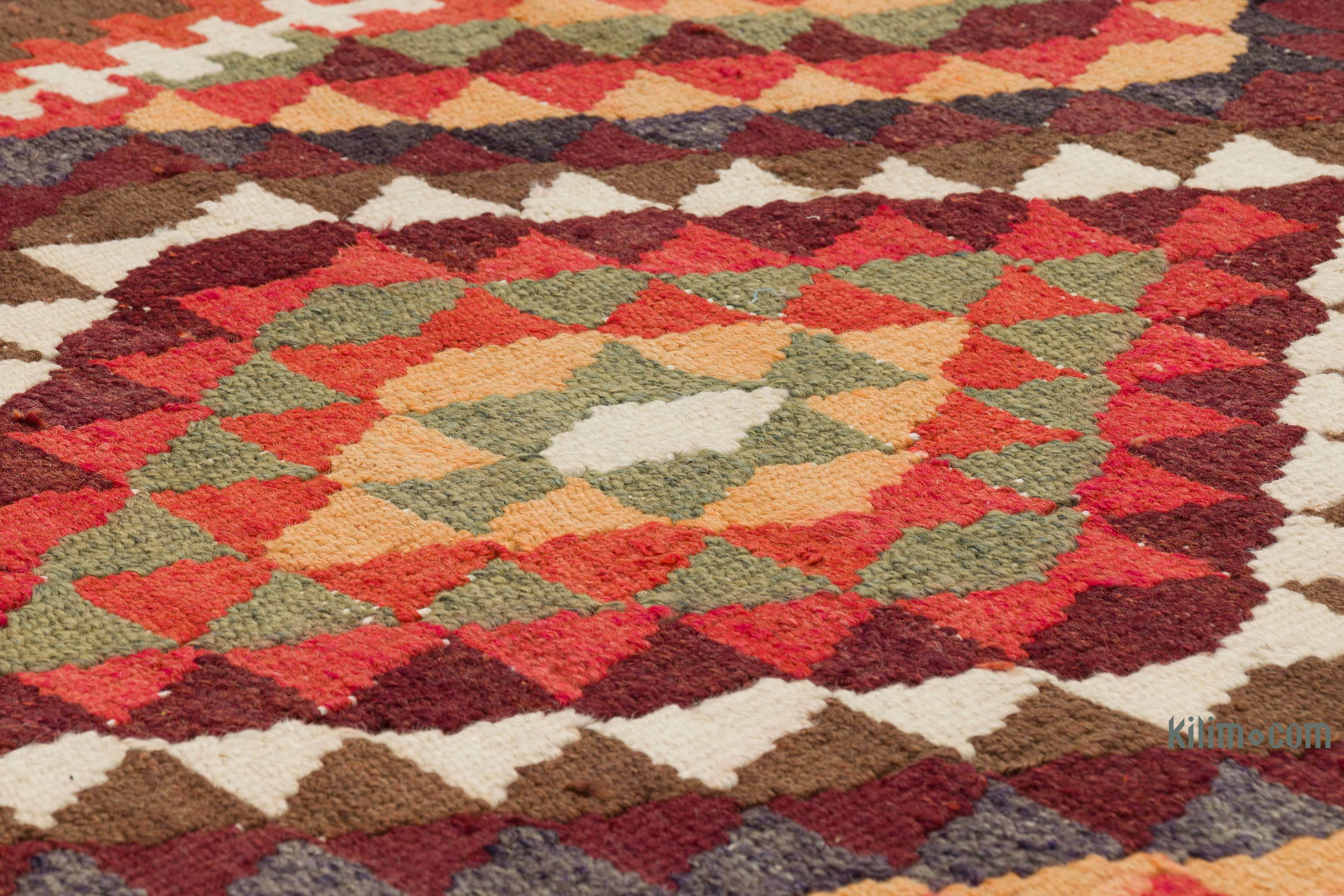
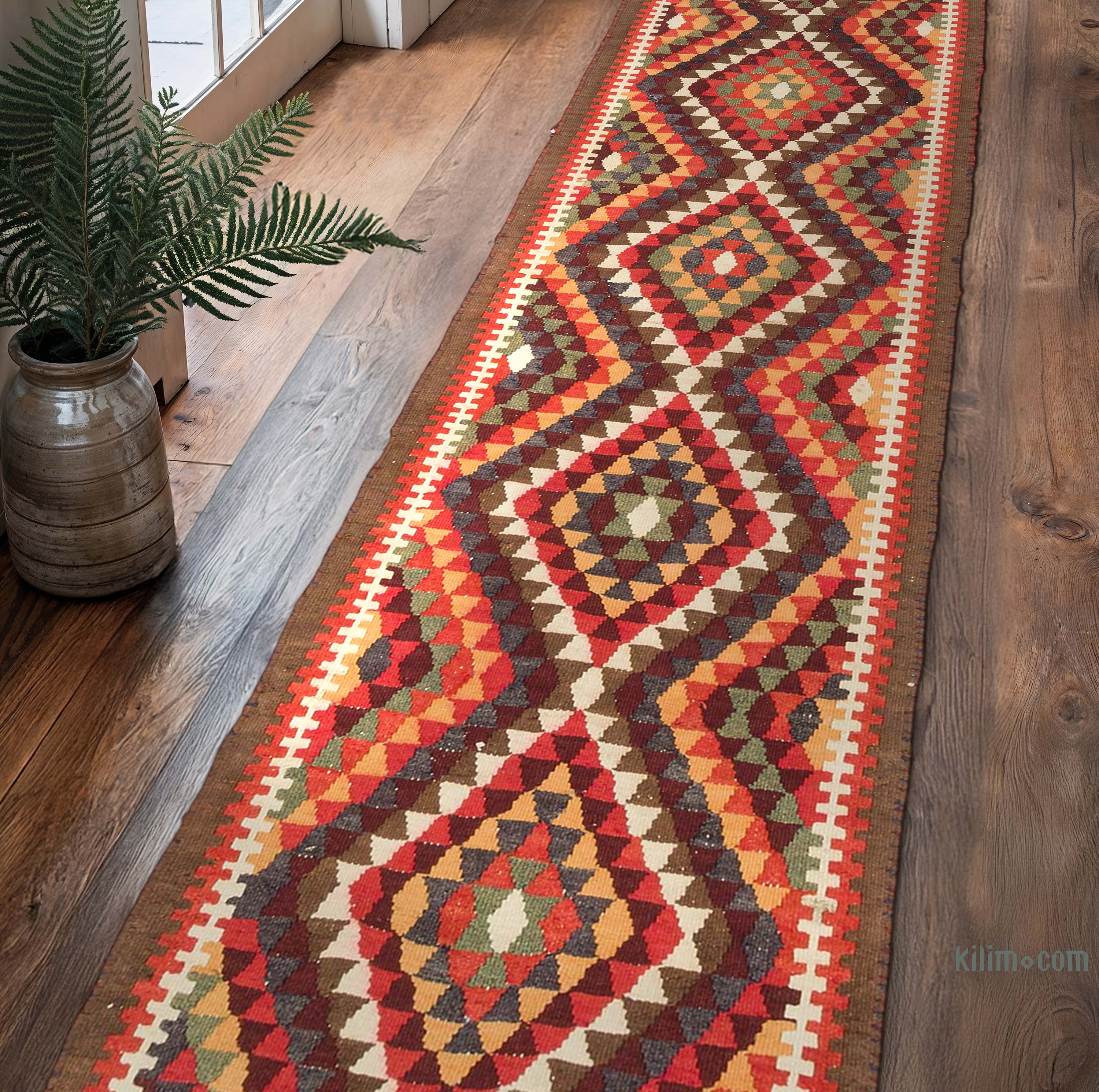
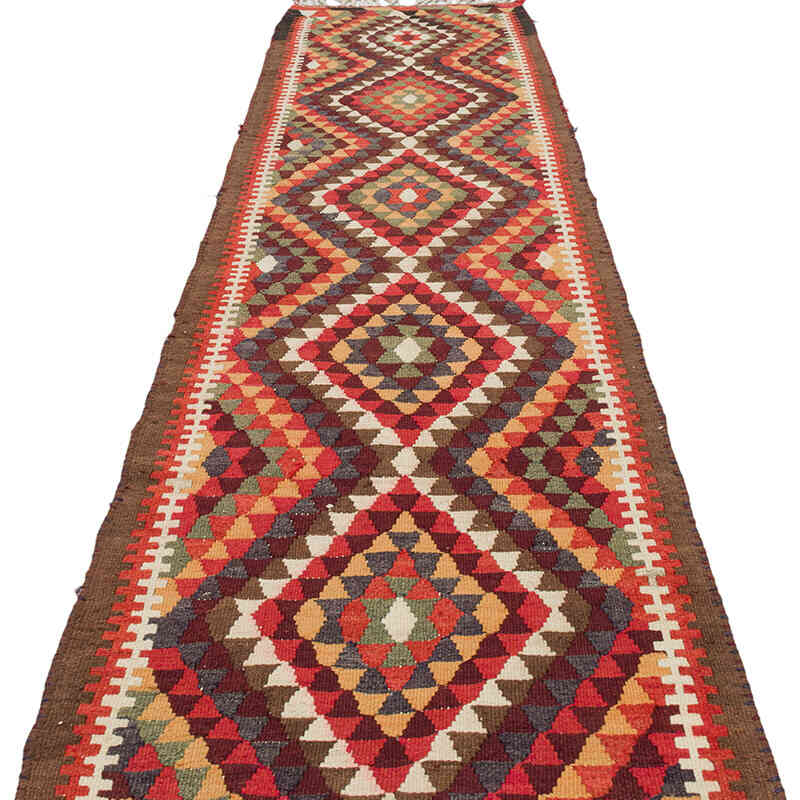
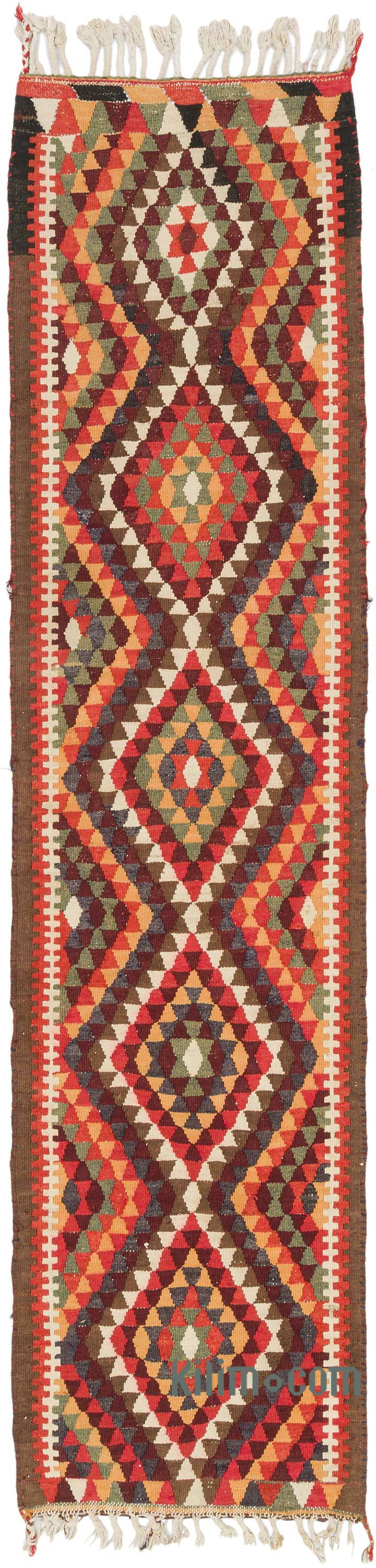
This exquisite kilim features a vibrant geometric pattern composed largely of repeated diamond-shaped motifs arranged vertically along the length of the rug. Each diamond is formed by smaller triangles in a rich palette of reds, oranges, greens, browns, and creamy whites, creating a rhythmic and almost hypnotic visual effect. The borders frame the rug with alternating colors that reinforce the overall harmony and balance of the piece.
- Diamond Motifs: Symbolizing protection and the eye of God, the diamonds reflect the weaver’s hope to ward off evil and misfortune. Their layered construction suggests abundance and continuity, echoing the cycles of life.
- Triangles: These often represent elements like fertility or the mountains, grounded in nature's resilience and strength. The interlocking triangles here imply unity and balance.
- Color Palette: Earthy yet warm tones bring a cozy and inviting atmosphere, while the contrasting dark and light shades add dynamic depth to the design.
Every motif is a storytelling element from Anatolian tradition, reflecting the weavers’ personal narratives, aspirations, and cultural heritage. These patterns give the rug an emotional resonance beyond its aesthetic appeal.
Integration with Interior Design Styles
- Bohemian Spaces: This kilim’s colorful, layered geometric designs perfectly enhance eclectic interiors. Its textured natural wool and ethnic character add authenticity and warmth, inviting a playful yet grounded ambience.
- Modern Minimalism: Despite its intricate pattern, the rug’s repetitive geometry and earthy colors introduce a bold focal point without overwhelming minimal decor. It brings natural texture and vibrancy while maintaining clean lines.
- Rustic and Farmhouse: The warm tones and handcrafted feel align beautifully with rustic interiors, pairing well with wood elements and natural materials to evoke comfort and heritage.
- Traditional or Ethnic Interiors: This kilim seamlessly fits in spaces that embrace cultural depth, echoing motifs from global tribal art and blending with antiques or handmade furnishings for a heartfelt, authentic vibe.
- Contemporary Designs: When balanced against sleek furniture and neutral backdrops, the rug introduces a striking graphic element that adds soul without sacrificing sophistication.
The versatility of this piece comes from its timeless design language — bridging ancient symbolisms with today’s aesthetic sensibilities.
Explore more about these motifs through our Kilim motifs and symbols page to deepen your connection with the stories woven into every fiber.
Rolling Up
- The rug’s diamond and triangle motifs communicate themes of protection, abundance, and resilience, inviting deep cultural engagement.
- Its warm, earthy palette fosters an inviting and dynamic atmosphere suitable for a variety of interiors.
- From Bohemian to Modern Minimalism, Rustic to Contemporary, this kilim effortlessly bridges stylistic divides, adding authentic texture and narrative depth.
- Understanding the symbolism within the rug enhances its value beyond decoration, making it a meaningful centerpiece in any room.
- Further insights and cultural context are available in detail via the linked kilim motifs guide, enriching your appreciation of this remarkable textile art.
Colors may appear slightly different across various monitors due to screen settings device differences, and external lighting conditions. If color accuracy is important for your space, we recommend viewing the rug on multiple devices or contacting us for a detailed color description. We can provide detailed photos and references using Sherwin-Williams, Benjamin Moore, Pantone, or even Crayola crayons.
You can also visualize most of our products in your own room with AR (augmented reality) on an iPhone or iPad.
Return Policy
Need a rug pad? We recommend RugPadUSA