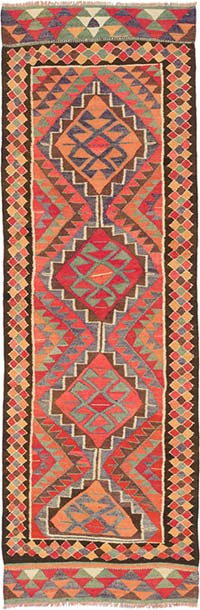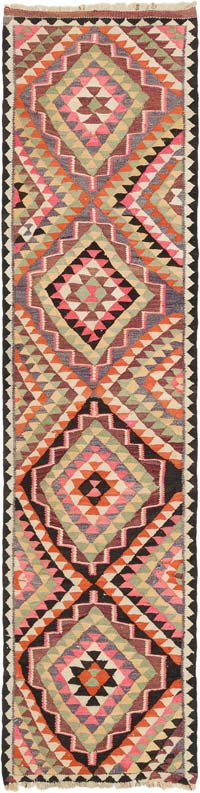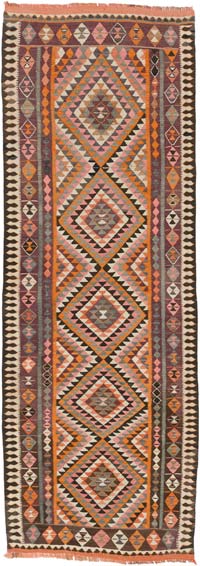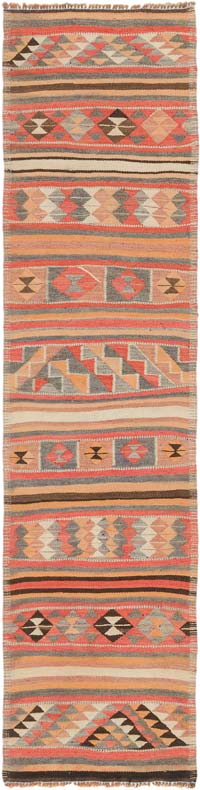
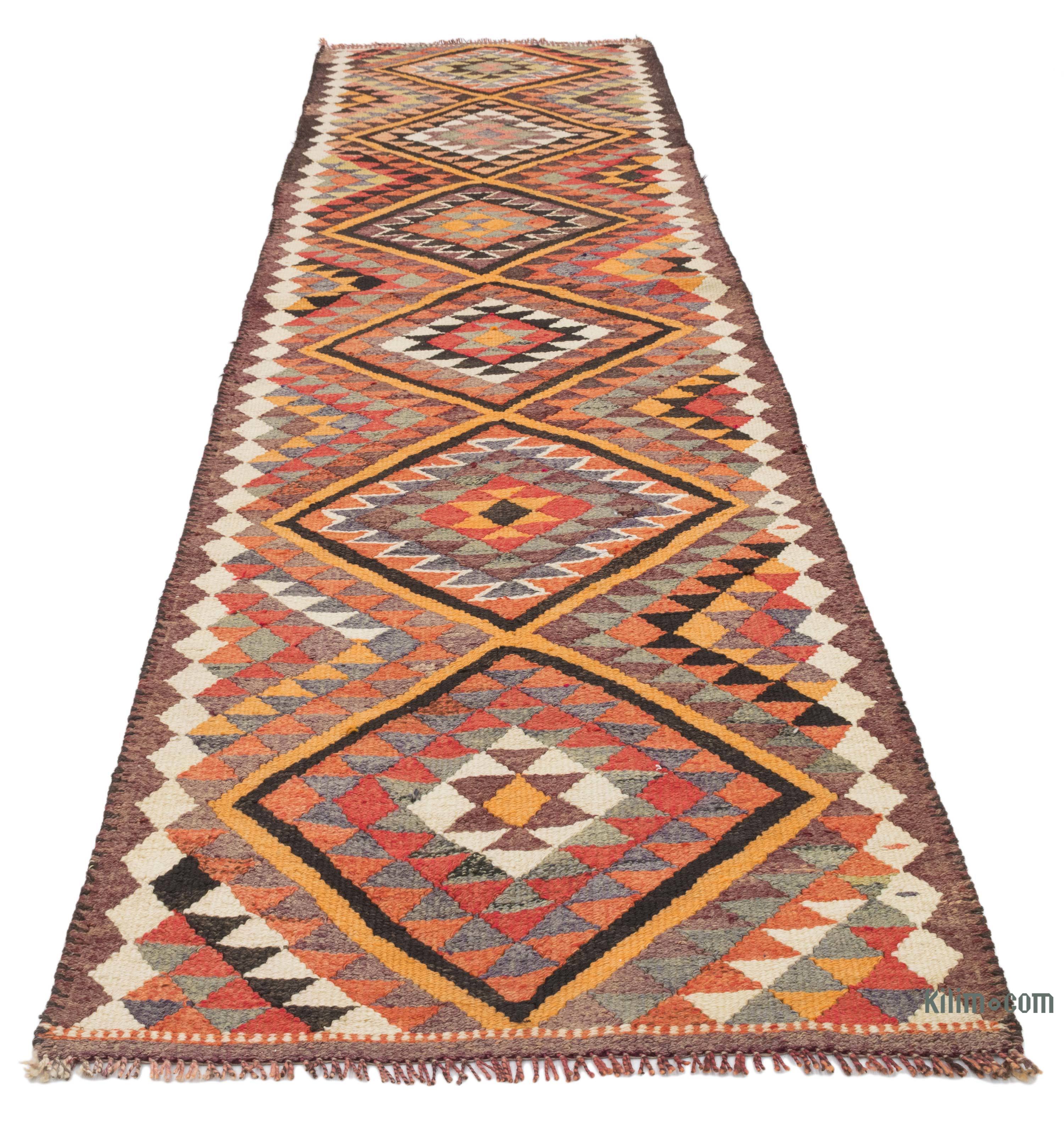

Vintage Tribal Kilim Runner 2' 10" x 10' 2" (34" x 122")
Type:
Kilim RugsCollection:
Tribal Runners, ClearanceStyle:
TribalID:
K0071261Size:
Material:
- Ships in 2-5 business days
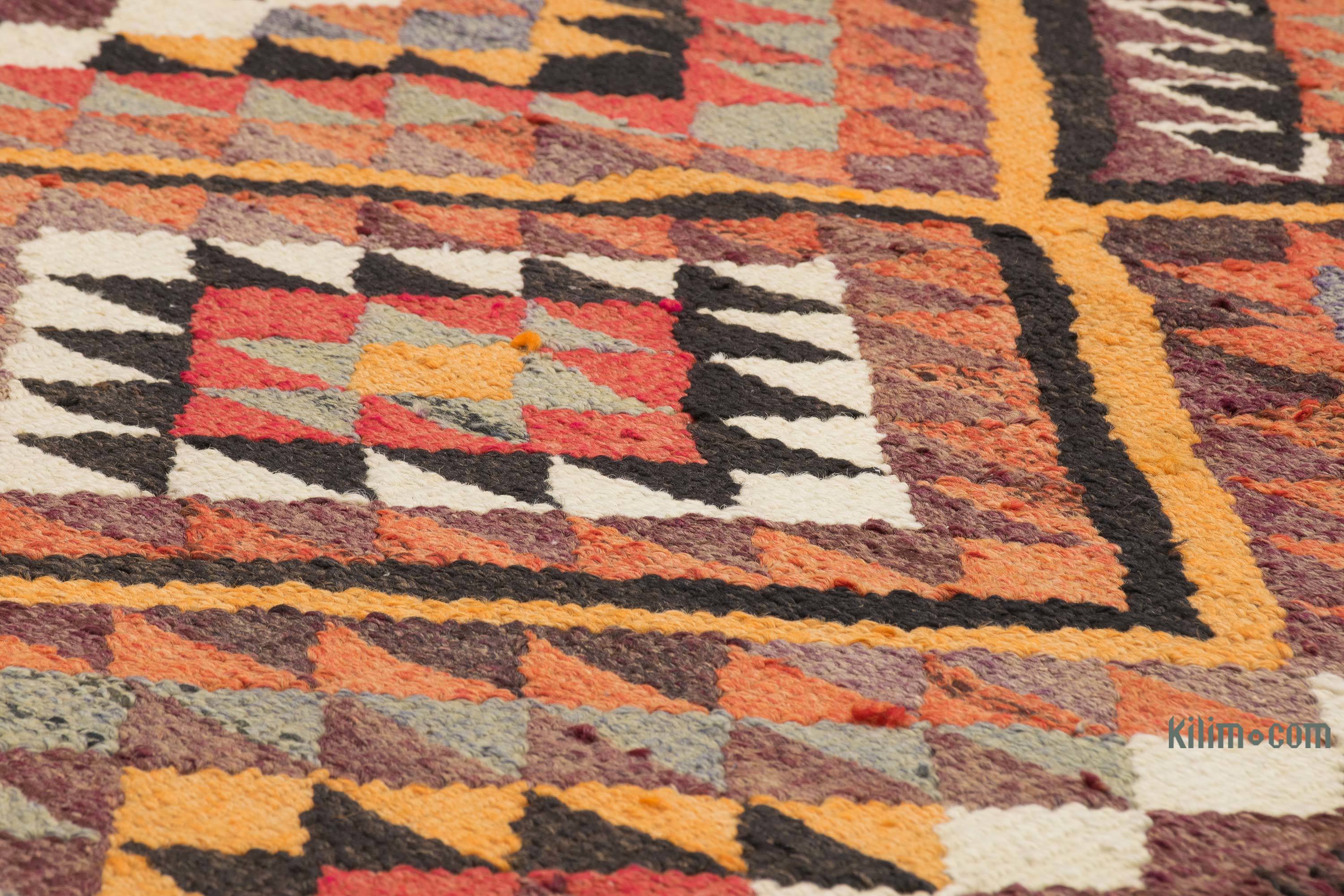
- All of our rugs are professionally cleaned; gentle wear from age and natural irregularities are inherent features of these one-of-a-kind handwoven vintage rugs.
- Free shipping via FedEx or UPS
- Contact us or add a note to your order if you want us to delay your shipping.
- Only one in stock, handmade, unique
- Easy returns, 100% satisfaction guaranteed
- Available for US only
The designs feature a rich array of symbols representing tribal culture and Anatolian motifs, often in the form of medallions, diamonds, and other geometric shapes. These kilim runners are ideal for hallways and narrow spaces, offering a touch of ethnic charm and artisanal quality to any interior.
Herki kilims not only serve as functional floor coverings but also as artistic expressions of tribal identity, making each rug a unique cultural artifact.
Design and Motifs
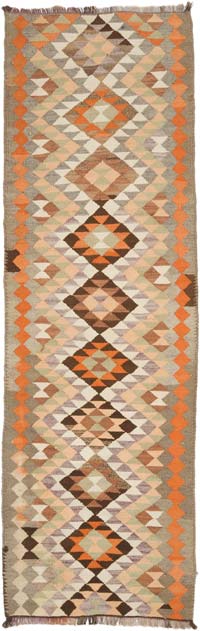
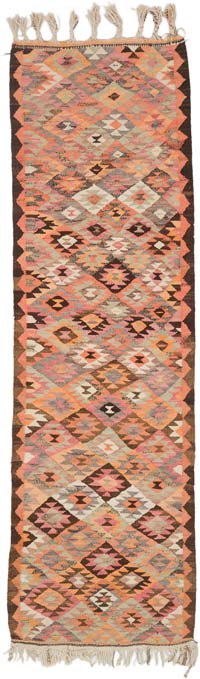
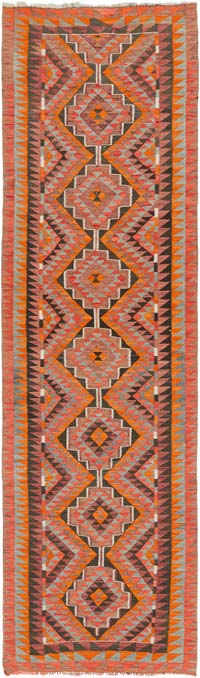
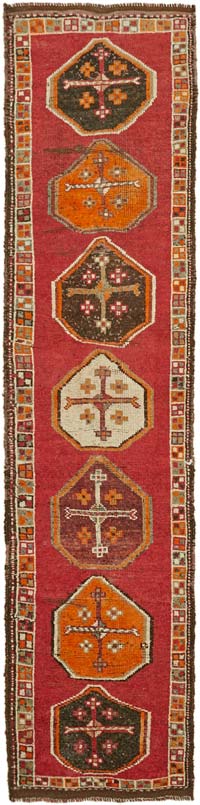
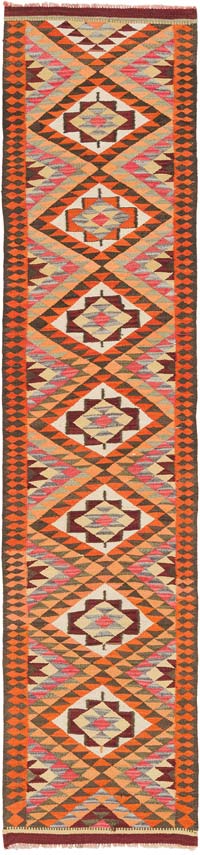
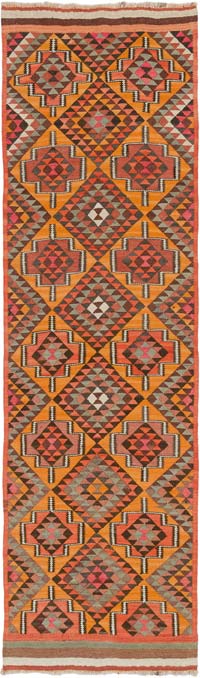
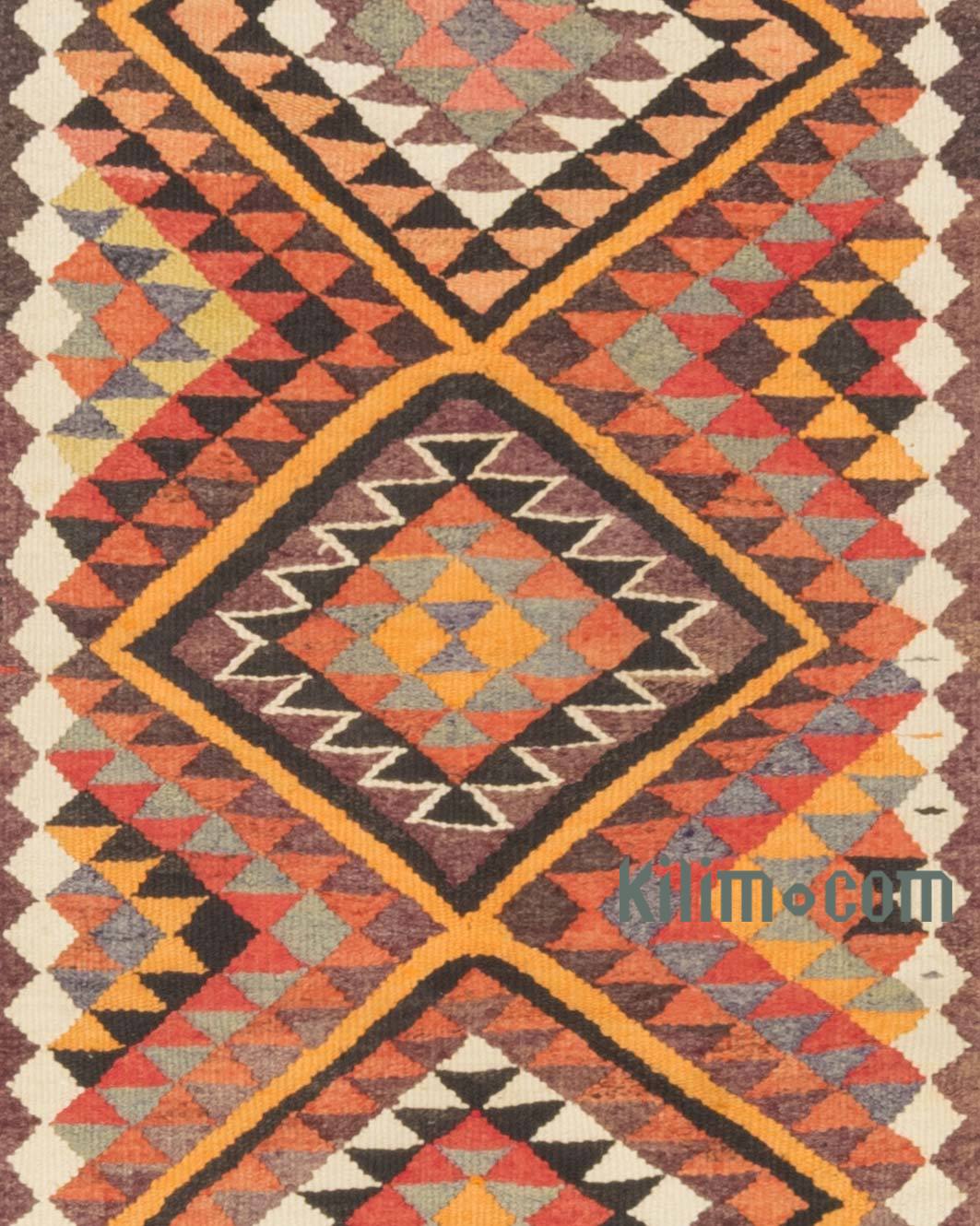
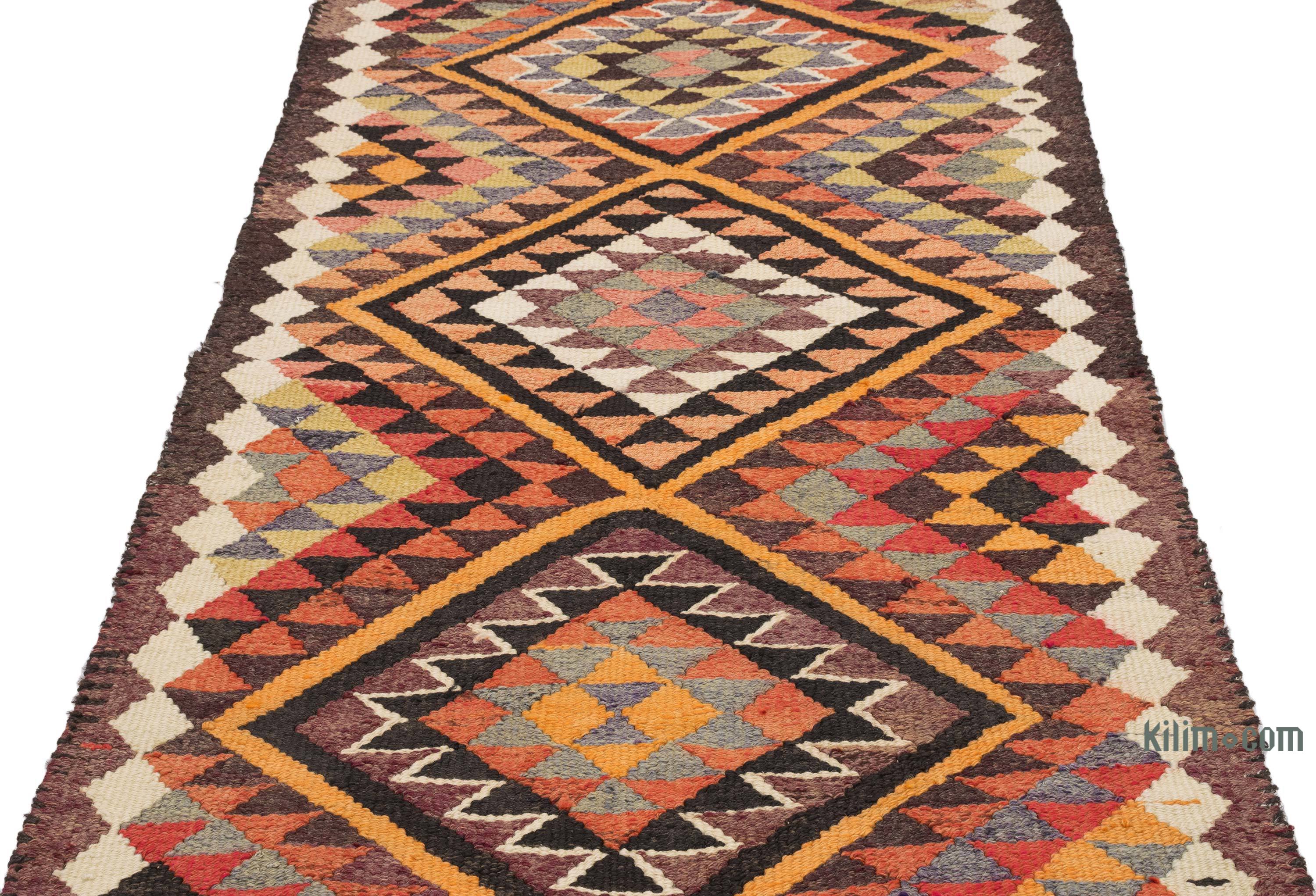
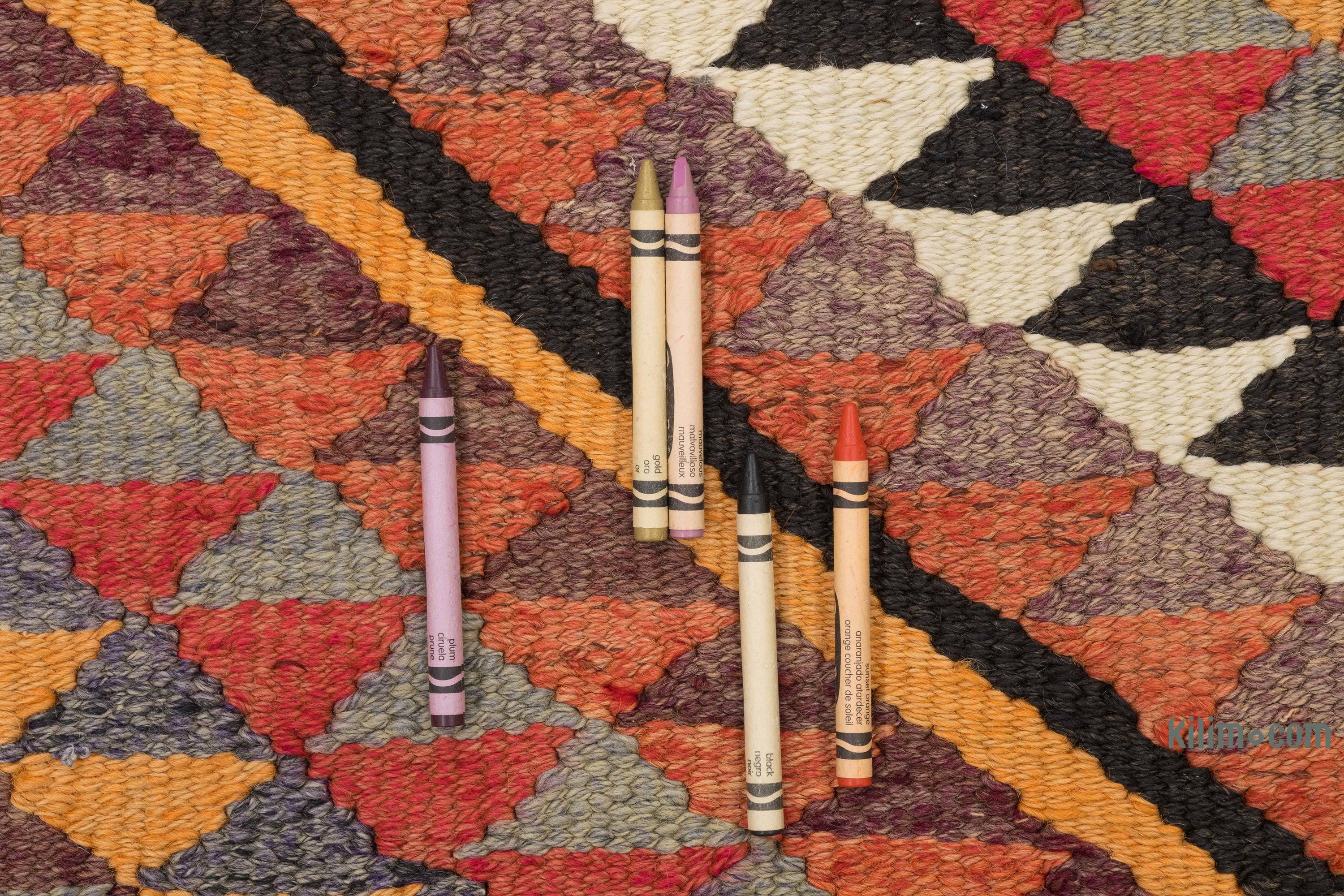
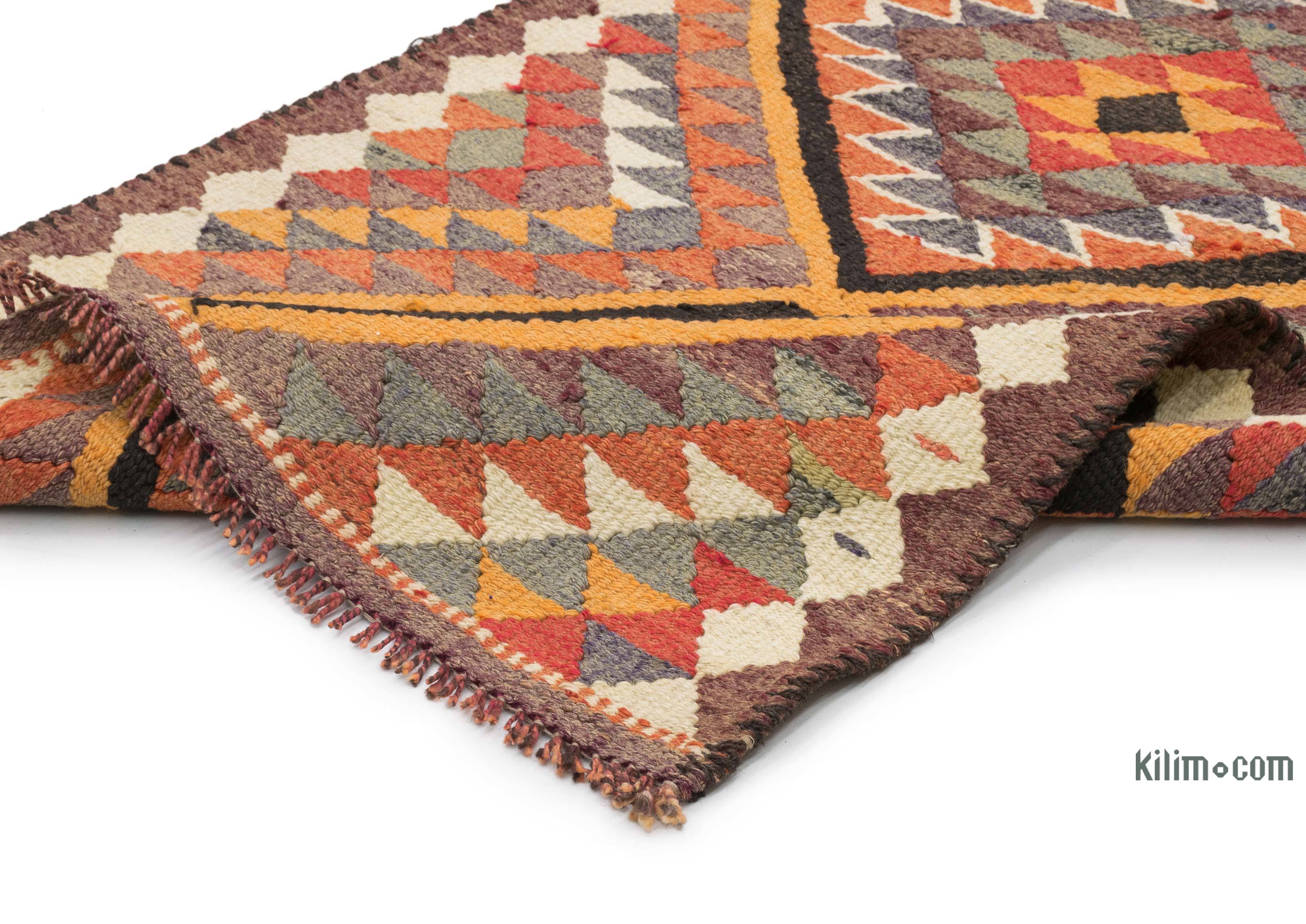
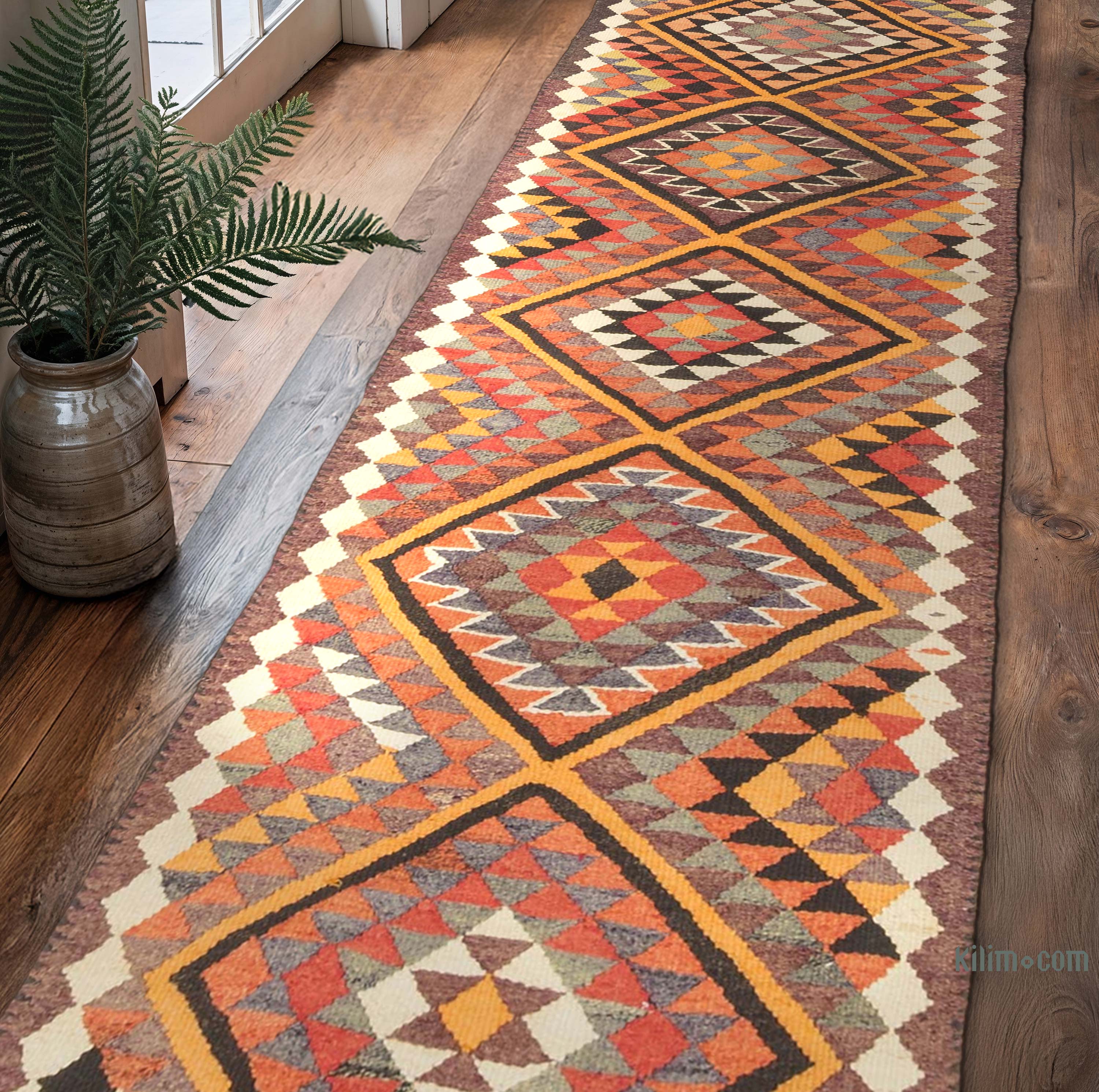
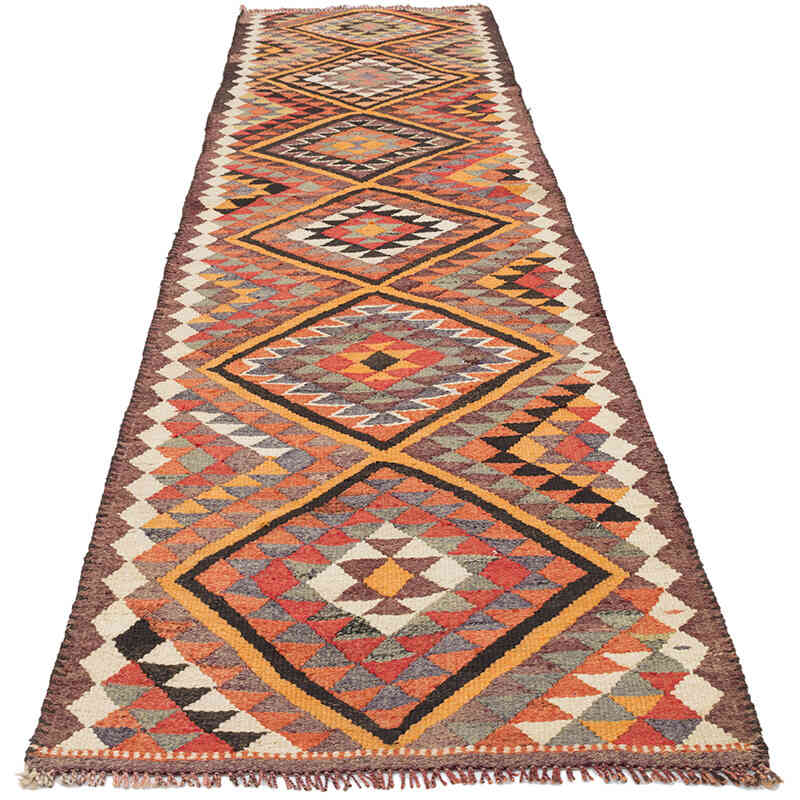
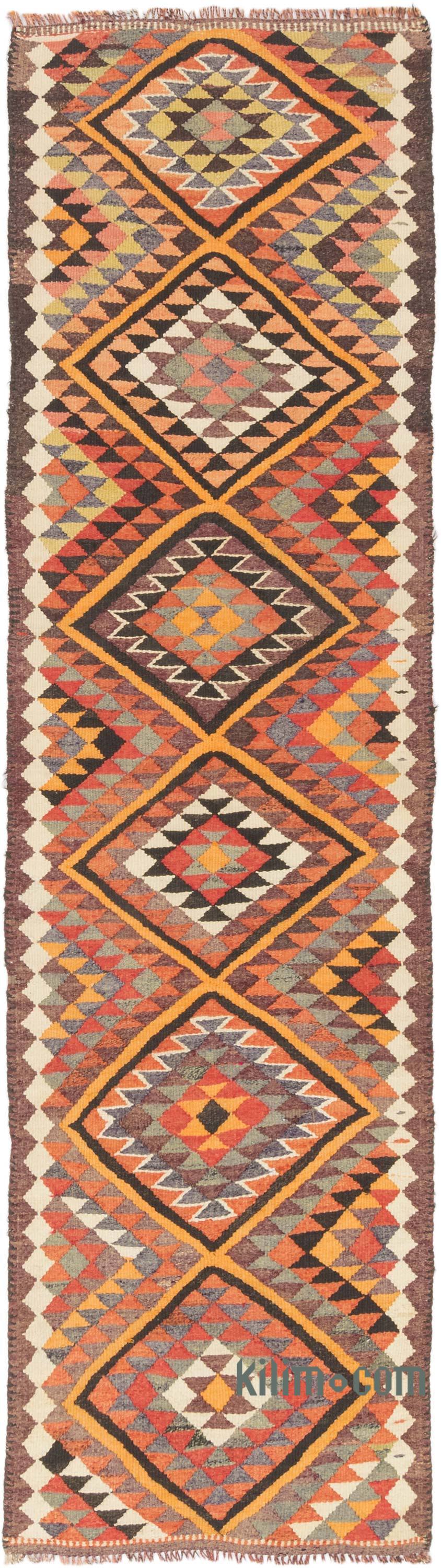
This Kilim runner showcases a striking geometric design characterized by a sequence of large diamond medallions running along its length. Each diamond encloses complex triangular and stepped patterns, rich in earth-toned shades including deep rust, ochre, olive green, and charcoal, punctuated by lighter beige accents. The diamonds are outlined boldly in warm yellow-orange, creating a rhythmic and balanced visual flow.
The diamond motif, prominent here, symbolizes protection and the female fertility figure in Anatolian weaving tradition. It reflects the weaver’s hope for safety and abundance within the home. Surrounding the diamonds, the triangular and hook-like shapes evoke “elibelinde” (hands on hips) and “labrys” motifs, which are associated with motherhood, strength, and resilience. These motifs together tell a story about life, continuity, and protection.
The layered geometric patterns stem from deep-rooted symbolism found across Anatolia’s weaving villages. They serve as talismans, ensuring well-being and prosperity while visually anchoring the rug with a vibrant, ordered complexity. These meaningful patterns form an intricate tapestry of cultural storytelling.
Integration with Interior Design Styles
- Bohemian and Eclectic Spaces: This Kilim lends warmth and texture with its rich palette and storytelling motifs, complementing layered textiles, plants, and vintage furniture for a worldly, curated vibe.
- Scandinavian and Minimalist Interiors: The rug’s warm colors and geometric patterns bring an inviting, grounding touch to their typically neutral and streamlined aesthetics, adding both comfort and character without overwhelming.
- Mid-Century Modern: The interplay of sharp geometric shapes and bold color contrasts resonates with mid-century design principles. This rug reinforces retro spirit while introducing artisanal authenticity.
- Rustic and Farmhouse: The earthy hues and handmade vibe harmonize beautifully with natural wood furnishings and cozy, informal spaces, reinforcing a sense of tradition and crafted quality.
- Contemporary Urban: Using this Kilim runner injects a handcrafted element into sleek spaces, breaking monotony and blending cultural heritage with modern living.
Each motif and color choice reflects the weaver’s connection to their environment and traditions, making this Kilim both an art piece and a vibrant expression of home spirit. Its adaptability across styles creates a bridge between history and today’s varied interior aesthetics.
Explore Kilim Motifs and Symbols to learn more about these fascinating designs and their meanings.
Rolling Up
- This Kilim features a sequence of protective diamond motifs and related symbolic patterns representing fertility, strength, and resilience.
- Its earth-toned colors create warmth and visual interest, enhancing diverse interior design styles.
- The rug’s geometric design bridges cultural storytelling with modern aesthetics, making it a versatile piece for any home.
- From Bohemian to minimalist and contemporary spaces, it integrates effortlessly, offering both beauty and meaningful heritage.
- Understanding the motifs brings deeper appreciation, connecting the rug to universal themes of life and protection.
Send an image of your room with the dimensions to sales1@kilim.com and we will do a Photoshop simulation with the rugs or furniture you choose.
You can also visualize most of our products in your own room with AR (augmented reality) on an iPhone or iPad. Just click the "AR View in Your Room" button below the item photo.