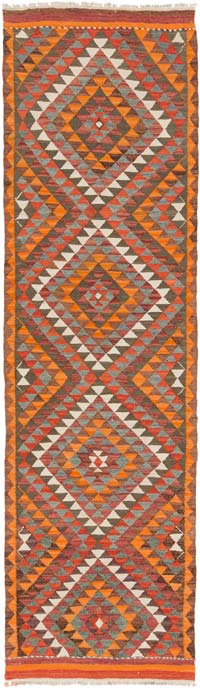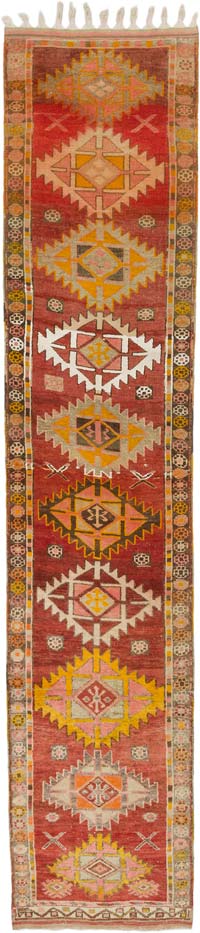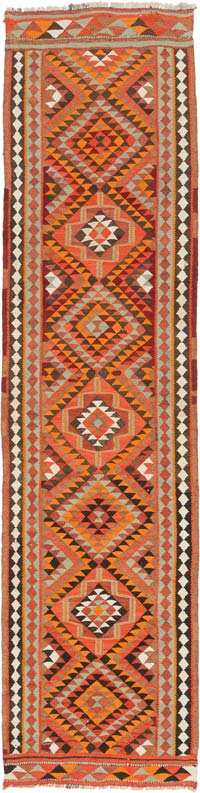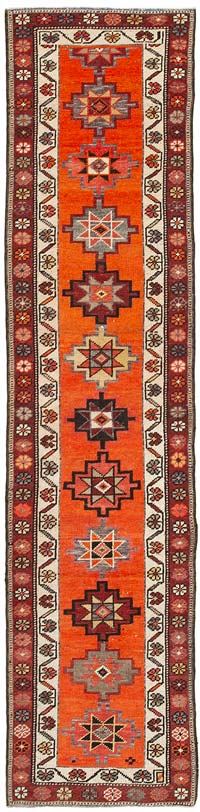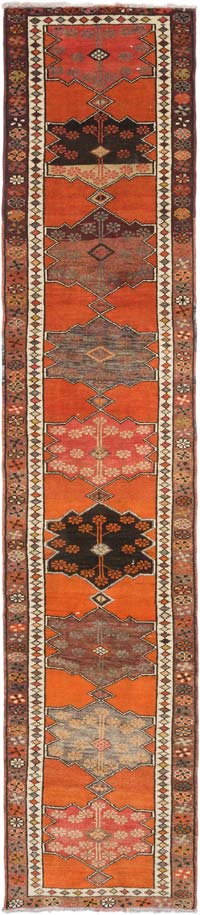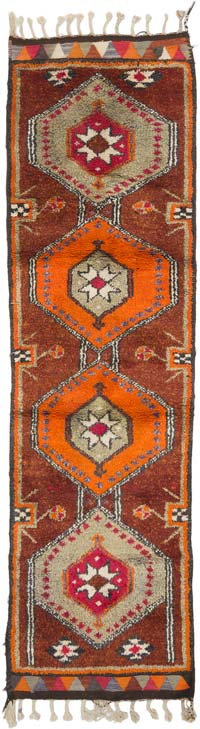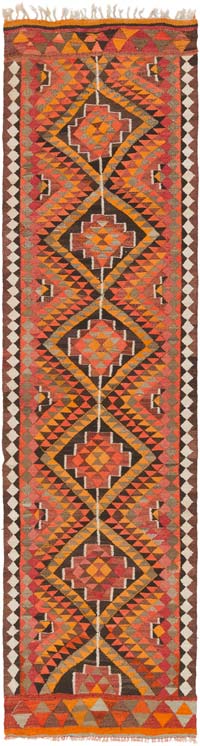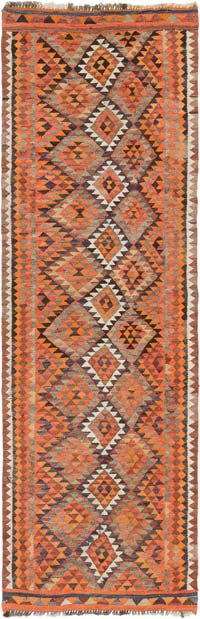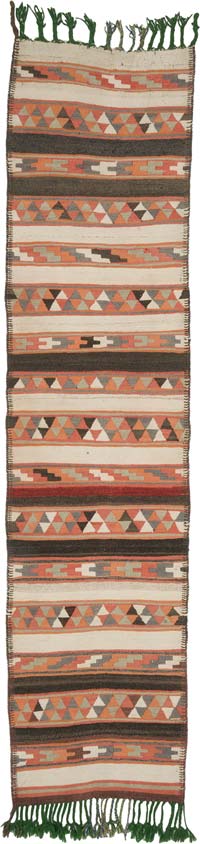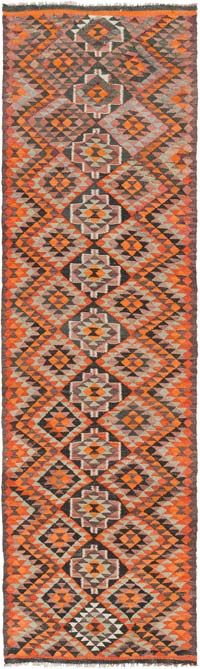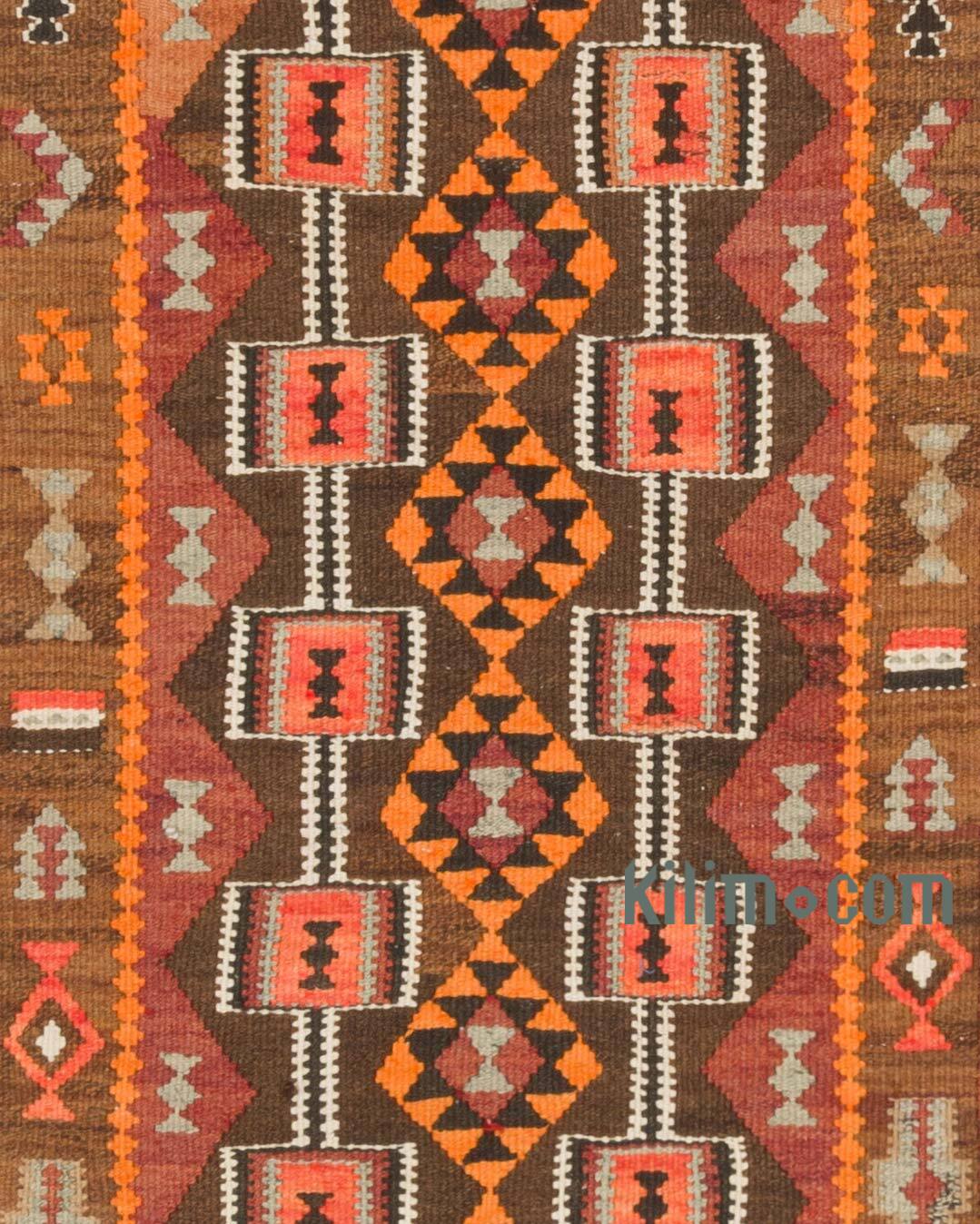
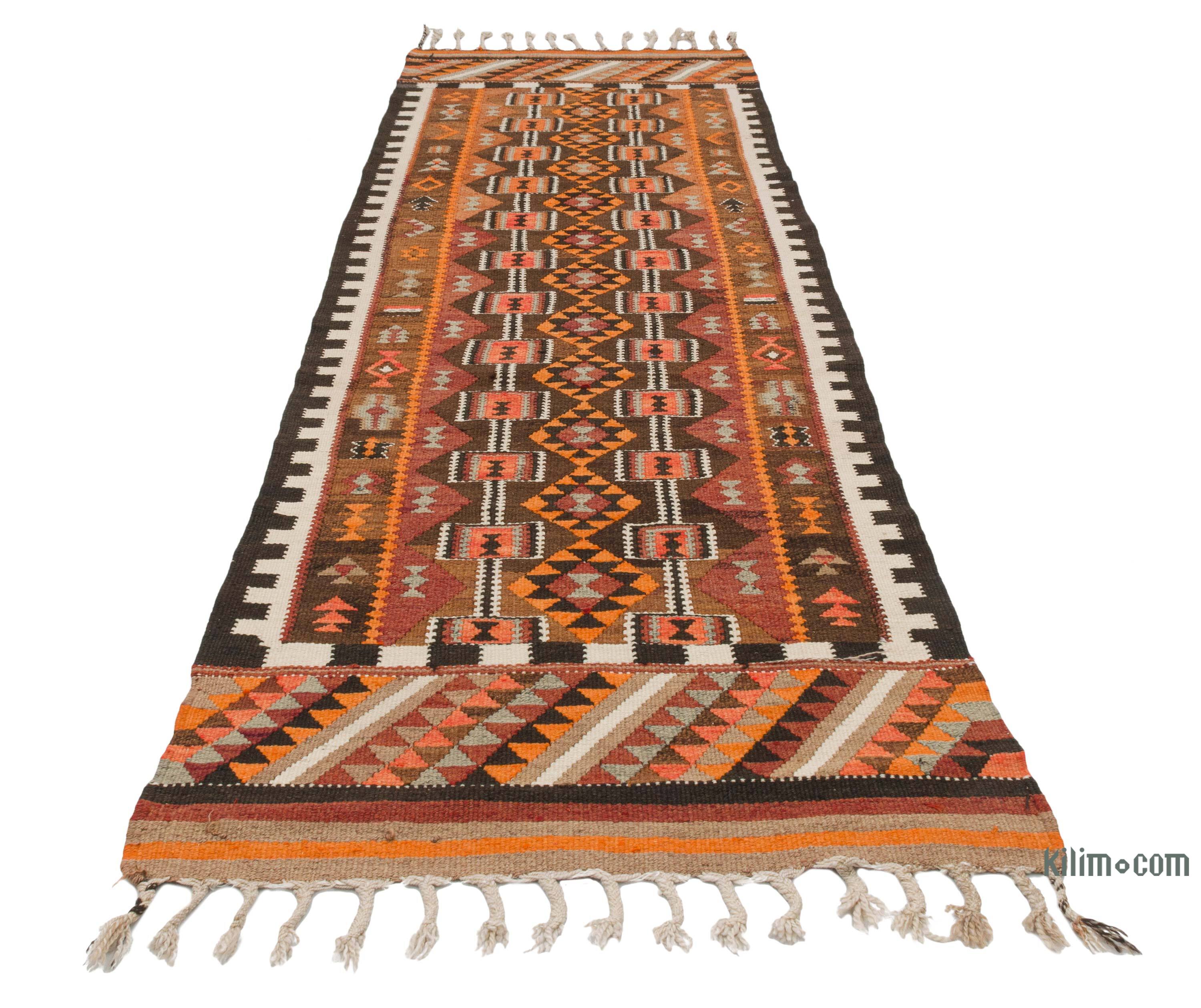
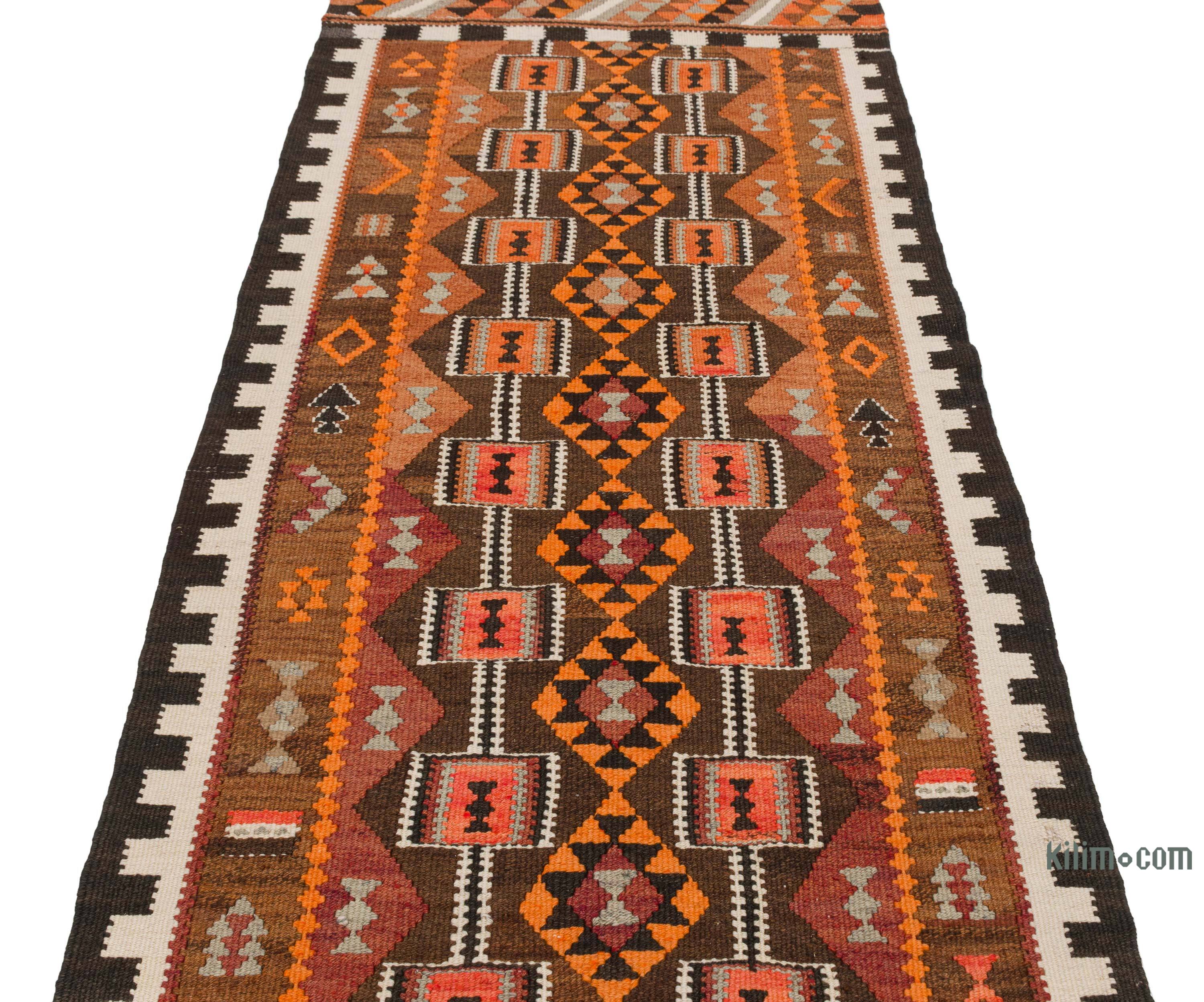

Vintage Tribal Kilim Runner 3' x 9' 9" (36" x 117")
Type:
Kilim RugsCollection:
Tribal RunnersStyle:
TribalID:
K0077538Size:
Material:
- Ships in 2-5 business days
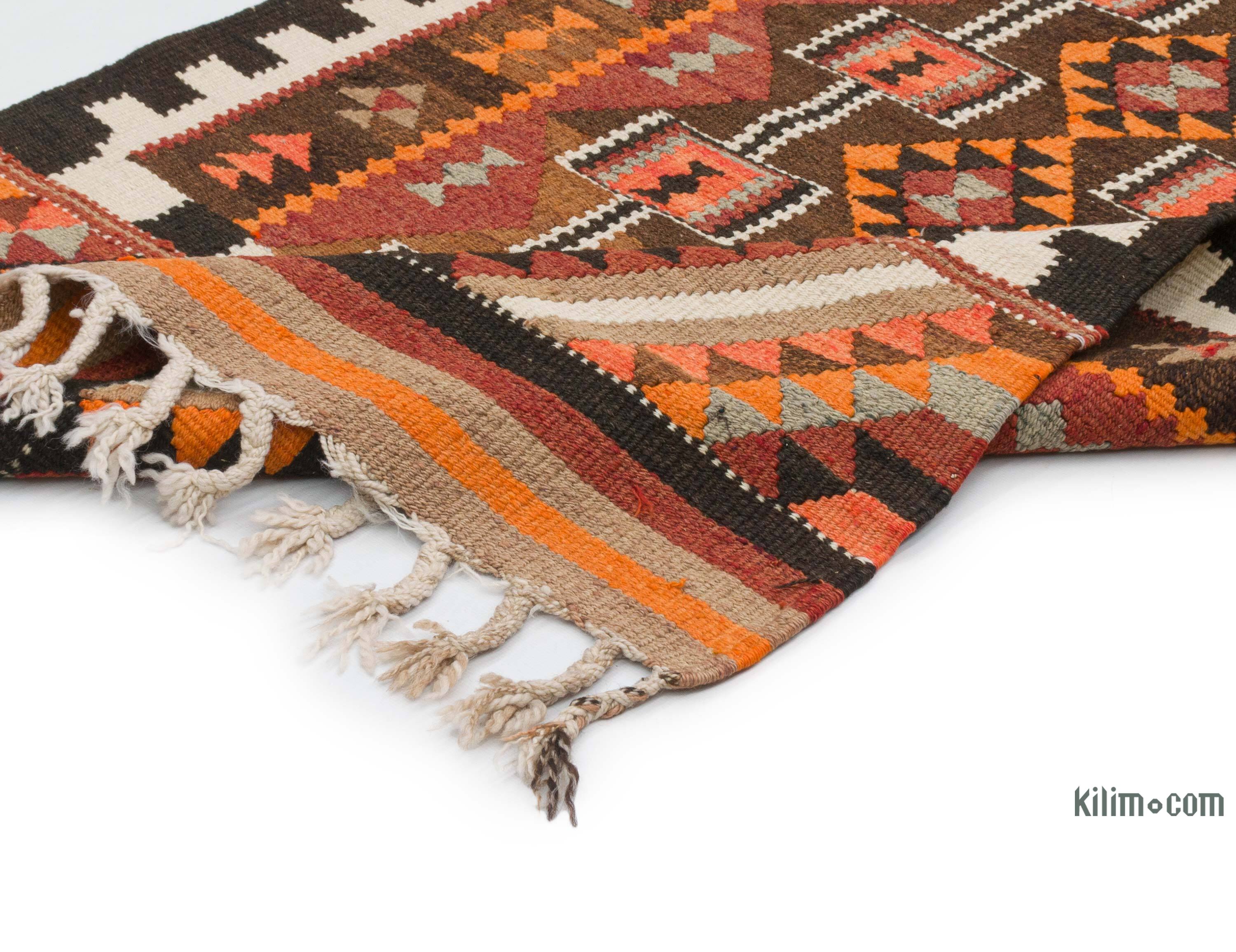
- All of our rugs are professionally cleaned; gentle wear from age and natural irregularities are inherent features of these one-of-a-kind handwoven vintage rugs.
- Only one in stock, handmade, unique
- Free shipping via FedEx Express. Returns & exchanges
- Contact us or add a note to your order if you want us to delay your shipping.
- Request more info if you want this rug shorter or narrower
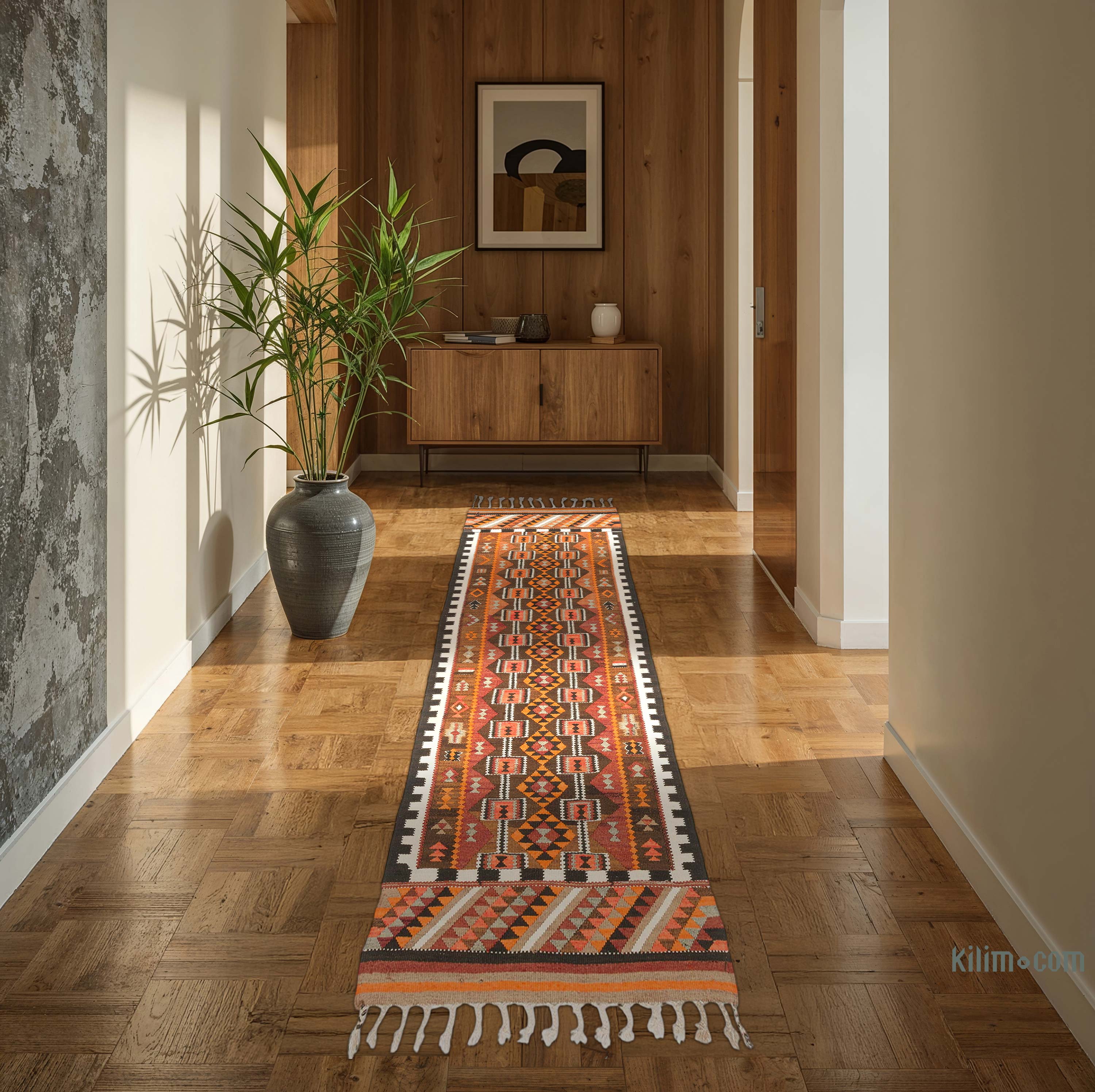
The designs feature a rich array of symbols representing tribal culture and Anatolian motifs, often in the form of medallions, diamonds, and other geometric shapes. These kilim runners are ideal for hallways and narrow spaces, offering a touch of ethnic charm and artisanal quality to any interior.
Herki kilims not only serve as functional floor coverings but also as artistic expressions of tribal identity, making each rug a unique cultural artifact.
Design Elements
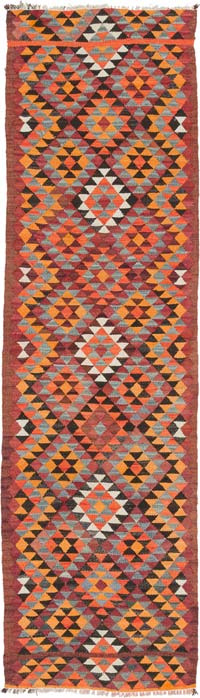
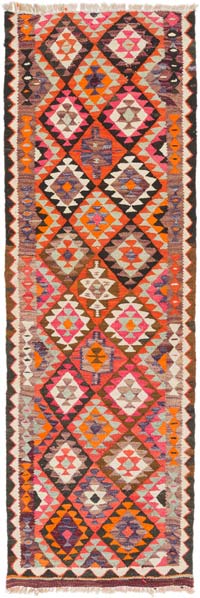
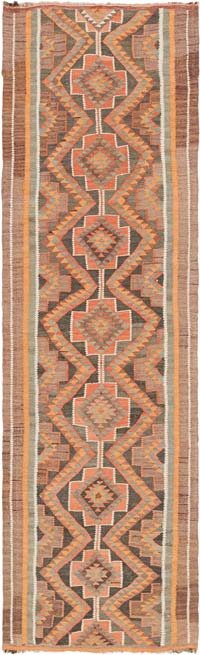
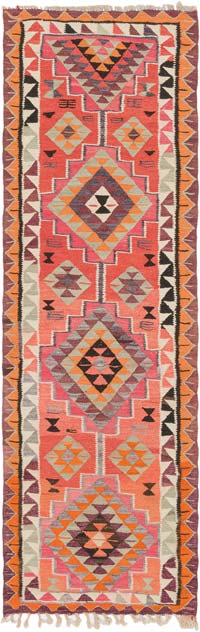
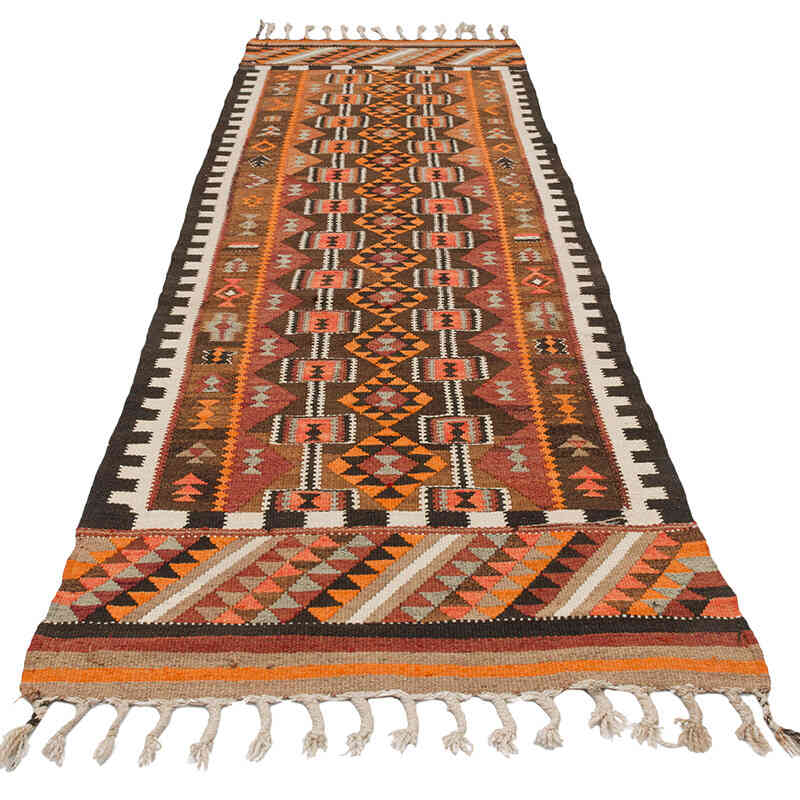
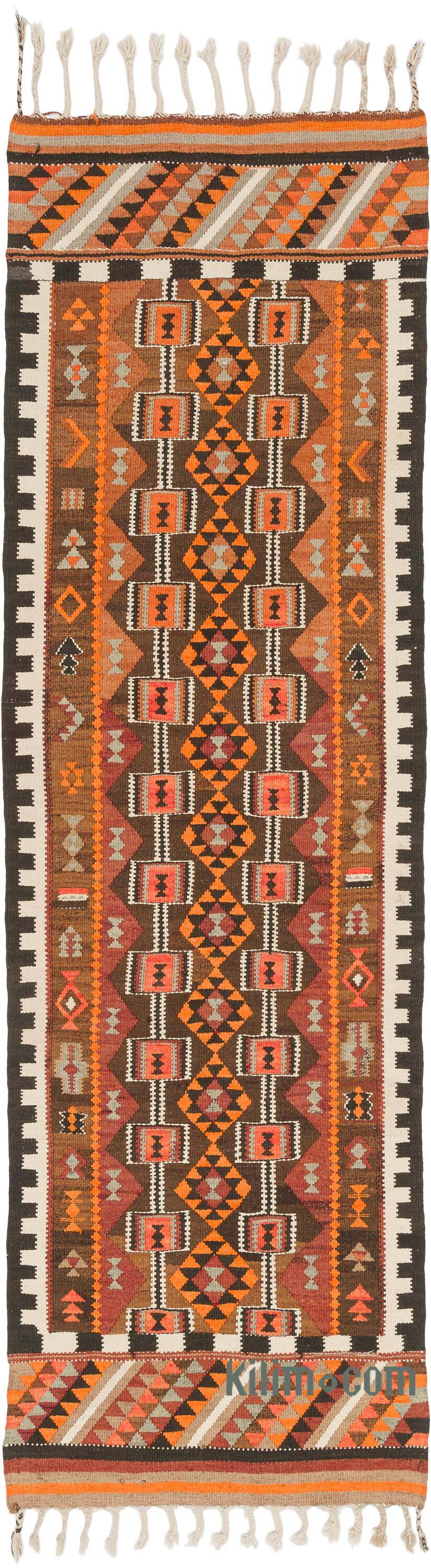
- Patterns: The vintage tribal kilim runner showcases a variety of geometric patterns and symmetrical motifs. These patterns are often arranged in horizontal bands, creating a sense of movement and rhythm throughout the design.
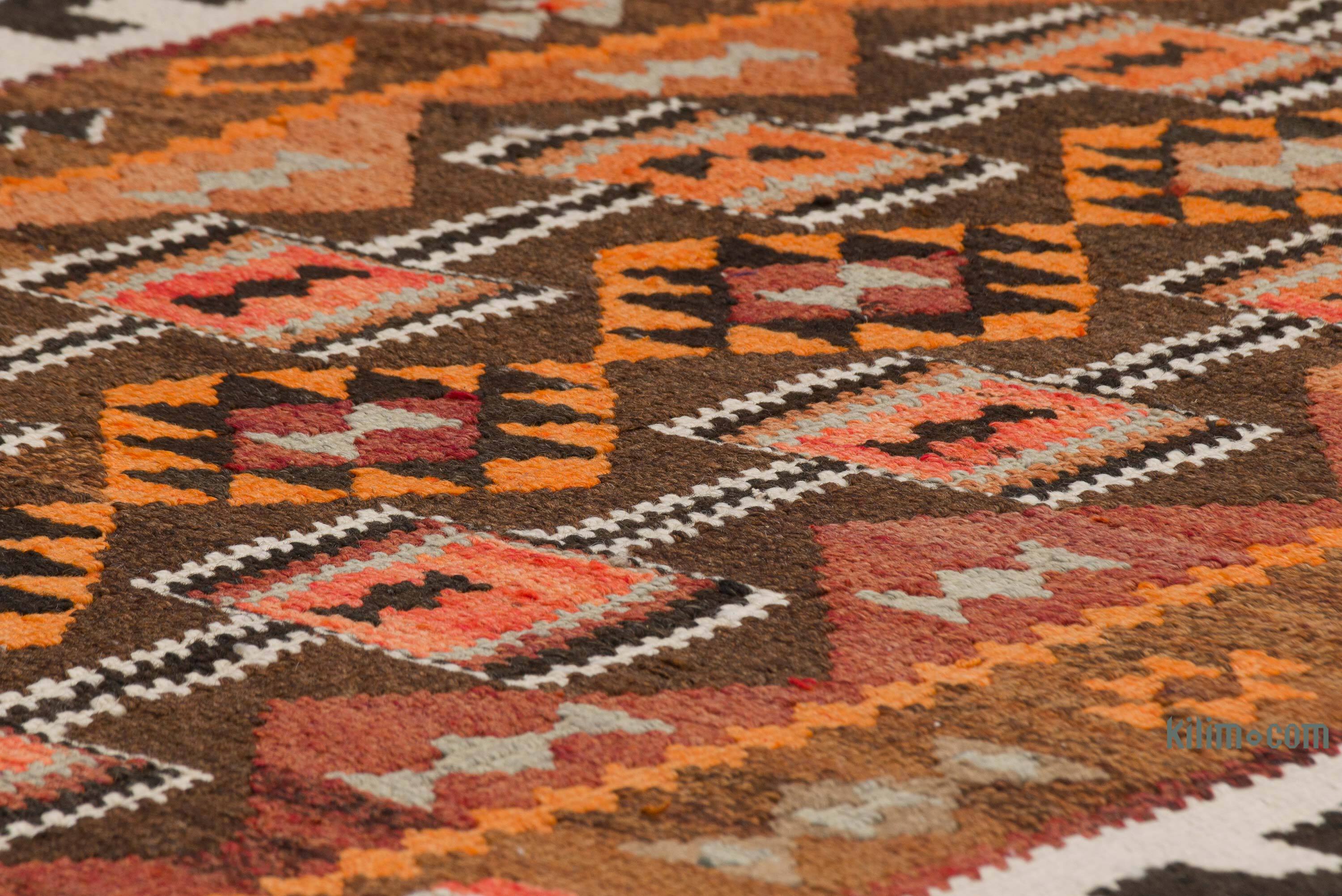
- Texture: The flat-weave technique of kilims results in a lightweight rug with a smooth texture that highlights the intertwined threads. The absence of pile gives it a rustic yet sophisticated feel.
- Borders: The kilim features bold, contrasting borders that frame the inner patterns. These borders often contain simpler motifs that accentuate the complexity of the central designs.
- Line Work: The design incorporates both thick and thin lines, with thicker outlines emphasizing the primary motifs and thinner lines detailing the secondary patterns.
Color Palette
- Warm Tones: The kilim runner predominantly utilizes warm colors, including shades of red, orange, and brown. These colors not only evoke warmth and coziness but also represent the earth and natural elements.
- Contrasting Neutrals: The use of cream and black provides a stark contrast that enhances the vibrancy of the warmer colors, making the design elements pop. The neutrals add balance and a classic touch to the overall composition.
- Symbolism of Color: The warm colors can symbolize joy and life, while the neutral tones represent stability and structure, creating a harmonious balance within the design.
Main Motifs and Their Symbolism
- Zigzag Patterns: Often represent the journey of life, portrayed through the ups and downs, symbolizing movement and progress.
- Diamond Shapes: These motifs can symbolize wealth and protection, believed to offer a safeguard against negativity and misfortune.
- Crosses and Squares: Often represent the four elements (earth, air, fire, water) and balance in life, showcasing harmony within the natural and spiritual realms.
Summary
The vintage tribal kilim runner combines intricate geometric patterns and a vibrant color palette primarily composed of warm tones with contrasting neutrals. The design serves as a representation of life journeys, protection, harmony, and the spiritual connection between individuals and nature. With its combination of texture, color, and symbolism, this rug not only complements interior spaces but also tells a rich story through its artistic elements.
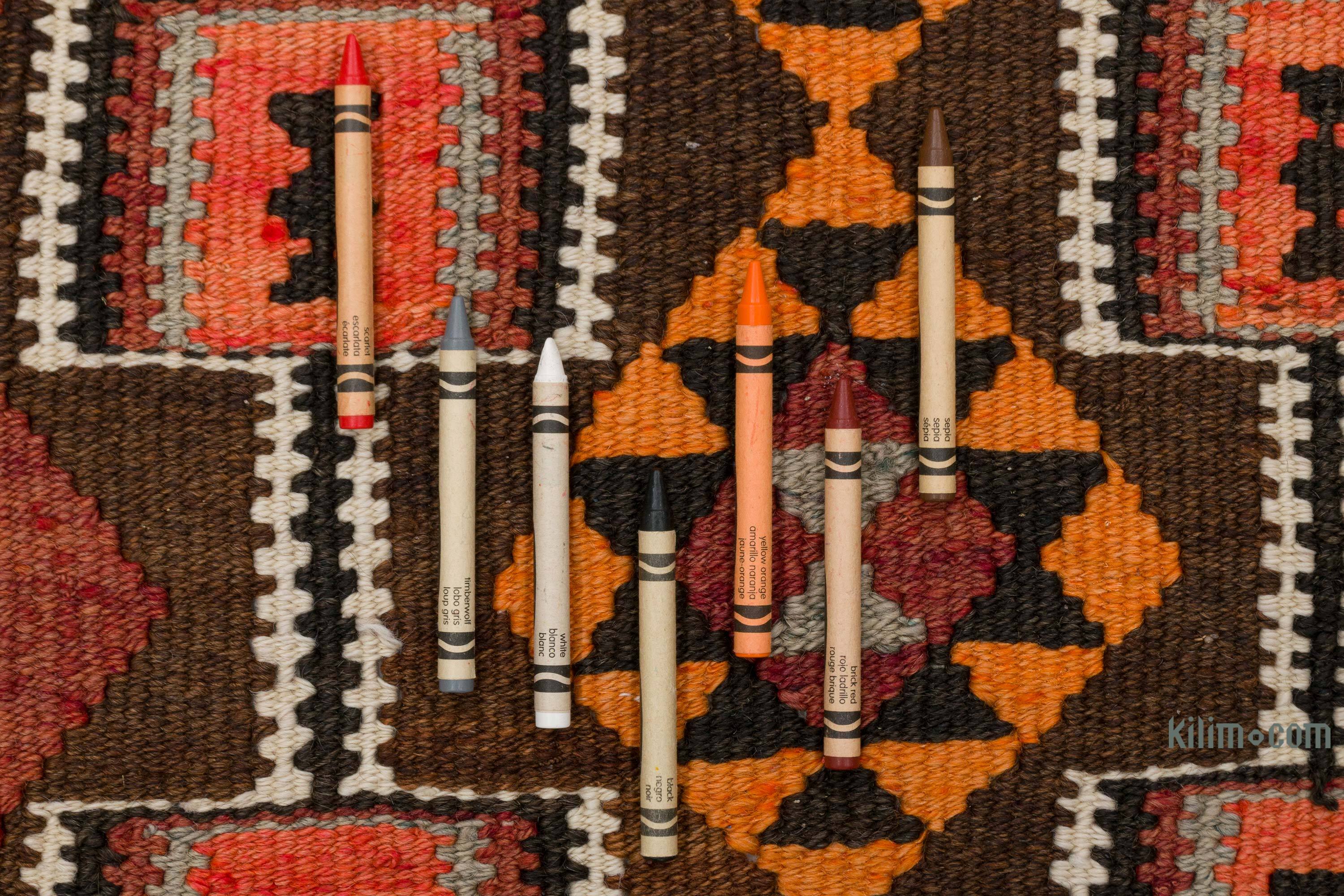
Colors may appear slightly different across various monitors due to screen settings device differences, and external lighting conditions. If color accuracy is important for your space, we recommend viewing the rug on multiple devices or contacting us for a detailed color description. We can provide detailed photos and references using Sherwin-Williams, Benjamin Moore, Pantone, or even Crayola crayons.
You can also visualize most of our products in your own room with AR (augmented reality) on an iPhone or iPad.
Return Policy
Need a rug pad? We recommend RugPadUSA