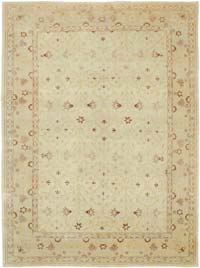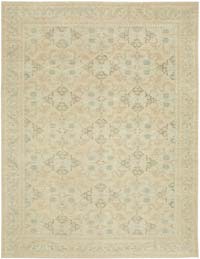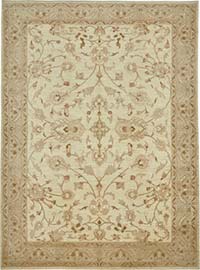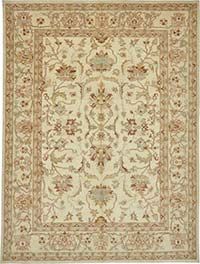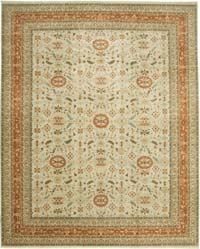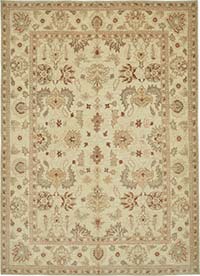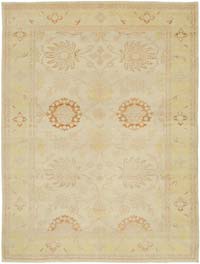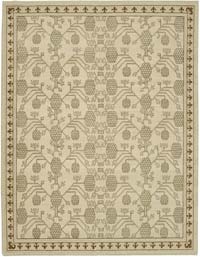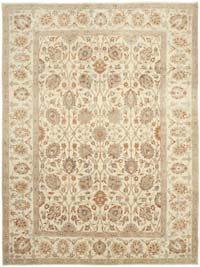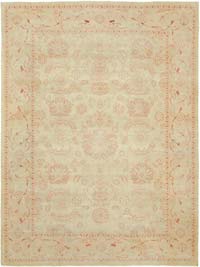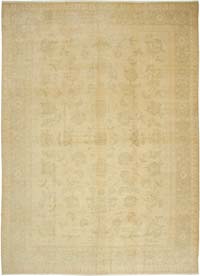
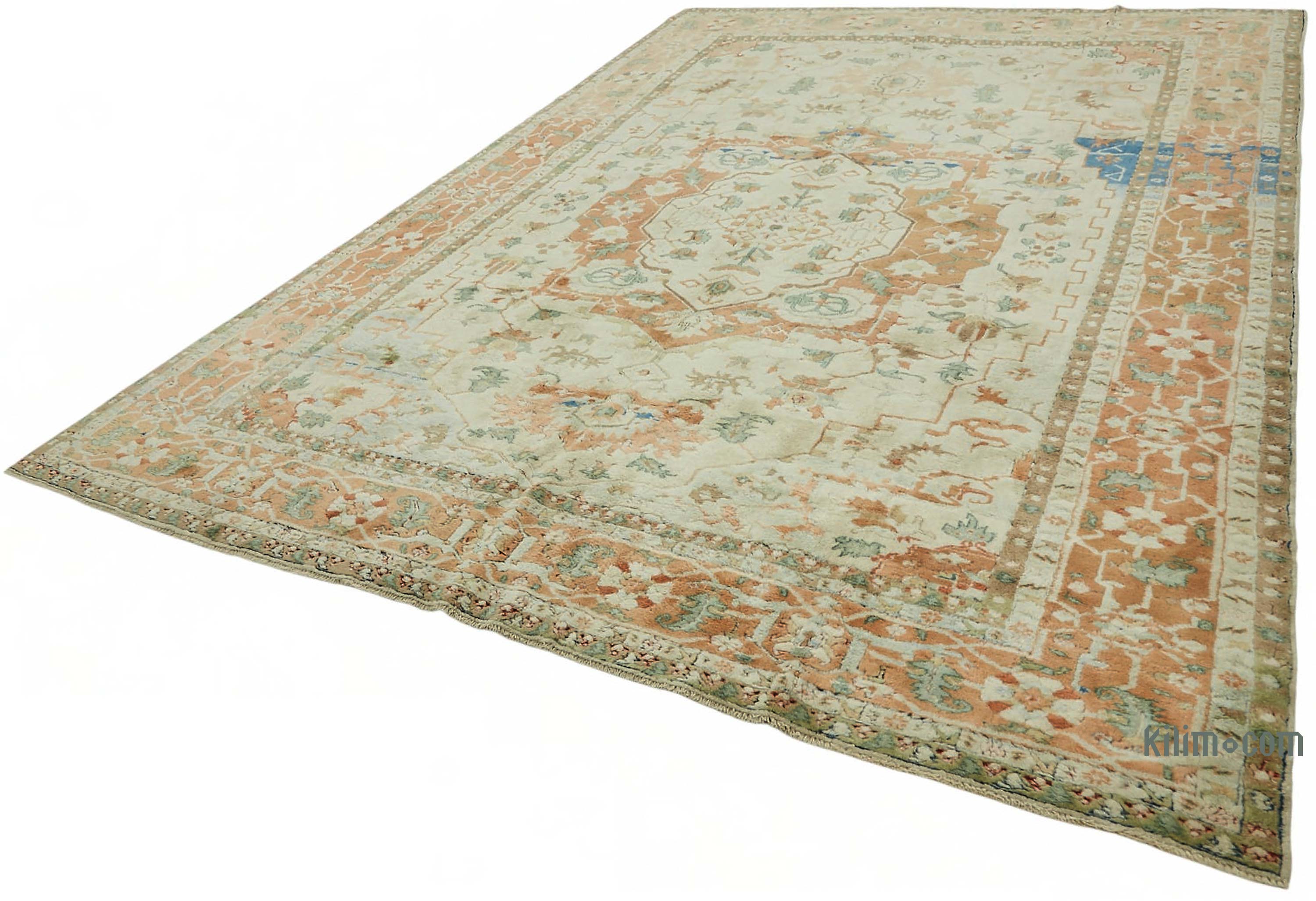

New Hand Knotted Wool Oushak Rug 9' x 13' (108" x 156")
Type:
Hand-Knotted RugsCollection:
OushakStyle:
TraditionalID:
K0087017Size:
Material:
- Ships in 2-5 business days
- Only one in stock, handmade, unique
- Free shipping via FedEx Express. Returns & exchanges
- Contact us or add a note to your order if you want us to delay your shipping.
- Request more info if you want this rug shorter or narrower
Design and Motifs of This Rug
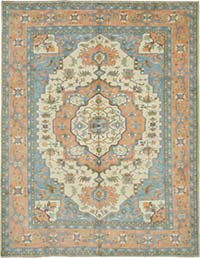
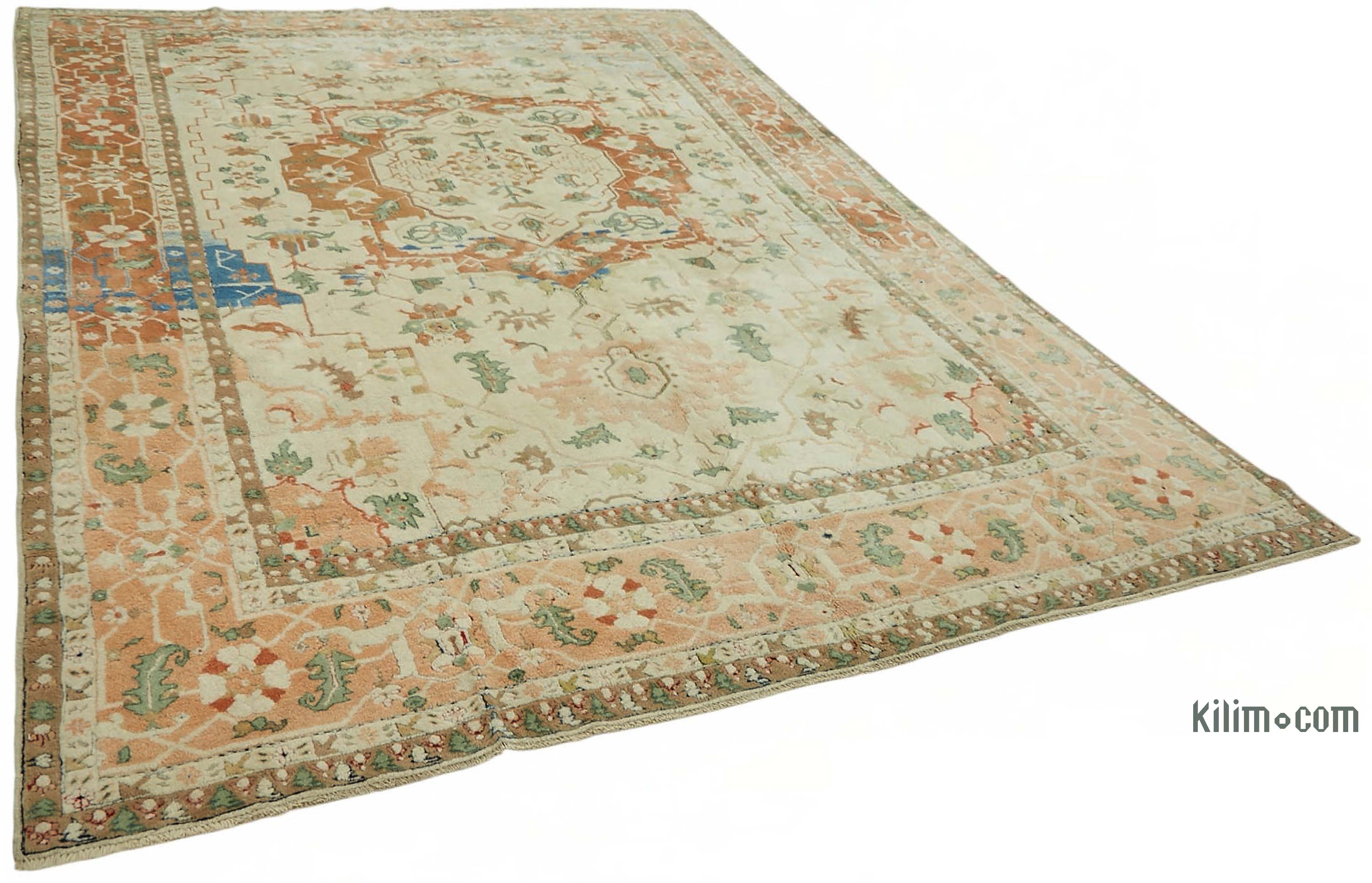
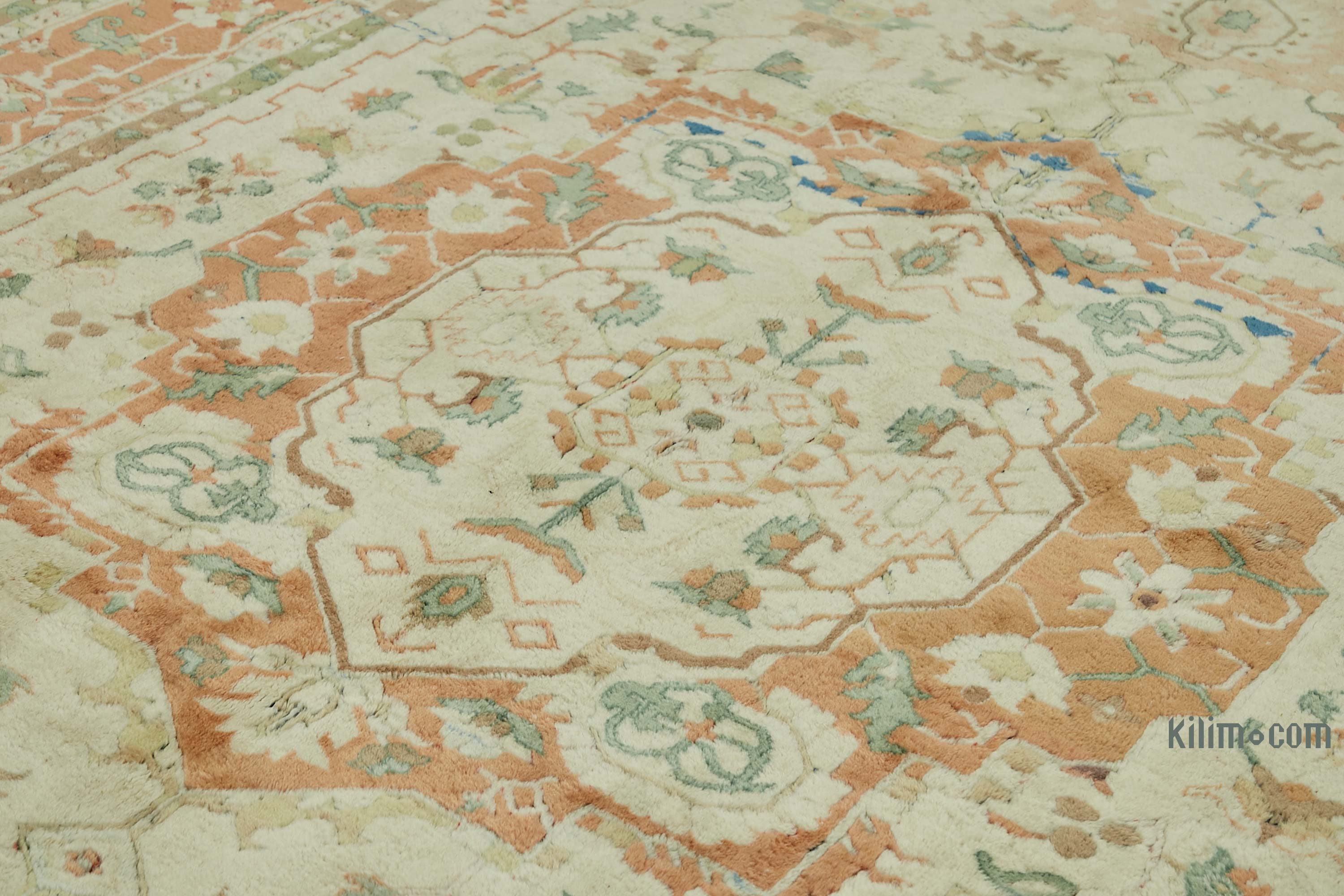
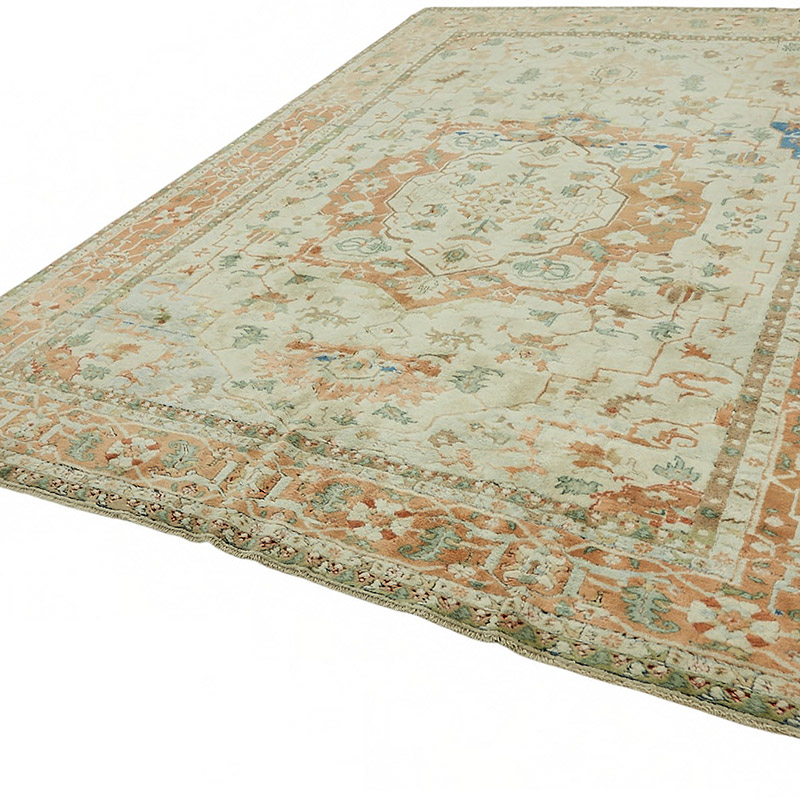
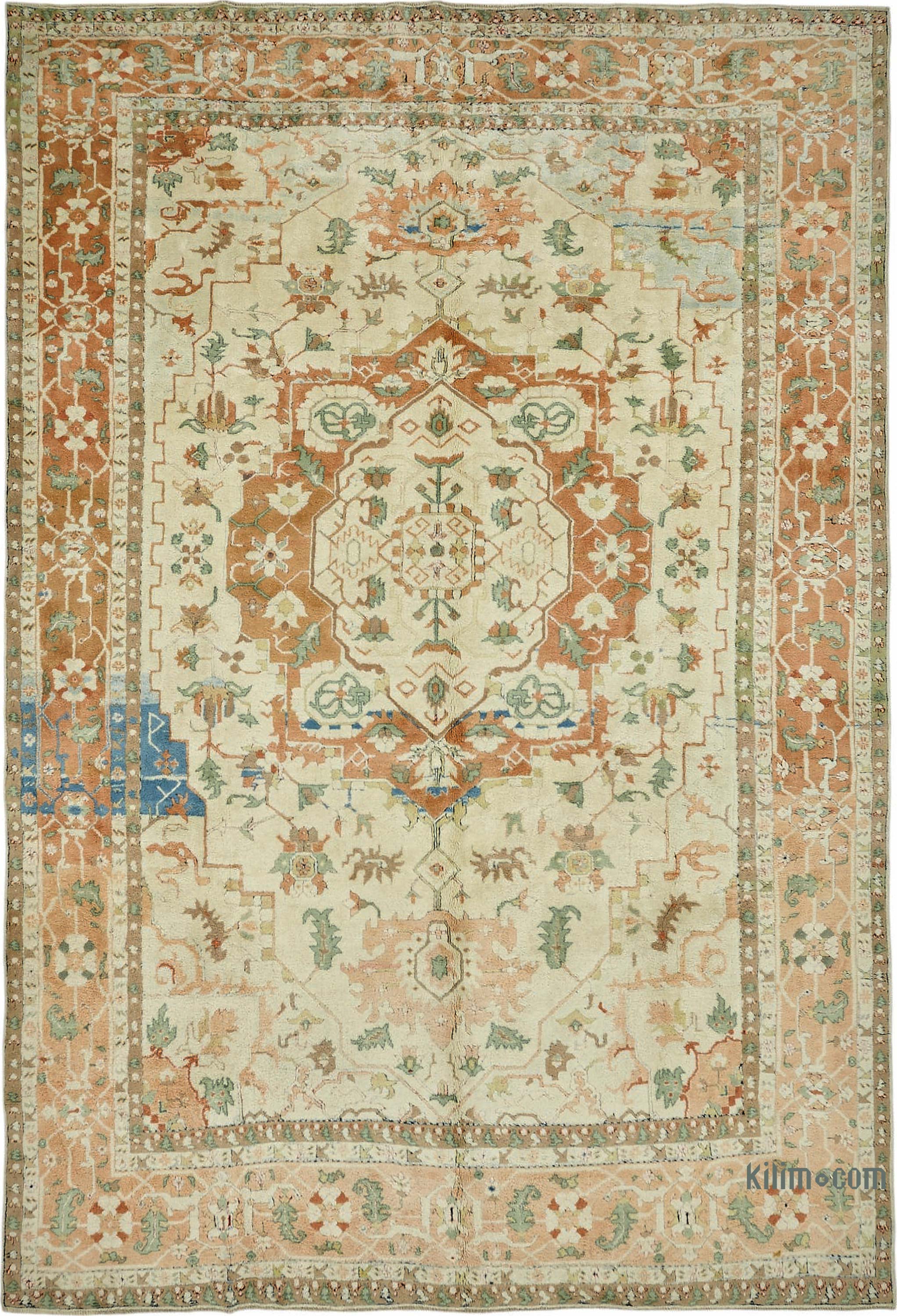
This vintage Anatolian rug presents a captivating medallion design that sits firmly in the center, drawing immediate attention. The soft, earthy palette of creams, muted terracotta, sage greens, and hints of sky blue creates a serene and warm atmosphere. This color scheme provides an inviting balance without overwhelming the senses, making the rug adaptable to many living spaces.
The central medallion, a signature feature in traditional Anatolian rugs, is framed by partially scalloped outlines and surrounded by a field rich with botanical and symbolic motifs. Floral patterns blossom throughout the design in an organic flow, with stylized flowers and leaves representing abundance and renewal—a common theme in Anatolian weaving traditions.
- Elibelinde (Hands on Hips Motif): Visible within the medallion and its surrounding areas, this motif symbolizes motherhood, fertility, and the power of creation. It reflects hope for family prosperity and continuity.
- Bird Motifs: Scattered discreetly around the field, birds epitomize freedom and the transcendence of worldly concerns. They add a lighthearted and uplifting element to the look.
- Herbs and Floral Scrolls: The creeping vines and floral elements symbolize growth, life, and protection against negativity. The intertwining nature of these motifs evokes a sense of connection and harmony.
- Hands of Fatima (Hamsa): Subtly integrated near the medallion, this motif signifies protection and warding off evil. Its inclusion adds a layer of spiritual peace to the rug’s narrative.
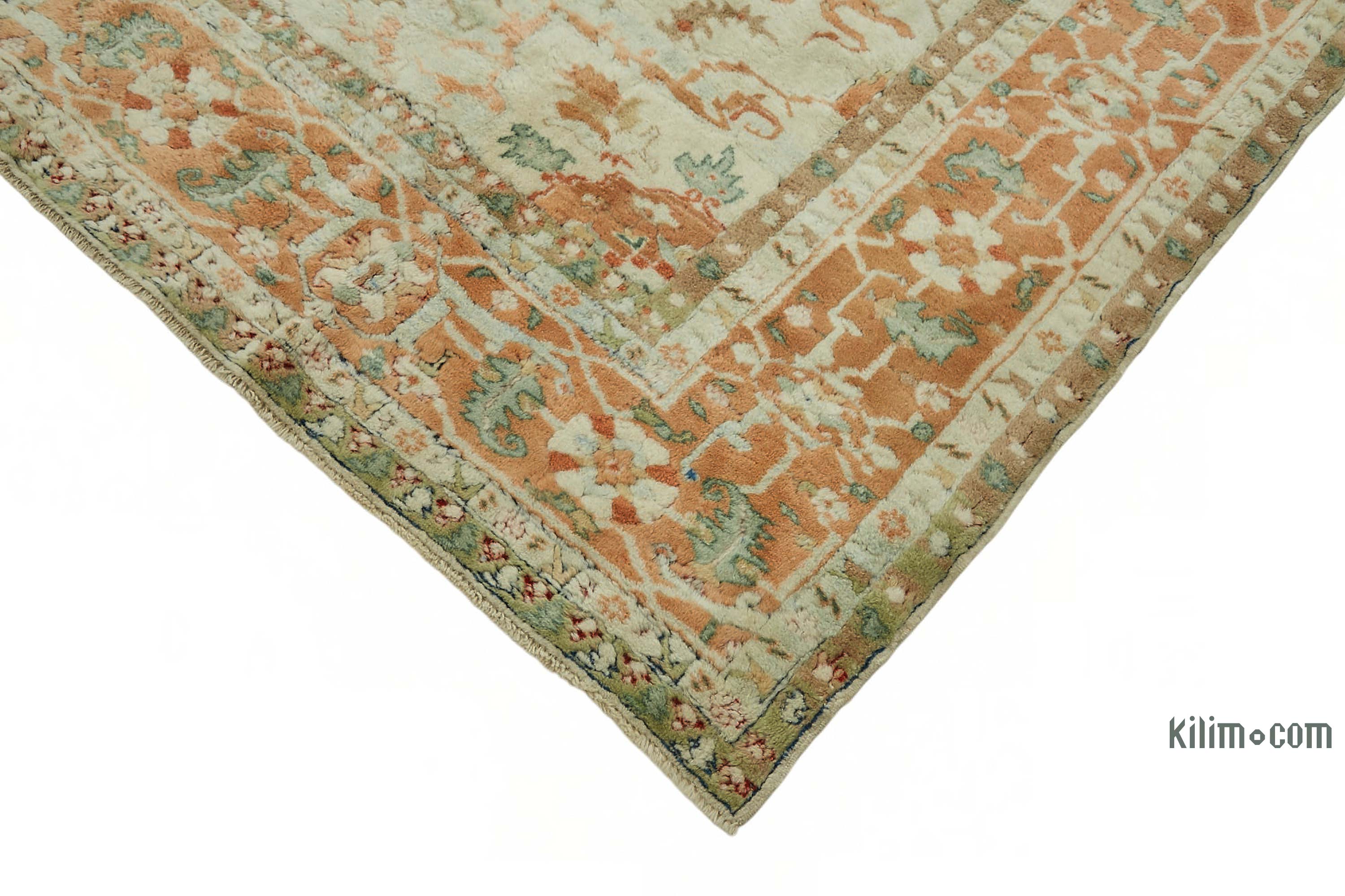
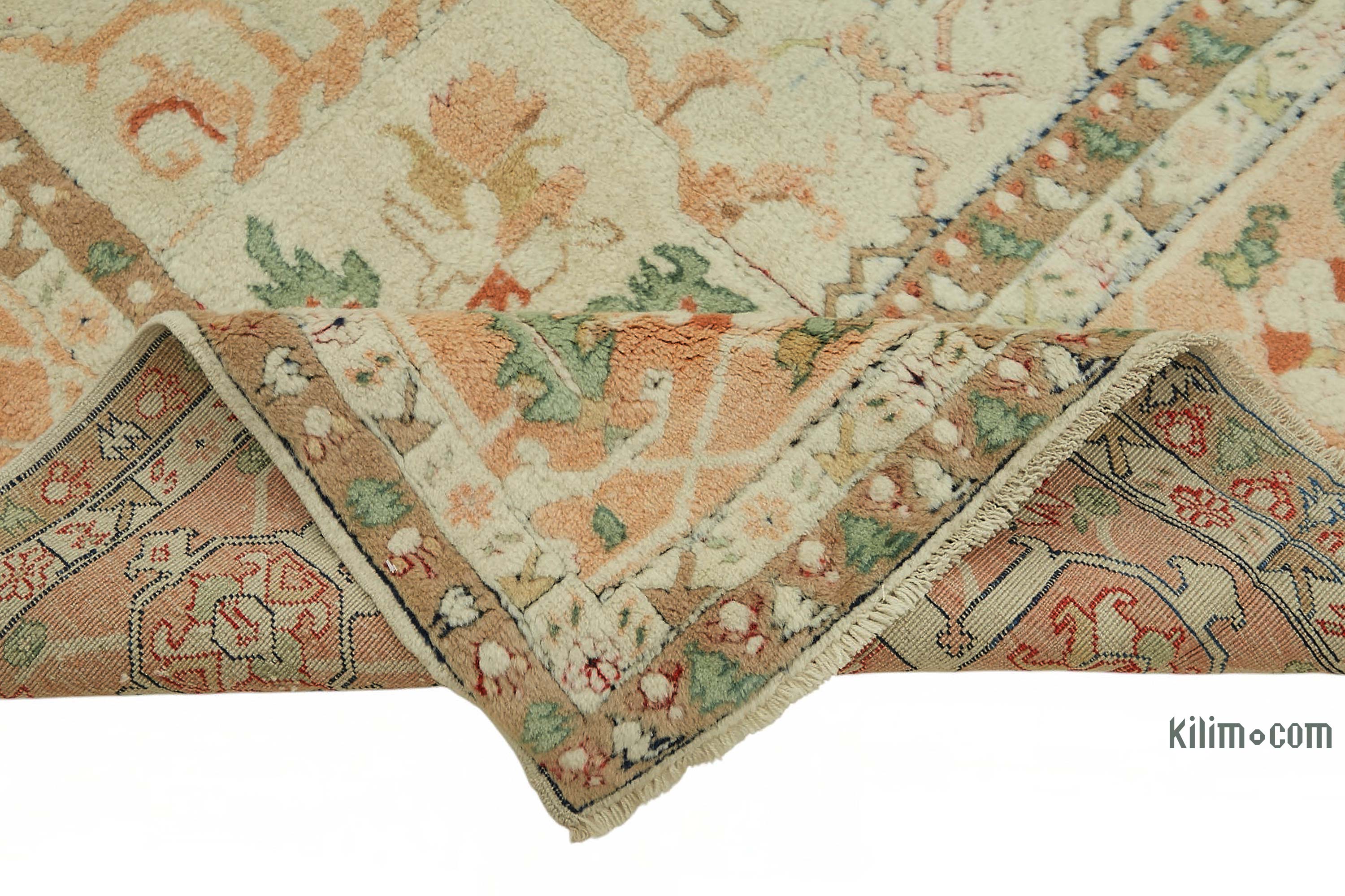
The borders of the rug strengthen the story told at the center by repeating floral and geometric patterns, providing a structural rhythm that visually contains and balances the rug’s expressive interior.
Integration with Interior Design Styles
This rug easily adapts to various interior design styles, making it a versatile choice for diverse settings:
- Bohemian: The rich storytelling woven into the motifs aligns perfectly with the eclectic, worldly vibe of boho interiors. Layered with textured pillows and natural elements, this rug brings depth and intrigue.
- Traditional: The classic medallion and floral arrangements complement historic, elegant interiors beautifully. Antique furnishings, wood accents, and plush fabrics will resonate with the rug’s timeless charm.
- Scandinavian: The rug’s soft, muted tones bring warmth and a touch of heritage to minimalist Scandinavian rooms, creating a relaxed yet refined atmosphere.
- Modern Farmhouse: Earthy hues and organic motifs harmonize with rustic farmhouse elements, such as reclaimed wood and distressed furnishings, enhancing the cozy, lived-in feeling.
- Transitional: Builders of transitional spaces who seek a blend of contemporary and classic will find the rug’s balanced patterns and subdued palette a perfect bridge between eras.
No matter the design style, this rug acts as a grounding element, offering an emotional connection through its motifs and a visual anchor through its medallion design and harmonious colors.
Rolling Up
- The rug features a central medallion design surrounded by traditional Anatolian motifs like Elibelinde, birds, floral scrolls, and Hands of Fatima, each representing hopes for motherhood, freedom, growth, and protection.
- The warm, earthy color palette of creams, terracotta, sage greens, and blues creates a serene, inviting ambiance suitable for many interior themes.
- This rug integrates seamlessly with Bohemian, Traditional, Scandinavian, Modern Farmhouse, and Transitional interiors by contributing emotional depth, cultural storytelling, and visual warmth.
- Its balanced design and motif symbolism provide both decorative appeal and a meaningful connection to the weavers’ lives, reflecting universal themes of resilience, protection, and abundance.
Colors may appear slightly different across various monitors due to screen settings device differences, and external lighting conditions. If color accuracy is important for your space, we recommend viewing the rug on multiple devices or contacting us for a detailed color description. We can provide detailed photos and references using Sherwin-Williams, Benjamin Moore, Pantone, or even Crayola crayons.
You can also visualize most of our products in your own room with AR (augmented reality) on an iPhone or iPad.
Return Policy
Need a rug pad? We recommend RugPadUSA