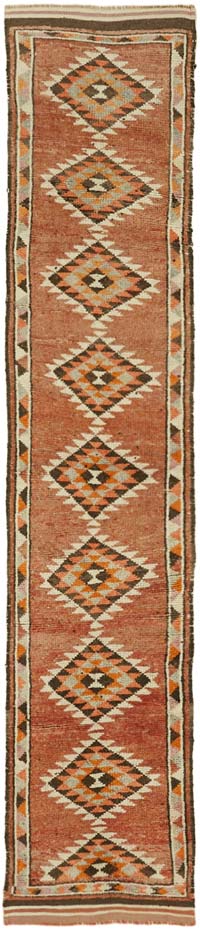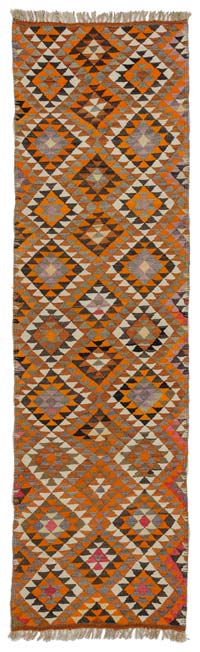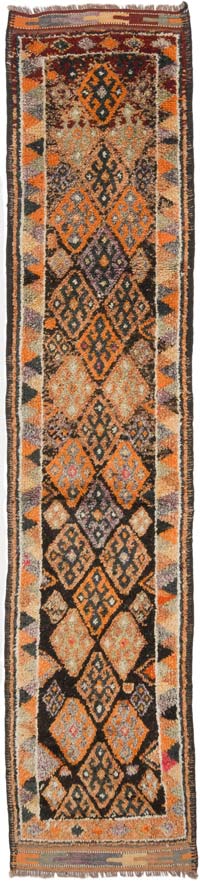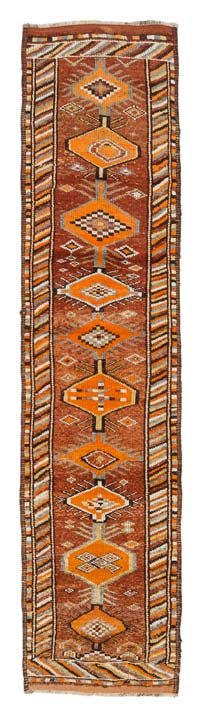
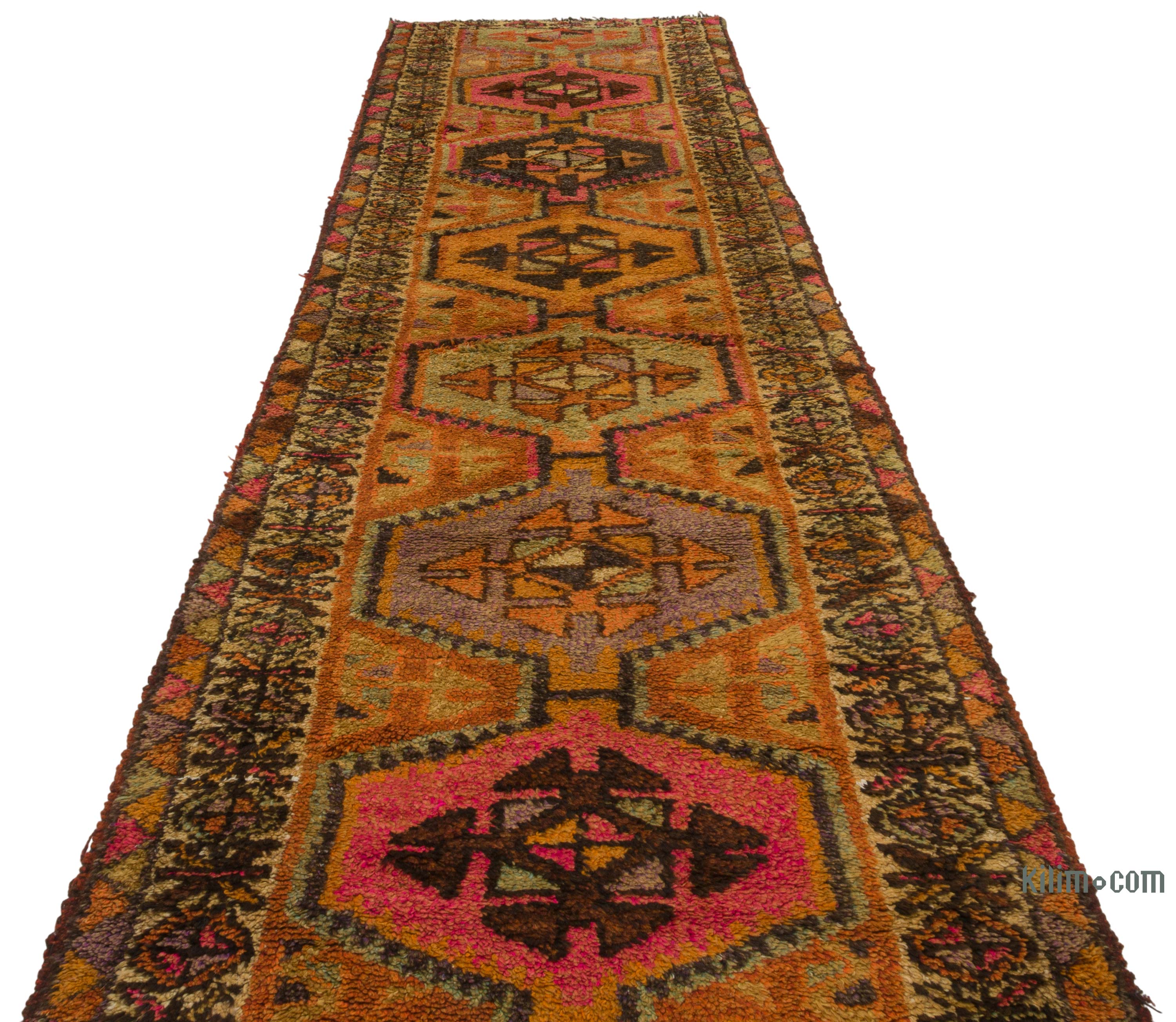
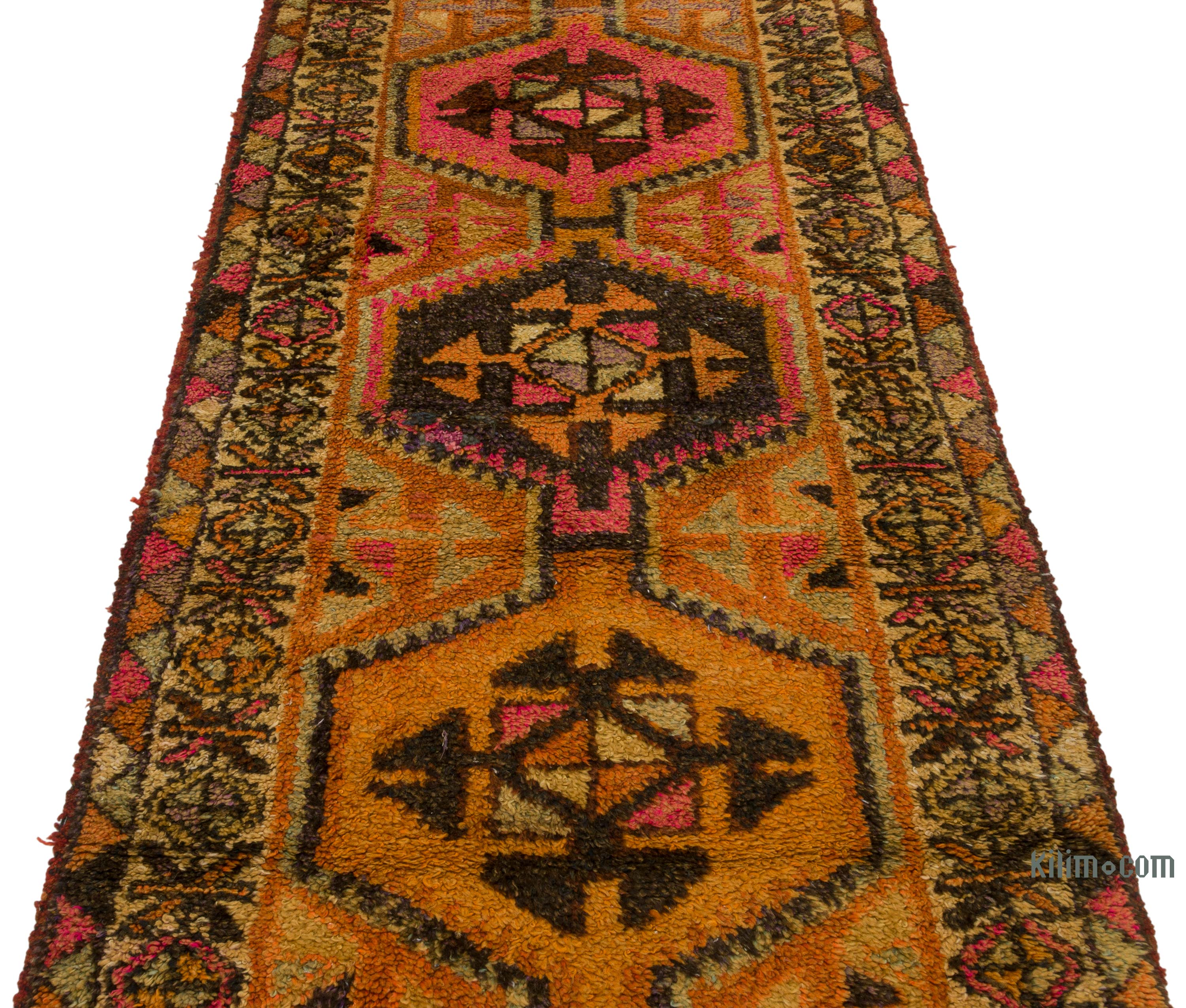
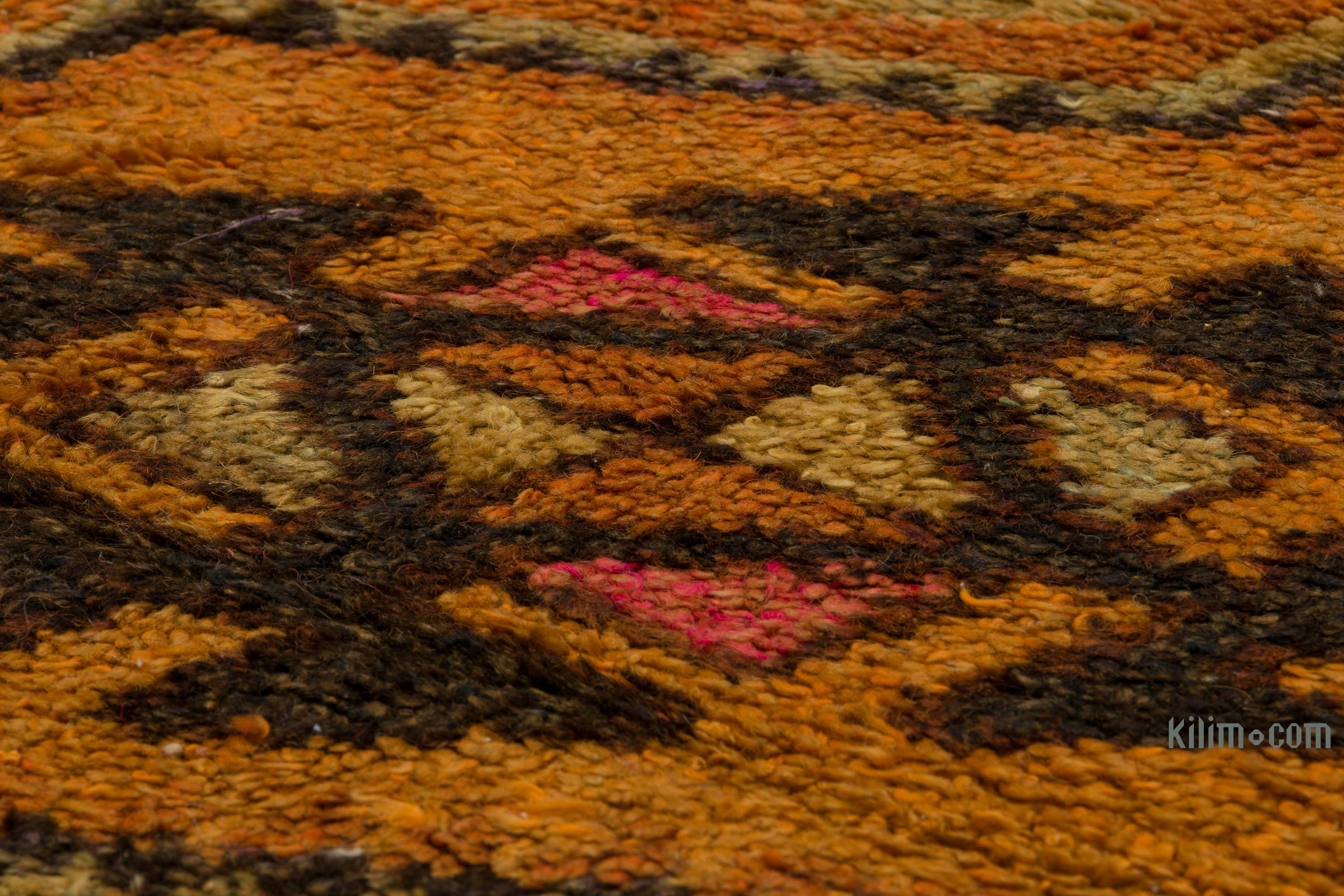
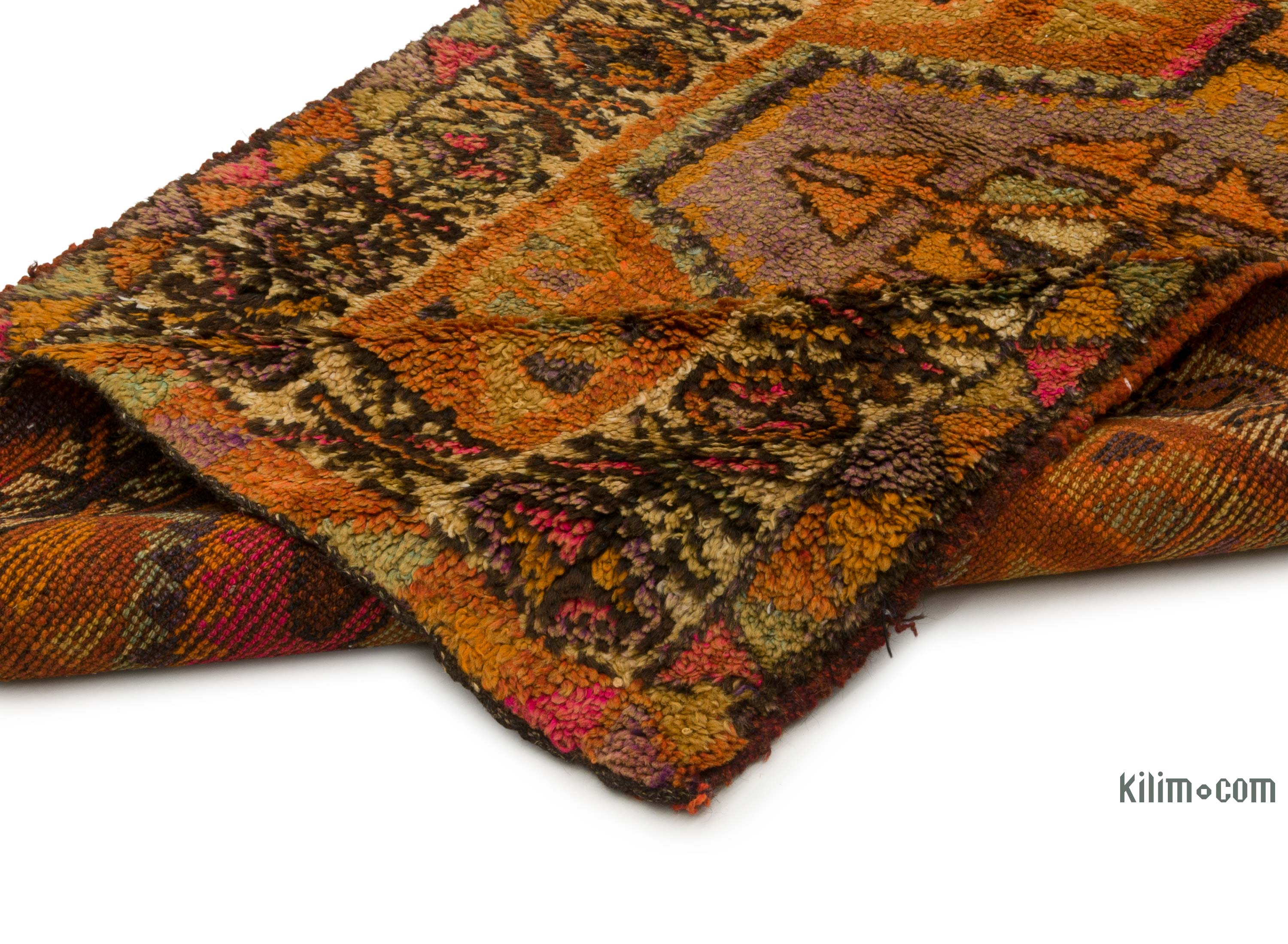
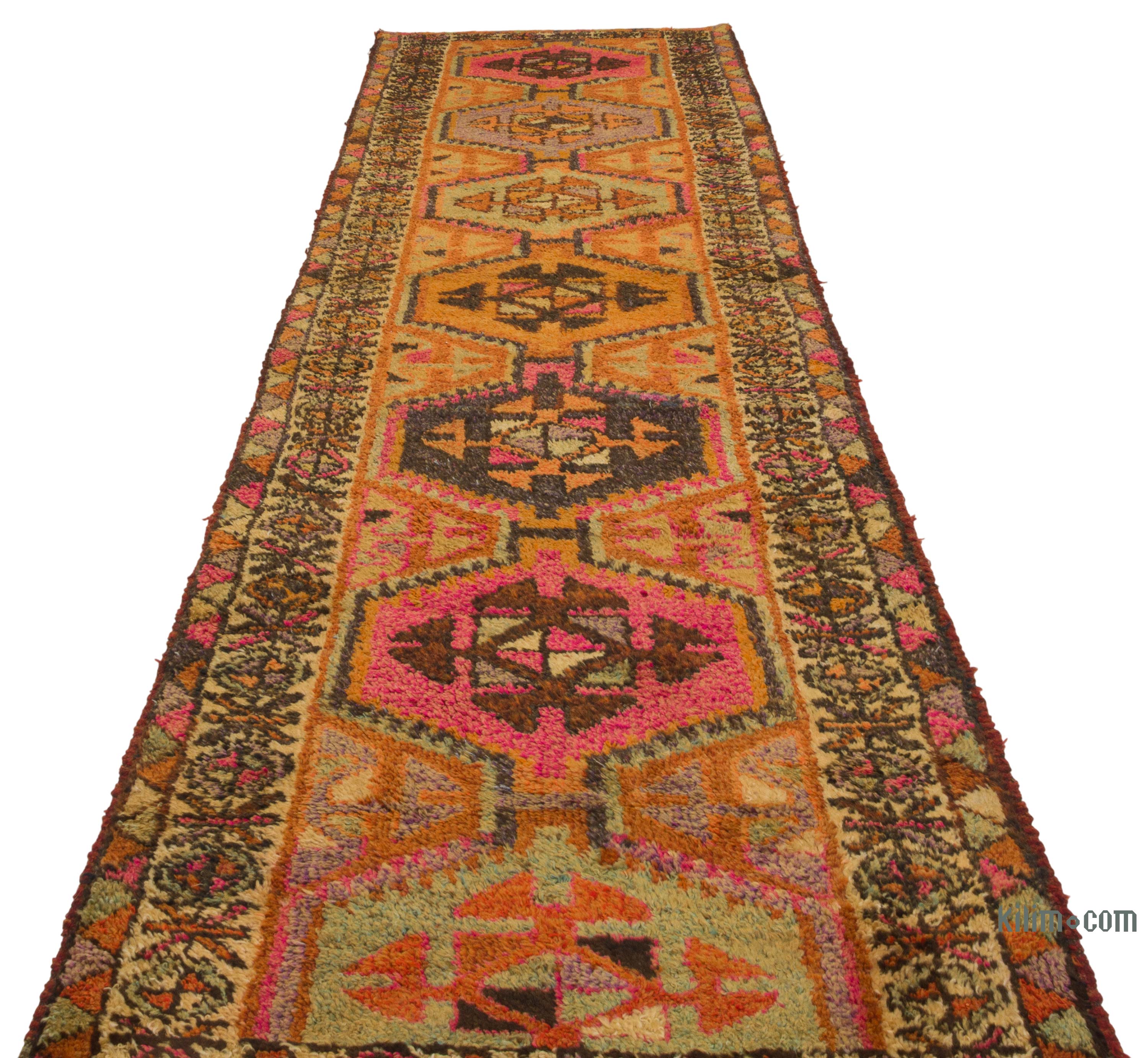
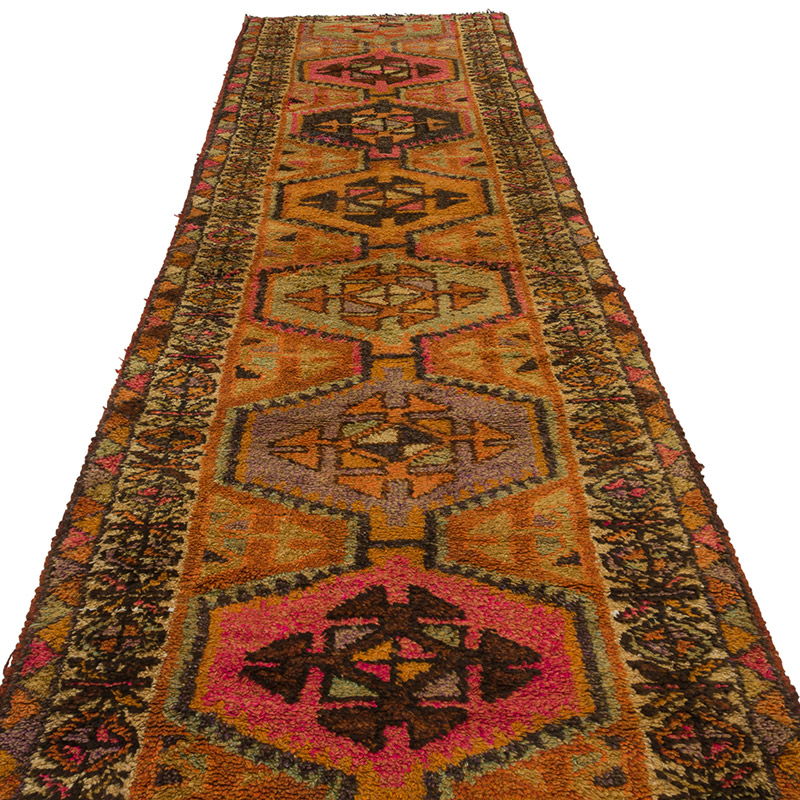

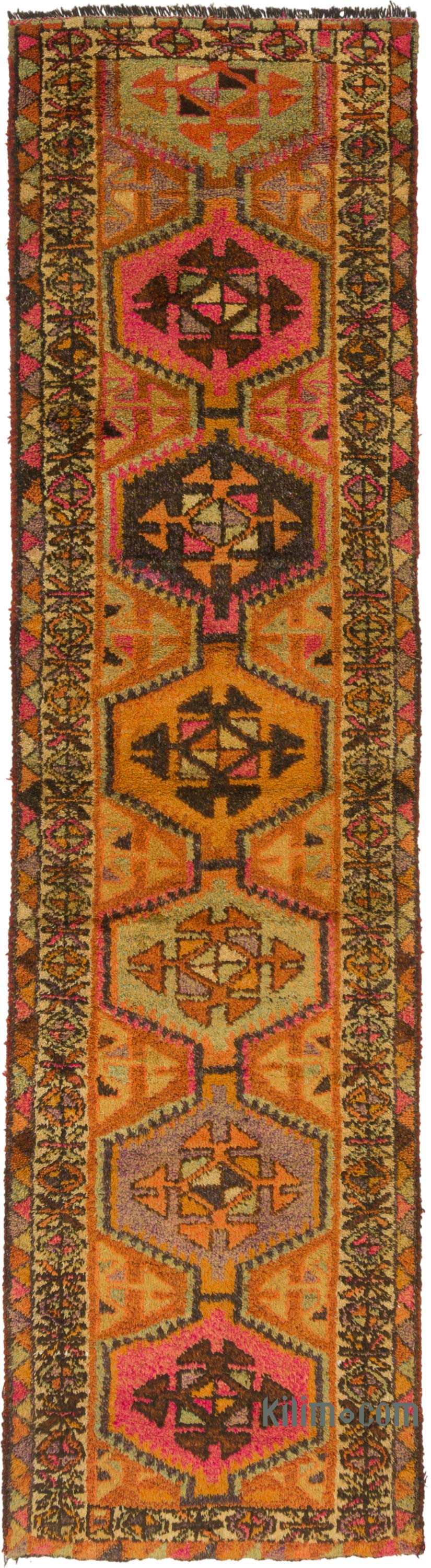
Vintage Tribal Runner Rug 3' 1" x 11' 3" (37" x 135")
Type:
Hand-Knotted RugsCollection:
Tribal RunnersStyle:
TribalID:
K0085342Size:
Material:
- Ships in 2-5 business days
- All of our rugs are professionally cleaned; gentle wear from age and natural irregularities are inherent features of these one-of-a-kind handwoven vintage rugs.
- Only one in stock, handmade, unique
- Free shipping via FedEx Express. Returns & exchanges
- Contact us or add a note to your order if you want us to delay your shipping.
- Request more info if you want this rug shorter or narrower
The designs often feature geometric patterns, symbolic motifs, and a harmonious blend of colors, reflecting the natural landscapes and cultural heritage of the area. These runners not only serve as functional pieces but also as a testament to the enduring legacy of tribal craftsmanship, adding a touch of history and elegance to any space.
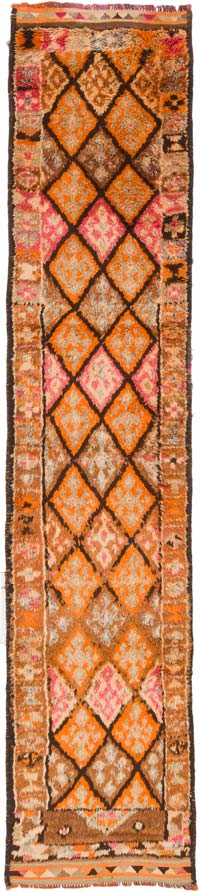
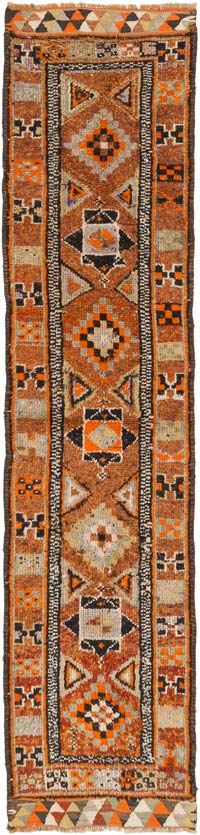
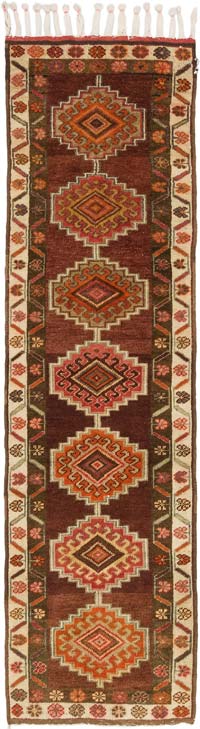
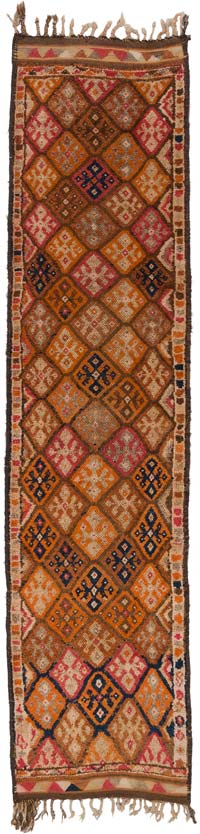
Indulge in vintage charm and bring a piece of Anatolian patterns into your living space with this attractive runner that measures 3' 1" x 11' 3" (37" x 135").
Design and Motifs in Detail
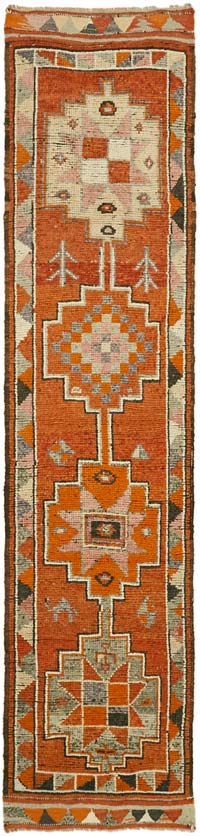
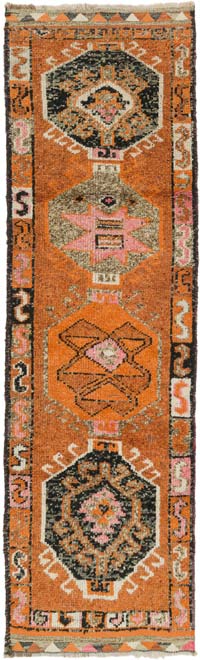
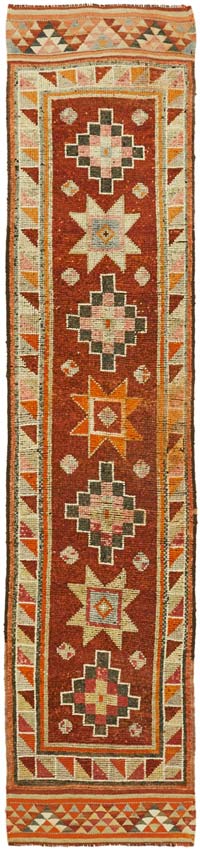
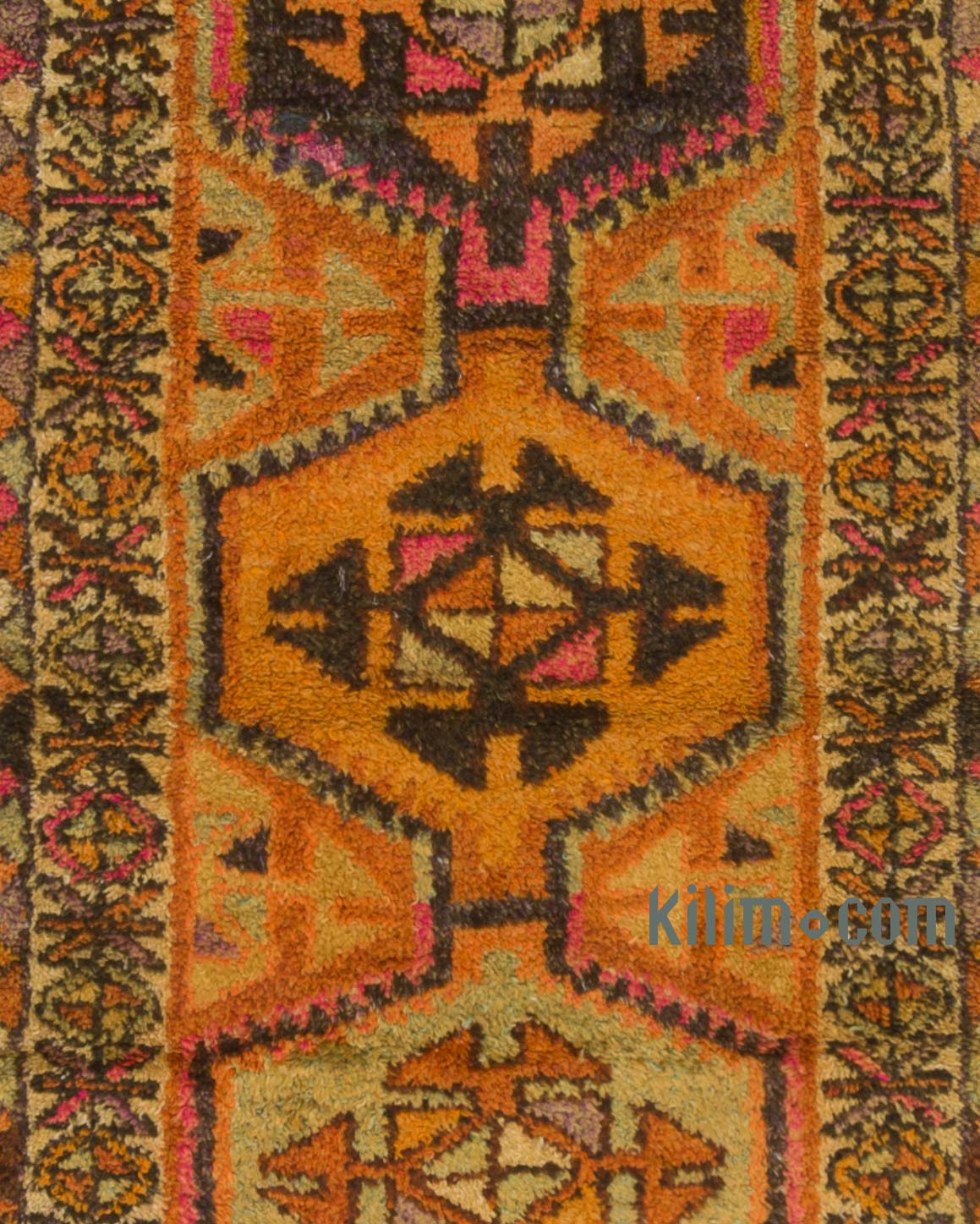
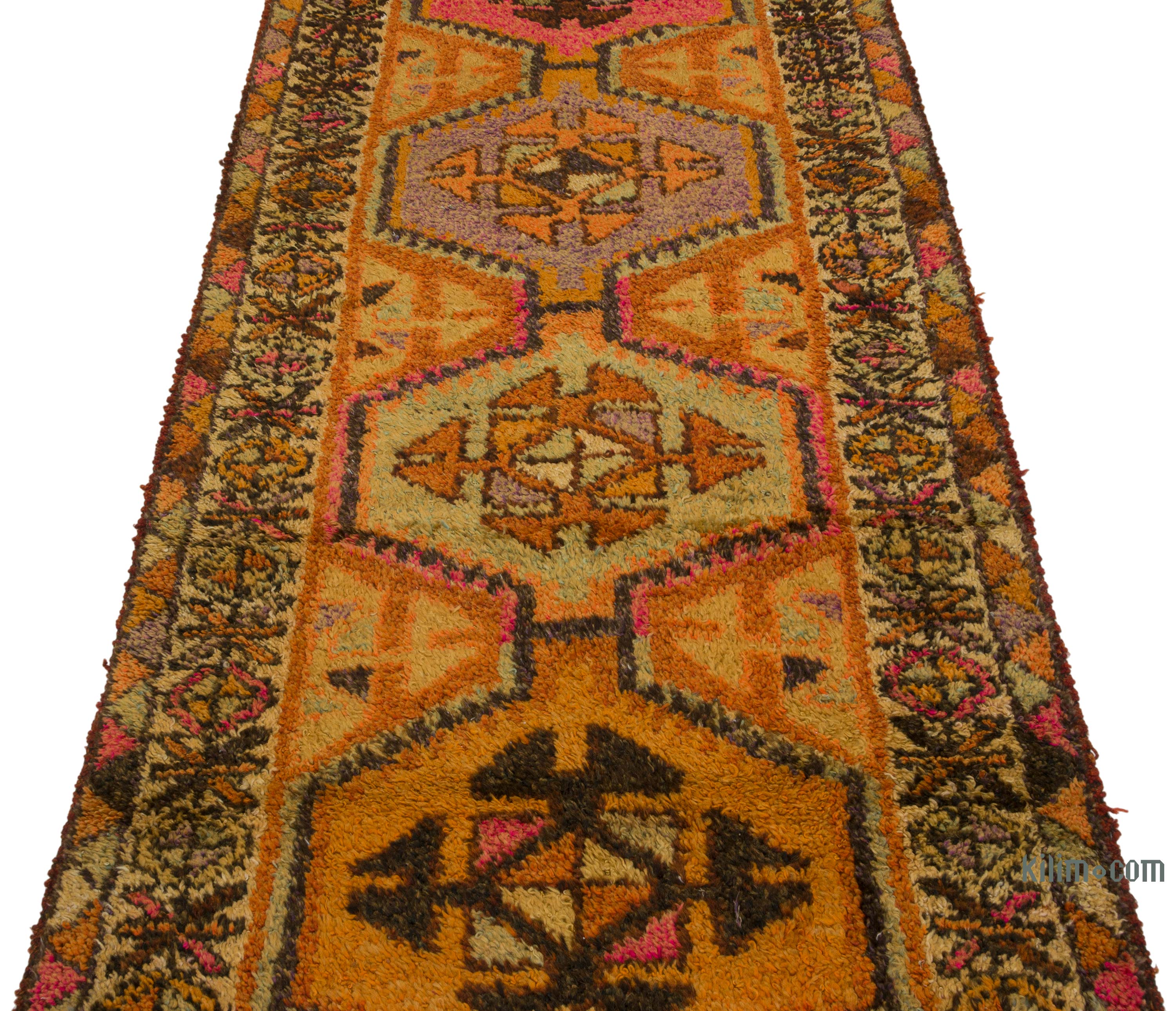
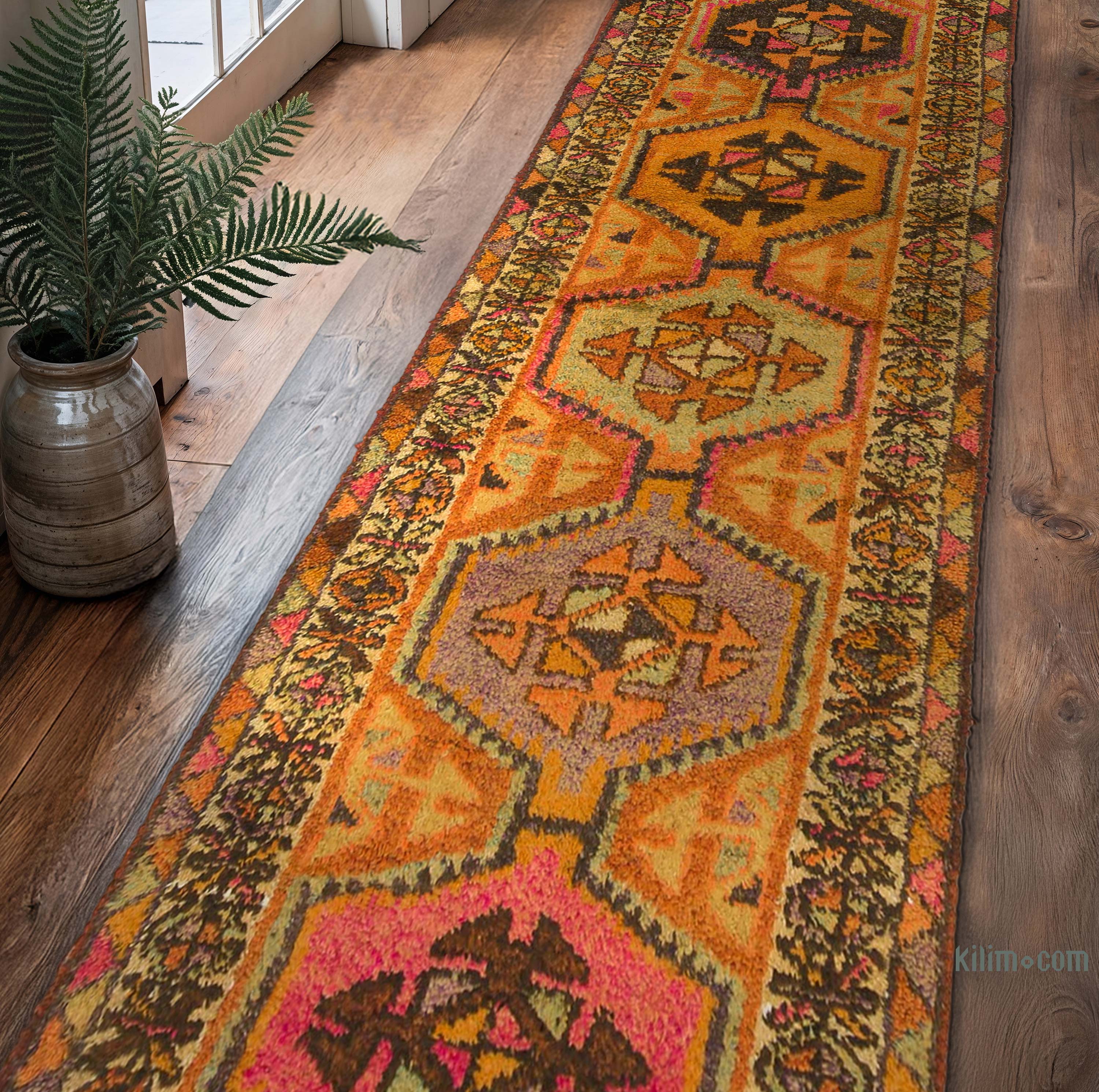
This vibrant kilim runner showcases a distinct geometric design composed of repeated hexagonal medallions, each enclosing intricate traditional motifs. The colors range from rich oranges, deep pinks, burnt sienna, olive greens, and hints of lavender, creating a warm, inviting palette that instantly energizes the space. The motifs within the medallions appear to be stylized arrows and protective symbols common in Anatolian weaving traditions.
- Hexagonal Medallions: Symbolize unity and protection, often representing the weaver’s desire to create a harmonious and secure home environment.
- Arrow Motifs: These point in various directions, typically symbolizing protection from evil, guidance, and a journey toward growth and success.
- Border Patterns: The intricate borders include smaller geometric shapes and floral-inspired elements, evoking fertility, life’s continuity, and resilience in the face of adversity.
- Color Symbolism: The bold orange shades express warmth and vitality, while pinks infuse a touch of joy and celebration. Earthy greens bring balance, grounding the energetic hues with calmness and stability.
Each symbol and color carries stories that reflect the hopes and beliefs of the traditional weaver’s community. They provide both a cultural narrative and a visual texture that transcends simple decoration.
Integrating This Rug with Various Interior Design Styles
- Bohemian: This rug’s vibrant colors and rich patterns are perfect for boho interiors where layering textures and mixing cultures create a carefree, artistic vibe.
- Modern Eclectic: The sharp geometric motifs provide a bold contrast to sleek furniture, pulling together diverse elements and adding character without overwhelming.
- Mid-Century Modern: The earthy palette complements iconic wood tones and streamlined shapes typical of mid-century design, while the rug adds a warm, lived-in feel.
- Rustic and Farmhouse: The handcrafted appeal and warm hues enhance the cozy, natural environment, bringing authenticity and a sense of heritage to country-inspired interiors.
- Contemporary Minimalist: While subtle and restrained, this rug introduces pops of color and pattern that break up clean lines, preventing the space from feeling overly sterile.
Beyond its visual appeal, the rug’s storytelling through motifs invites meaningful connection, making it more than a decorative accent—it becomes a piece that enriches the ambiance wherever it’s placed.
Explore more Kilim motifs and symbols to understand the timeless cultural expressions woven into each rug.
Rolling Up
- This runner features hexagonal medallions packed with protective arrow motifs and vibrant borders representing fertility and life.
- Its warm and lively color palette combines earthy tones with joyful pinks to balance energy and calm.
- The design stories reflect the rich cultural heritage and the weaver’s aspirations and beliefs about protection and abundance.
- It integrates beautifully with styles ranging from Bohemian and Mid-Century Modern to Rustic and Contemporary, offering both visual delight and emotional warmth.
- Bringing this rug into your space adds a profound cultural narrative alongside a striking artistic statement.
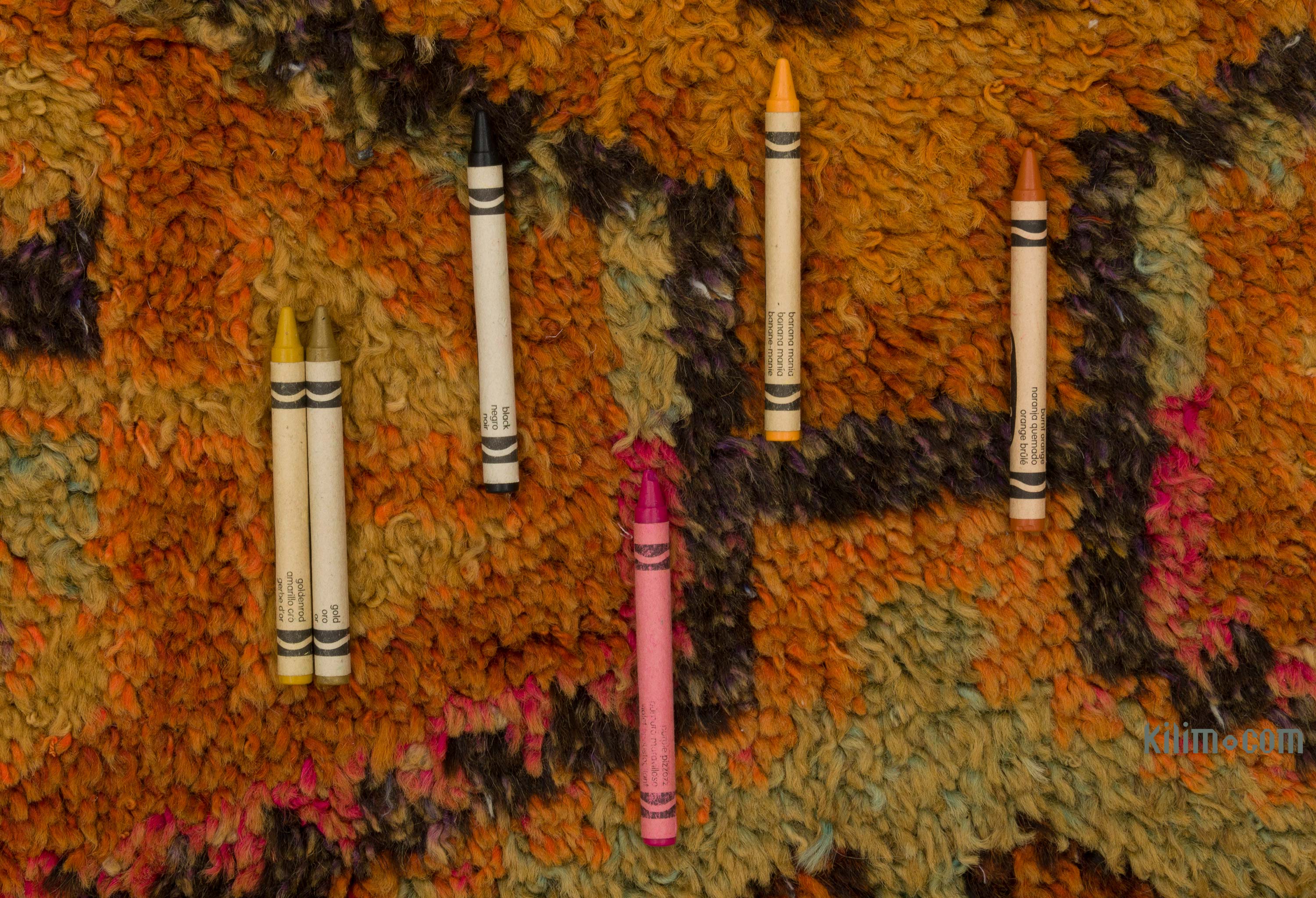
Colors may appear slightly different across various monitors due to screen settings device differences, and external lighting conditions. If color accuracy is important for your space, we recommend viewing the rug on multiple devices or contacting us for a detailed color description. We can provide detailed photos and references using Sherwin-Williams, Benjamin Moore, Pantone, or even Crayola crayons.
You can also visualize most of our products in your own room with AR (augmented reality) on an iPhone or iPad.
Return Policy
Need a rug pad? We recommend RugPadUSA