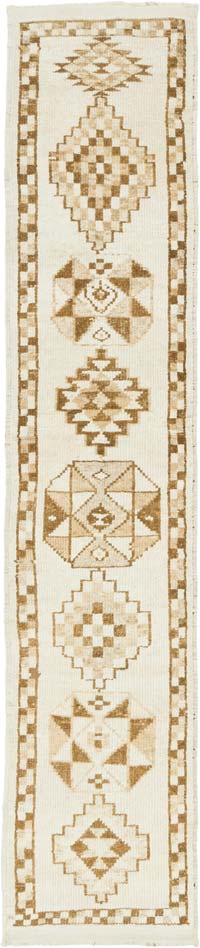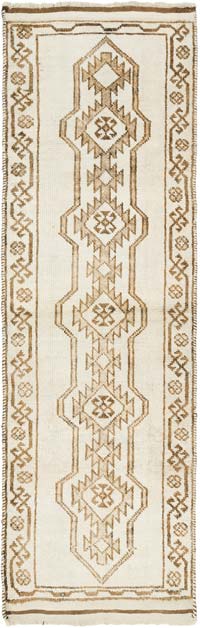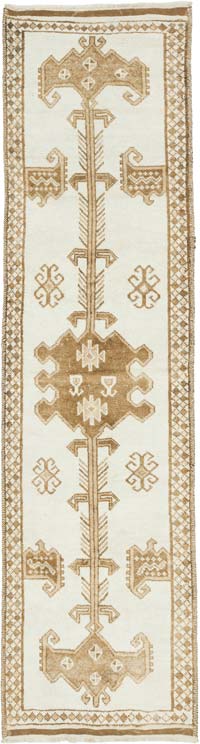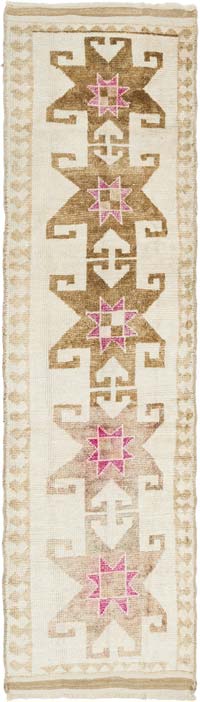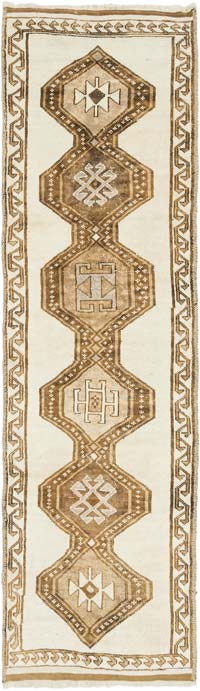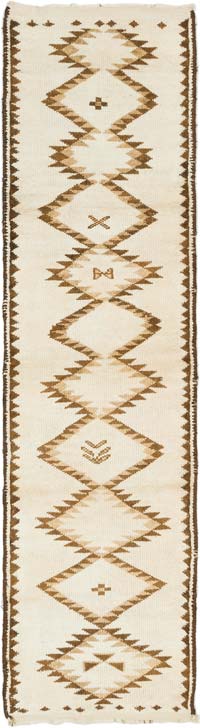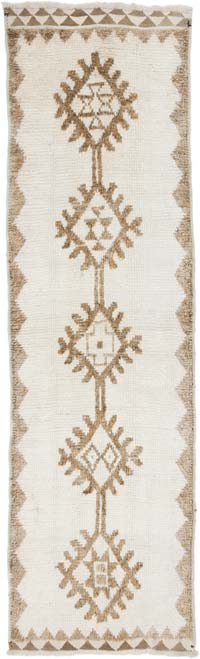
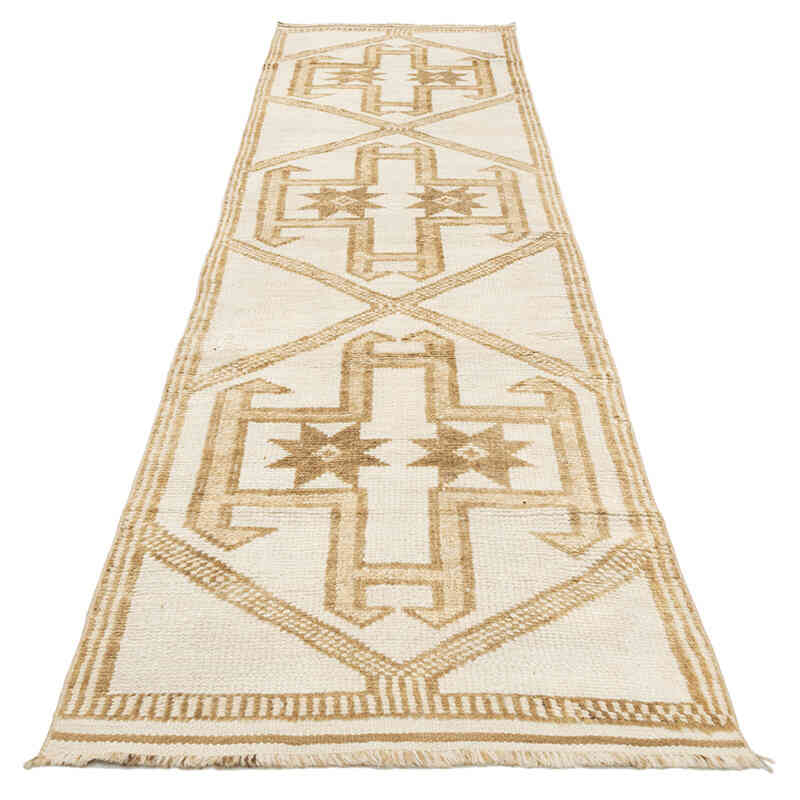

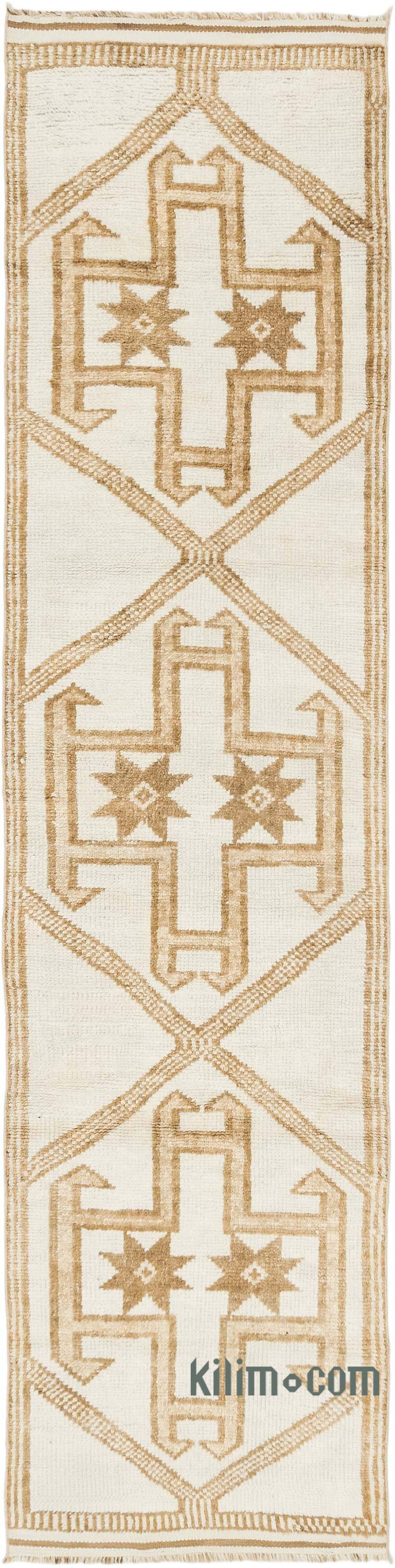
Vintage Tribal Runner Rug 2' 10" x 11' 7" (34" x 139")
Type:
Hand-Knotted RugsCollection:
Tribal RunnersStyle:
TribalID:
K0077825Size:
Material:
- Ships in 2-5 business days
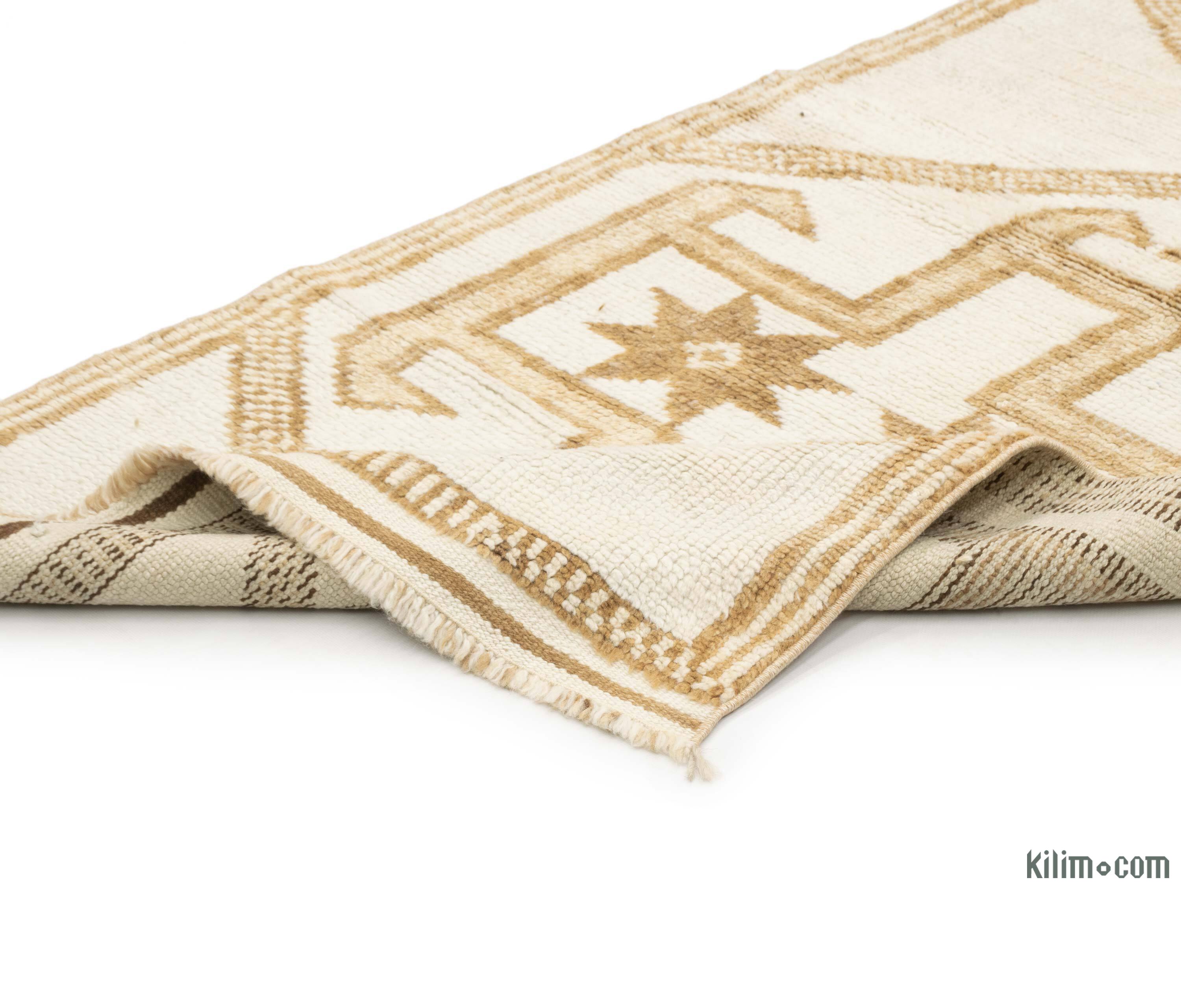
- All of our rugs are professionally cleaned; gentle wear from age and natural irregularities are inherent features of these one-of-a-kind handwoven vintage rugs.
- Only one in stock, handmade, unique
- Free shipping via FedEx Express. Returns & exchanges
- Contact us or add a note to your order if you want us to delay your shipping.
- Request more info if you want this rug shorter or narrower
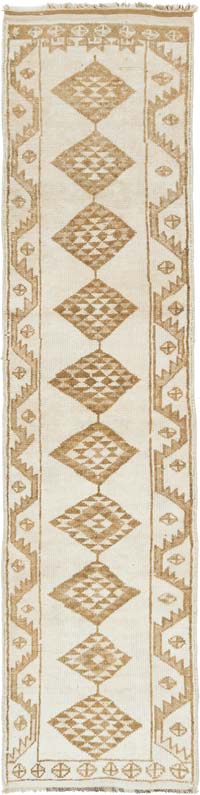
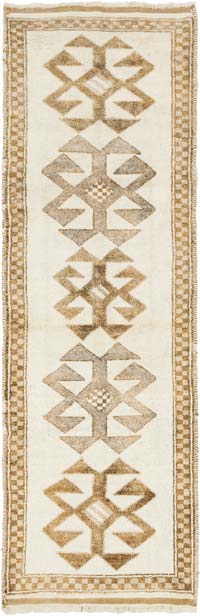
The designs often feature geometric patterns, symbolic motifs, and a harmonious blend of colors, reflecting the natural landscapes and cultural heritage of the area. These runners not only serve as functional pieces but also as a testament to the enduring legacy of tribal craftsmanship, adding a touch of history and elegance to any space.
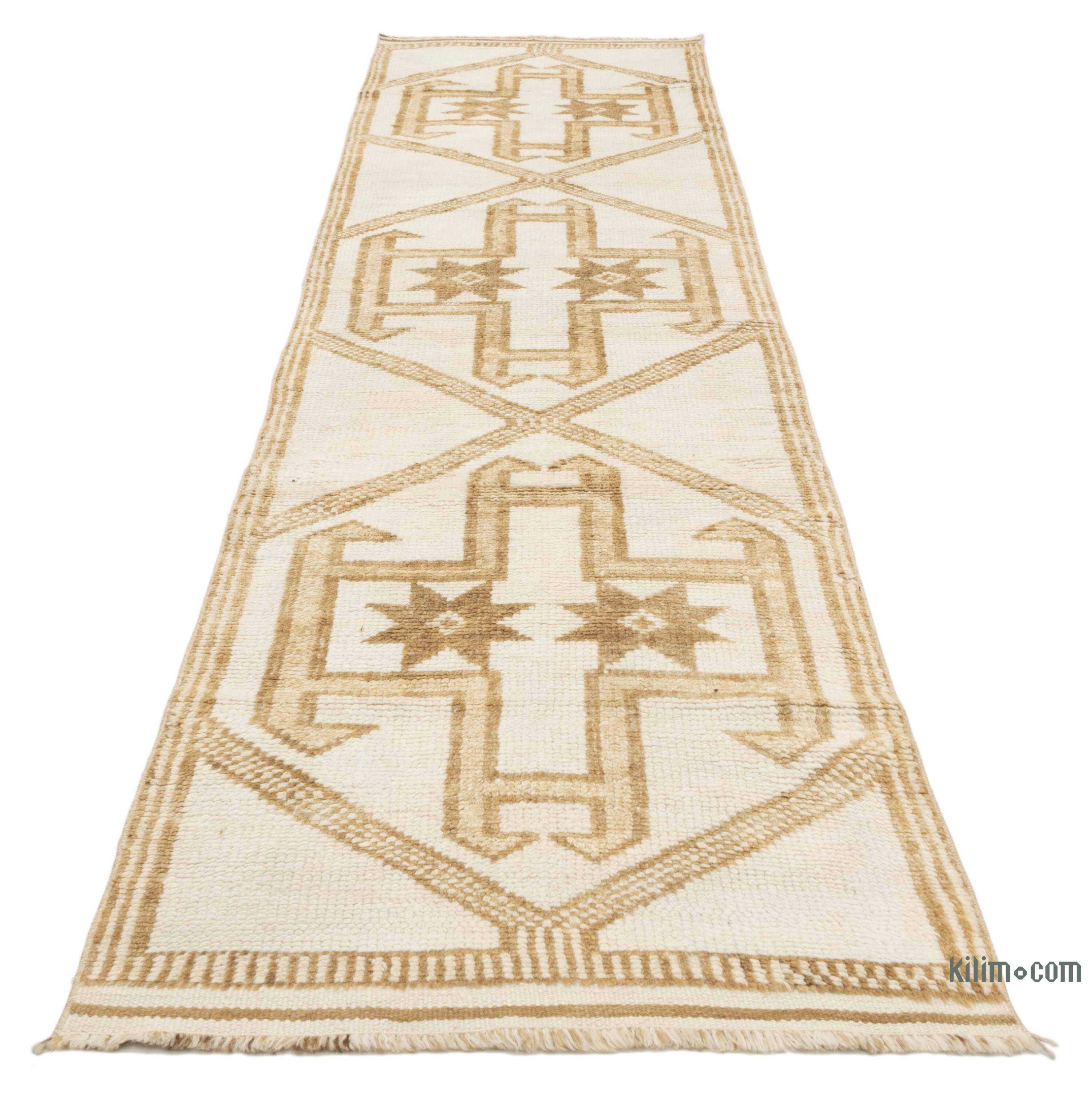
Indulge in vintage charm and bring a piece of Anatolian patterns into your living space with this attractive runner that measures 2' 10" x 11' 7" (34" x 139").
Design and Motifs of the Rug
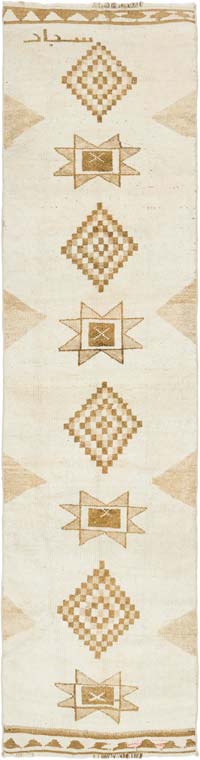
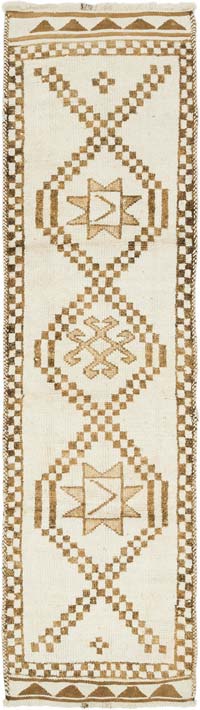
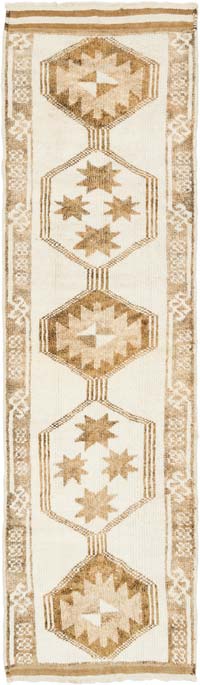
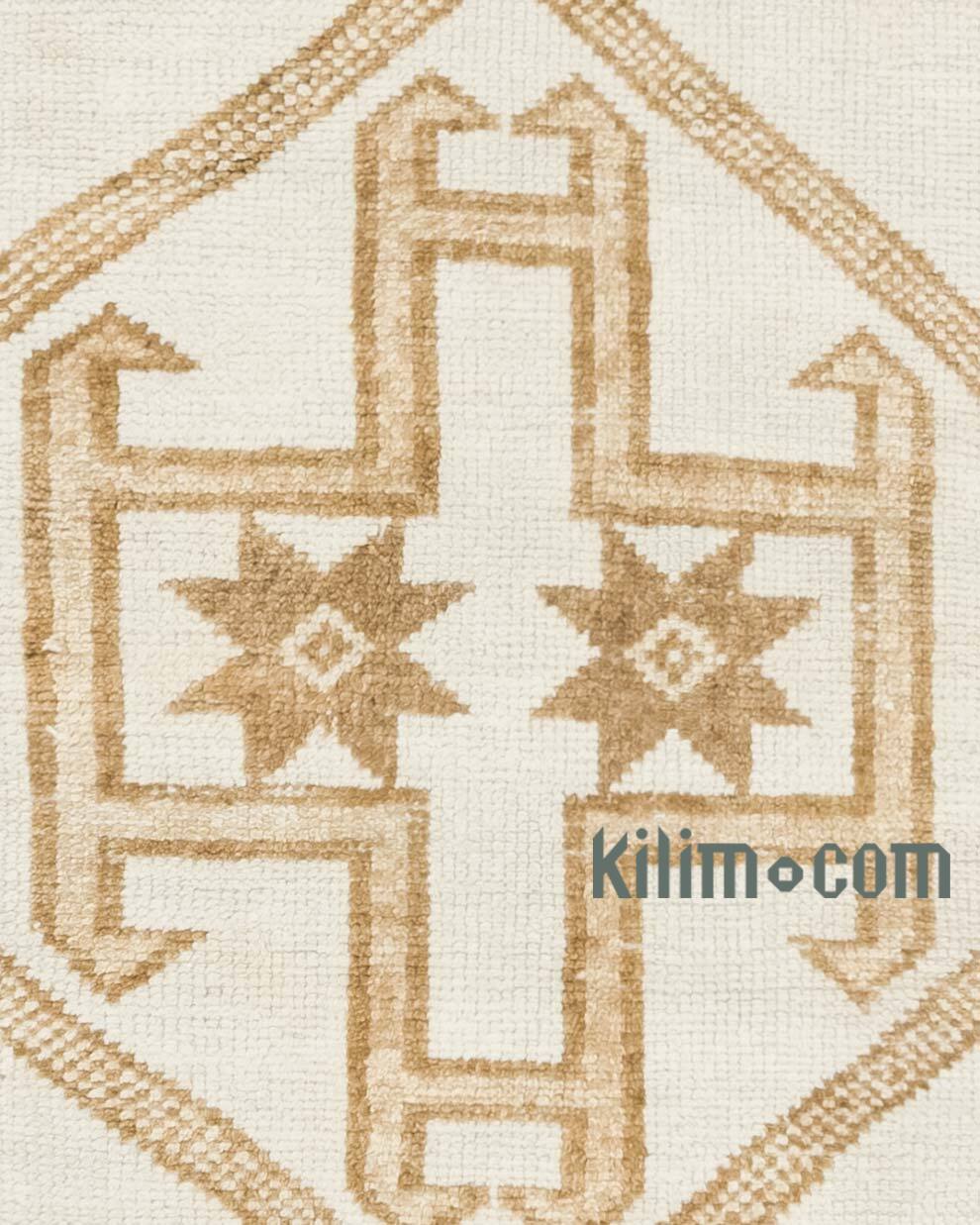
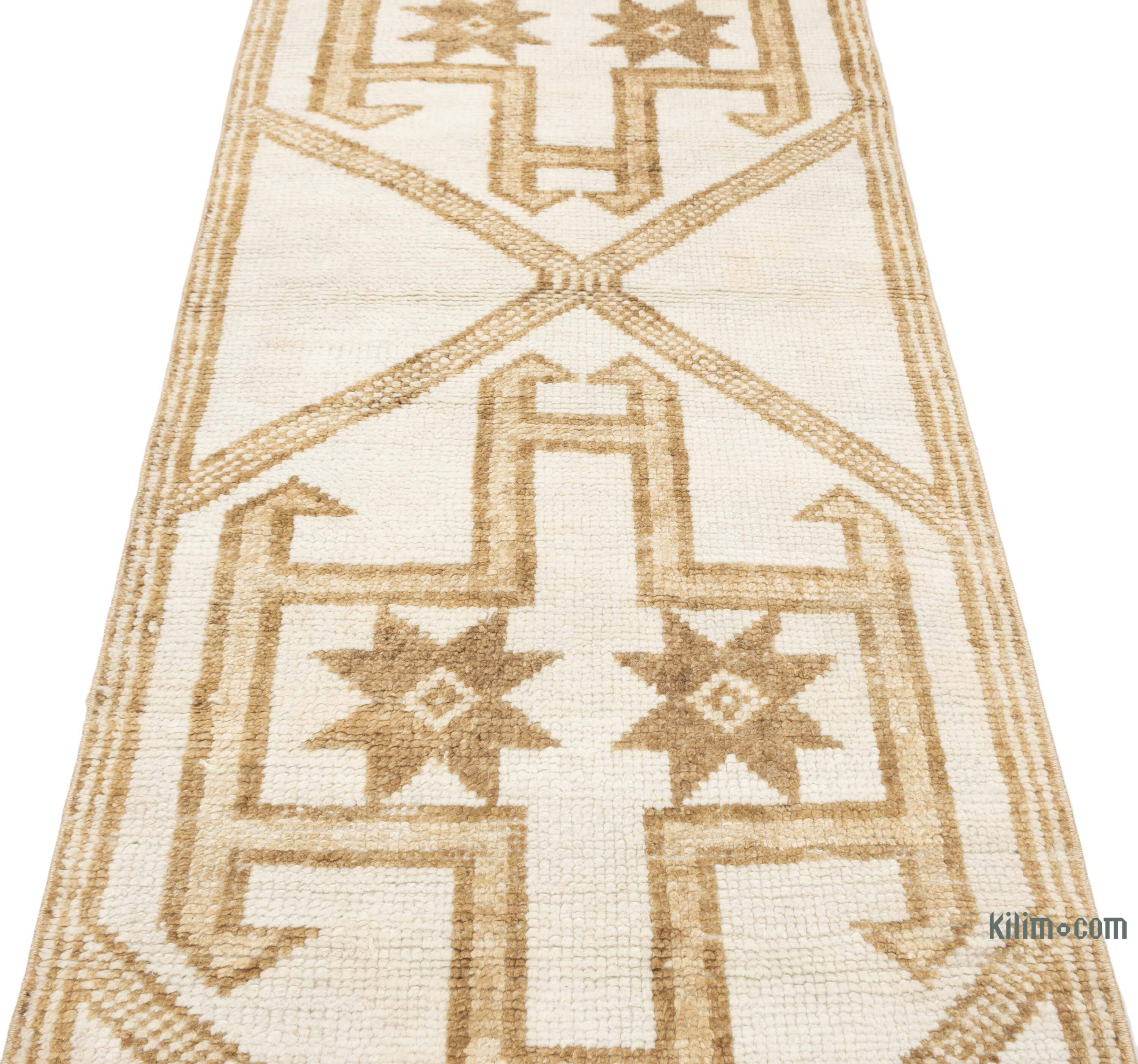
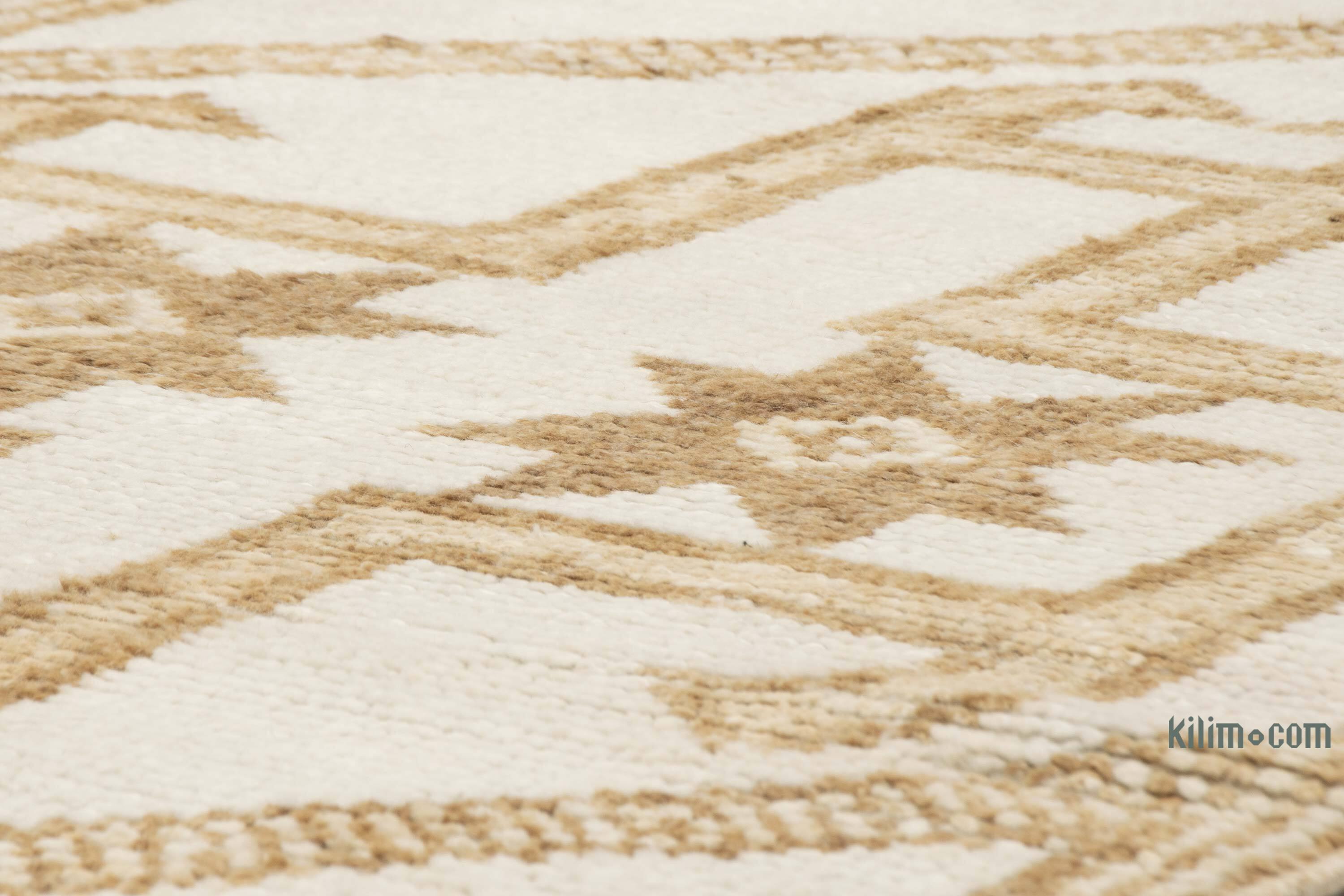
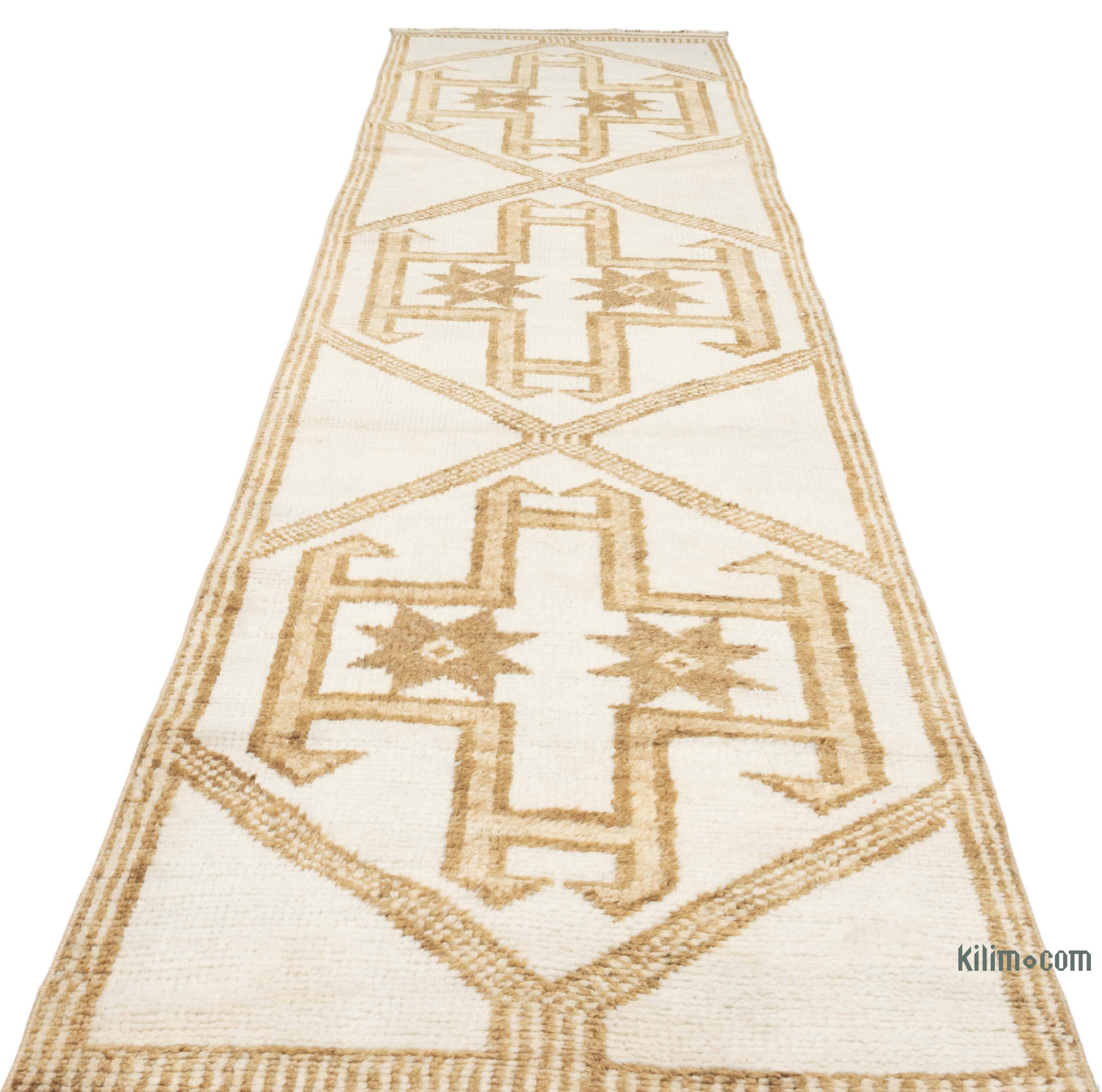
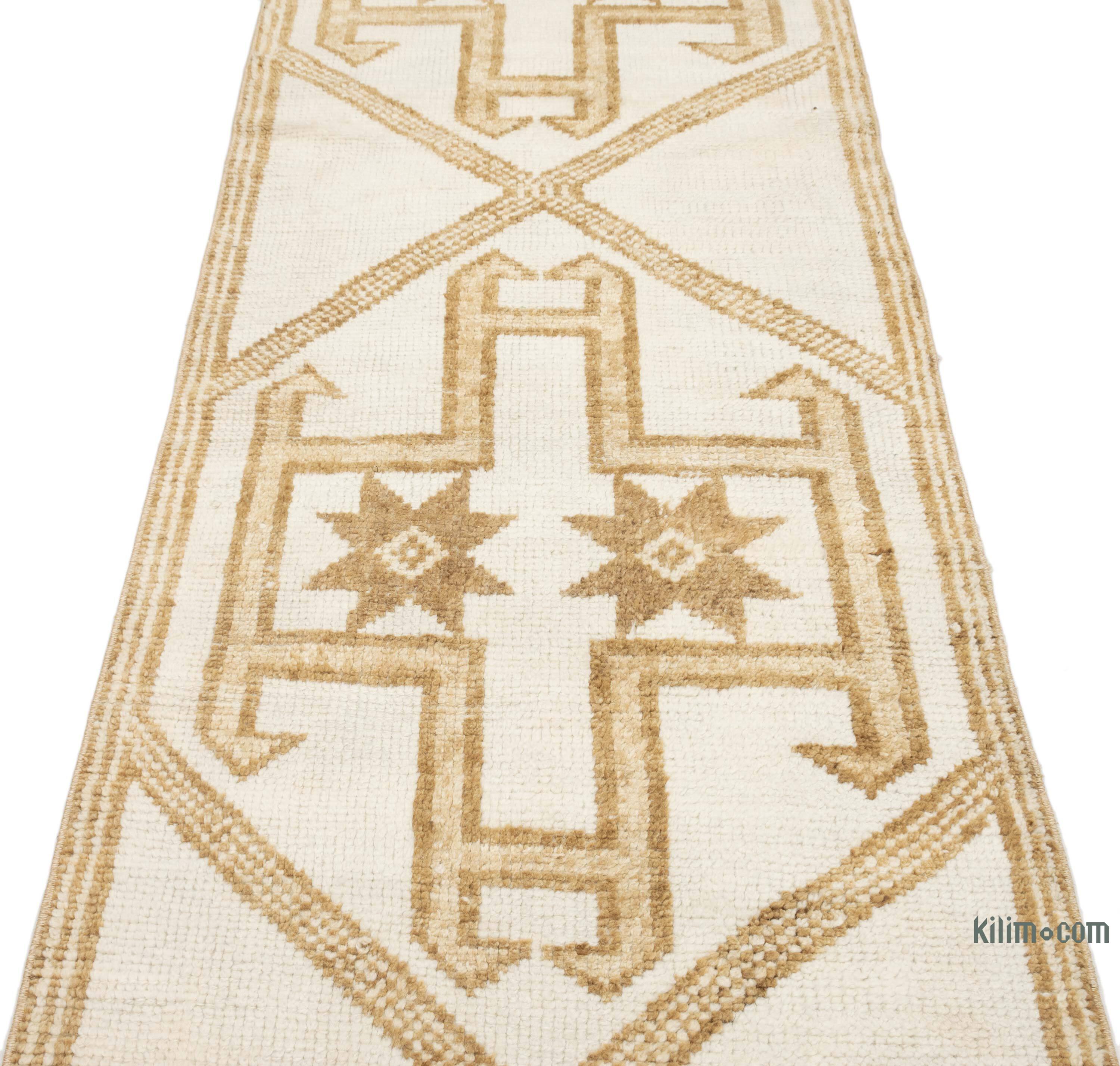
This rug showcases a stunningly minimalist yet deeply meaningful design rooted in classic Anatolian tradition. The base is a soft off-white, serving as a serene canvas for the warm beige geometric patterns that dominate the piece. The central motifs feature a repeating rectangular cross shape encased within hexagonal frames. Each cross is accompanied by two eight-pointed stars, a pairing that imbues the design with both balance and depth.
- The Cross Motif: Traditionally, the cross in Anatolian kilims often symbolizes protection and spiritual guidance. It stands as a guardian symbol, meant to ward off evil and provide safety to the household. The angular, maze-like extensions on each cross add complexity, echoing resilience and an ongoing journey.
- Eight-Pointed Star: This star is a common motif in Turkish rugs, representing good fortune, harmony, and the wishes for abundance and happiness. Positioned beside the cross, it enhances the protective qualities with an optimistic outlook on life’s blessings.
- Geometric Borders: The subtle linear frame around the edges highlights the rug’s craftsmanship while encapsulating the motifs in a refined boundary, symbolizing order and stability.
These motifs are reflections of the weavers’ lives—their hopes for safety, prosperity, and harmony living vibrantly through every knot and pattern. You can explore more about these motifs in detail by visiting Kilim Motifs and Symbols.
Integration with Interior Design Styles
This rug’s neutral palette and geometric design make it an incredibly versatile piece that elevates a variety of interior decor styles:
- Modern Minimalism: The simple color scheme and clean lines complement minimalist spaces by adding unexpected warmth without overwhelming the calm, uncluttered aesthetic.
- Scandinavian: Its light, natural tones and geometric motifs resonate well with Scandinavian design’s love for coziness and functional beauty, lending texture and grounding airy, light-filled rooms.
- Bohemian: Layered with other textiles and eclectic furnishings, this rug introduces a subtle yet meaningful pattern that enriches the space with cultural depth and handcrafted charm.
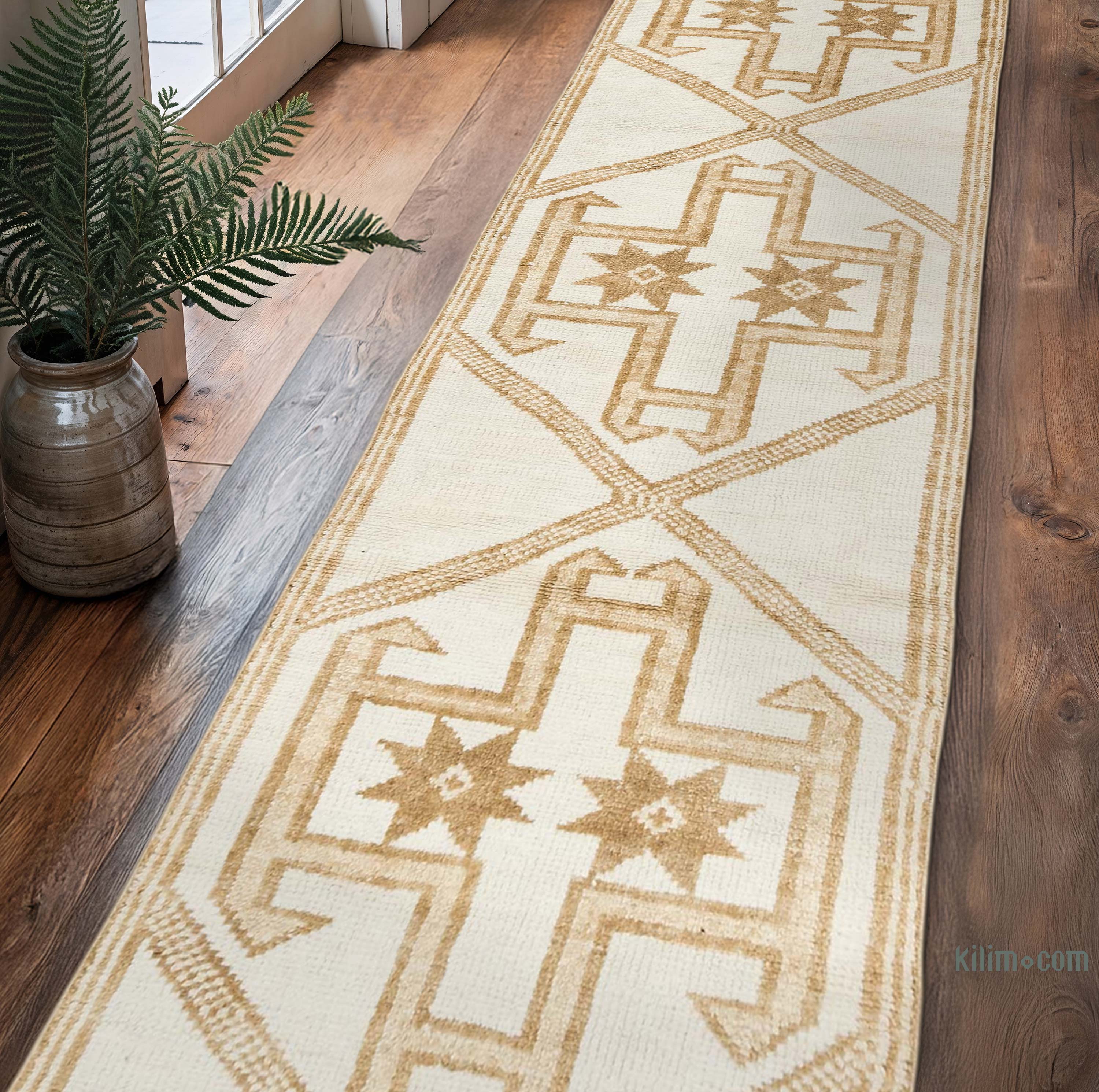
- Rustic and Farmhouse: The earthy beige and traditional patterns connect beautifully with natural wood and organic materials, reinforcing a sense of homey comfort and timelessness.
- Contemporary: In contemporary settings, the rug acts as an artistic statement piece that draws the eye while keeping the overall look sophisticated and balanced.
Its design tells a story that transcends cultures and epochs, making it a thoughtful addition whether placed in a cozy reading nook, a bustling hallway, or an elegant living space.
Rolling Up
- The rug features prominent Anatolian motifs—crosses symbolizing protection and eight-pointed stars representing good fortune and harmony.
- Its warm beige and off-white color palette offers subtle elegance and timeless appeal.
- The geometric design and muted tones allow it to harmonize seamlessly with multiple interior styles, from minimalist to rustic.
- This piece enriches spaces with cultural symbolism and handcrafted artistry, making it a meaningful and functional decor element.
- Explore the rich significance behind these motifs by visiting Kilim Motifs and Symbols.
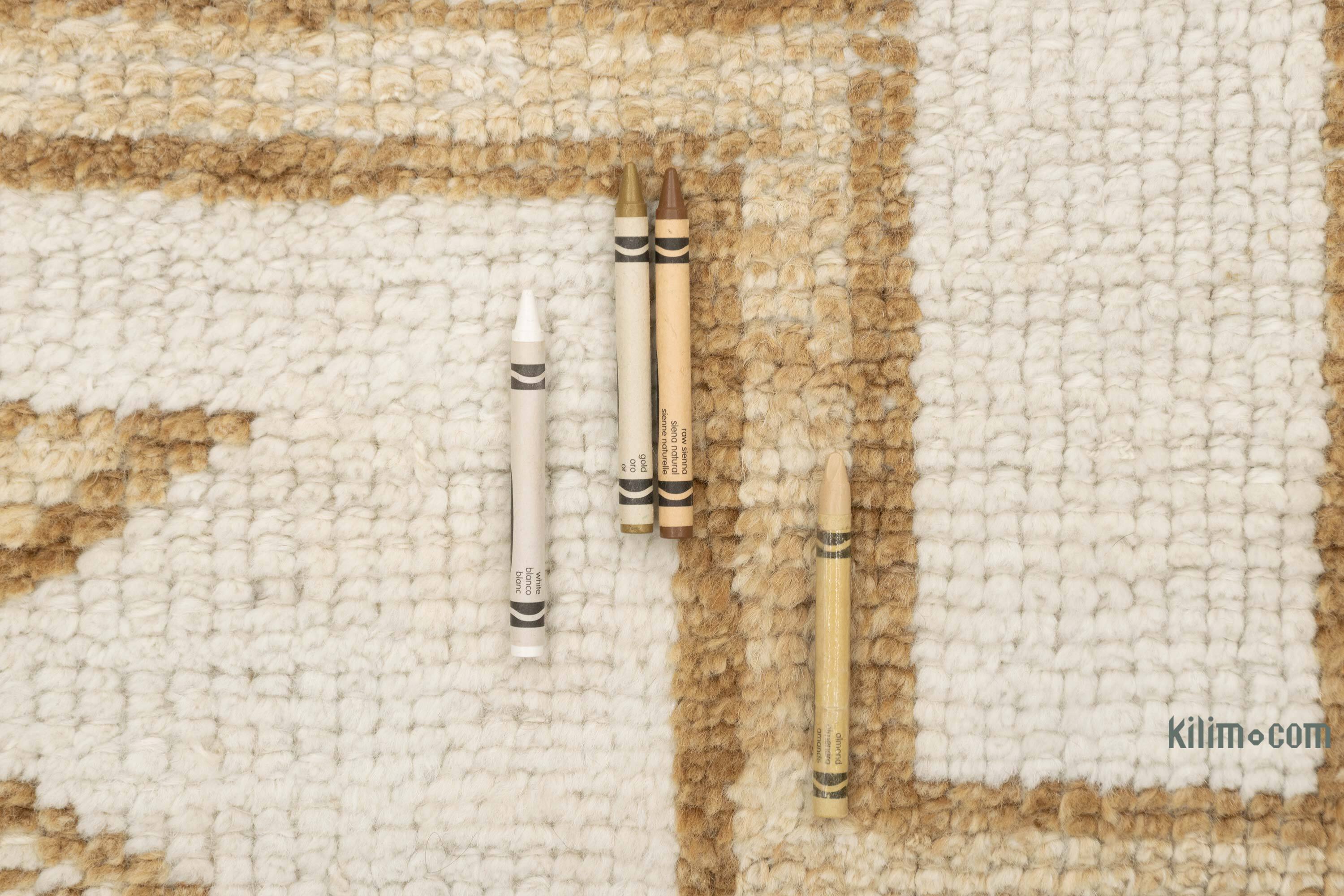
Colors may appear slightly different across various monitors due to screen settings device differences, and external lighting conditions. If color accuracy is important for your space, we recommend viewing the rug on multiple devices or contacting us for a detailed color description. We can provide detailed photos and references using Sherwin-Williams, Benjamin Moore, Pantone, or even Crayola crayons.
You can also visualize most of our products in your own room with AR (augmented reality) on an iPhone or iPad.
Return Policy
Need a rug pad? We recommend RugPadUSA