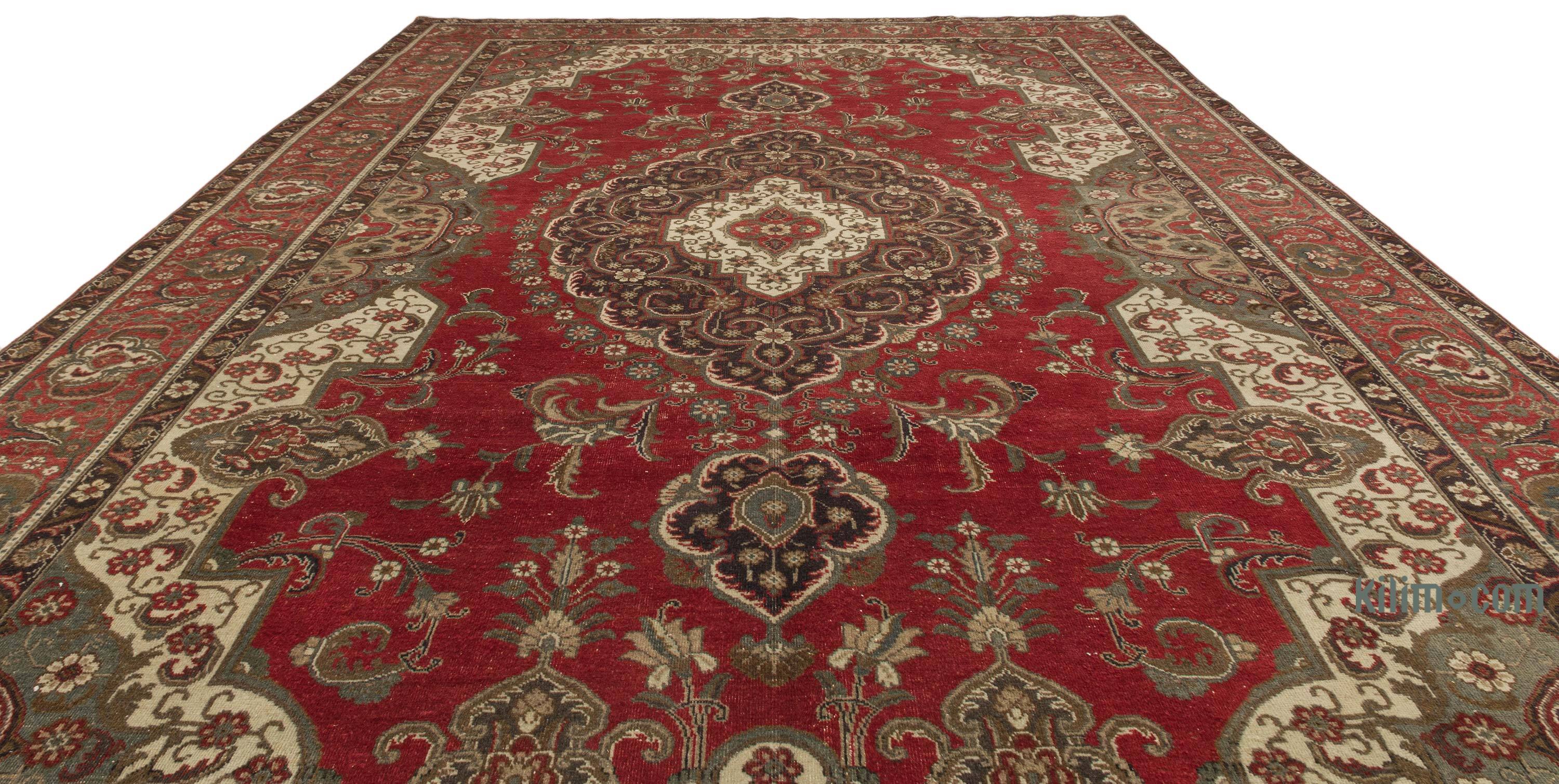
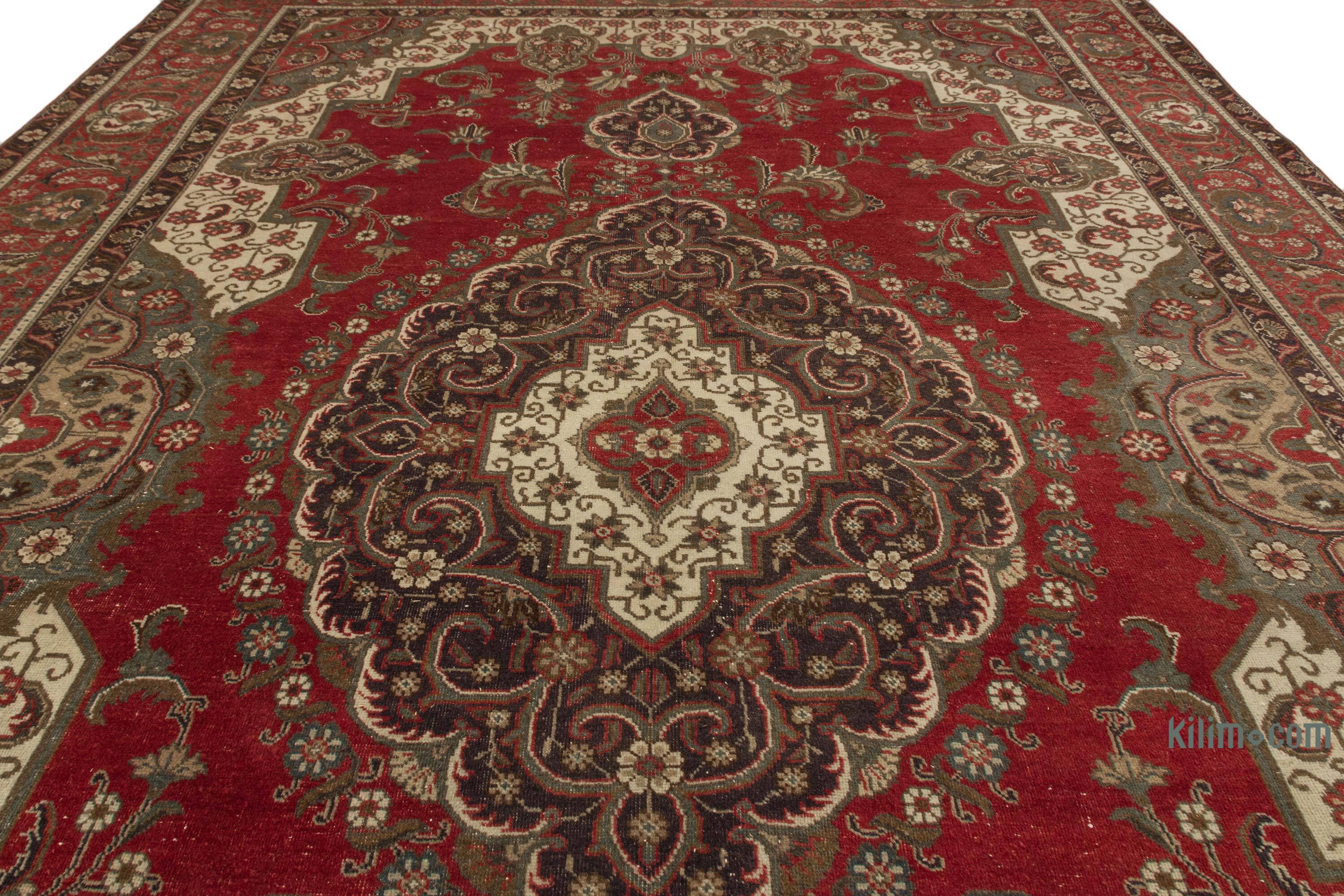
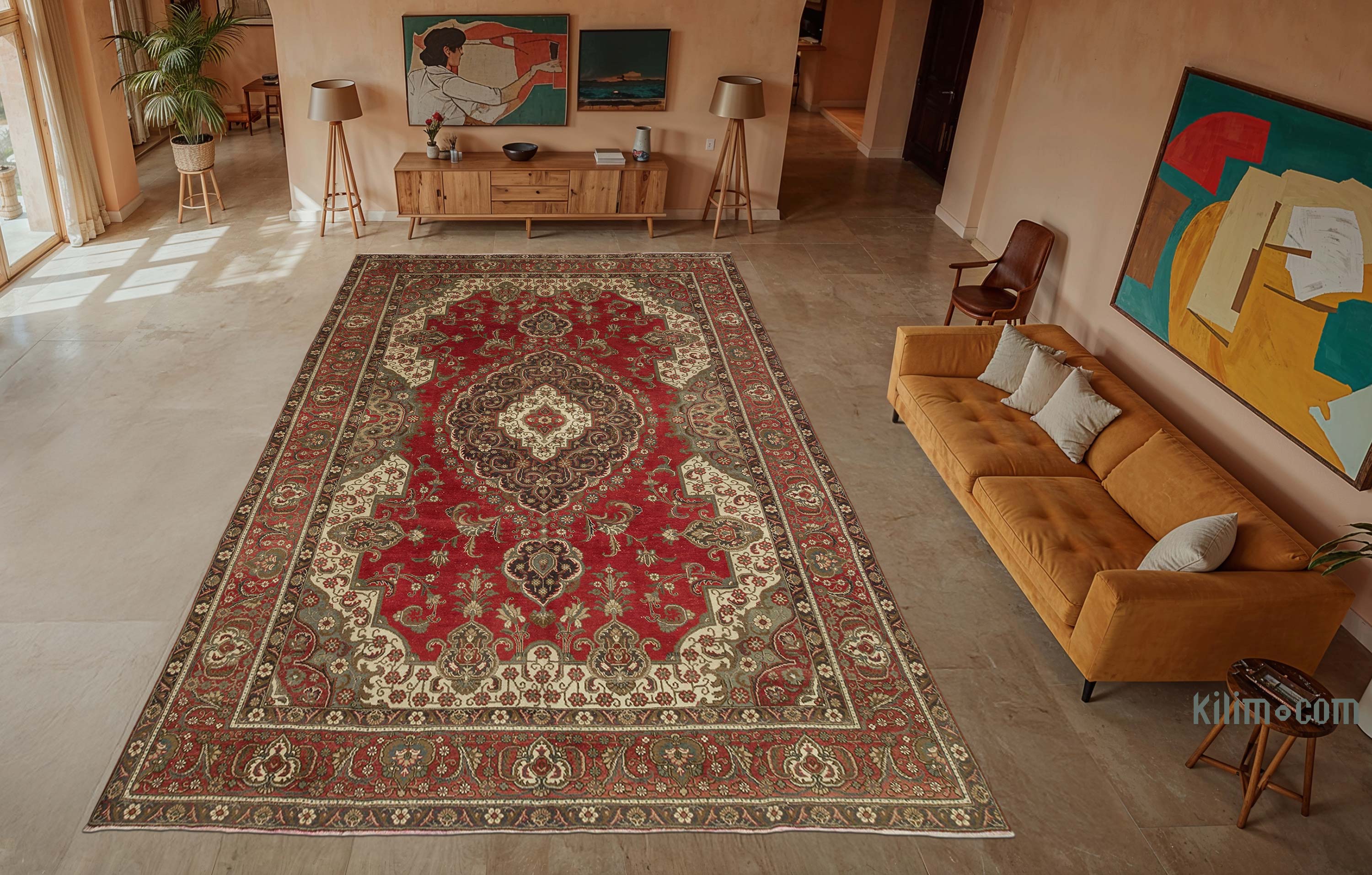

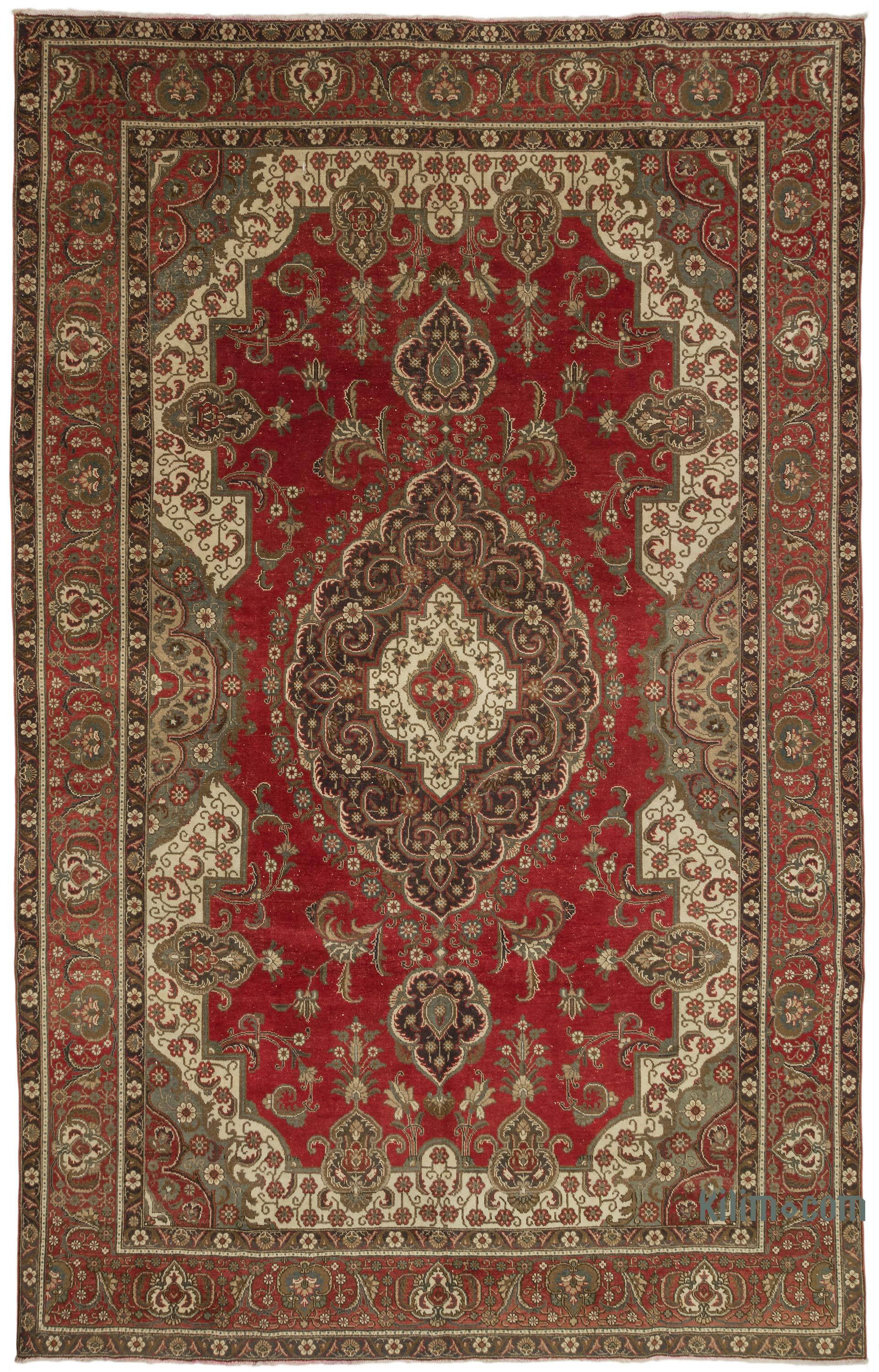
Vintage Hand-Knotted Oriental Rug 9' 10" x 15' 6" (118" x 186")
Type:
Hand-Knotted RugsCollection:
Oriental RugsStyle:
TraditionalID:
K0075427Size:
Material:
- Ships in 2-5 business days
- All of our rugs are professionally cleaned; gentle wear from age and natural irregularities are inherent features of these one-of-a-kind handwoven vintage rugs.
- Only one in stock, handmade, unique
- Free shipping via FedEx Express. Returns & exchanges
- Contact us or add a note to your order if you want us to delay your shipping.
- Request more info if you want this rug shorter or narrower
Design Elements of the Rug
Overall Design
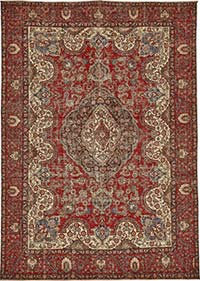
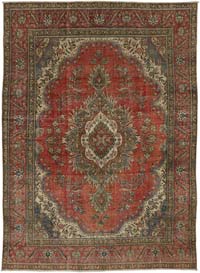
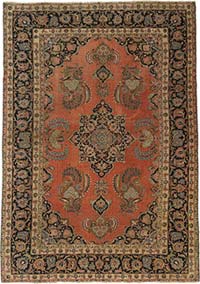
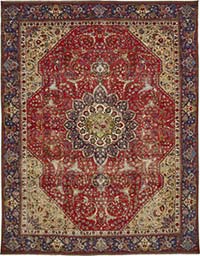
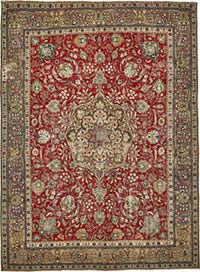
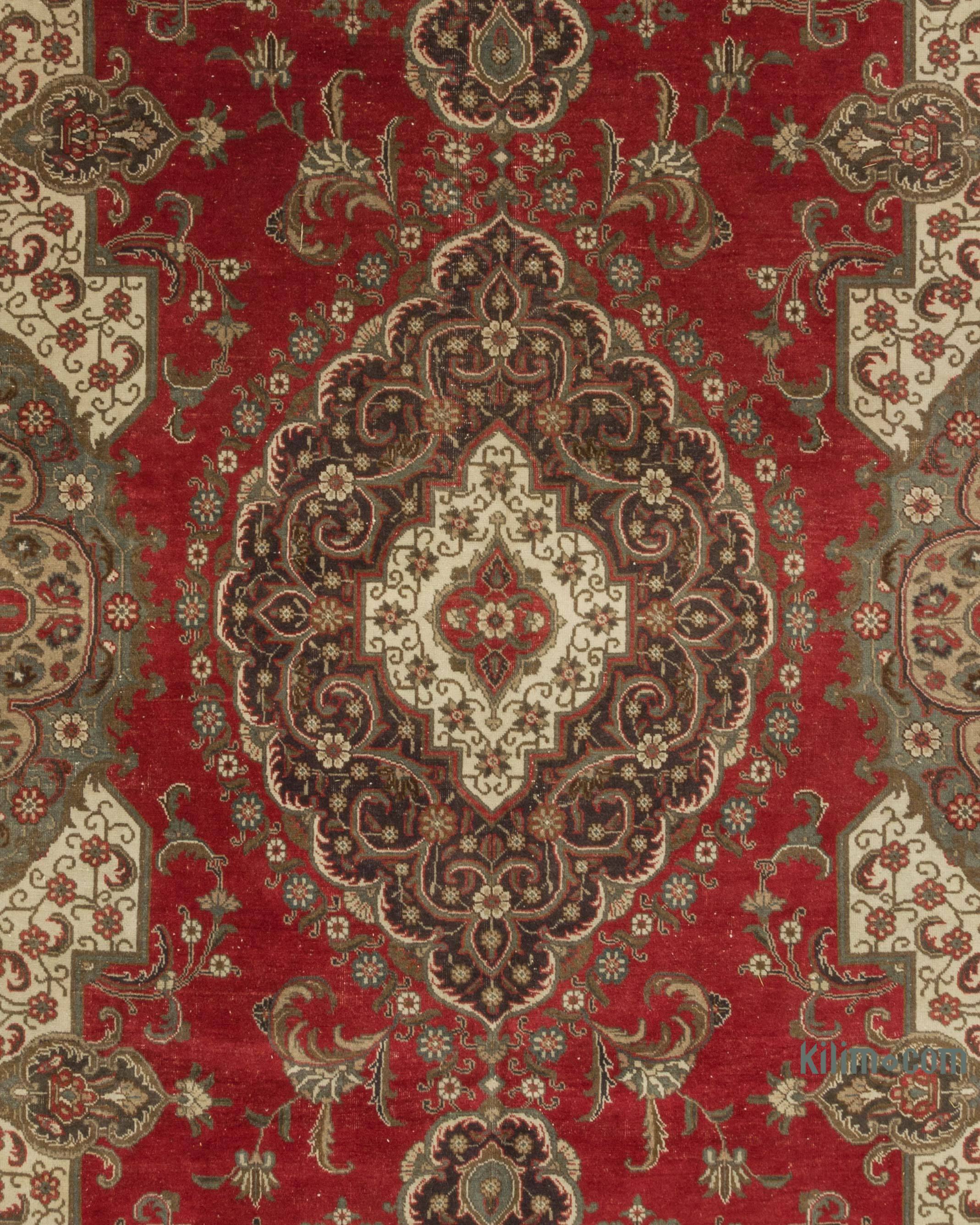
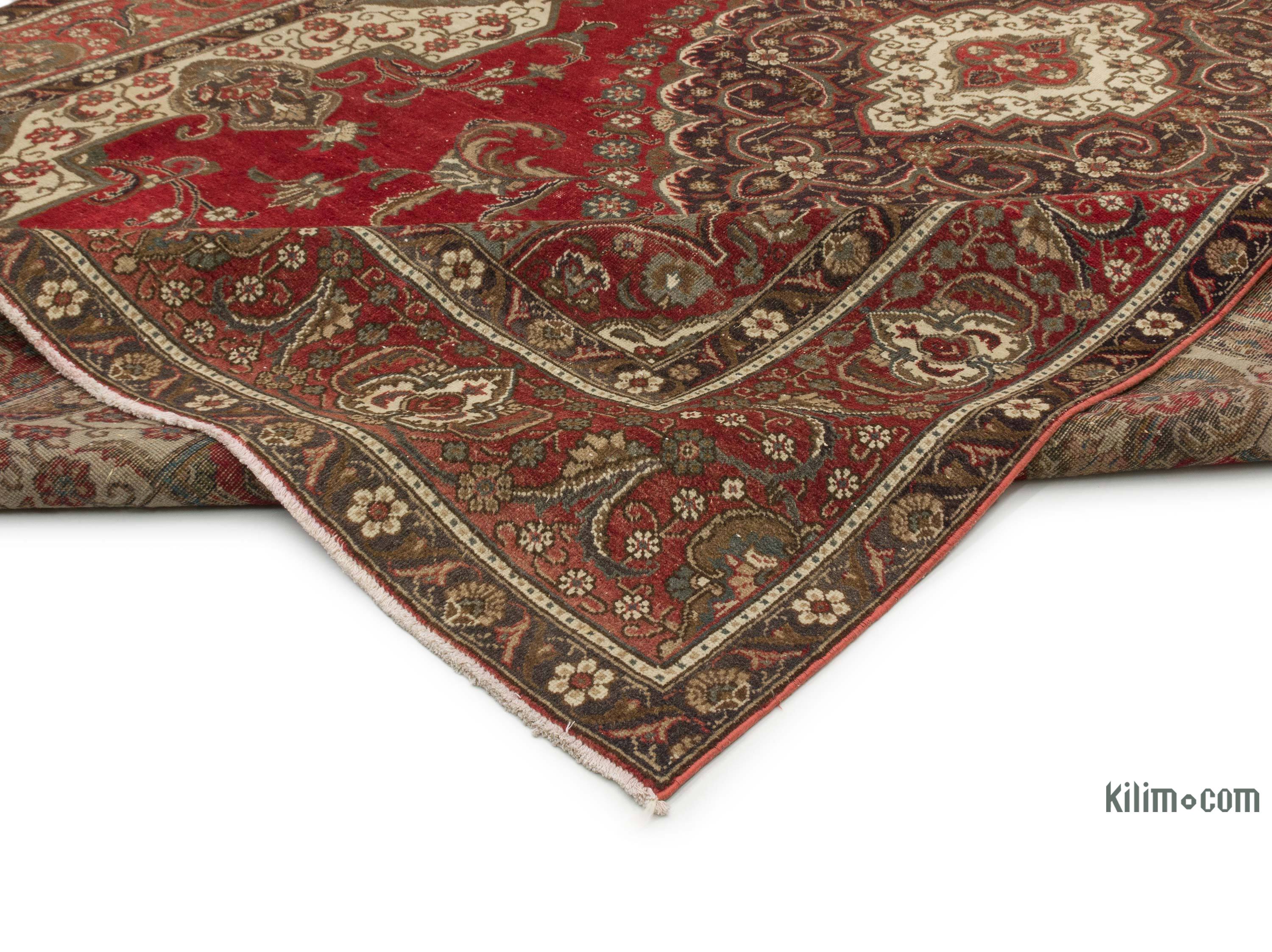
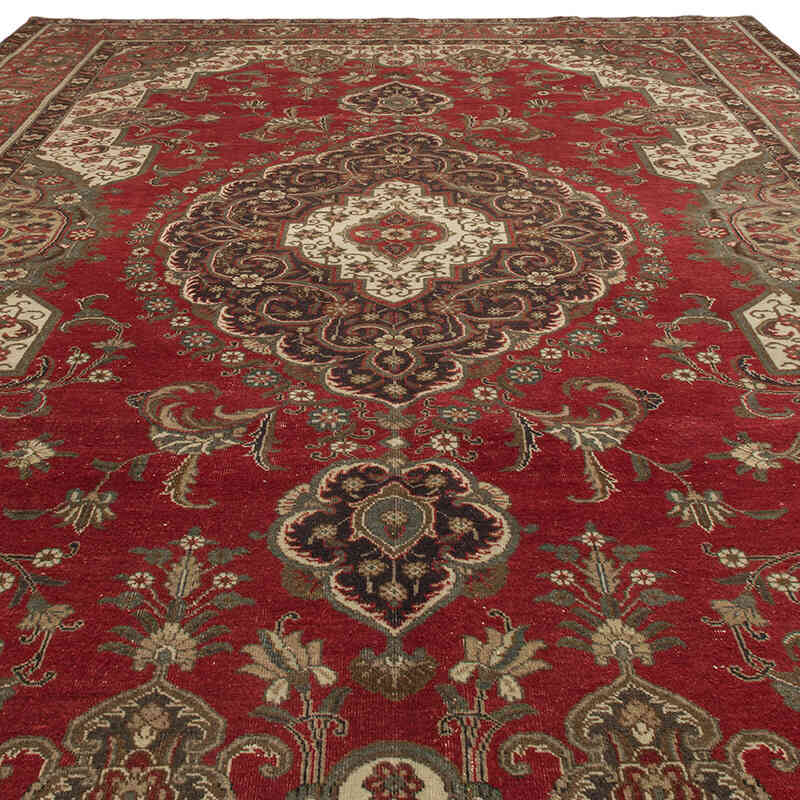
- Style: Traditional Persian design characterized by intricate patterns and floral motifs.
- Structure: Center medallion with surrounding motifs, creating a focal point.
- Borders: Wide decorative borders featuring repeating patterns that frame the interior design.
Patterns
- Floral Motifs: Repeated inclusion of floral and paisley designs, offering a sense of elegance.
- Geometric Elements: Curves and symmetrical shapes enhance the complexity of the overall design.
- Layering: Multiple layers of patterns give a sense of depth and richness to the rug.
Color Palette
- Dominant Colors: Rich red tones form the primary base, which is vibrant and warm.
- Accent Colors: Deep browns and creamy beige are used for floral and border details, providing contrast.
- Subtle Hues: Additional shades such as muted greens might be present, offering a varied visual experience.
Texture and Material
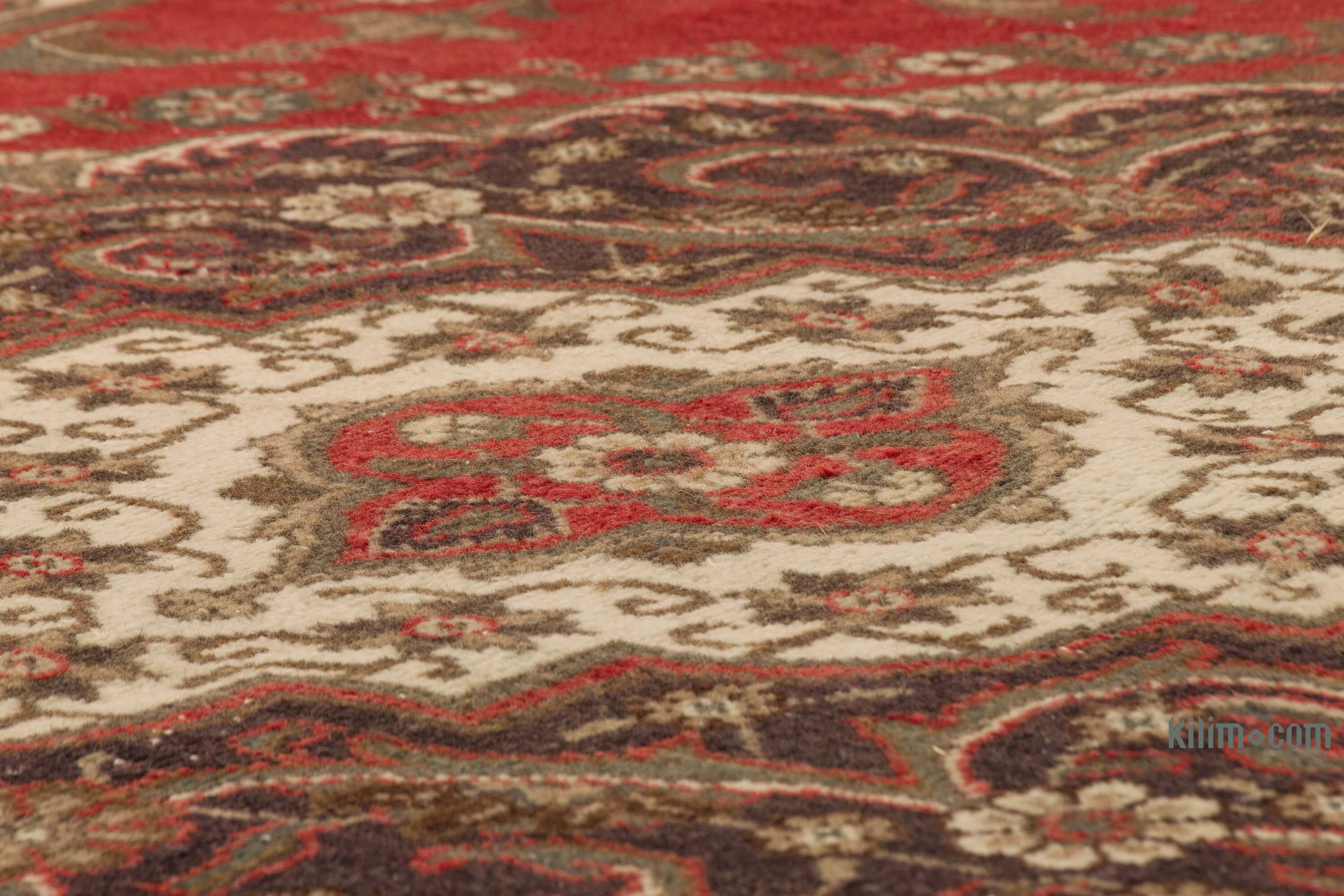
- Fabric: Typically made of wool, which contribute to a soft feel.
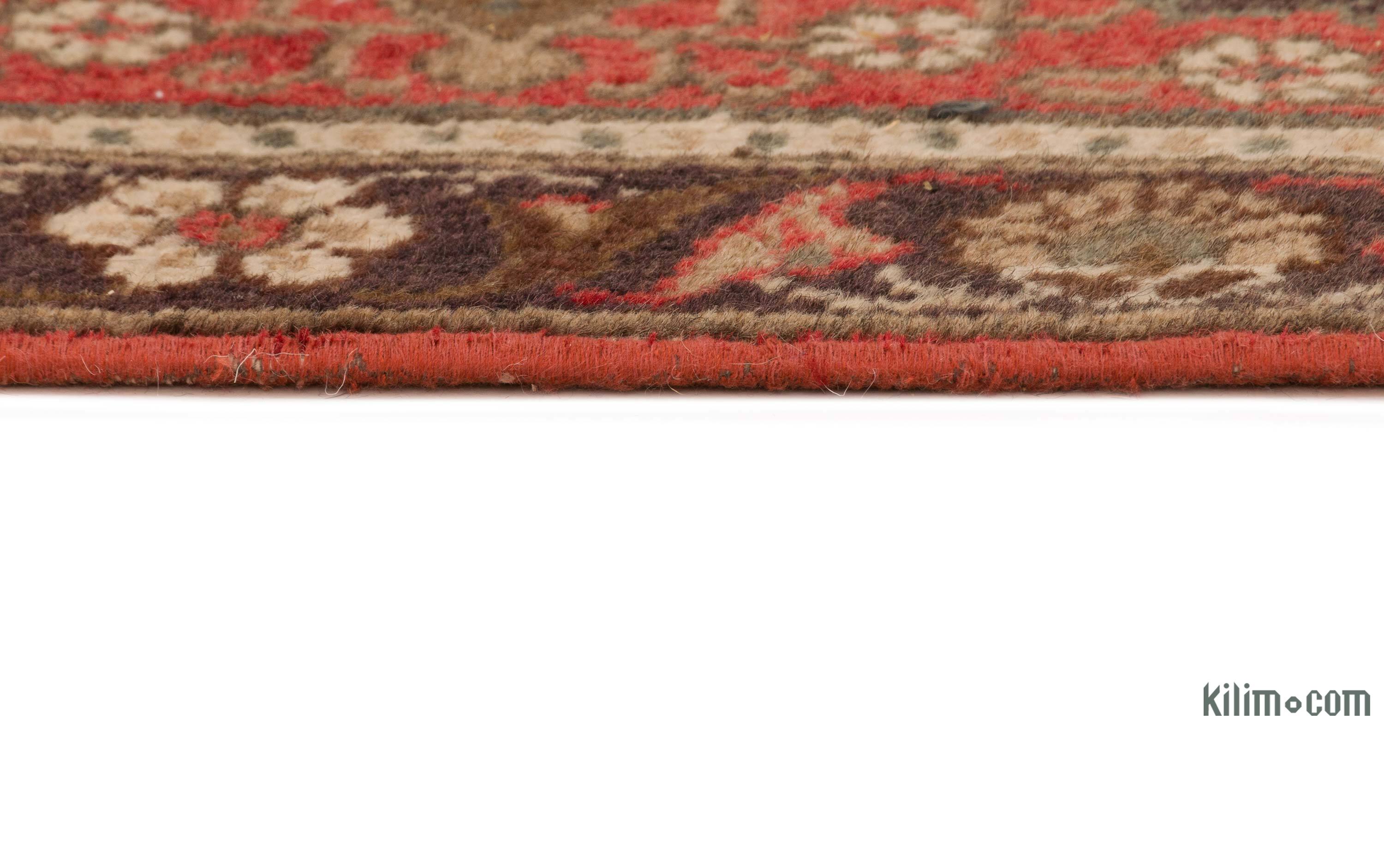
- Weaving Technique: Hand-knotted with attention to detail, impacting durability and appearance.
- Finish: A plush finish that adds to the comfort and enhances the colors.
Summary
The rug features a traditional design, showcasing intricate floral and geometric patterns with a central medallion that draws attention. The color palette primarily consists of rich reds, complemented by deep browns and creamy beiges, offering elegance and warmth. The material typically provides a plush texture, enhancing both the visual and tactile experience.
Vintage hand-knotted Oriental rug woven in the 70s with wool on cotton foundation using traditional techniques. The pile has been professionally trimmed recently to create a smooth, even surface that enhances the clarity of the motifs, while preserving an authentic vintage look. Ideal for interiors seeking a 1970s vintage wool rug with a refined, well-defined pattern rather than an intentionally aged appearance.
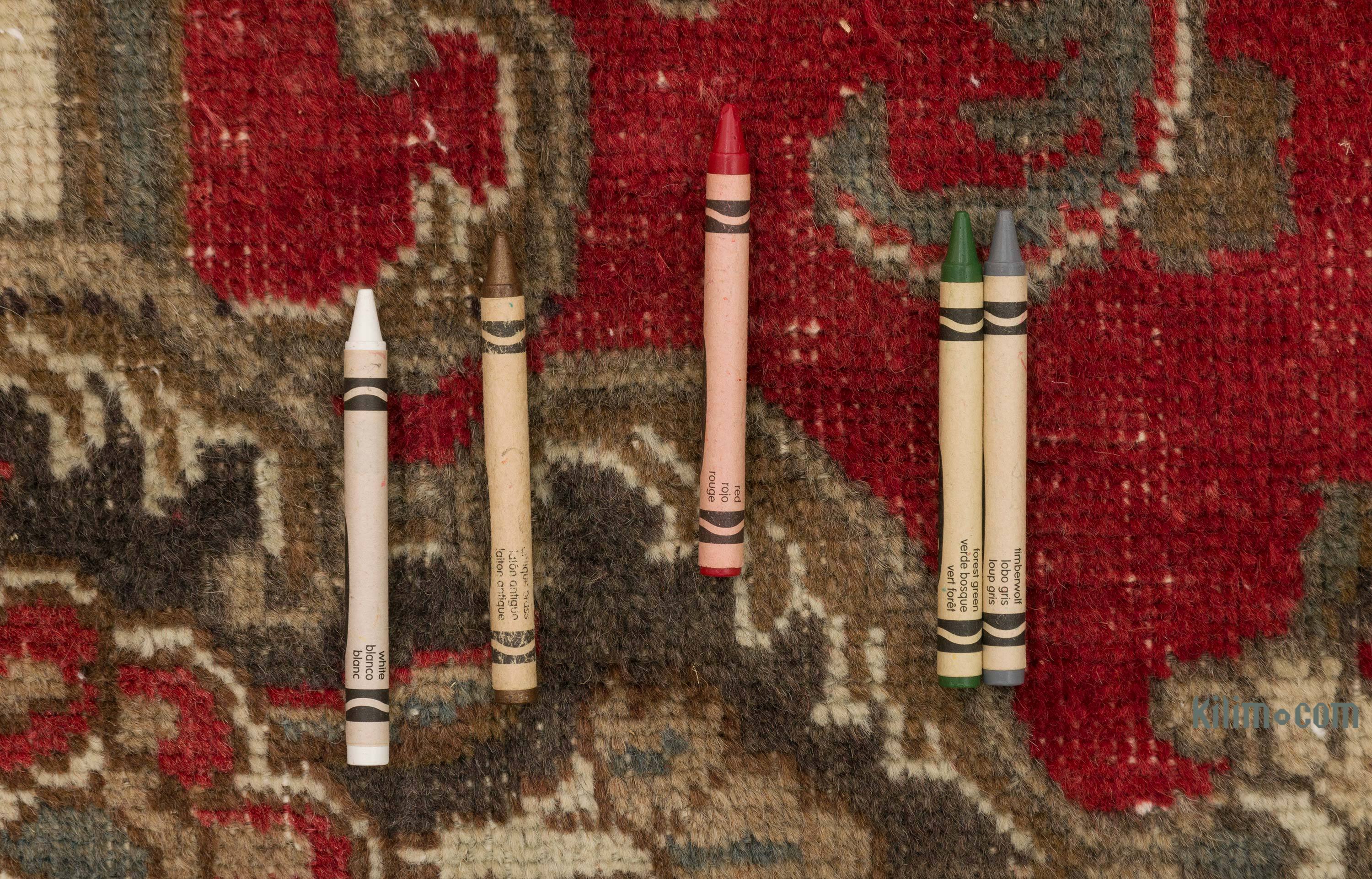
Colors may appear slightly different across various monitors due to screen settings device differences, and external lighting conditions. If color accuracy is important for your space, we recommend viewing the rug on multiple devices or contacting us for a detailed color description. We can provide detailed photos and references using Sherwin-Williams, Benjamin Moore, Pantone, or even Crayola crayons.
You can also visualize most of our products in your own room with AR (augmented reality) on an iPhone or iPad.
Return Policy
Need a rug pad? We recommend RugPadUSA