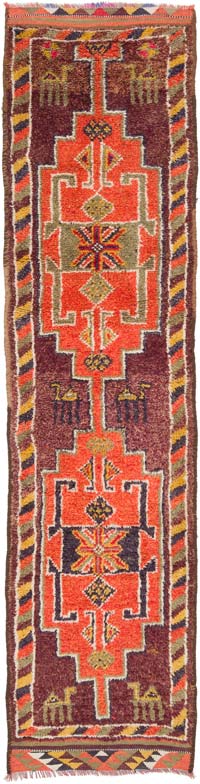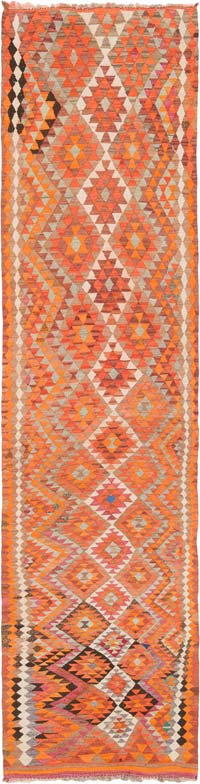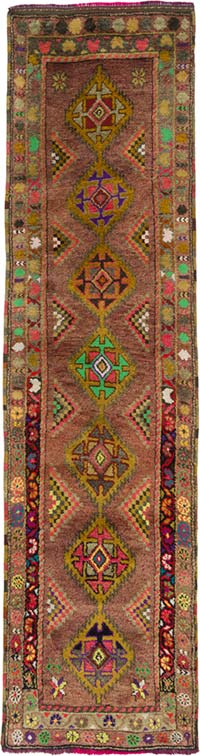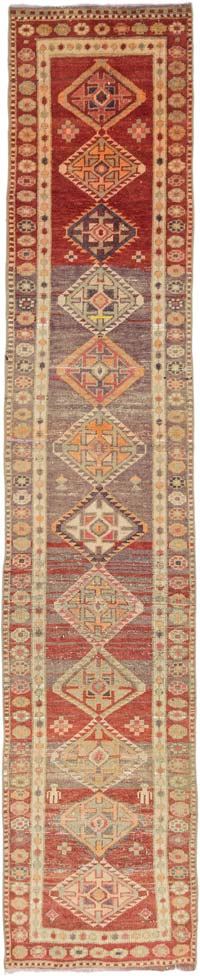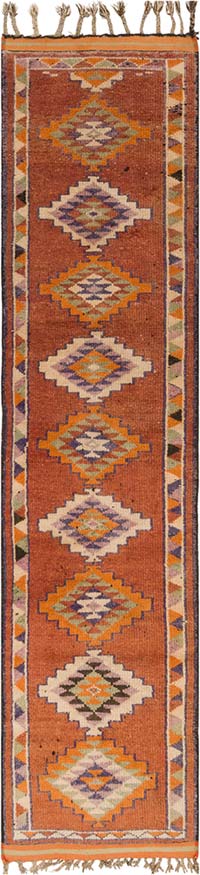
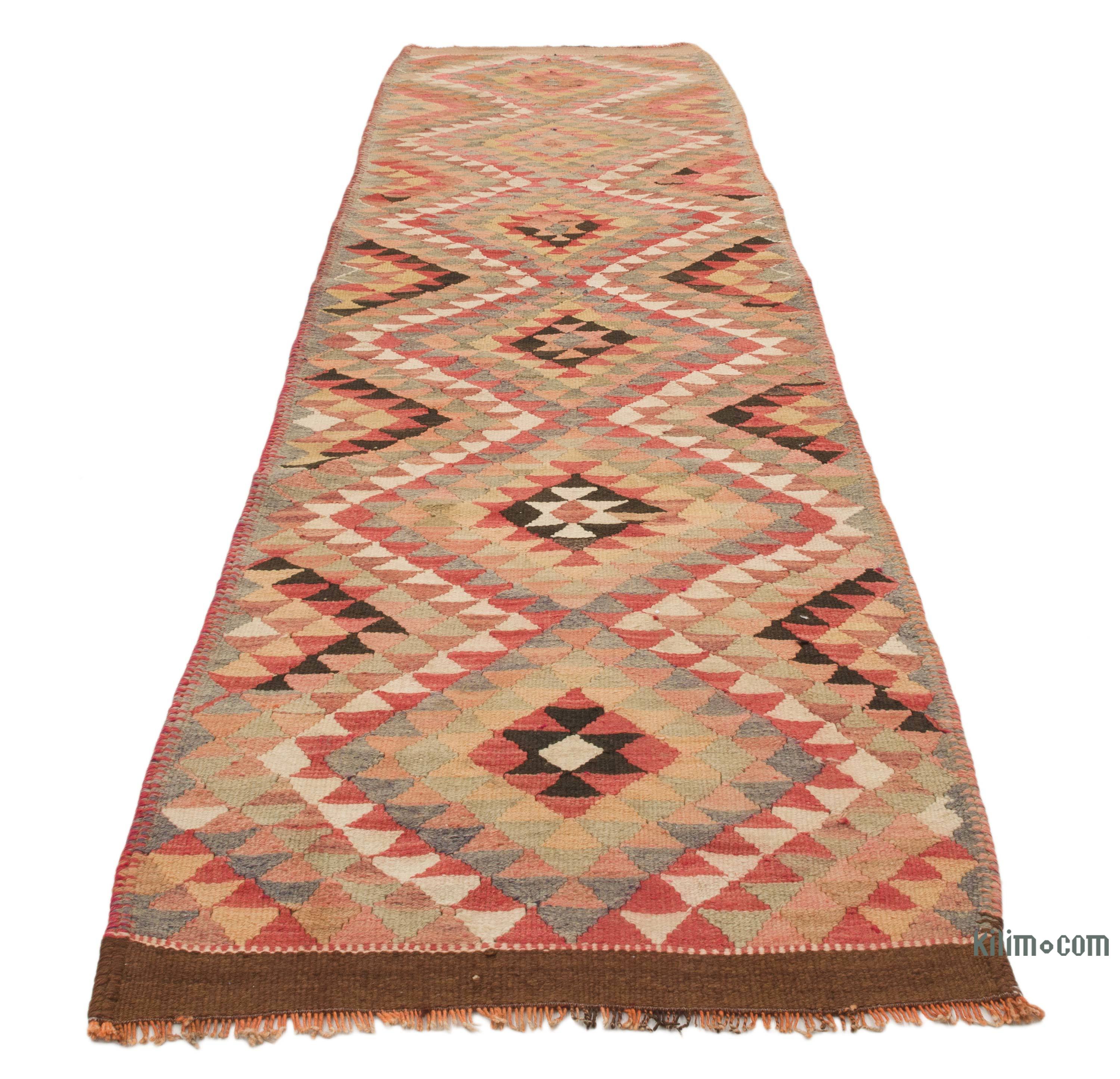
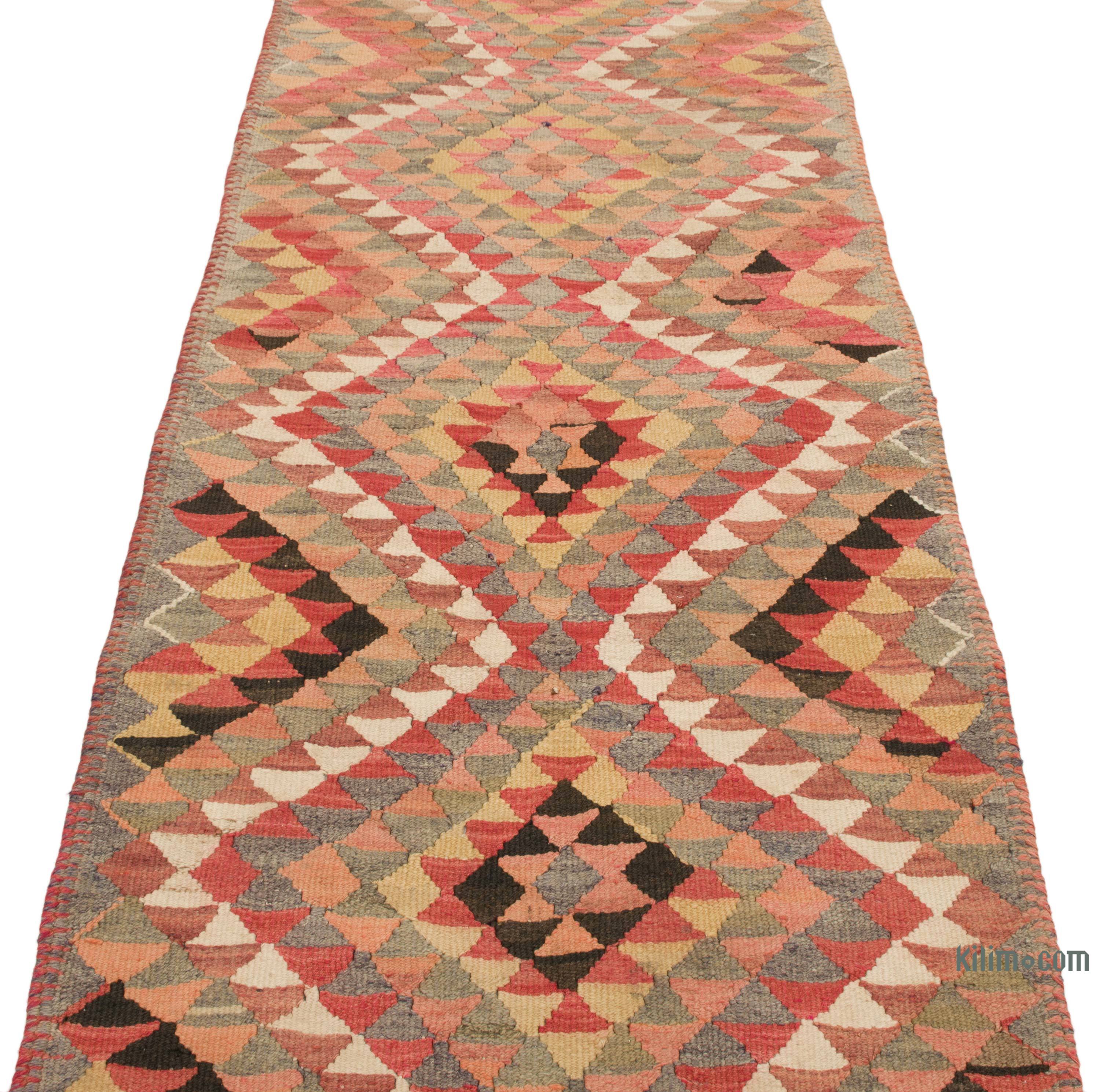

Vintage Tribal Kilim Runner 2' 11" x 10' 2" (35" x 122")
Type:
Kilim RugsCollection:
Tribal Runners, ClearanceStyle:
TribalID:
K0069679Size:
Material:
- Ships in 2-5 business days
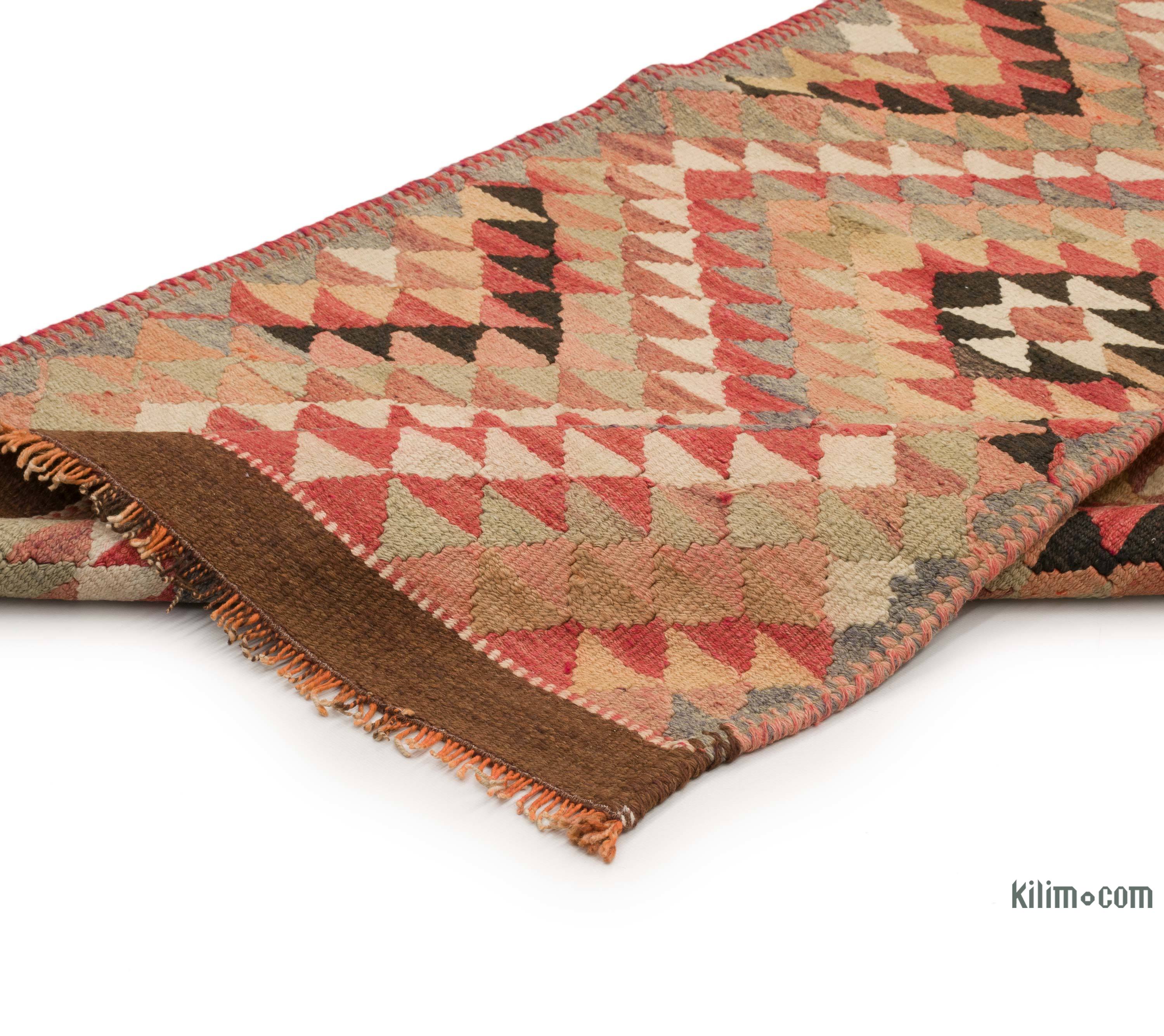
- All of our rugs are professionally cleaned; gentle wear from age and natural irregularities are inherent features of these one-of-a-kind handwoven vintage rugs.
- Only one in stock, handmade, unique
- Free shipping via FedEx Express. Returns & exchanges
- Contact us or add a note to your order if you want us to delay your shipping.
- Request more info if you want this rug shorter or narrower
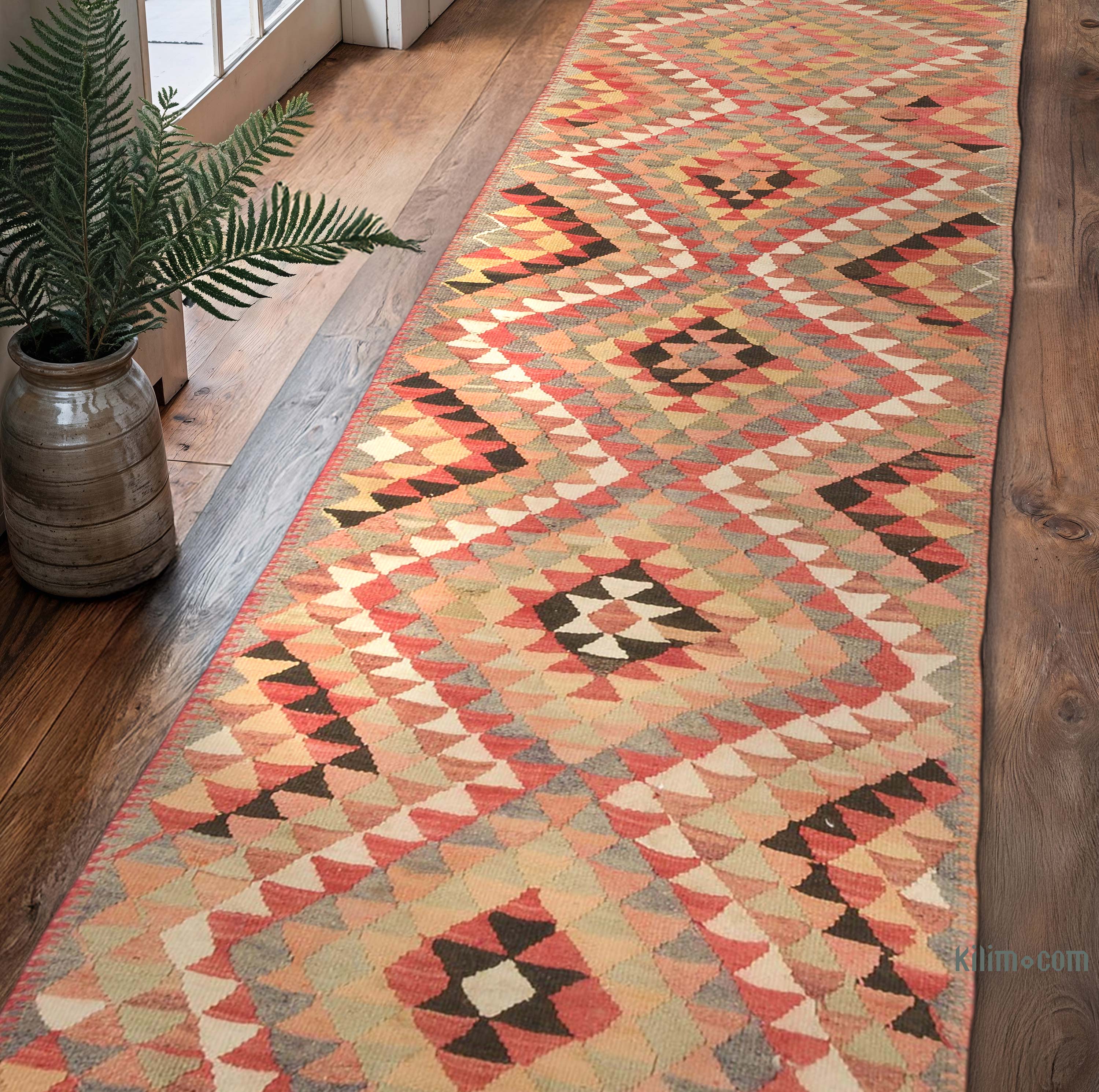
The designs feature a rich array of symbols representing tribal culture and Anatolian motifs, often in the form of medallions, diamonds, and other geometric shapes. These kilim runners are ideal for hallways and narrow spaces, offering a touch of ethnic charm and artisanal quality to any interior.
Herki kilims not only serve as functional floor coverings but also as artistic expressions of tribal identity, making each rug a unique cultural artifact.
Design and Motifs
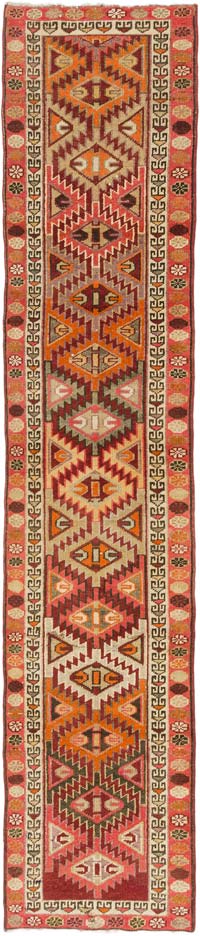
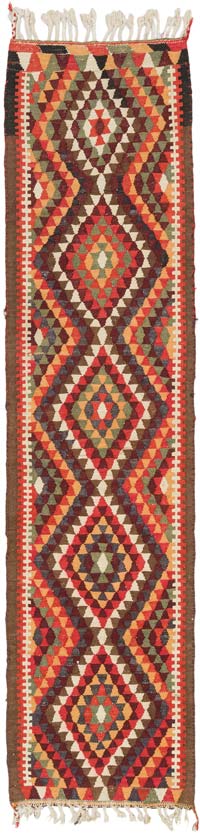
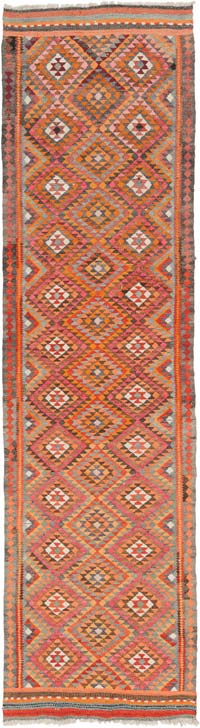
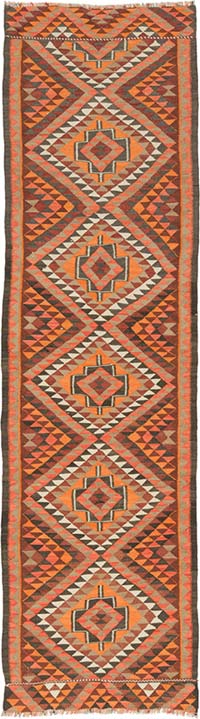
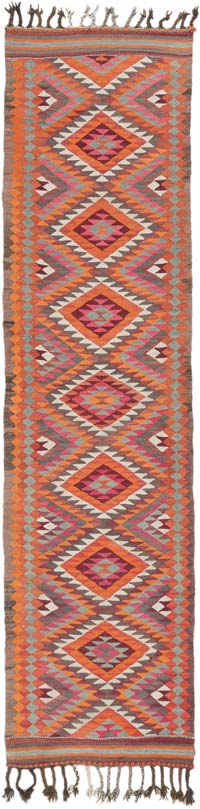
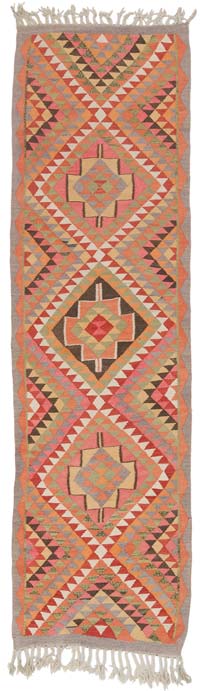
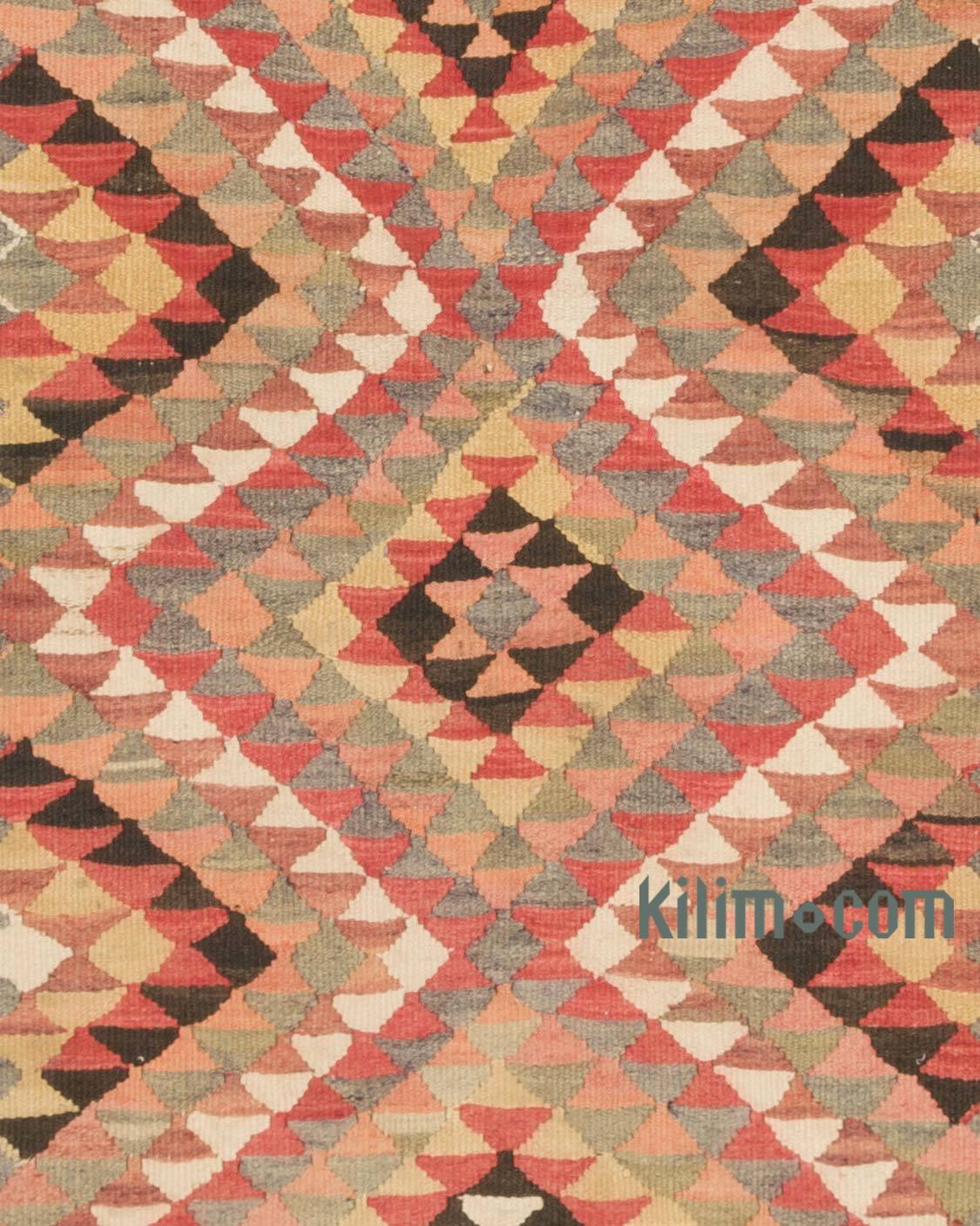
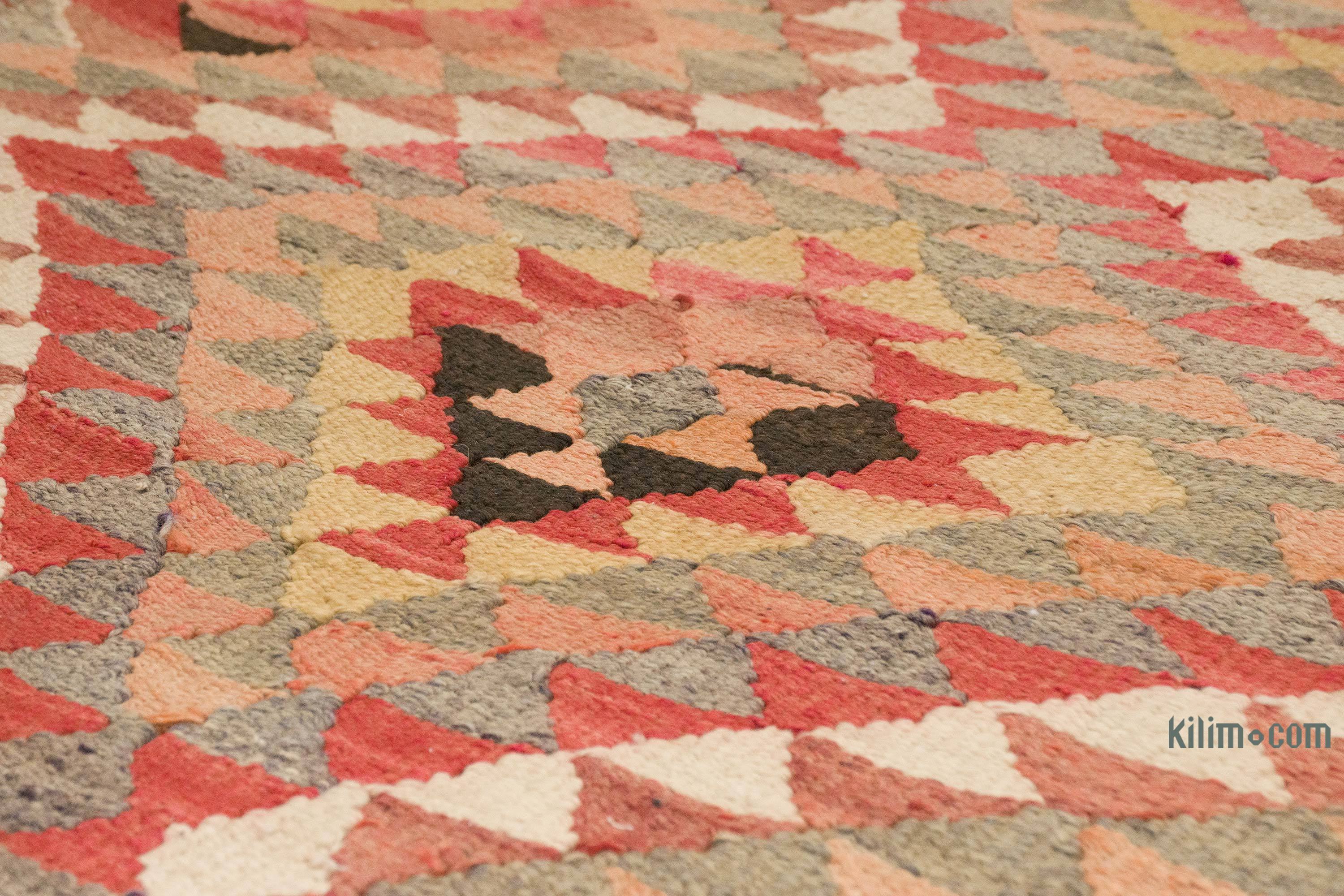
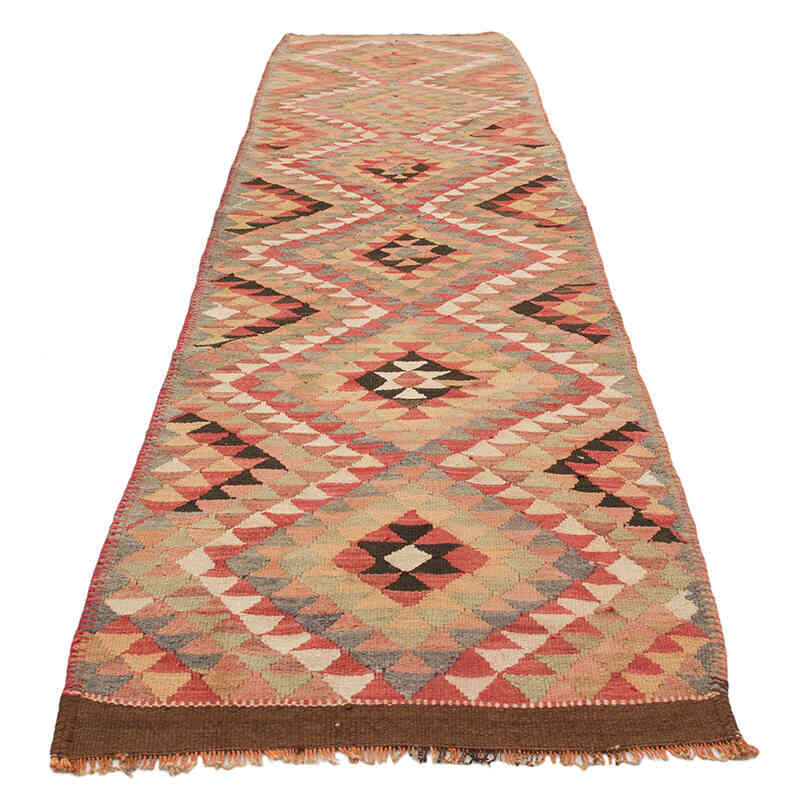
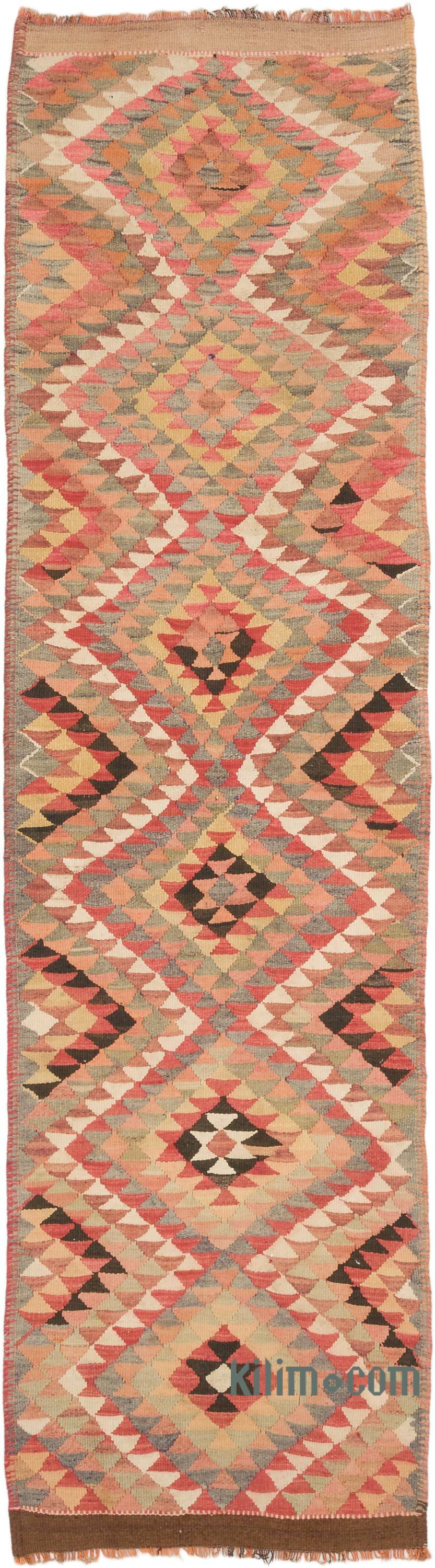
This vibrant kilim showcases a classic geometric pattern formed by a series of large, diamond-shaped medallions aligned vertically. Each diamond is filled with multiple smaller diamonds and triangles in warm earth tones—shades of terracotta, dusty pink, muted olive, cream, and soft gray come together to create a harmonious palette. The repetition and sharp lines give the rug a rhythmic and balanced feel, while subtle color shifts add depth and movement.
Among these geometric shapes, you’ll notice distinctive traditional Anatolian motifs:
- Elibelinde: Although not illustrated with human figures, the diamond shapes suggest fertility and motherhood, symbolizing nurturing and abundance in women’s lives.
- Ram’s Horn: Triangular forms resemble this motif, which represents strength and heroism, offering a protective symbolism to the household.
- Eye motifs: Small, diamond-shaped “eyes” scattered within the pattern ward off evil, inviting positive energy and safeguarding the home.
- Water motifs: The wave-like zigzags hint at water’s life-giving flow and purification, symbolizing renewal and resilience.
Every motif echoes the weaver's life and hopes—these are abstract prayers and stories woven into every inch of fabric, merging beauty with meaning. For a deeper dive into the symbolism, explore our Kilim motifs and symbols page.
Integration with Interior Design Styles
- Bohemian: The rich, earthy tones and geometric motifs make this kilim a natural centerpiece in eclectic boho spaces. Layer it with throws, cushions, and plants for a warm, inviting atmosphere.
- Mid-Century Modern: The rug’s geometric patterns resonate with mid-century clean lines, adding texture and color without overpowering minimalist furnishings.
- Rustic and Farmhouse: Its muted, natural palette complements worn woods and stone, bringing an authentic cultural touch that feels grounded and cozy.
- Contemporary: When paired with sleek furniture, this kilim introduces subtle complexity and heritage, bridging modernity and tradition effortlessly.
- Scandinavian: The understated yet strategic use of color fits perfectly with Scandinavian design’s love for muted palettes and natural materials, offering warmth and personality.
Because kilim rugs are flatweaves with lightweight textures, they layer naturally under furniture or as wall art, enriching any space without overwhelming it. With this piece, your décor gains a story woven from generations, a burst of earthy color and protective symbolism that resonates across cultures and centuries.
Rolling Up
- The design centers on classic Anatolian motifs such as Elibelinde (motherhood), Ram’s Horn (strength), and protective eye symbols.
- A geometric diamond pattern in warm, subtle tones gives the rug both timeless beauty and meaningful symbolism.
- This kilim complements a variety of interior styles, from bohemian and rustic to contemporary and Scandinavian.
- Its lightweight, flatwoven texture allows versatile use as floor covering or wall decoration.
- It invites connection to ancestral stories, offering more than decoration—a handwoven experience of hope, protection, and abundance.
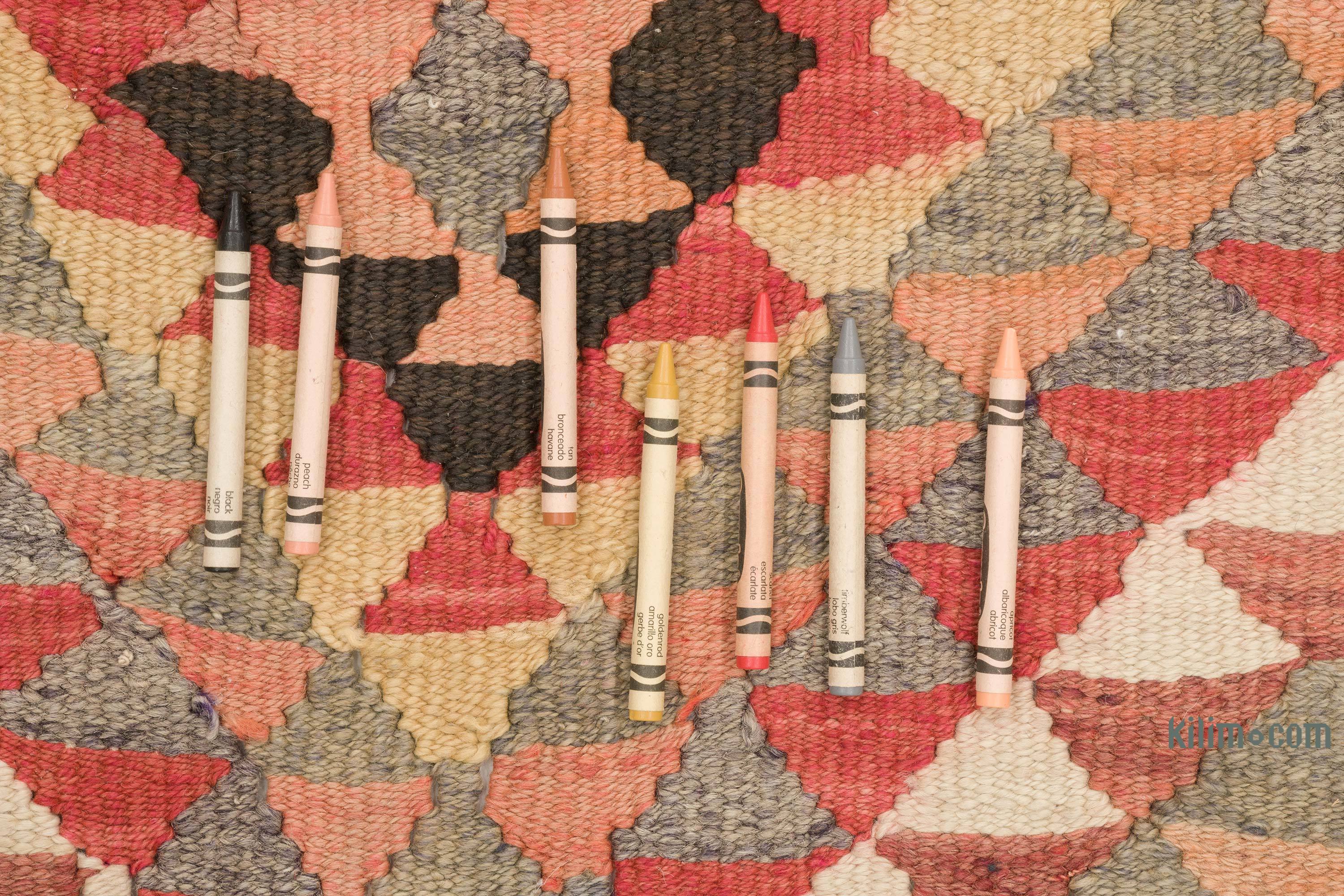
Colors may appear slightly different across various monitors due to screen settings device differences, and external lighting conditions. If color accuracy is important for your space, we recommend viewing the rug on multiple devices or contacting us for a detailed color description. We can provide detailed photos and references using Sherwin-Williams, Benjamin Moore, Pantone, or even Crayola crayons.
You can also visualize most of our products in your own room with AR (augmented reality) on an iPhone or iPad.
Return Policy
Need a rug pad? We recommend RugPadUSA