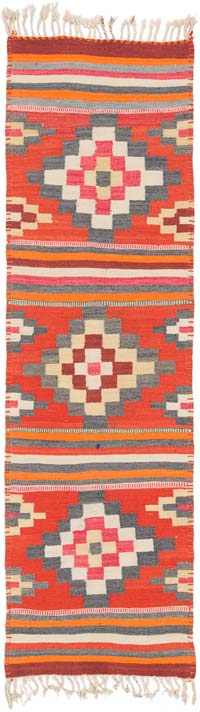
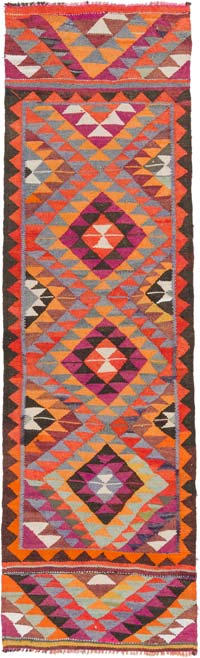
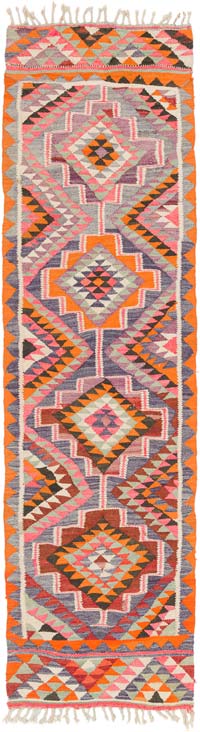
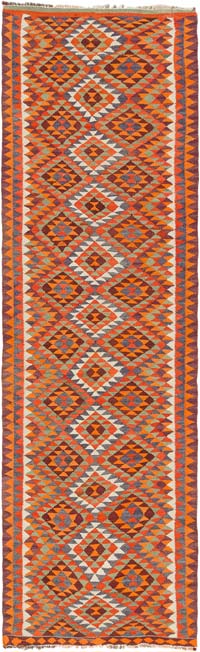
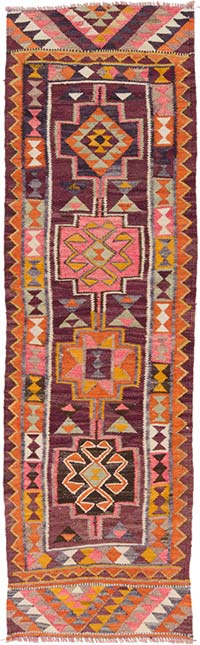
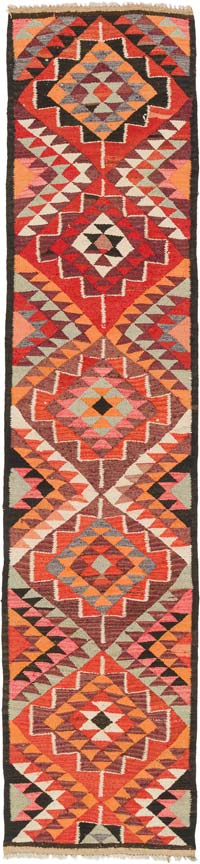
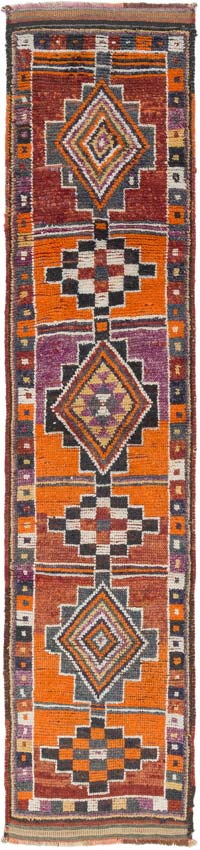
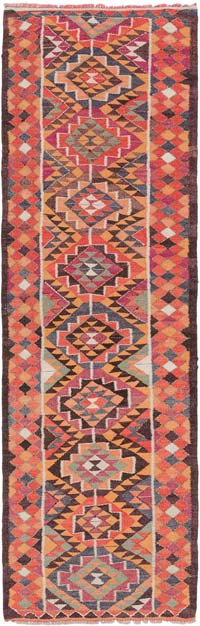
Vintage Tribal Kilim Runner 2' 10" x 11' 2" (34" x 134")
Type:
Kilim RugsCollection:
Tribal RunnersStyle:
TribalID:
K0077158Size:
Material:
- Ships in 2-5 business days
- All of our rugs are professionally cleaned; gentle wear from age and natural irregularities are inherent features of these one-of-a-kind handwoven vintage rugs.
- Only one in stock, handmade, unique
- Free shipping via FedEx Express. Returns & exchanges
- Contact us or add a note to your order if you want us to delay your shipping.
- Request more info if you want this rug shorter or narrower
The designs feature a rich array of symbols representing tribal culture and Anatolian motifs, often in the form of medallions, diamonds, and other geometric shapes. These kilim runners are ideal for hallways and narrow spaces, offering a touch of ethnic charm and artisanal quality to any interior.
Herki kilims not only serve as functional floor coverings but also as artistic expressions of tribal identity, making each rug a unique cultural artifact.
Design and Motifs of the Kilim Rug
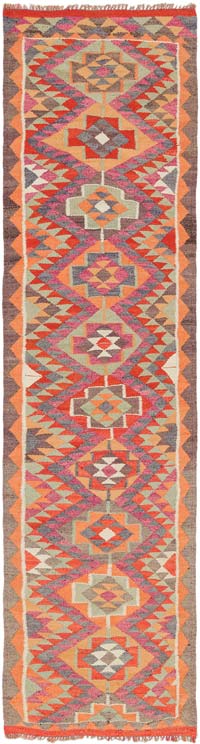
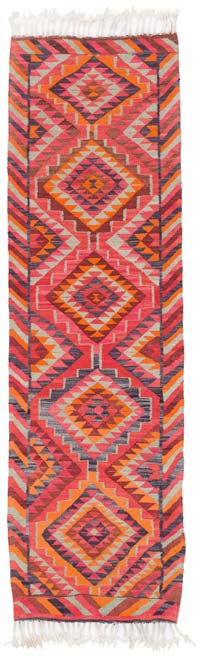
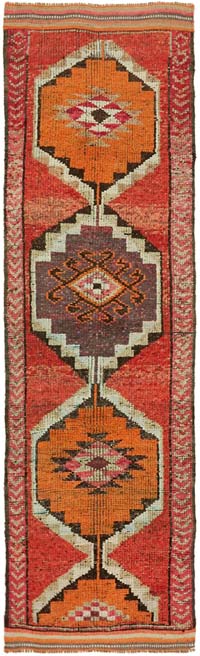
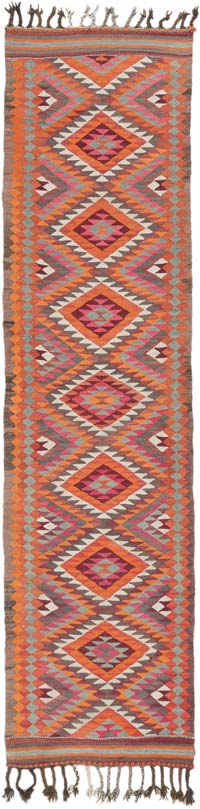
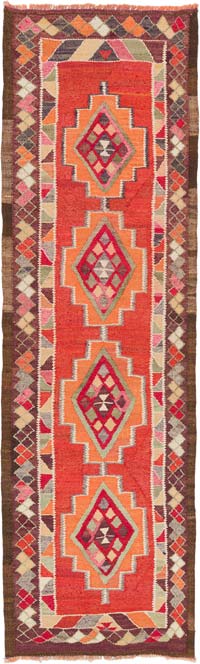
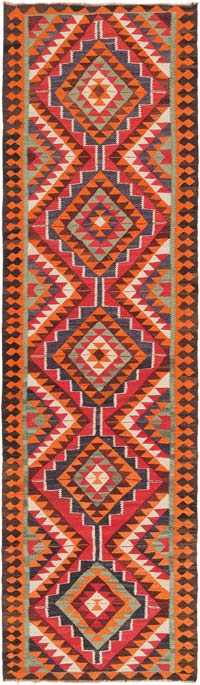
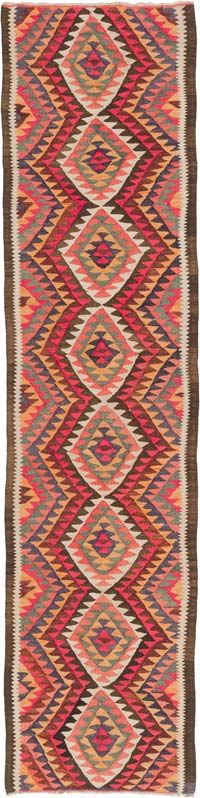
This kilim rug features a vibrant and energetic palette dominated by warm coral hues, accented with pops of orange, pink, muted greens, deep purples, and crisp white. The design is characterized by a series of interconnected diamond-shaped medallions that run along the length of the runner. Each diamond is filled with geometric, angular motifs, showcasing an intricate play of triangles, zigzags, and small arrow-like shapes. The sharp contrasts and repetitive symmetry create a lively rhythm across the rug’s surface.
The borders are equally rich in motifs, displaying smaller, repeated geometric symbols clustered tightly to frame the central design. The weaving displays typical Anatolian artistry, balancing bold graphic elements with subtle color gradients.
Meaning Behind the Motifs
- Diamond shapes: Often symbolize protection and the eye motif, which is believed to ward off evil and negativity from the home.
- Zigzags and triangles: These motifs represent water and lightning in Kilim symbolism, conveying themes of life, vitality, and continuity.
- Arrow-like designs: Reflect movement and progress, speaking to the weavers’ hopes for a prosperous future and safe journeys.
- Color symbolism: The warm orange radiates enthusiasm and vitality, while pink shades evoke affection and comfort. The dark purples and deep browns ground the rug, providing emotional balance and depth.
Altogether, the motifs narrate a story of protection, hope, and vibrant life which echoes the daily experiences and dreams of the traditional Anatolian weavers. For a deeper dive into these compelling symbols, you can explore Kilim Motifs and Symbols.
Integration with Interior Design Styles
- Bohemian Style: The rug’s rich color palette and intricate patterns harmonize perfectly with eclectic Boho interiors. It adds a handmade authenticity and a splash of warmth to layered textiles and globally influenced décor.
- Modern Minimalist: Placed in a minimalist setting, this kilim becomes a dynamic focal point. Its vivid patterns break up neutral color schemes and bring a natural, artisanal touch that softens rigid modern lines.
- Rustic and Farmhouse: The earthy vibes and traditional craftsmanship resonate beautifully with rustic wood elements and cozy, lived-in atmospheres typical of farmhouse decor.
- Mid-Century Modern: The geometric motifs echo mid-century enthusiasm for graphic patterns and vibrant colors, blending tradition with mid-century flair seamlessly.
- Global/Worldly Interiors: This rug pairs well with other handcrafted pieces from around the world, creating a layered and thoughtful space that celebrates artisan heritage and cultural diversity.
Rolling Up
This kilim rug, with its lively orange core and complex geometric motifs, offers a rich visual story of protection, vitality, and cultural tradition. It fits a diverse range of interiors, from grounding bohemian sanctuaries to elevating minimalist homes. The interplay of color and symbols makes it an expressive piece that brings warmth, meaning, and style to any room.
Colors may appear slightly different across various monitors due to screen settings device differences, and external lighting conditions. If color accuracy is important for your space, we recommend viewing the rug on multiple devices or contacting us for a detailed color description. We can provide detailed photos and references using Sherwin-Williams, Benjamin Moore, Pantone, or even Crayola crayons.
You can also visualize most of our products in your own room with AR (augmented reality) on an iPhone or iPad.
Return Policy
Need a rug pad? We recommend RugPadUSA