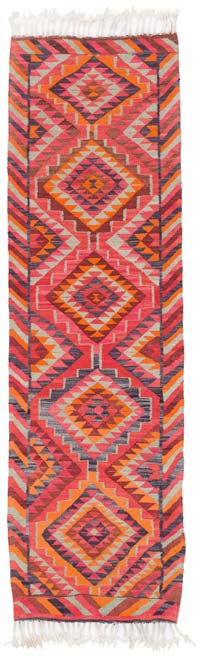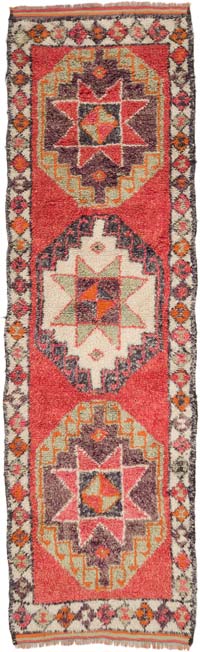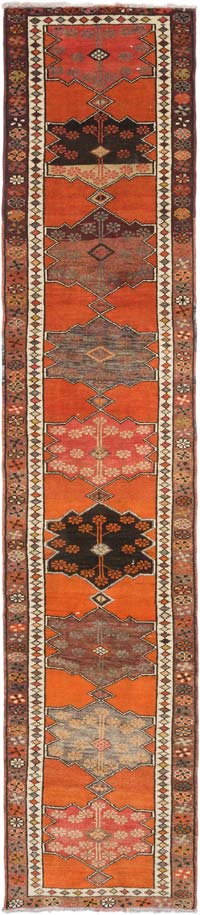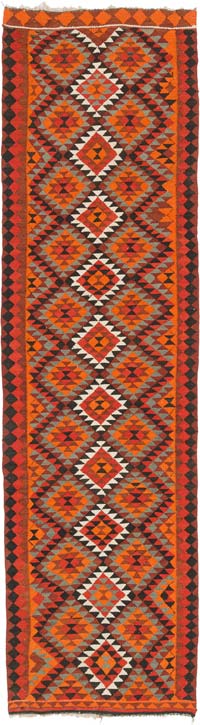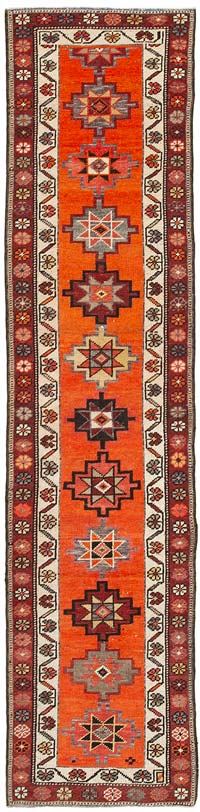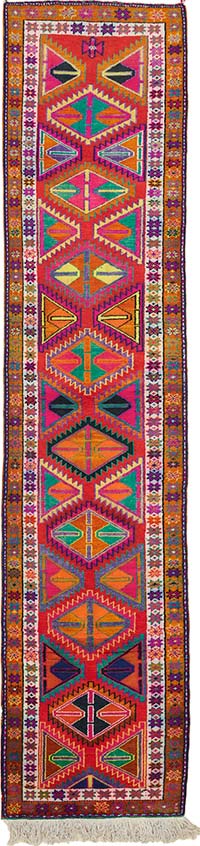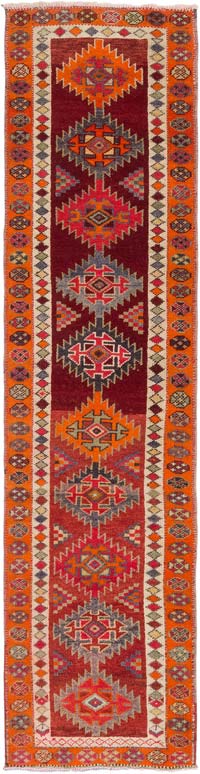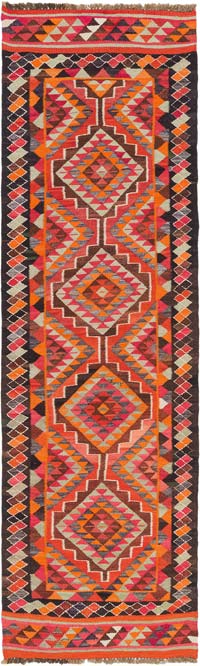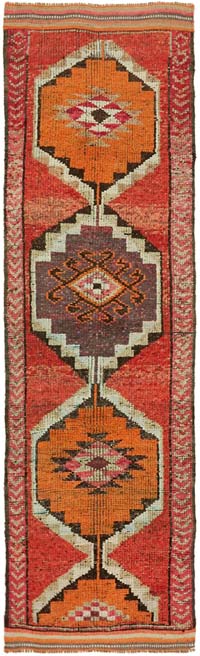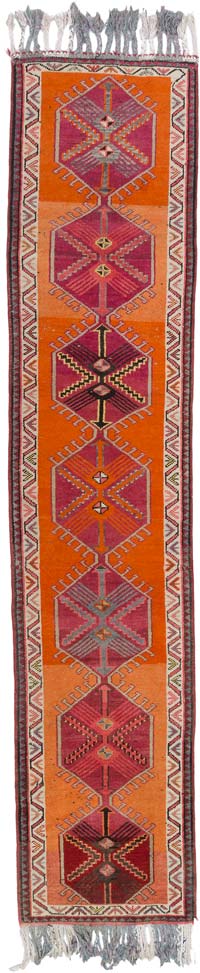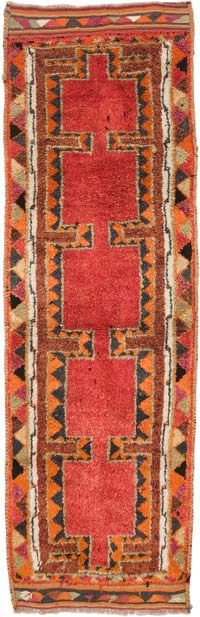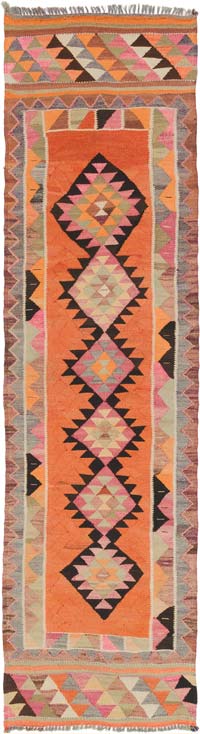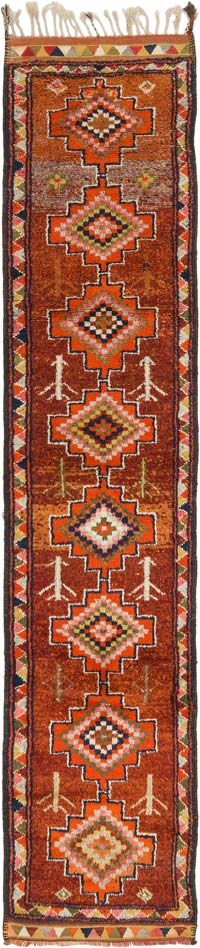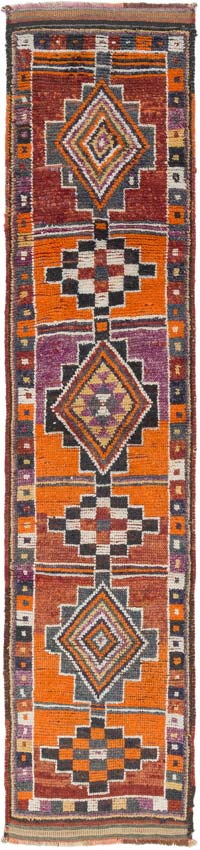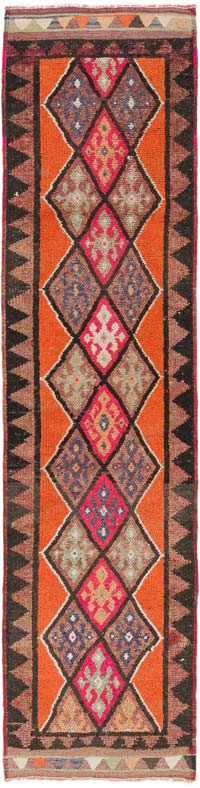
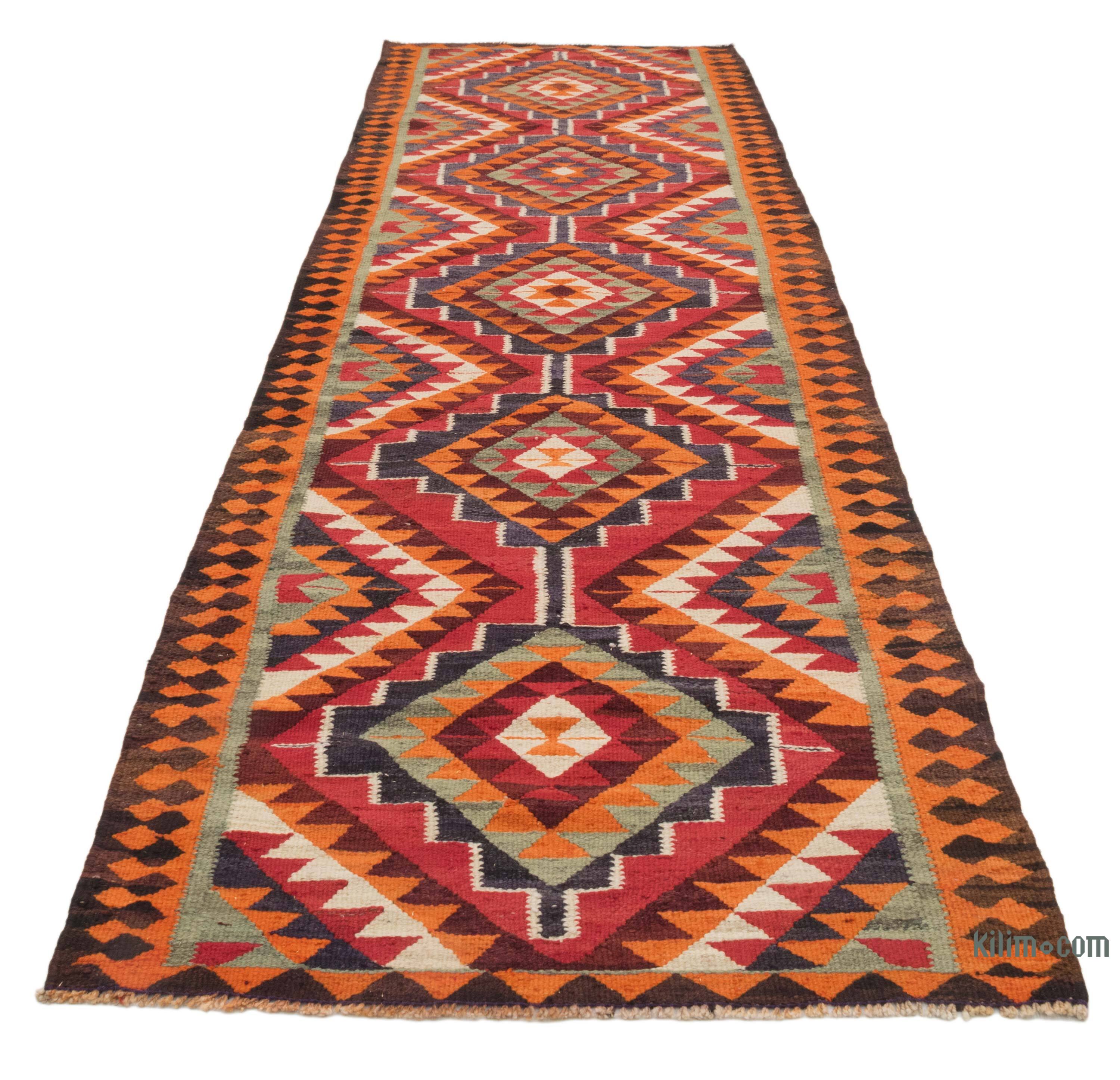

Vintage Tribal Kilim Runner 3' 1" x 10' 8" (37" x 128")
Type:
Kilim RugsCollection:
Tribal RunnersStyle:
TribalID:
K0077080Size:
Material:
- Ships in 2-5 business days
- All of our rugs are professionally cleaned; gentle wear from age and natural irregularities are inherent features of these one-of-a-kind handwoven vintage rugs.
- Only one in stock, handmade, unique
- Free shipping via FedEx Express. Returns & exchanges
- Contact us or add a note to your order if you want us to delay your shipping.
- Request more info if you want this rug shorter or narrower
The designs feature a rich array of symbols representing tribal culture and Anatolian motifs, often in the form of medallions, diamonds, and other geometric shapes. These kilim runners are ideal for hallways and narrow spaces, offering a touch of ethnic charm and artisanal quality to any interior.
Herki kilims not only serve as functional floor coverings but also as artistic expressions of tribal identity, making each rug a unique cultural artifact.
Design and Motifs
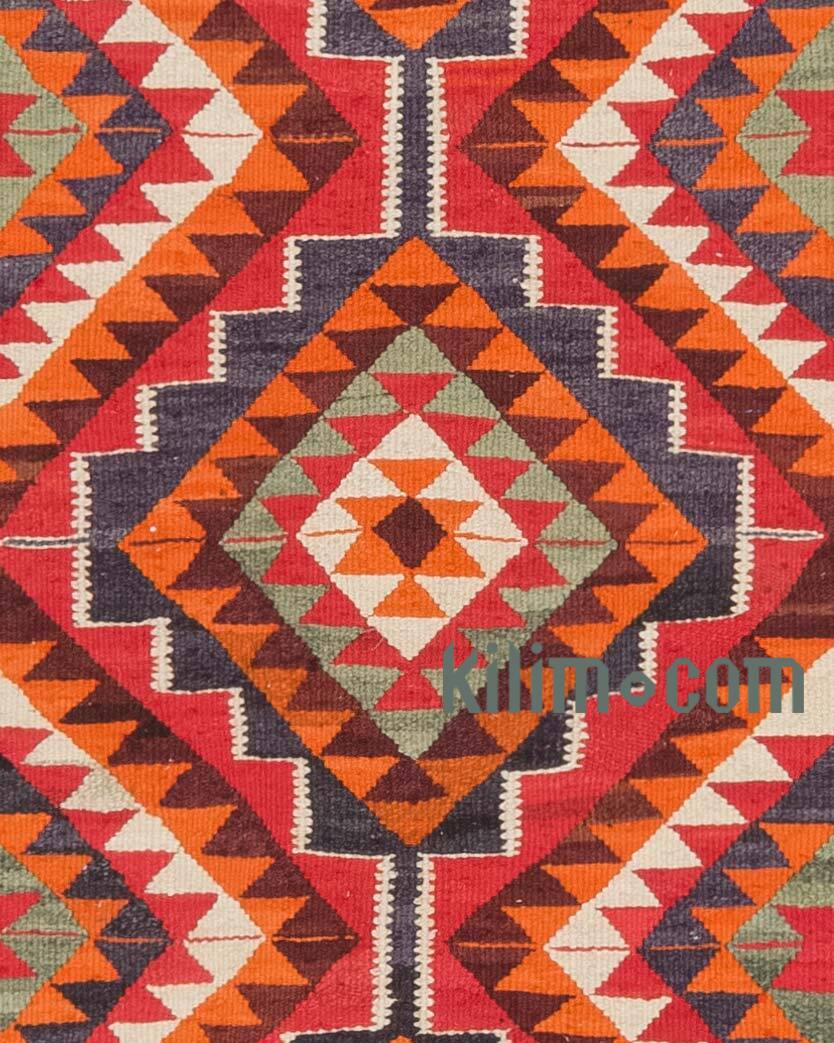
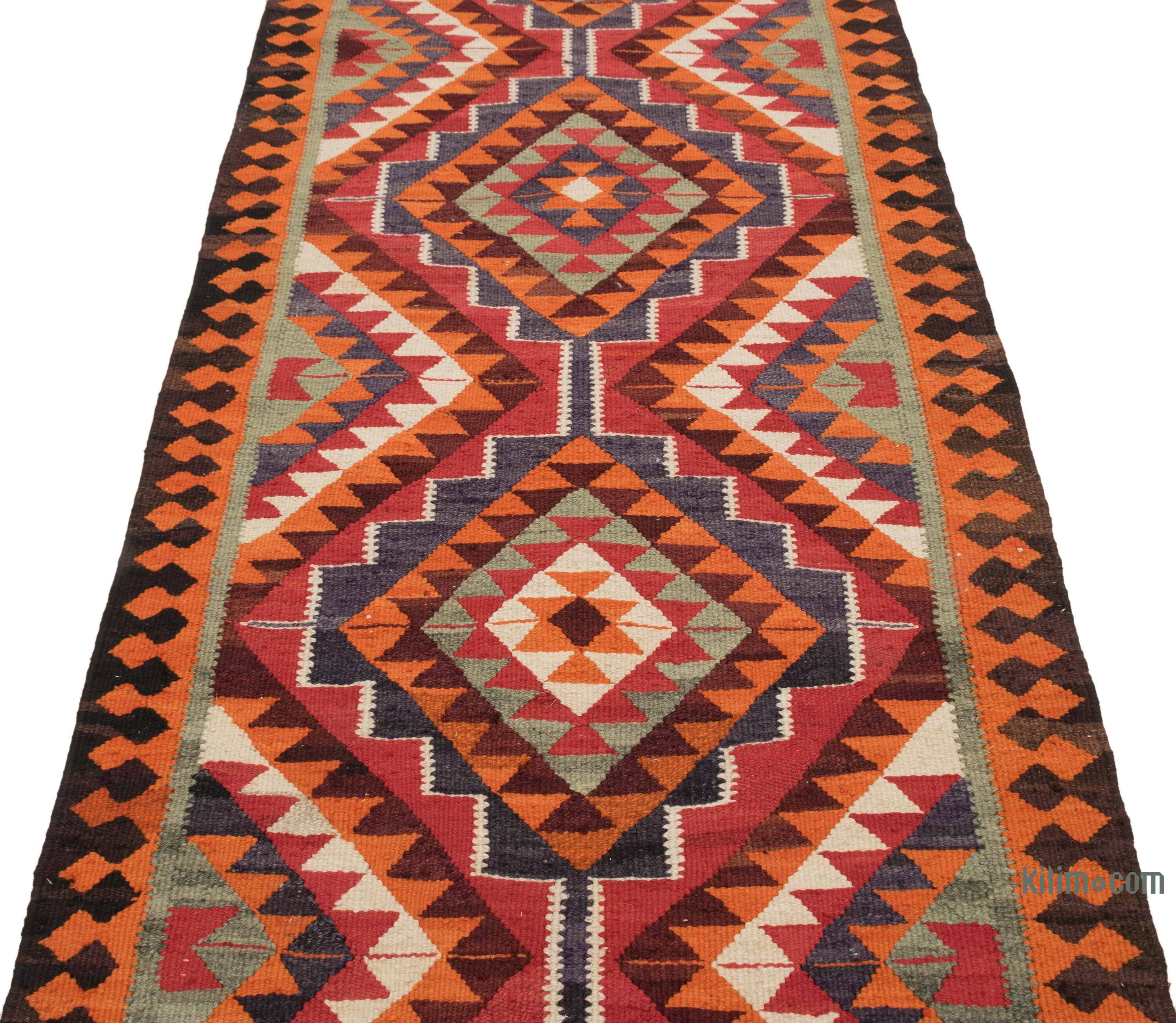
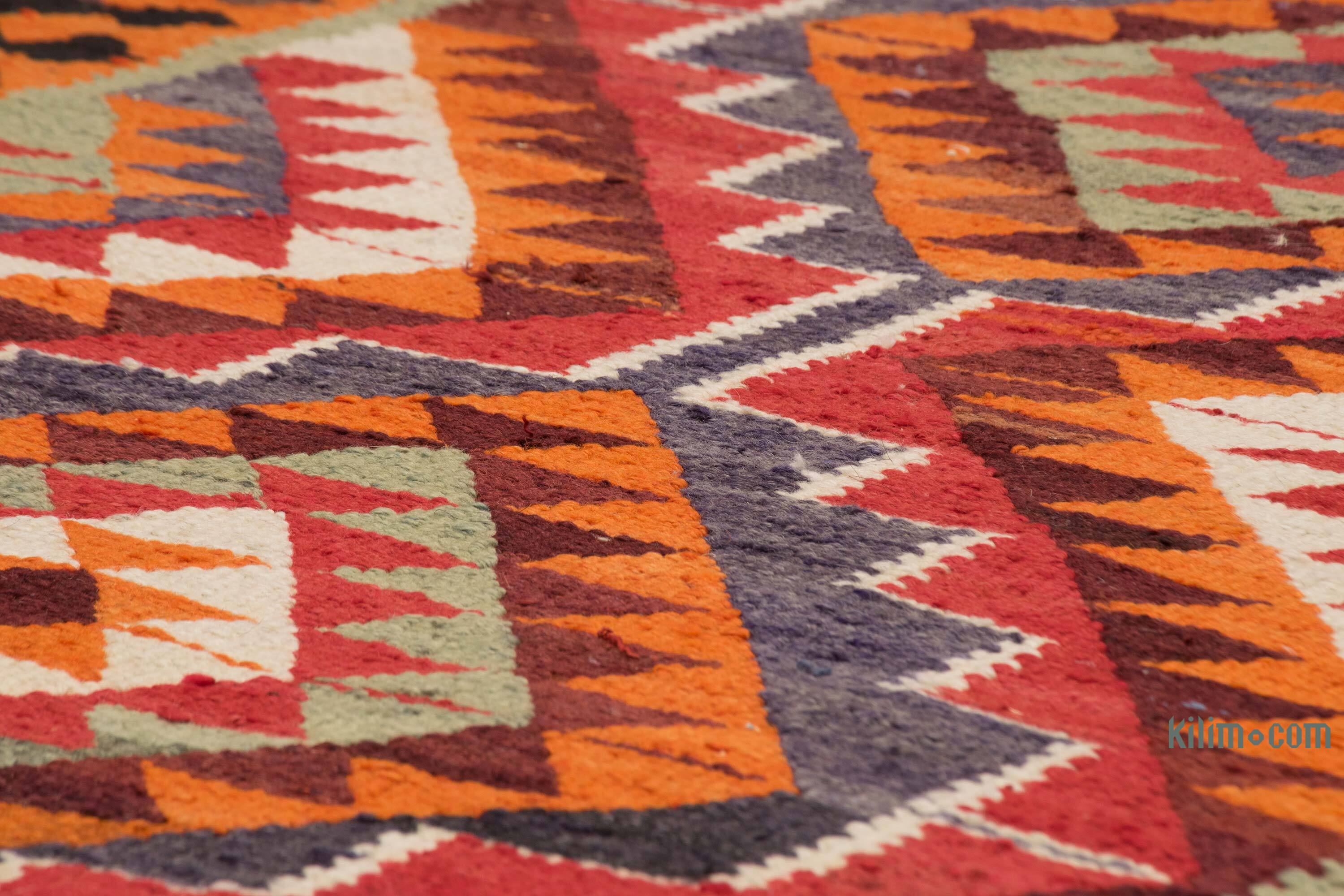
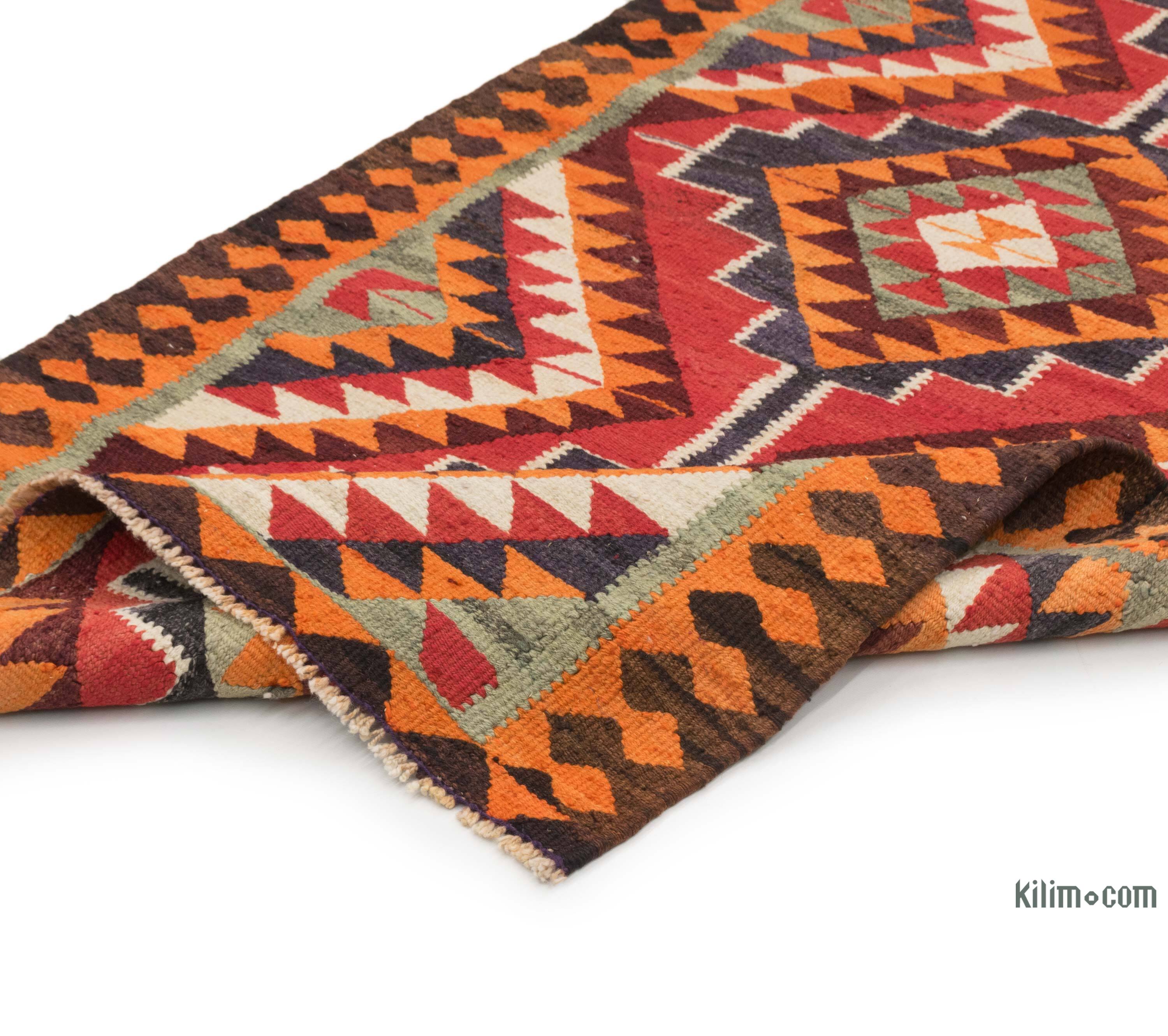
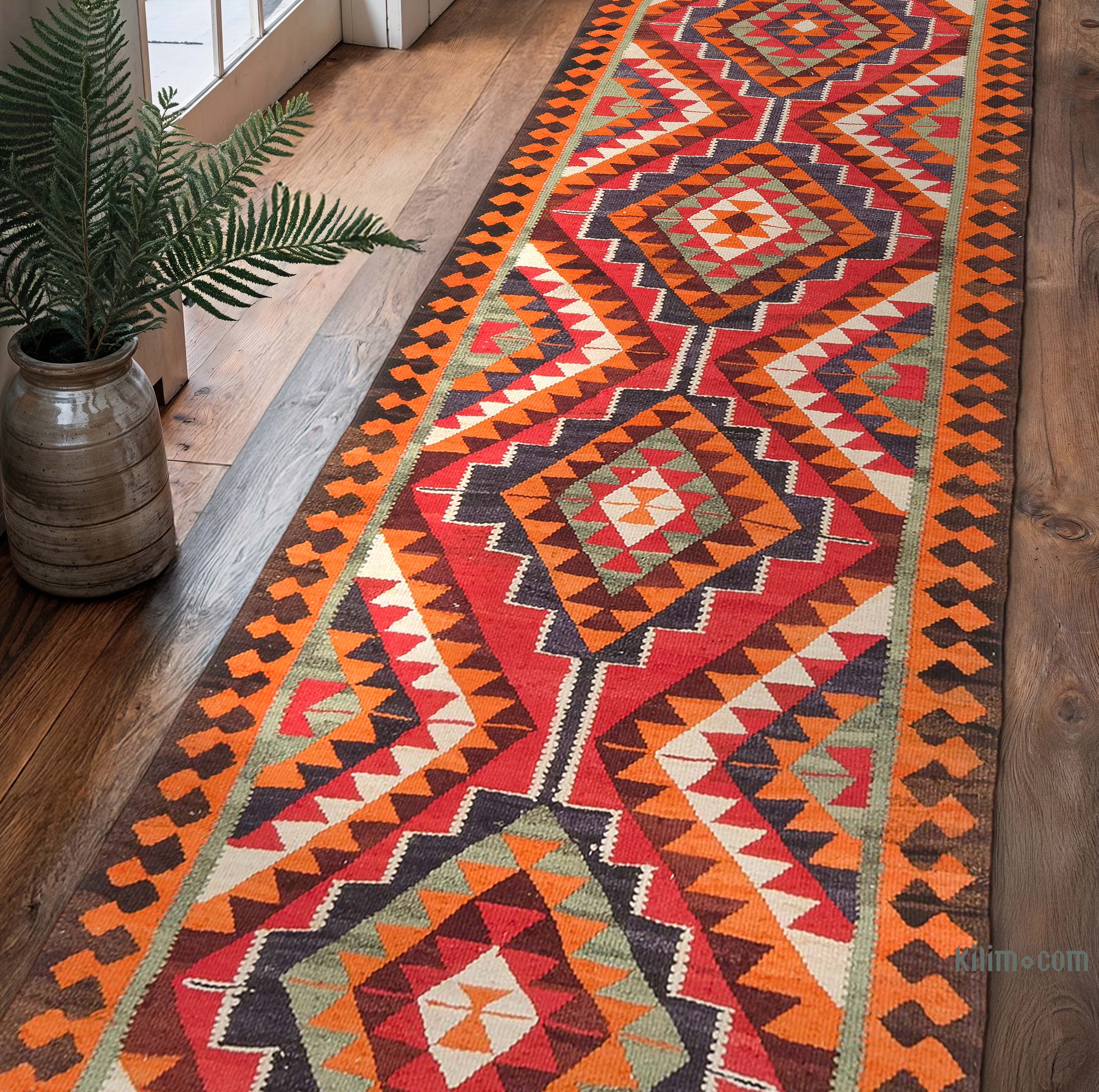
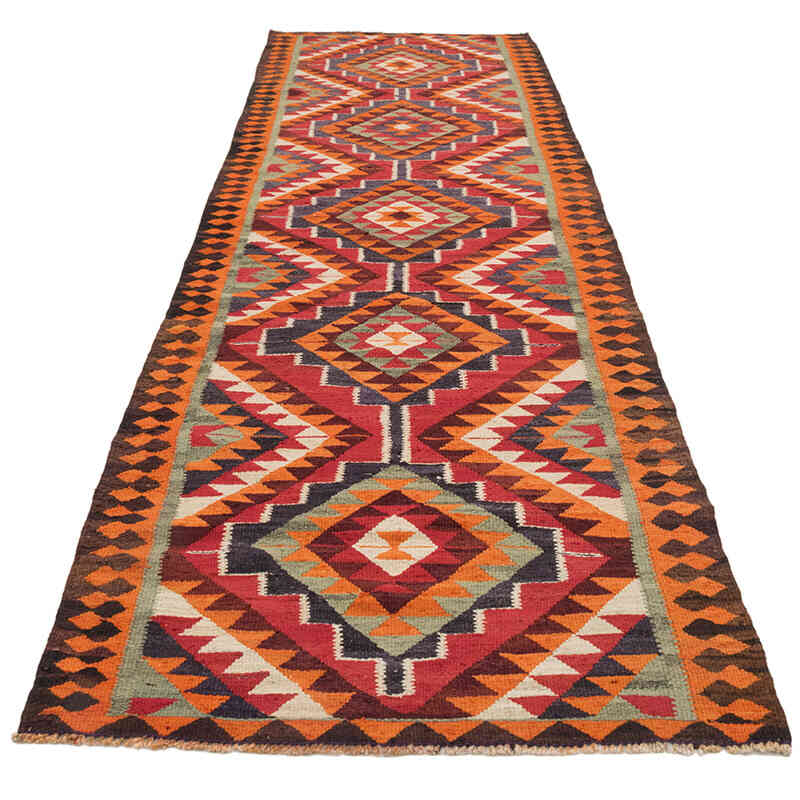
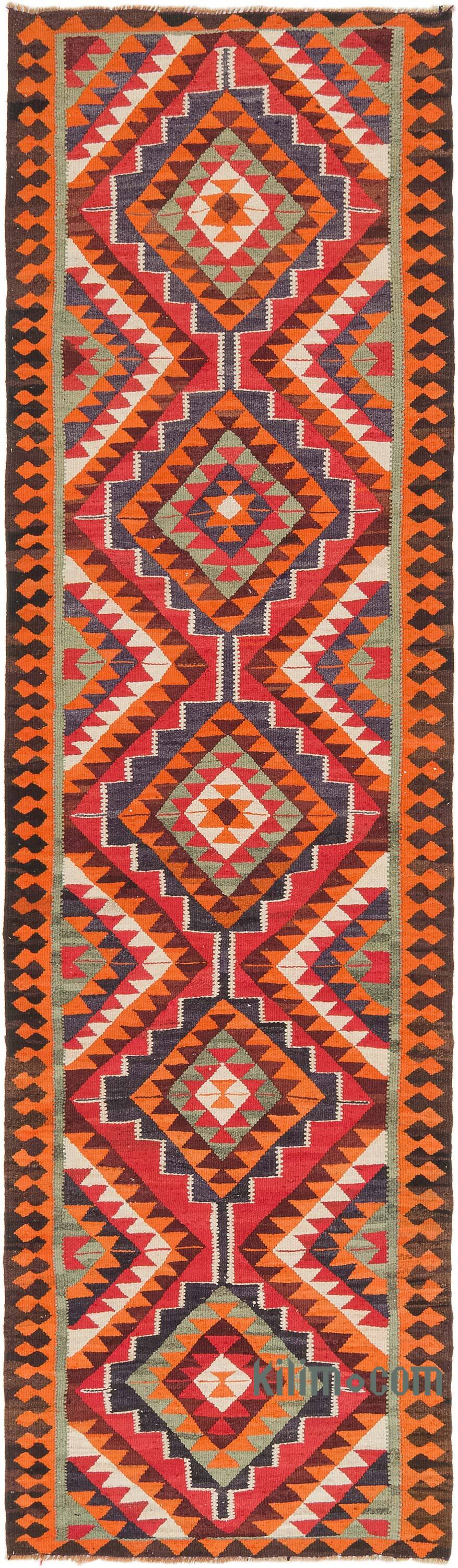
This kilim features a classic geometric design that showcases multiple large diamond motifs arranged vertically throughout the rug’s length. The diamonds are filled with smaller colorful triangles and pyramidal shapes, creating a vibrant, layered effect. The main color palette involves warm oranges, deep reds, earthy greens, and accents of cream and dark brown, which together evoke a lively yet grounding atmosphere.
The zigzag and triangular motifs that frame the diamonds are traditional elements in Anatolian kilims. They function symbolically to represent protective boundaries and natural elements like mountains or water waves, conveying the weaver’s connection to the surrounding landscape. Each diamond motif is intricately bordered with stepped lines, often signifying spirituality and the journey through life.
These motifs collectively tell a story of resilience, protection, and harmony. The repetition and symmetry suggest balance and stability, values deeply embedded in the culture that inspired this work. The alternating colors also create a dynamic rhythm that captures attention and encourages contemplation.
Integration with Interior Design Styles
- Bohemian: The warm tones and handcrafted look of this kilim fit perfectly within bohemian interiors, adding eclectic charm and global influence. Placing it under a rustic wooden coffee table or layered with other textiles enhances the relaxed, collected vibe.
- Mid-Century Modern: The geometric clarity and bold colors complement mid-century furniture’s clean lines and minimalist forms. This rug brings in a textural contrast and warmth that balances mid-century’s sleekness while maintaining a retro authenticity.
- Eclectic Contemporary: In a contemporary space with diverse elements, this kilim acts as a statement piece that draws the eye and pulses vibrant energy without clashing. It harmonizes with modern art, sculptural furniture, and mixed material palettes.
- Rustic and Farmhouse: The earth-inspired palette and textured weave of the rug resonate well in rustic interiors where natural fibers and handmade craftsmanship are prized. It adds color and pattern to wooden floors and neutral tones common in farmhouse designs.
- Traditional and Classic: Against traditional decor with ornate furniture and classical motifs, the kilim introduces an ethnic, handcrafted element that enriches the layered story of a room. It balances elegance with grounded cultural heritage.
Whether placed in an entryway, hallway, living room, or bedroom, this kilim instills a sense of warmth and history. Its motifs echo universal themes of protection, abundance, and harmony, making it relatable across different cultures and design sensibilities.
For a deeper look into the meanings of these traditional symbols, visit Kilim Motifs and Symbols.
Rolling Up
- The rug’s large diamond motifs and vibrant triangles express stories of protection, stability, and connection to nature.
- Its warm, earthy color scheme enhances atmosphere without overwhelming a space.
- The design adapts beautifully to bohemian, mid-century modern, eclectic, rustic, and traditional interior styles.
- It brings rich cultural storytelling and handcrafted texture into various living environments.
- Exploring these motifs helps viewers appreciate the emotional and symbolic depth woven into every thread.
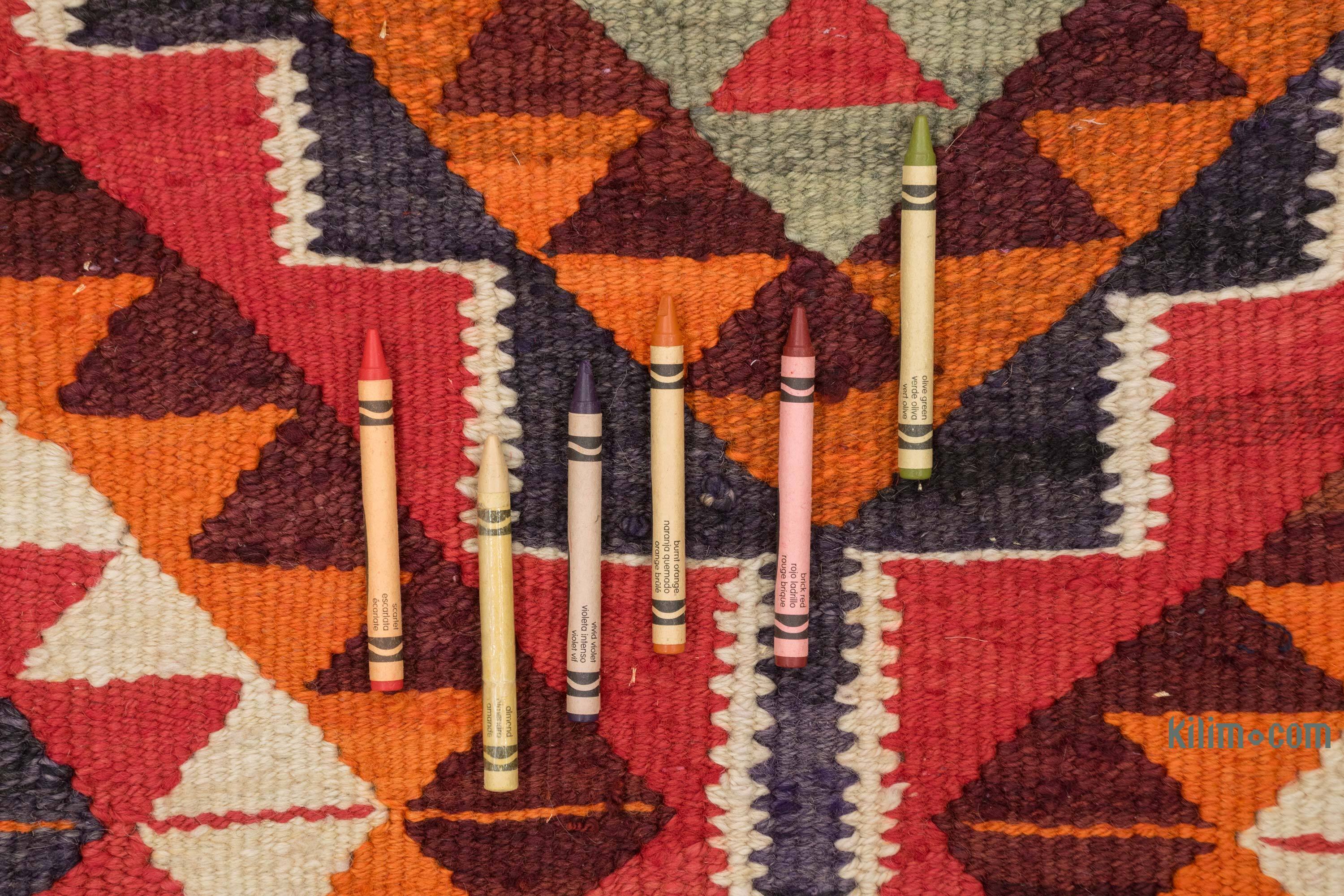
Colors may appear slightly different across various monitors due to screen settings device differences, and external lighting conditions. If color accuracy is important for your space, we recommend viewing the rug on multiple devices or contacting us for a detailed color description. We can provide detailed photos and references using Sherwin-Williams, Benjamin Moore, Pantone, or even Crayola crayons.
You can also visualize most of our products in your own room with AR (augmented reality) on an iPhone or iPad.
Return Policy
Need a rug pad? We recommend RugPadUSA