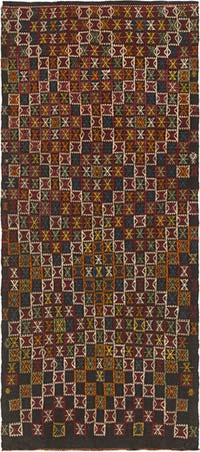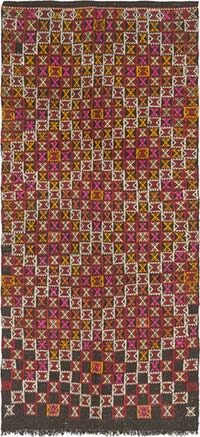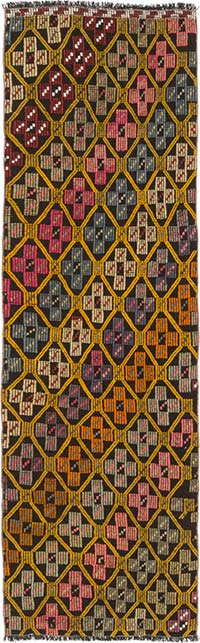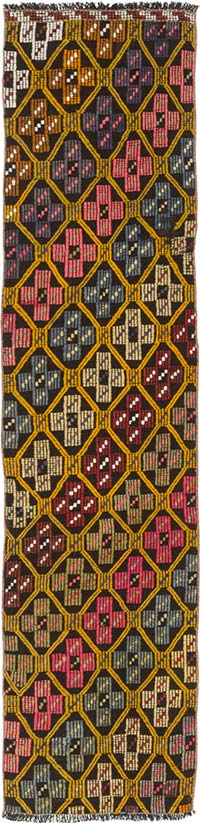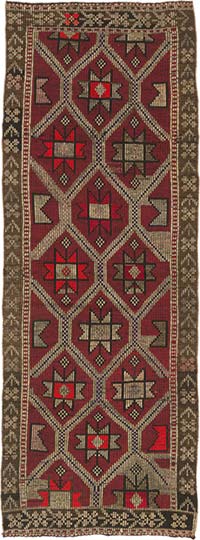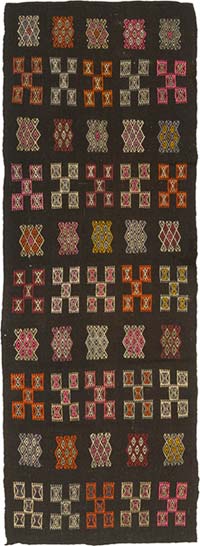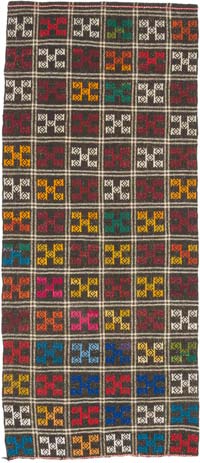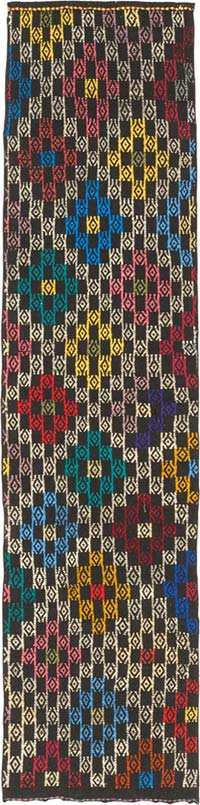
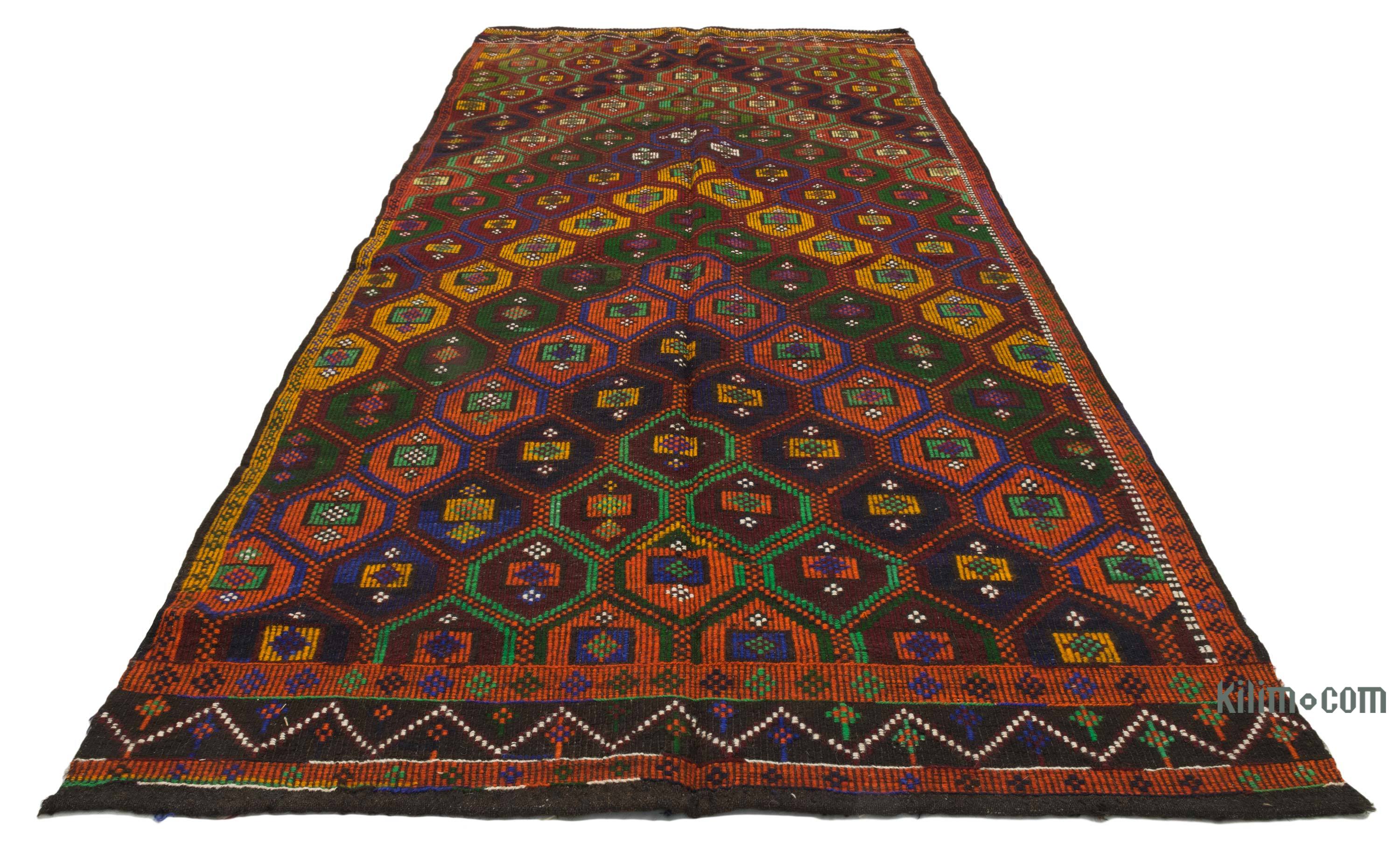
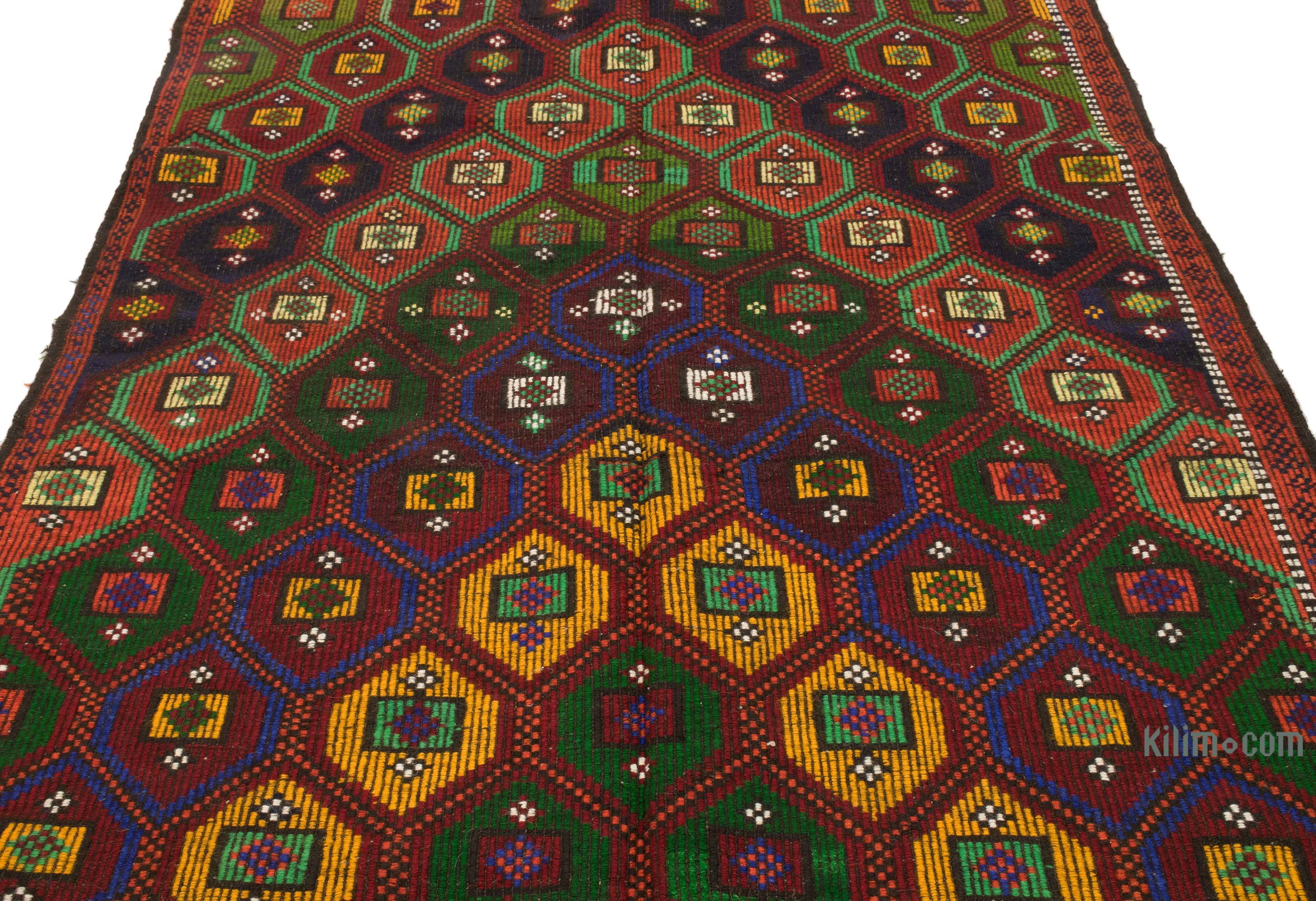
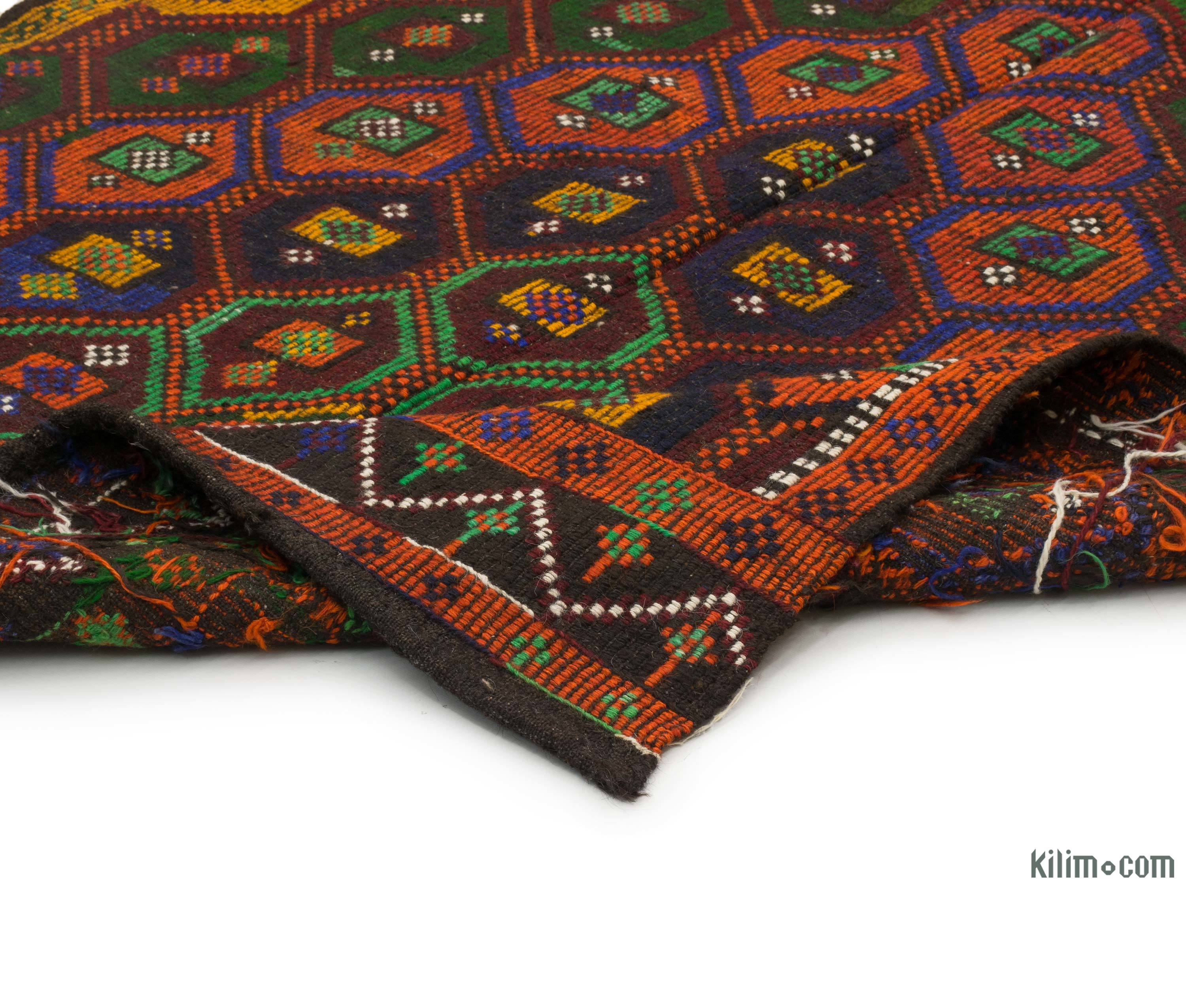
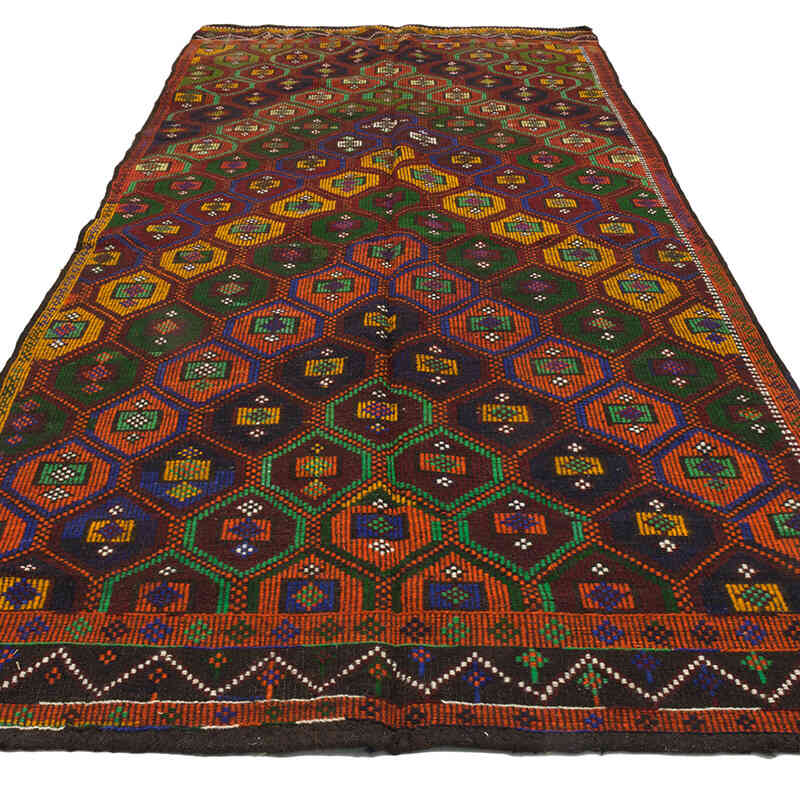

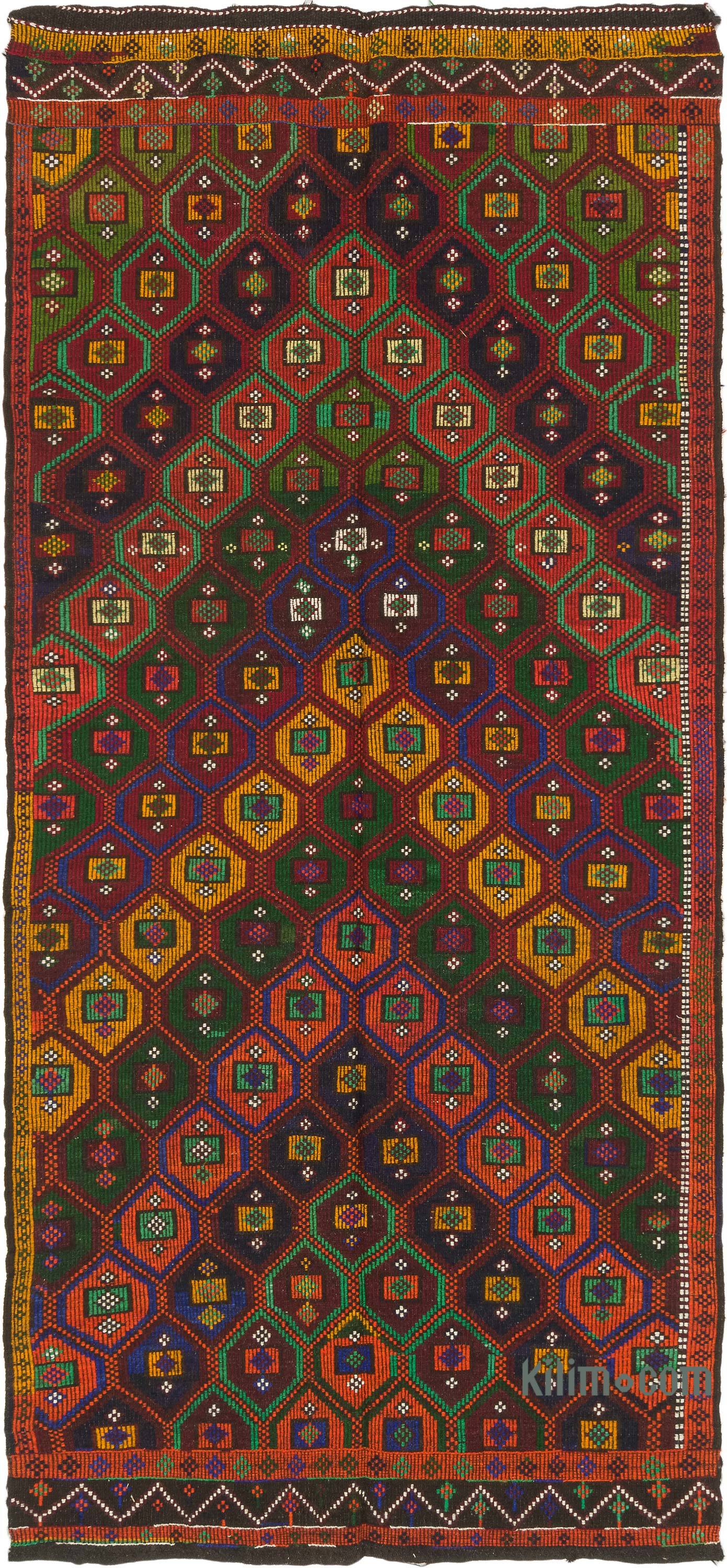
Vintage Anatolian Jijim Rug 5' 1" x 11' 3" (61" x 135")
Type:
Kilim RugsStyle:
TribalID:
K0072250Size:
Material:
- Ships in 2-5 business days
- All of our rugs are professionally cleaned; gentle wear from age and natural irregularities are inherent features of these one-of-a-kind handwoven vintage rugs.
- Only one in stock, handmade, unique
- Free shipping via FedEx Express. Returns & exchanges
- Contact us or add a note to your order if you want us to delay your shipping.
- Request more info if you want this rug shorter or narrower
Colors
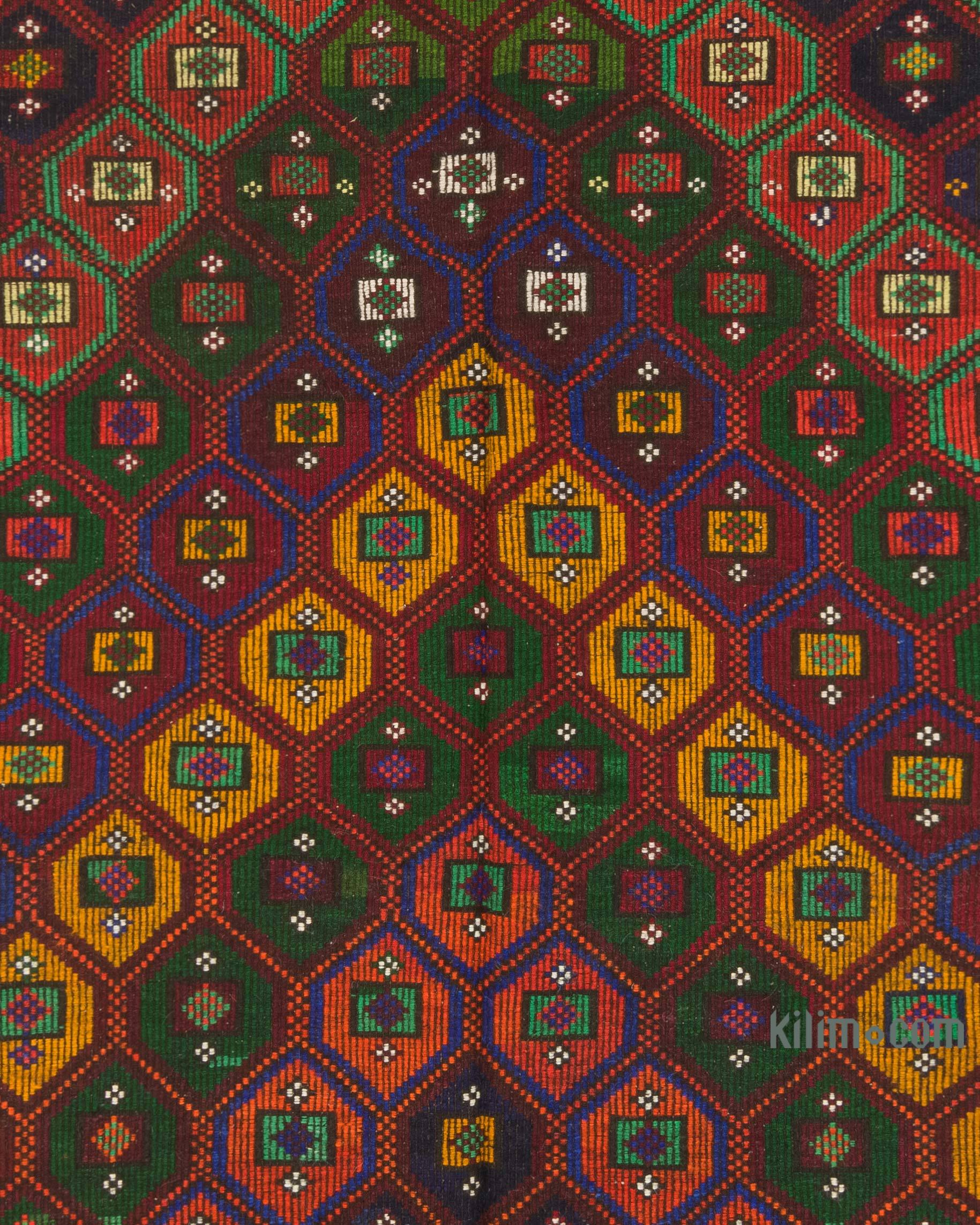
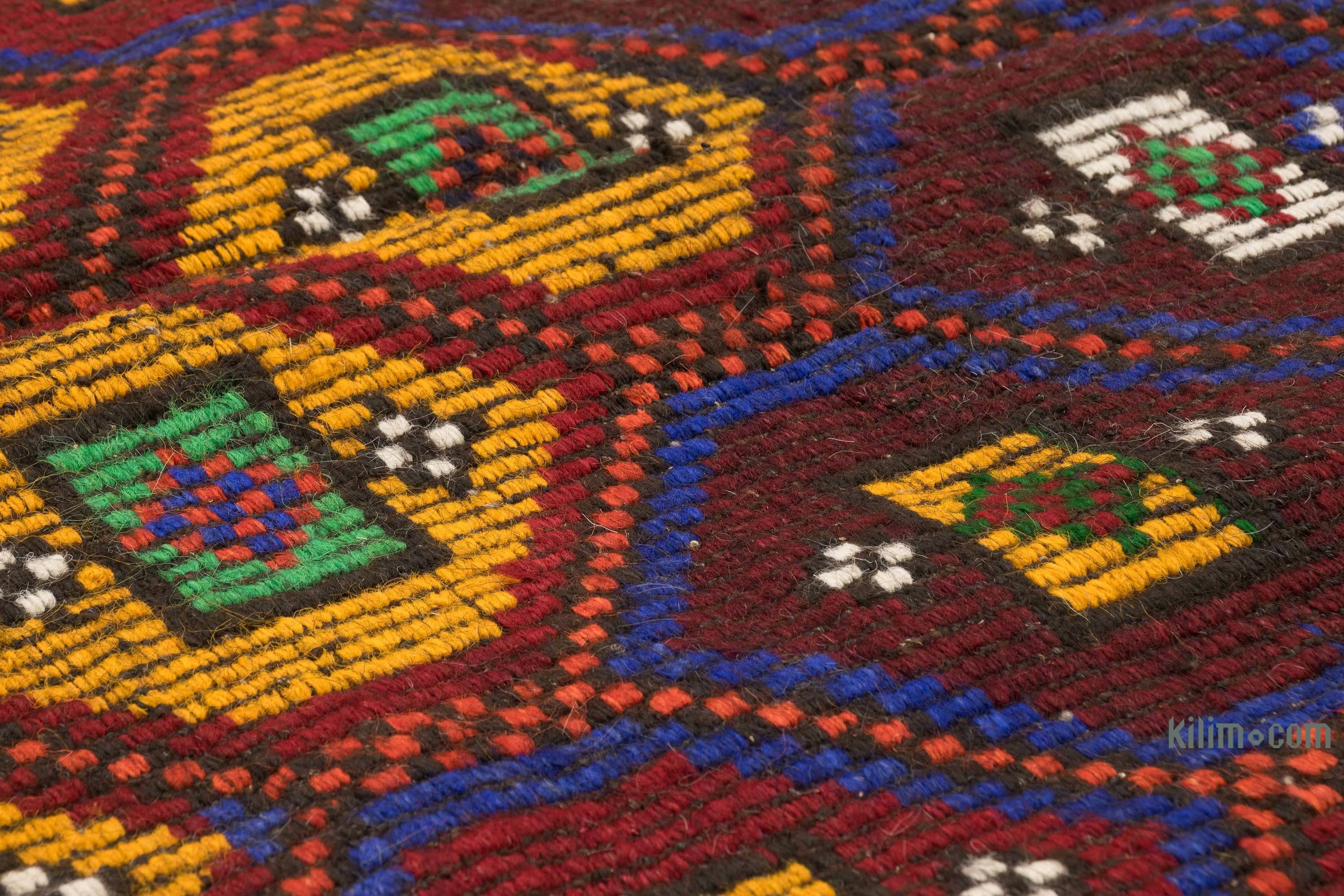
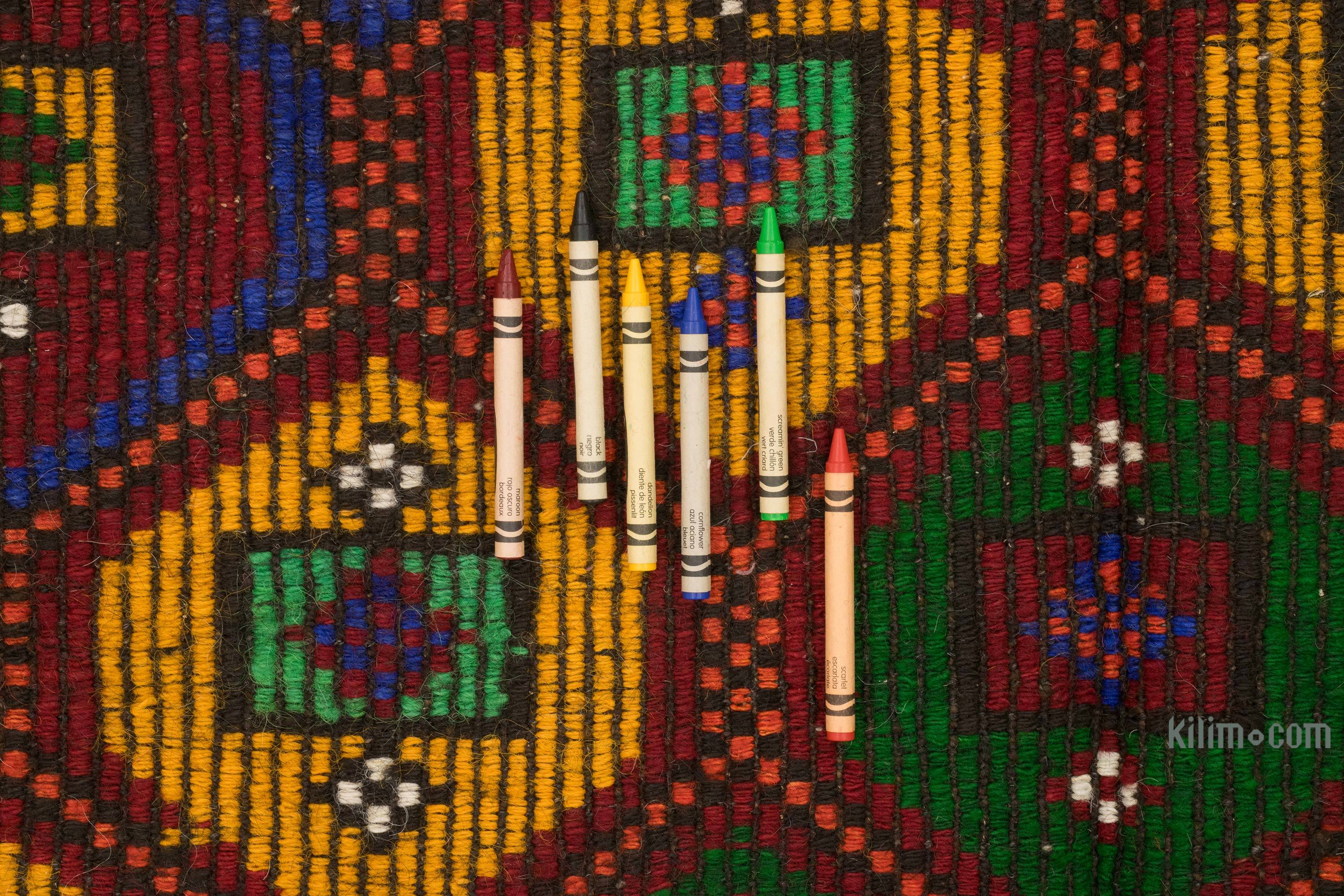
- Vibrant Palette: The kilim rug exhibits a rich and vivid color palette, featuring shades of red, green, yellow, and blue.
- Contrasting Colors: The contrast between the deep background colors and the bright geometric patterns creates a striking visual interest.
- Earthy Tones: The use of earth tones alongside brighter colors signifies a connection to nature and cultural heritage.
- Symbolic Colors: Each color usually holds significant meaning, such as red symbolizing love or passion, green representing fertility, and blue for protection.
Design Elements
- Jijim Technique: The jijim weaving technique stands out, characterized by its tight and intricate weaves, resulting in a durable texture.
- Geometric Patterns: The rug features repeating diamond shapes, intricate motifs, and bold borders, contributing to its rhythmic design.
- Symmetry and Balance: Symmetrical arrangements create harmony and balance, emphasizing the cultural significance of these designs.
- Layered Motifs: Each motif tells a story, reflecting the history and traditions of the Anatolian people.
Main Motifs and Their Symbolism
- Diamond Shapes: Represent the fertility of the earth and prosperity; their repeated nature reflects abundance.
- Crosses: Symbolize the four corners of the earth, balance, and protection against evil spirits.
- Spirals: Denote continuity and the cycle of life, embodying the connection between the past and the future.
- Flowers: Represent celestial beauty and nature, signifying harmony and the interrelations of life.
- Horizontal Lines: These lines suggest stability and encouragement, providing a steady foundation in life.
Summary
This vintage Anatolian kilim rug showcases a stunning display of vibrant colors and intricate geometric designs through the jijim weaving technique. Each color signifies deeper meanings, while the motifs, including diamonds, crosses, and spirals, convey rich symbolism rooted in fertility, balance, continuity, and harmony. Together, they illustrate a narrative about cultural identity and the bonds with both nature and spirituality.
Colors may appear slightly different across various monitors due to screen settings device differences, and external lighting conditions. If color accuracy is important for your space, we recommend viewing the rug on multiple devices or contacting us for a detailed color description. We can provide detailed photos and references using Sherwin-Williams, Benjamin Moore, Pantone, or even Crayola crayons.
You can also visualize most of our products in your own room with AR (augmented reality) on an iPhone or iPad.
Return Policy
Need a rug pad? We recommend RugPadUSA