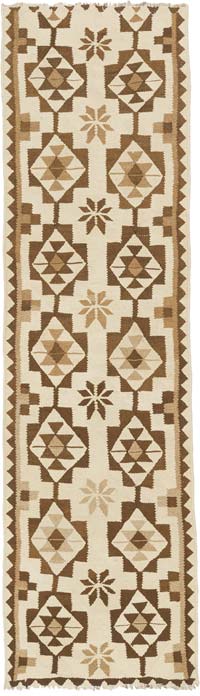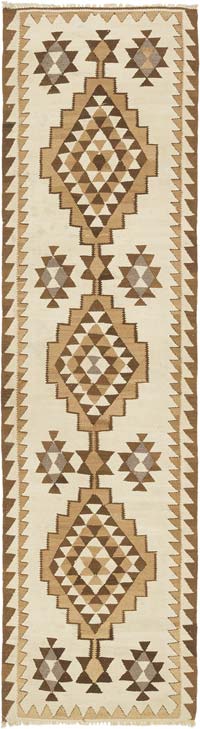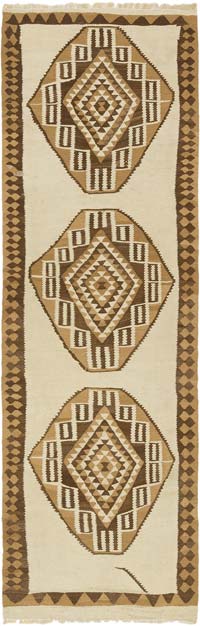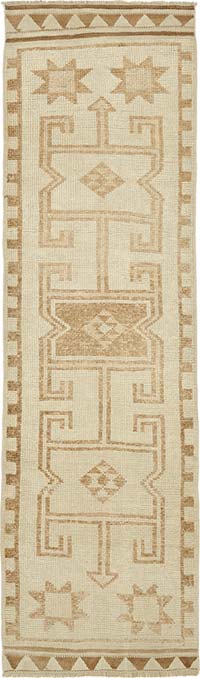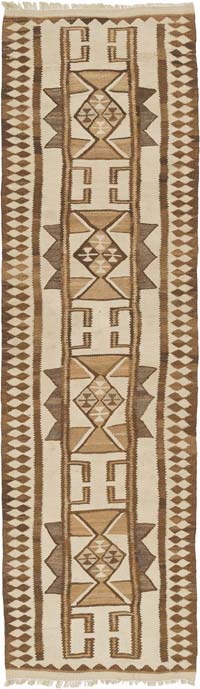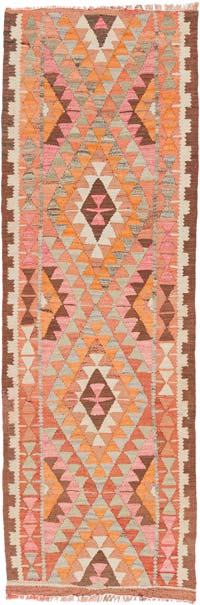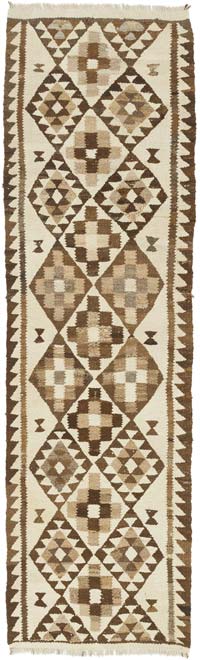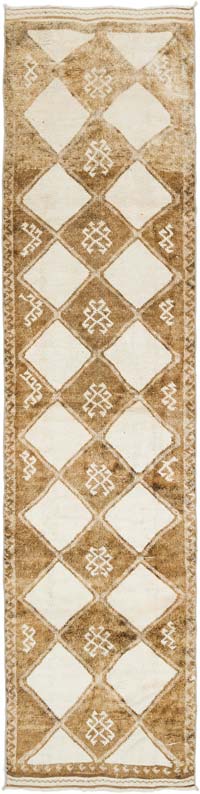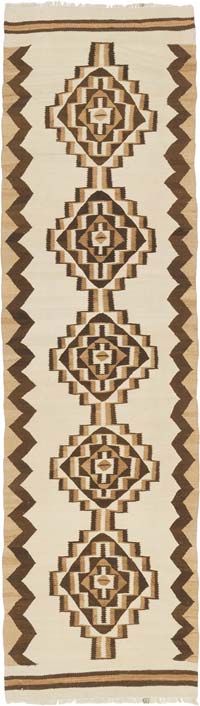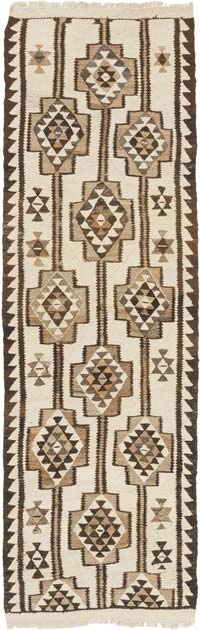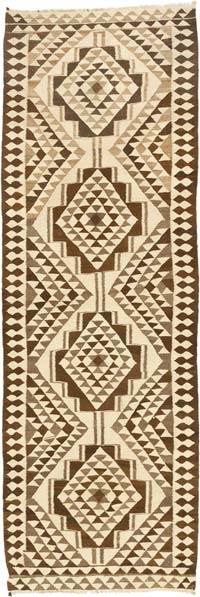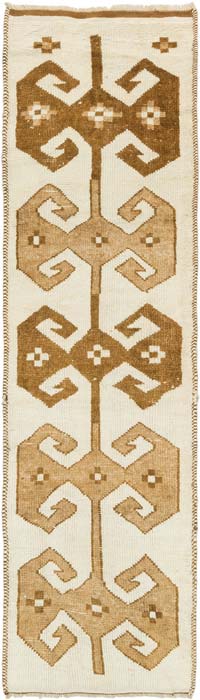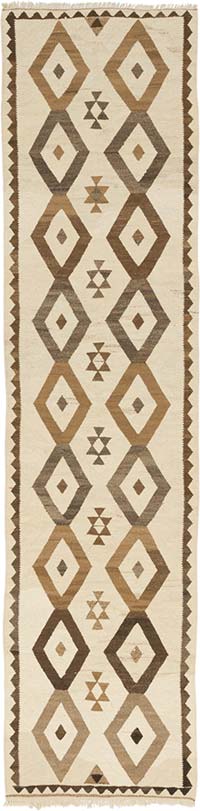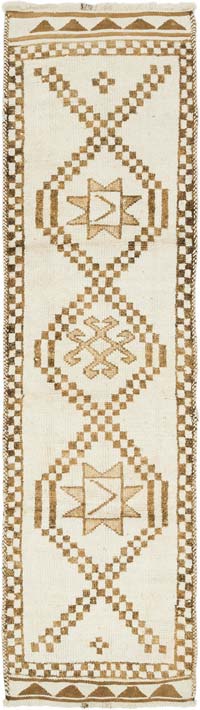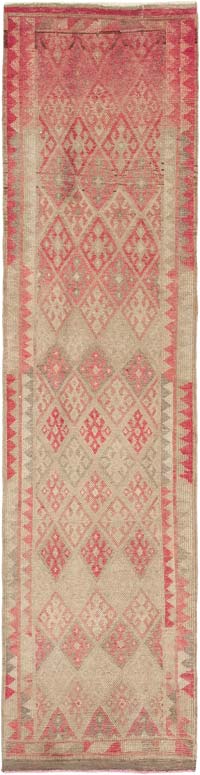
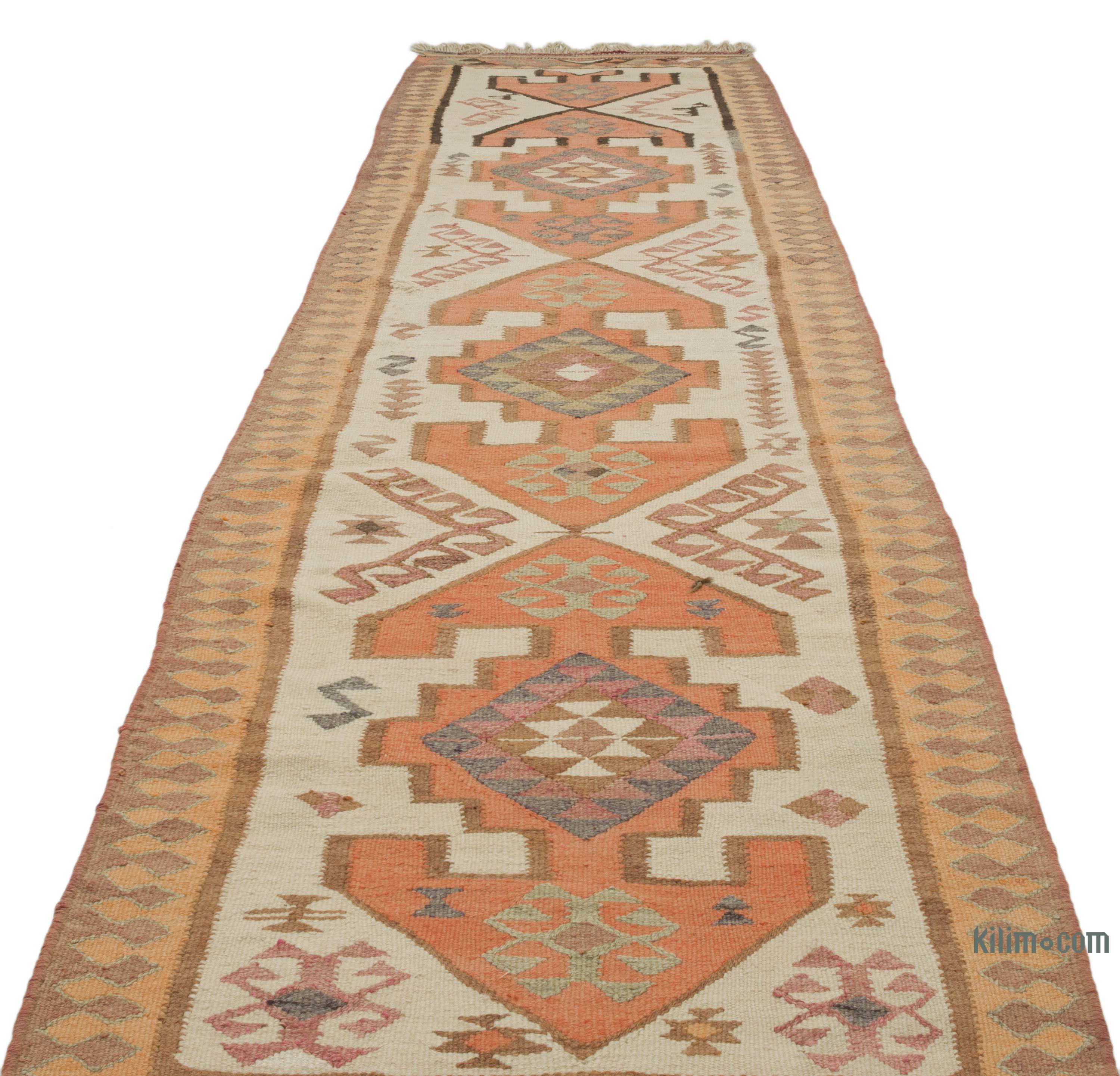

Vintage Tribal Kilim Runner 3' 4" x 11' 11" (40" x 143")
Type:
Kilim RugsCollection:
Tribal RunnersStyle:
TribalID:
K0069825Size:
Material:
- Ships in 2-5 business days
- All of our rugs are professionally cleaned; gentle wear from age and natural irregularities are inherent features of these one-of-a-kind handwoven vintage rugs.
- Only one in stock, handmade, unique
- Free shipping via FedEx Express. Returns & exchanges
- Contact us or add a note to your order if you want us to delay your shipping.
- Request more info if you want this rug shorter or narrower
The designs feature a rich array of symbols representing tribal culture and Anatolian motifs, often in the form of medallions, diamonds, and other geometric shapes. These kilim runners are ideal for hallways and narrow spaces, offering a touch of ethnic charm and artisanal quality to any interior.
Herki kilims not only serve as functional floor coverings but also as artistic expressions of tribal identity, making each rug a unique cultural artifact.
Design and Motifs
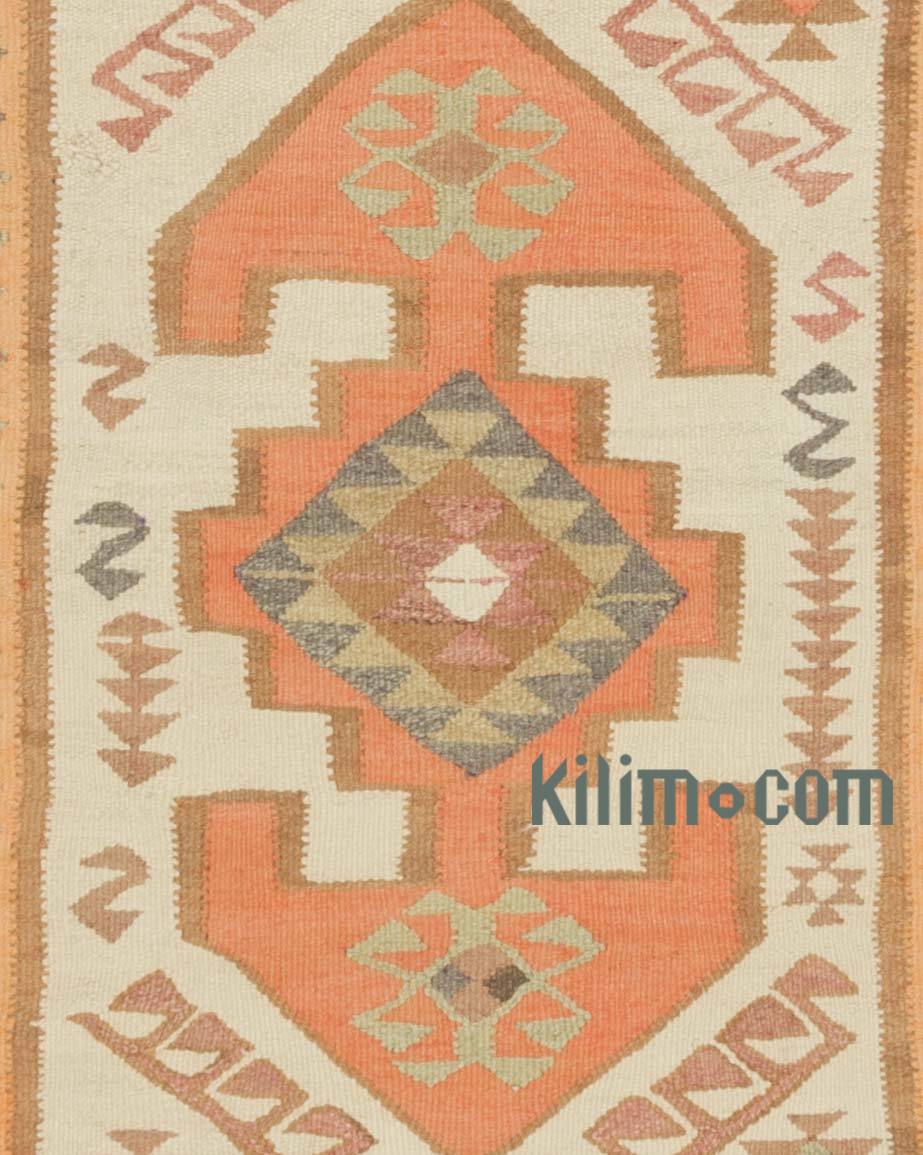
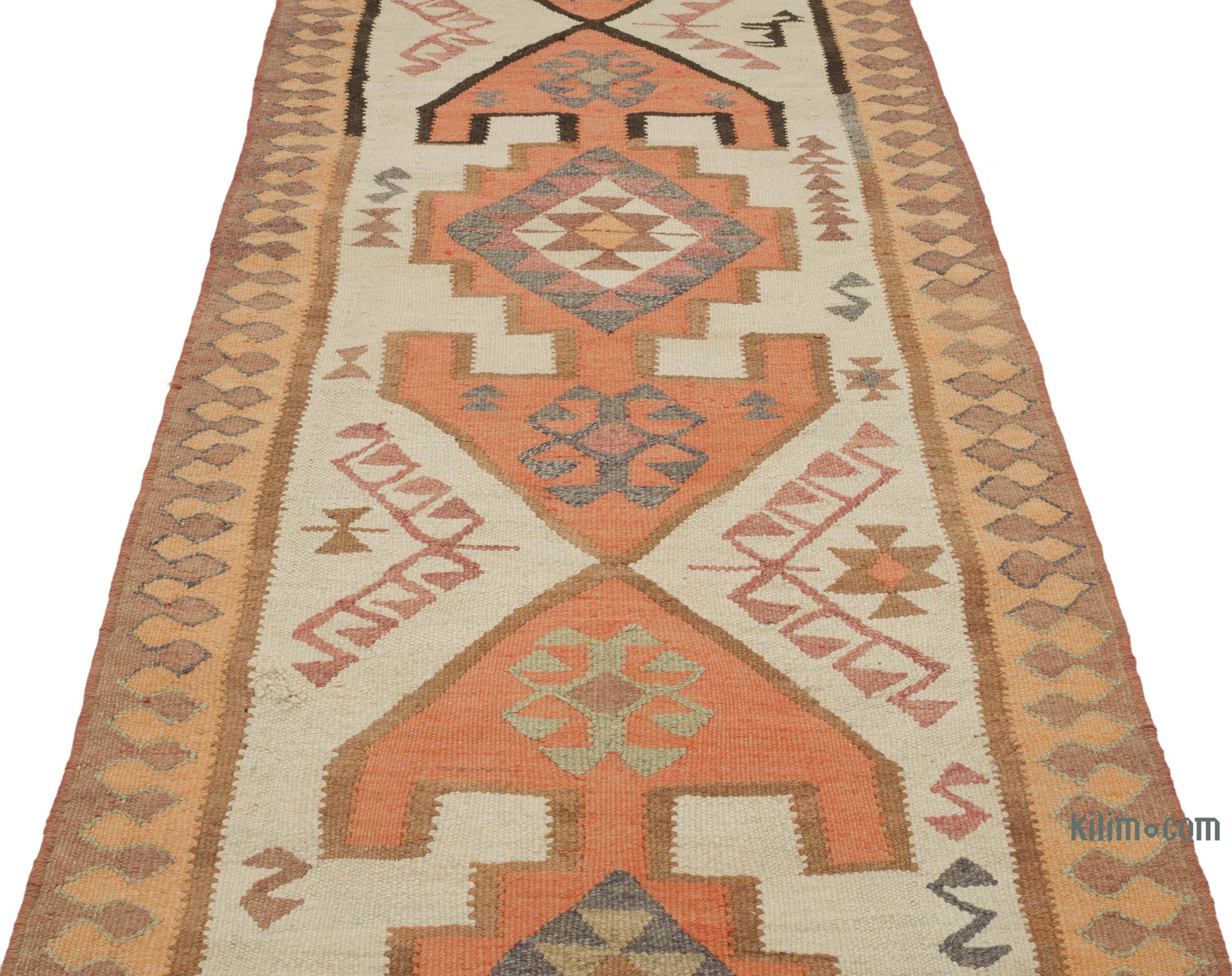
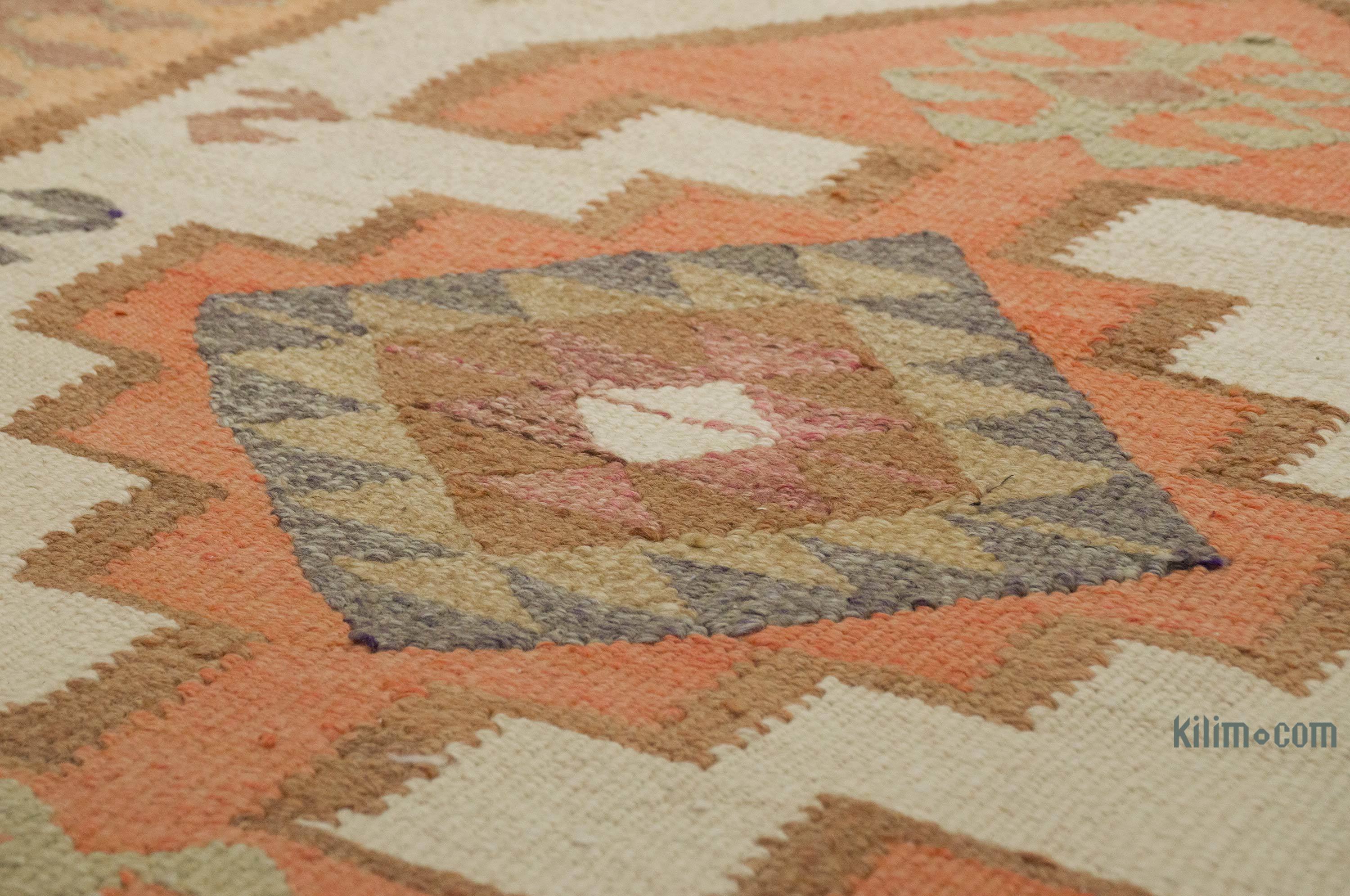
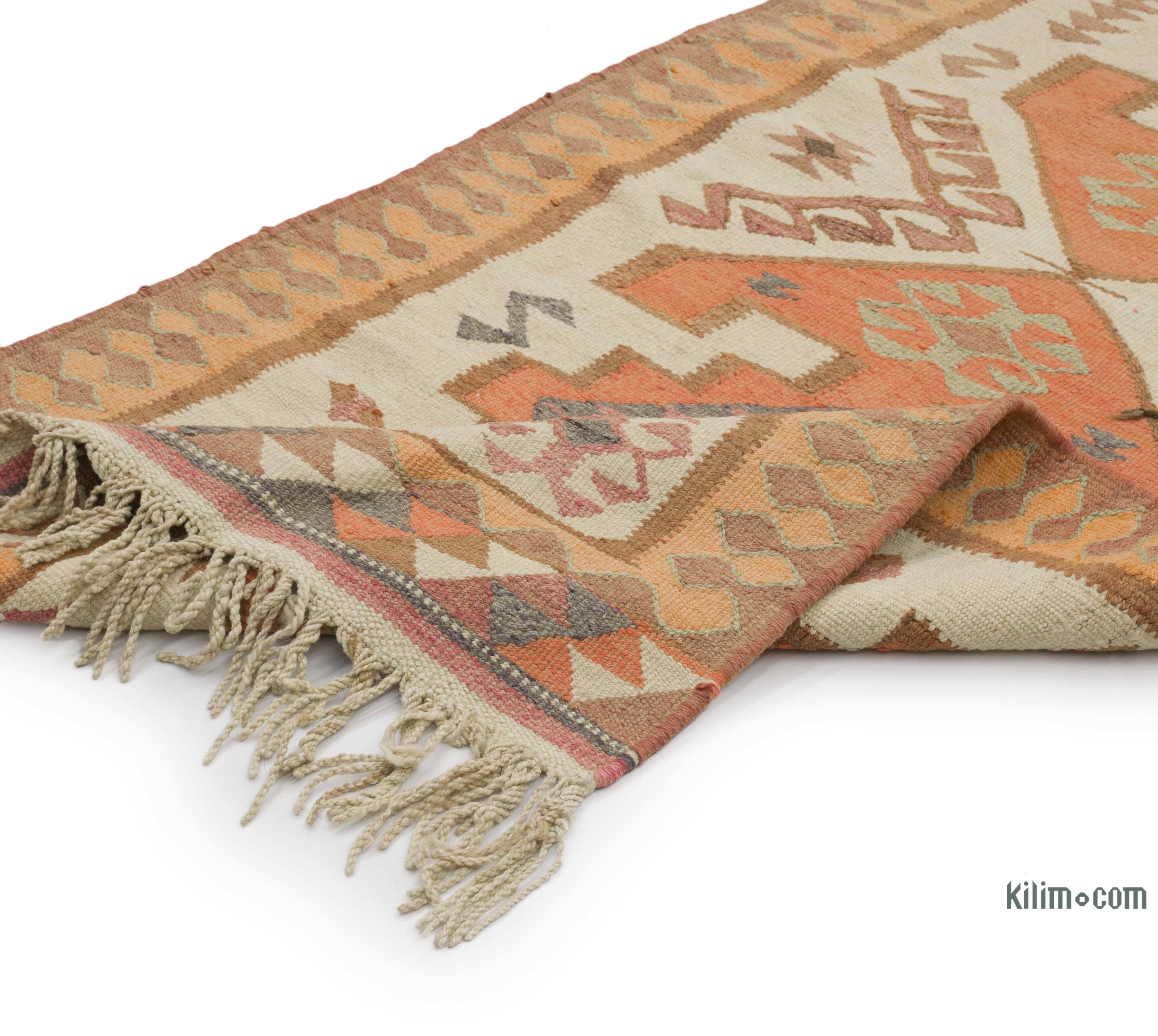
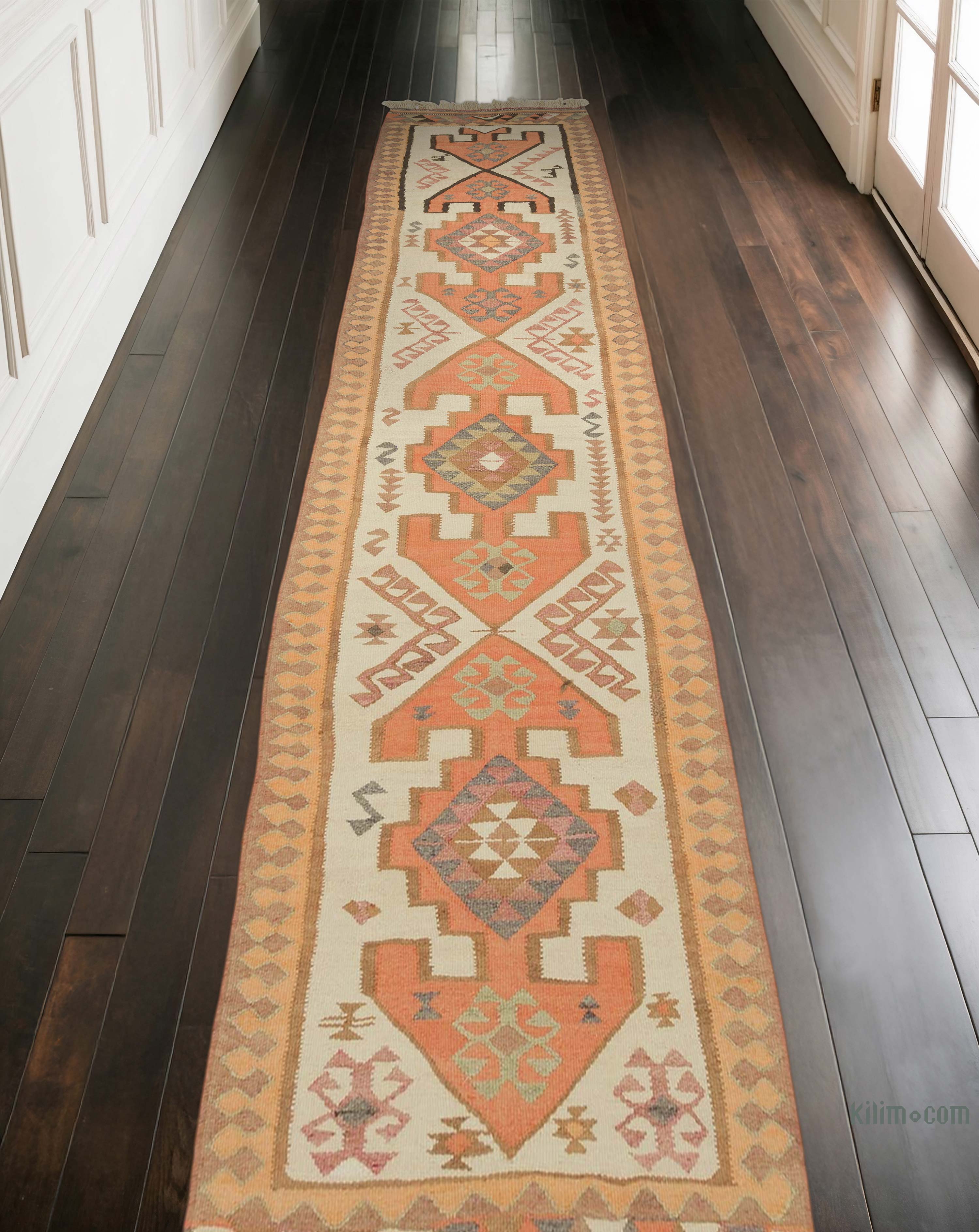
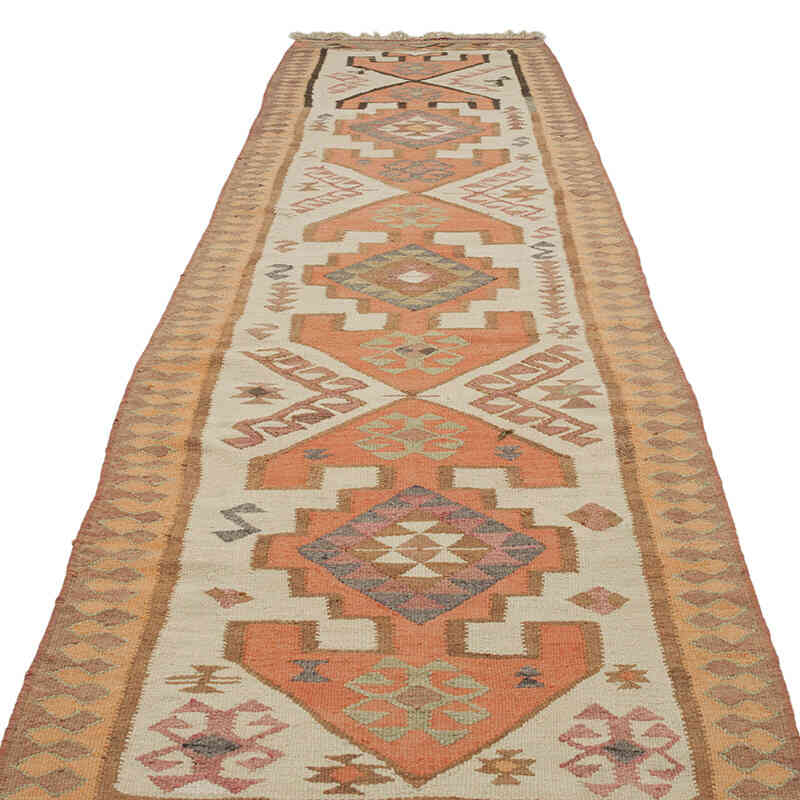
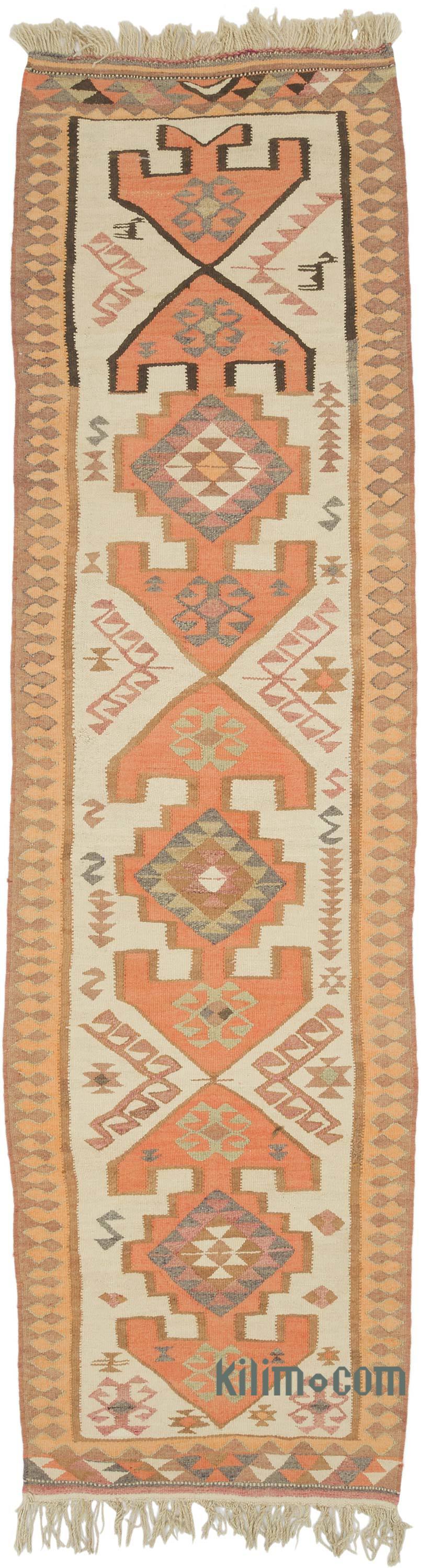
This exquisite Anatolian Kilim features a masterful composition of geometric shapes and symbolic motifs, typical of traditional Turkish weaving. The rug’s dominant warm hues of soft terracotta, beige, rust, and muted pastels create a calming yet vibrant palette. Central to the design are several large, hooked lozenge shapes, each adorned with smaller diamond and triangular patterns achieving a layered complexity that draws the eye.
- Hooked Motifs: The hooked or ram's horn shapes symbolize protection and strength. They often represent resilience and the enduring spirit of the weaver’s community, acting as a safeguard within the household.
- Diamond Patterns: Prominent in the centerpiece are diamond motifs, which commonly signify fertility and the womb, reflecting themes of creation and growth. These diamonds are intricately filled with smaller triangles that suggest movement and transformation.
- Ram’s Horns and Zigzags: Alongside the central motifs, zigzag lines and ram’s horns appear, expressing protection and warding off evil. These patterns connect the piece to both ancestral storytelling and spiritual beliefs.
- Borders: The borders contain repeating diamond and leaf-like shapes that echo abundance and continuity, enclosing the inner motifs harmoniously.
Each motif tells a story linked deeply to the life, hopes, and environment of the Anatolian nomadic weavers, turning the Kilim into an enduring cultural narrative woven with care and intention. You can explore more about these meaningful patterns on our Kilim motifs and symbols page.
Integration with Interior Design Styles
This Kilim runner adds a warm, earthy aesthetic that complements a variety of interior styles effortlessly, making it a versatile choice for modern living spaces.
- Bohemian Style: The eclectic and global feel of bohemian decor thrives on ethnic and handmade accents. This rug’s vivid storytelling and soft color palette amplify boho-chic settings, adding both texture and cultural depth to layered, artistic rooms.
- Mid-Century Modern: With its geometric precision and subdued colors, the Kilim pairs beautifully with the clean lines and organic shapes of mid-century design. It introduces warmth and a handcrafted touch within minimalist furniture arrangements.
- Rustic and Farmhouse: The earthy tones and tribal motifs anchor rustic spaces, complementing wood furniture and natural materials. It reinforces a cozy, grounded vibe in kitchens, hallways, or entryways.
- Scandinavian: Known for simplicity and muted palettes, Scandinavian interiors benefit from the rug’s soft patterns that add subtle visual interest without overwhelming. Its organic motifs bring nature-inspired harmony to minimalist rooms.
- Contemporary: The Kilim delivers an element of handcrafted artistry in sleek, modern environments. Placing this rug in high-traffic areas or narrow hallways injects warmth and character, balancing cool materials like glass or metal.
Rolling Up
This Anatolian Kilim rug blends traditional symbolism with timeless design, offering more than surface decoration. Its rich motifs speak to protection, fertility, and resilience deeply rooted in cultural heritage. The warm hues and geometric patterns make it adaptable across various interior styles, from bohemian to contemporary, enriching spaces with texture, story, and heart. Bringing this Kilim into your home is an invitation to experience an ancient craft intertwined with everyday living.
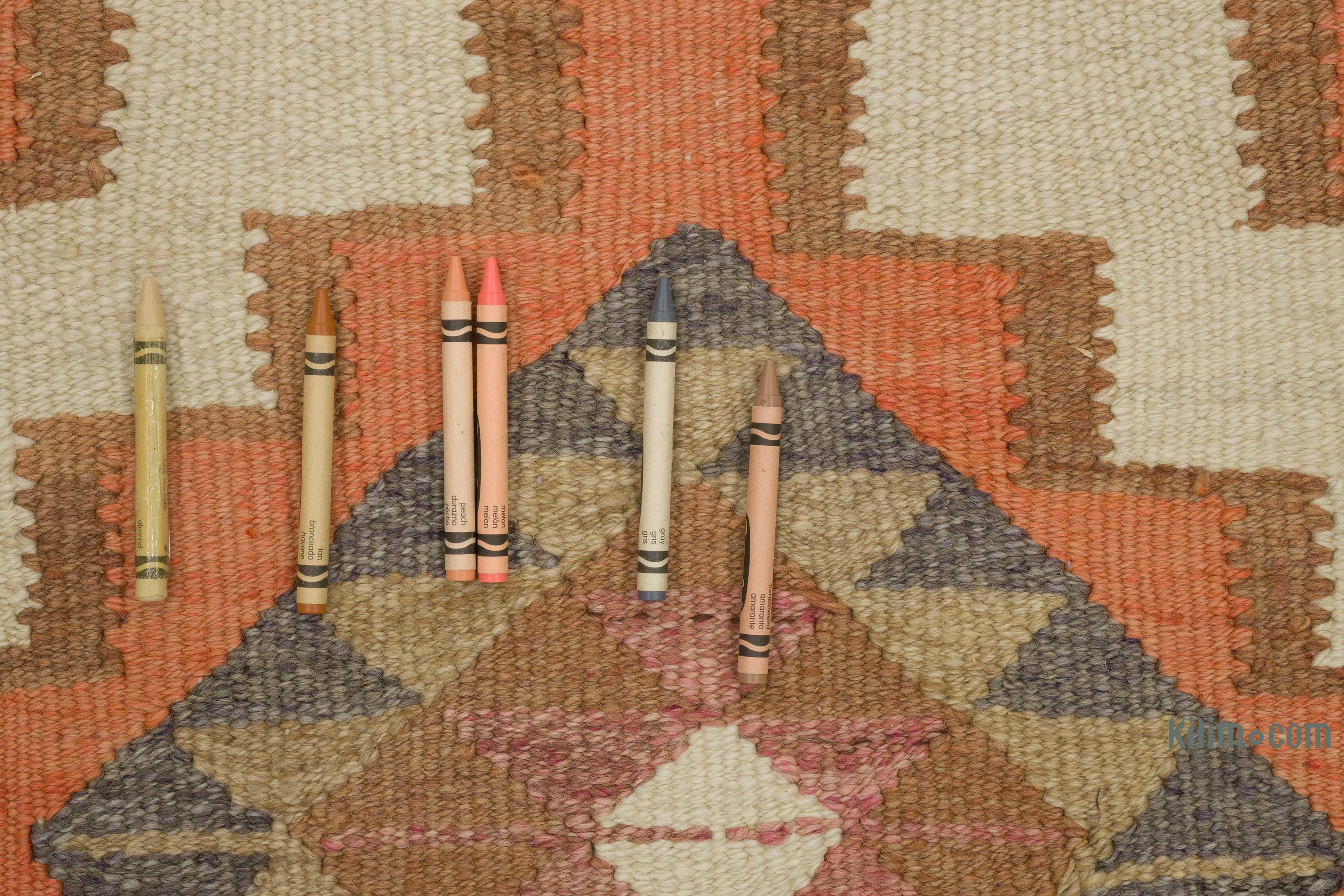
Colors may appear slightly different across various monitors due to screen settings device differences, and external lighting conditions. If color accuracy is important for your space, we recommend viewing the rug on multiple devices or contacting us for a detailed color description. We can provide detailed photos and references using Sherwin-Williams, Benjamin Moore, Pantone, or even Crayola crayons.
You can also visualize most of our products in your own room with AR (augmented reality) on an iPhone or iPad.
Return Policy
Need a rug pad? We recommend RugPadUSA