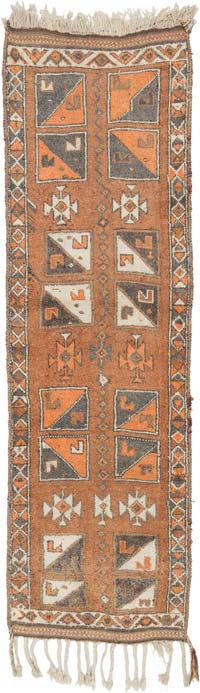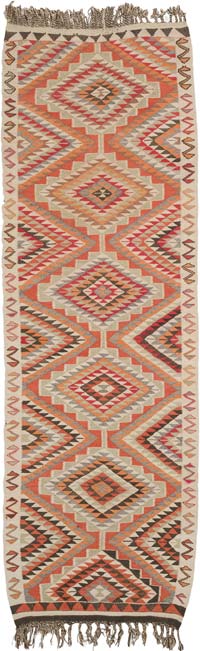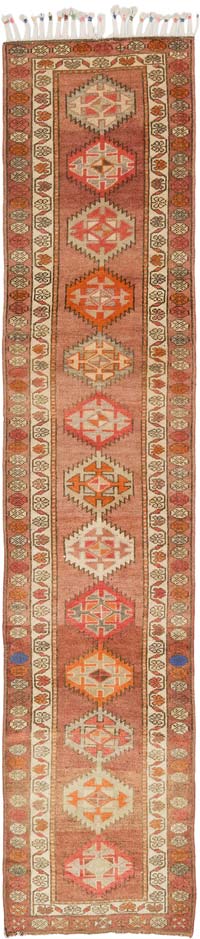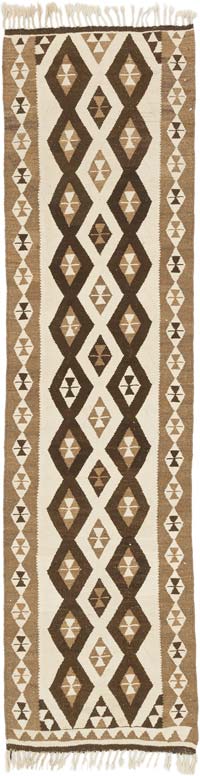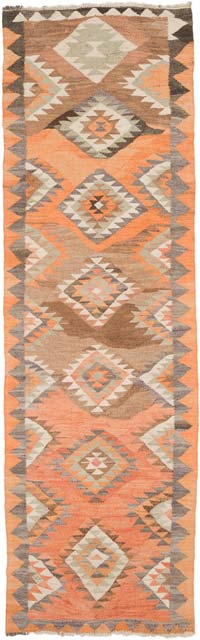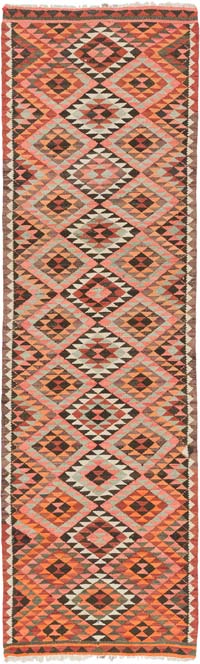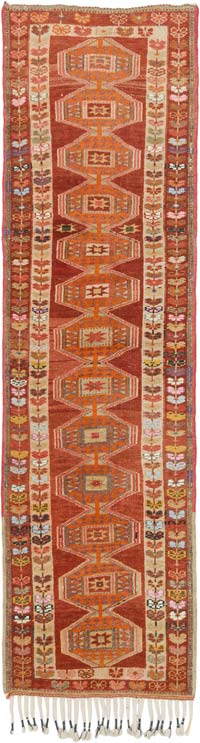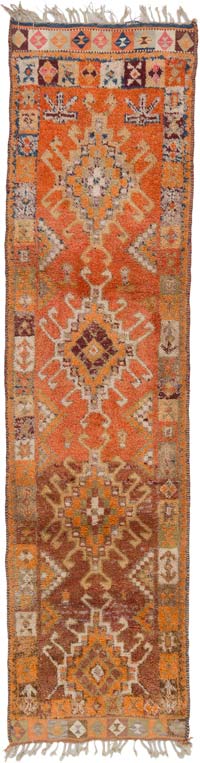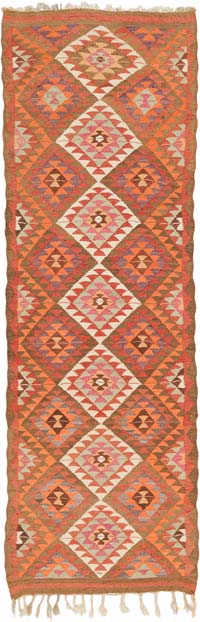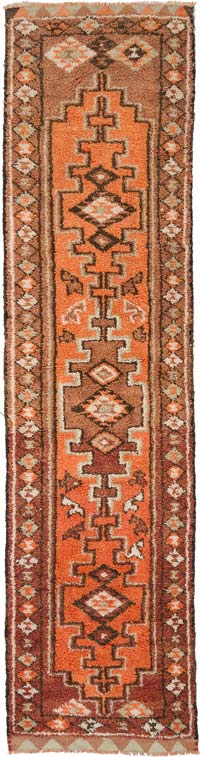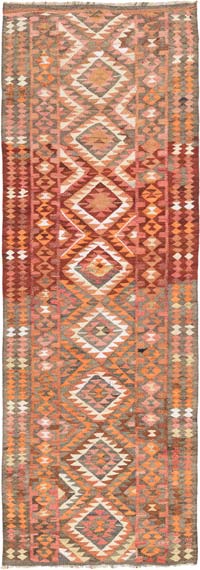
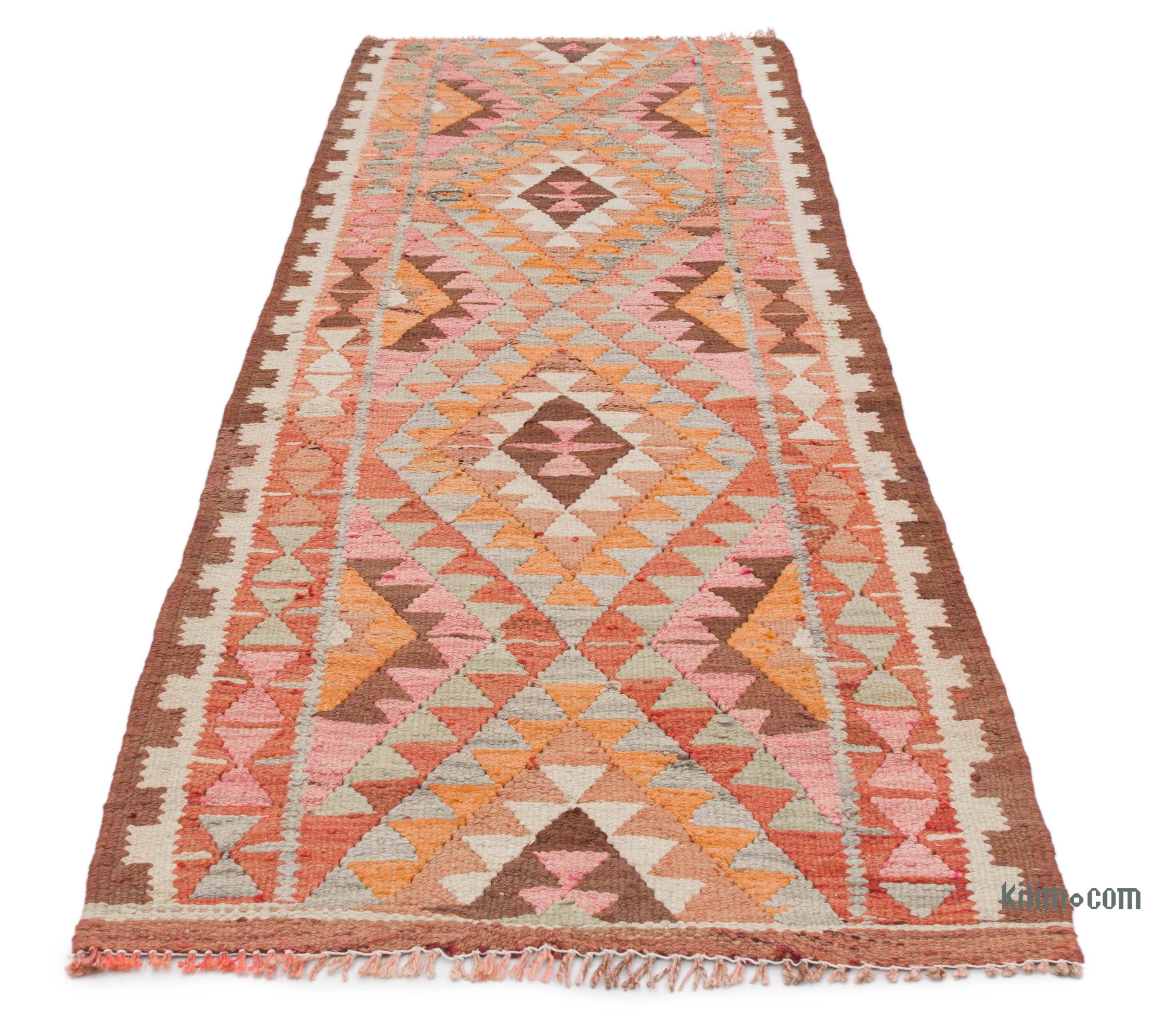
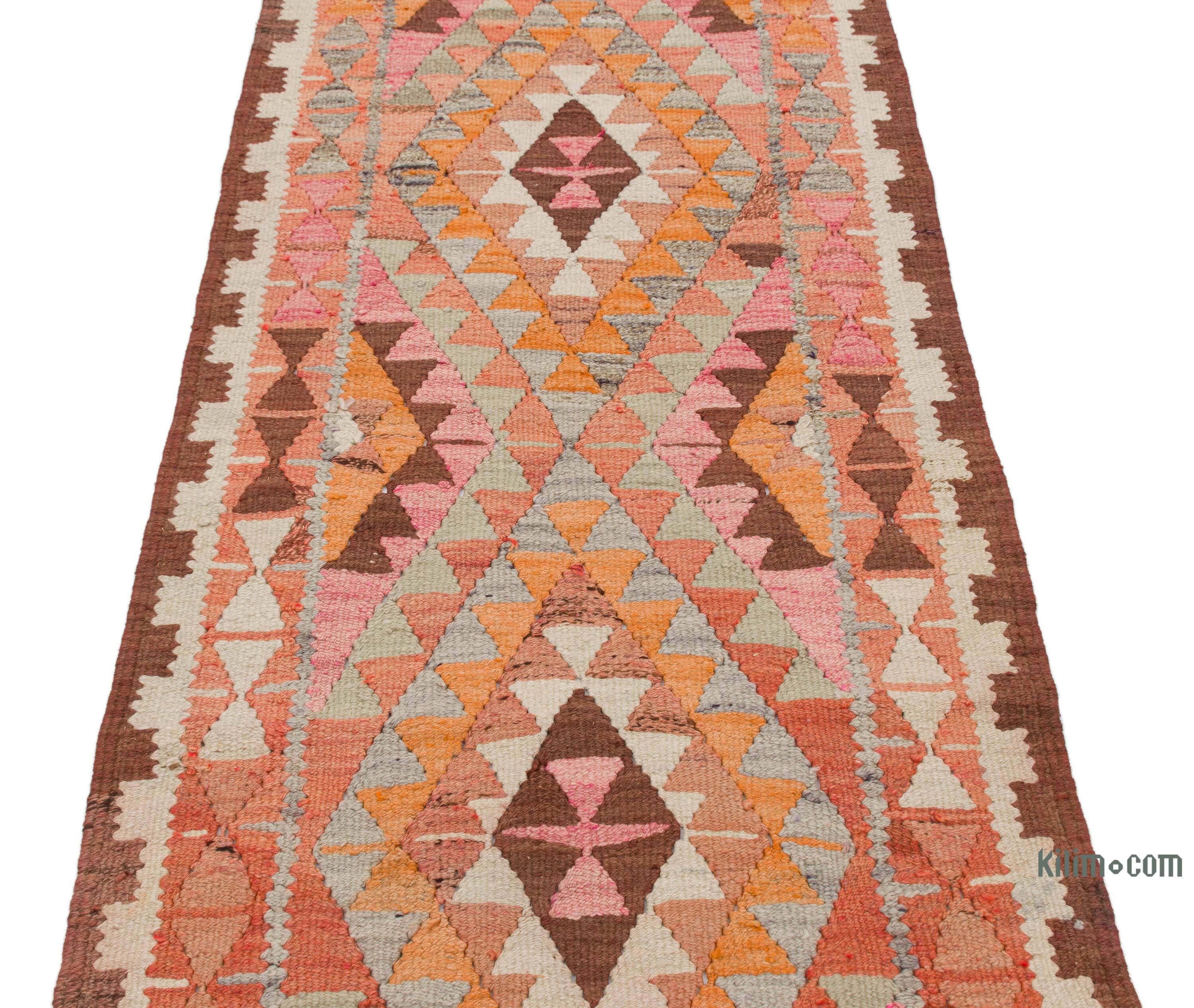
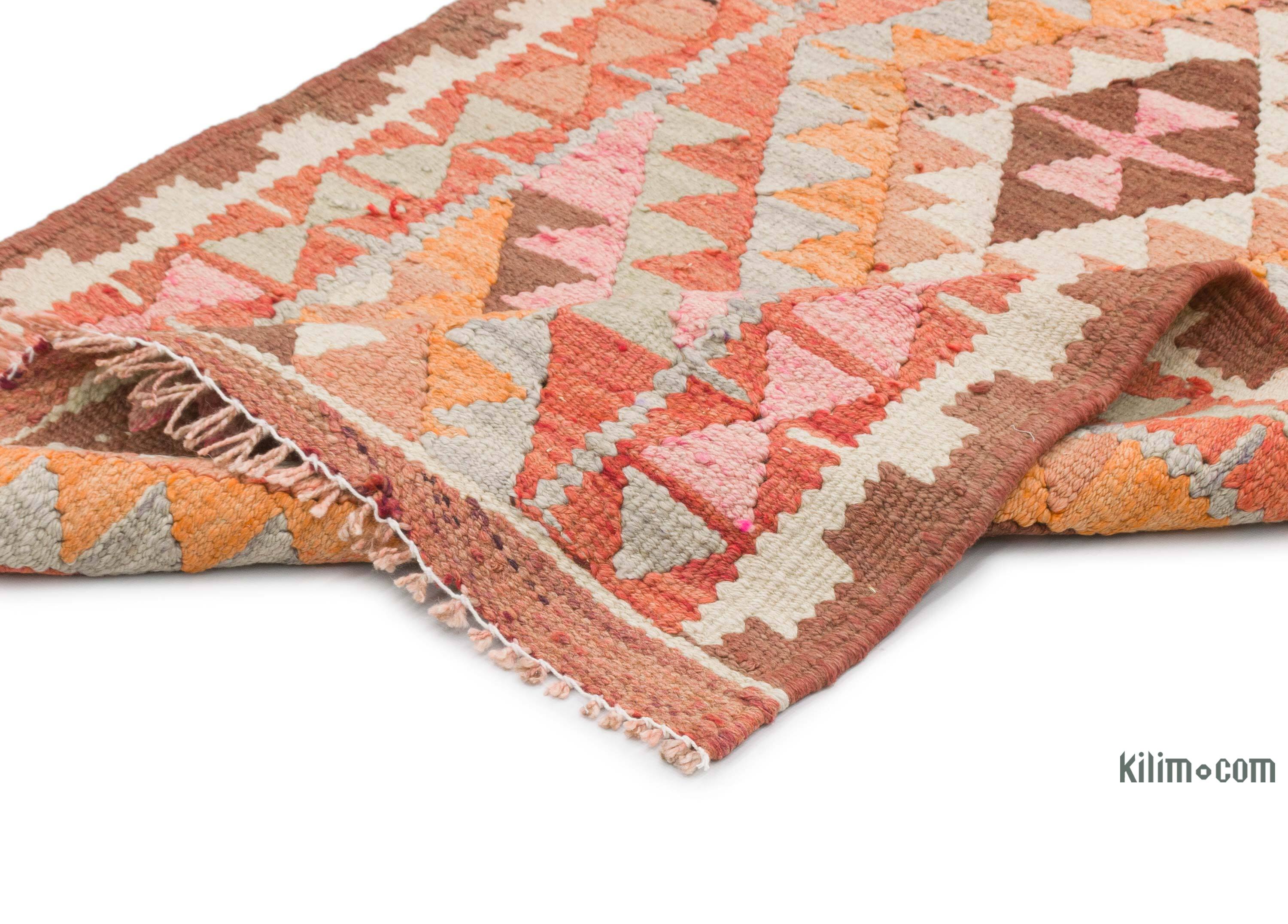
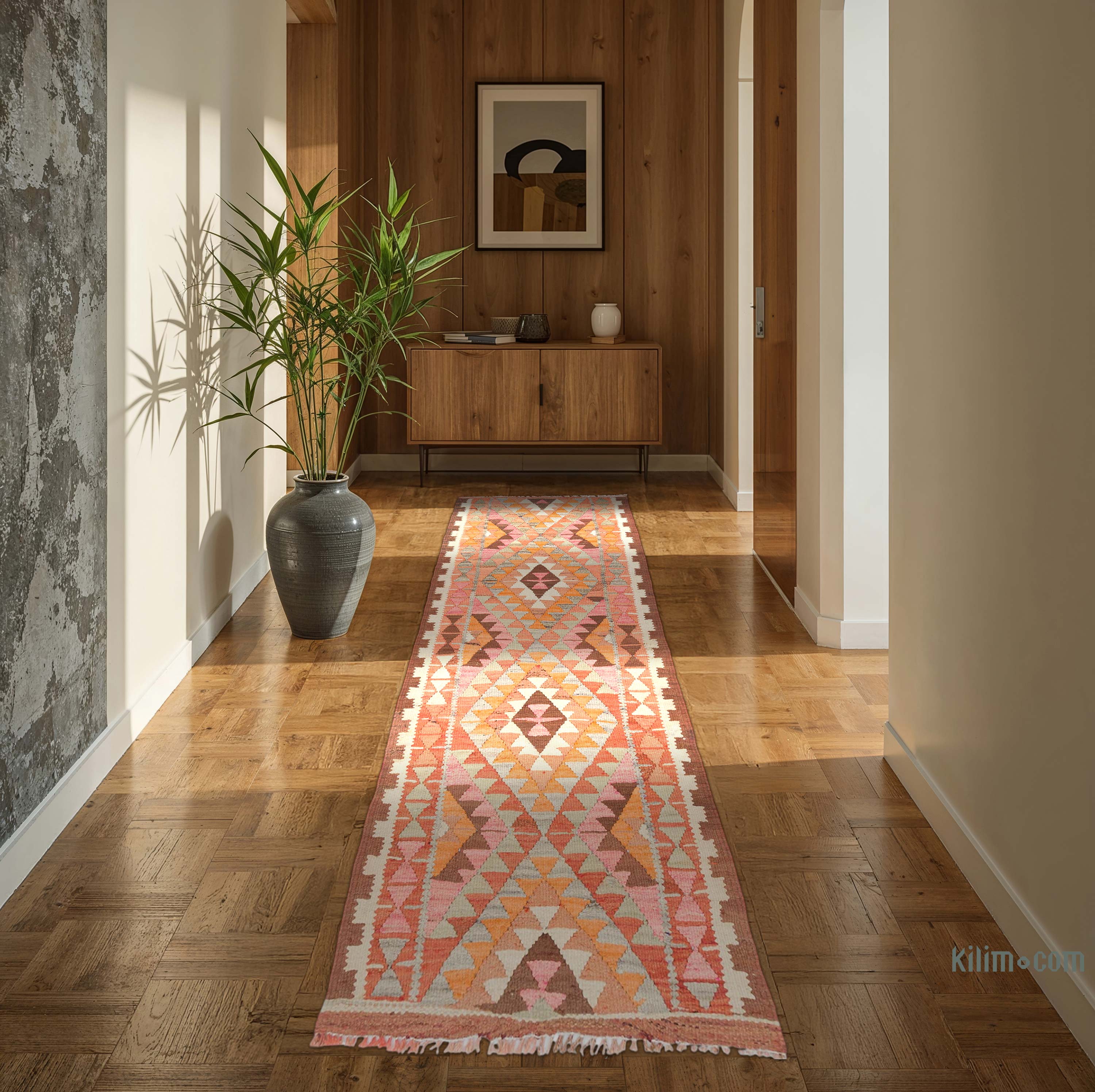
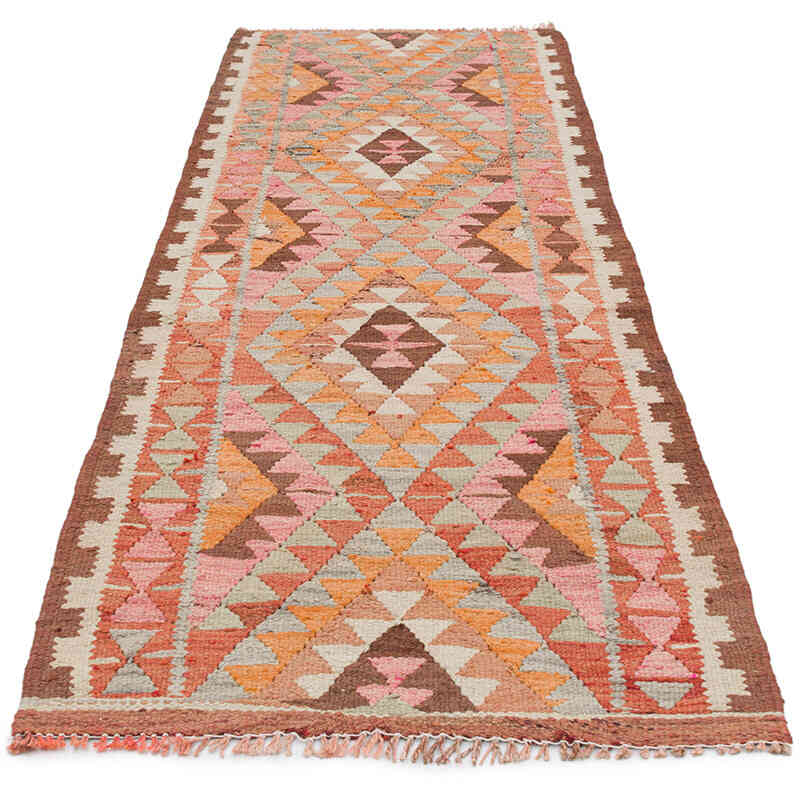

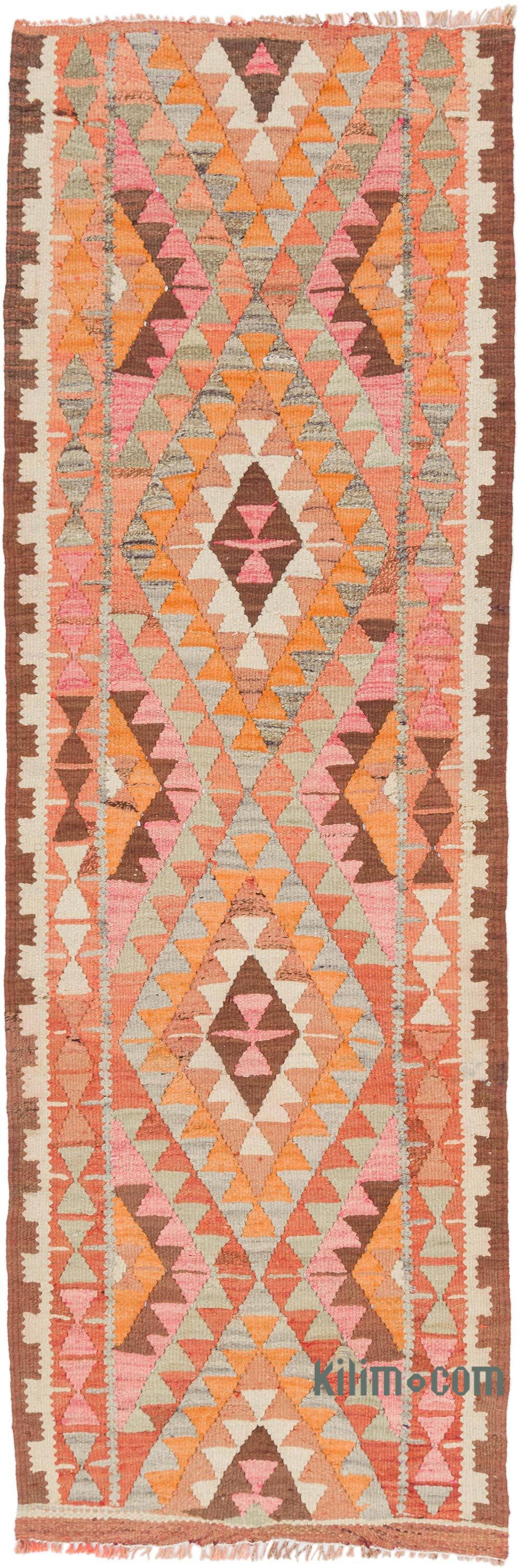
Vintage Tribal Kilim Runner 2' 10" x 8' 6" (34" x 102")
Type:
Kilim RugsCollection:
Tribal RunnersStyle:
TribalID:
K0077483Size:
Material:
- Ships in 2-5 business days
- All of our rugs are professionally cleaned; gentle wear from age and natural irregularities are inherent features of these one-of-a-kind handwoven vintage rugs.
- Only one in stock, handmade, unique
- Free shipping via FedEx Express. Returns & exchanges
- Contact us or add a note to your order if you want us to delay your shipping.
- Request more info if you want this rug shorter or narrower
The designs feature a rich array of symbols representing tribal culture and Anatolian motifs, often in the form of medallions, diamonds, and other geometric shapes. These kilim runners are ideal for hallways and narrow spaces, offering a touch of ethnic charm and artisanal quality to any interior.
Herki kilims not only serve as functional floor coverings but also as artistic expressions of tribal identity, making each rug a unique cultural artifact.
Design Elements
- Pattern
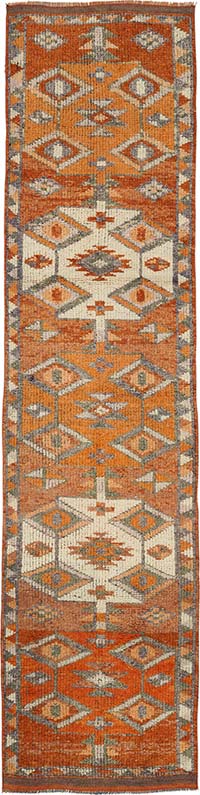
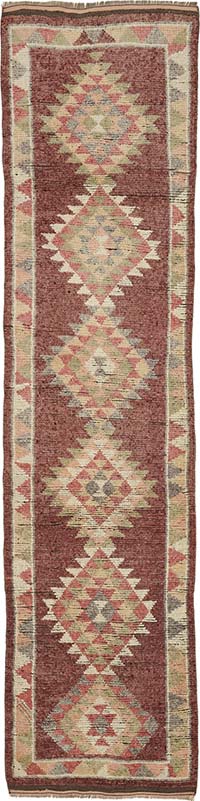
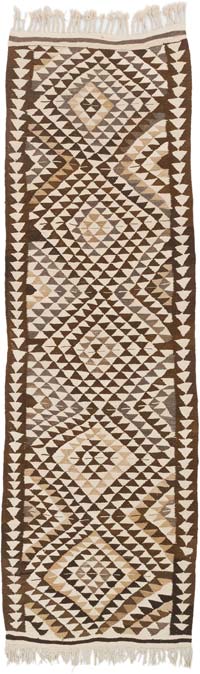
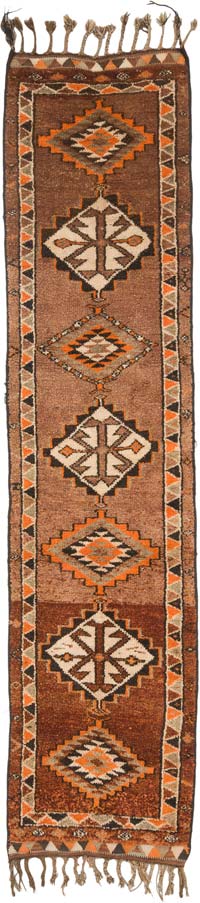
- The vintage tribal kilim runner features a repeating geometric pattern, creating a rhythmic visual experience.
- Large diamond shapes dominate the design, with smaller motifs interspersed throughout, contributing to a sense of depth.
- The symmetrical balance of the design provides a harmonious look, enhancing its aesthetic appeal.
- Texture
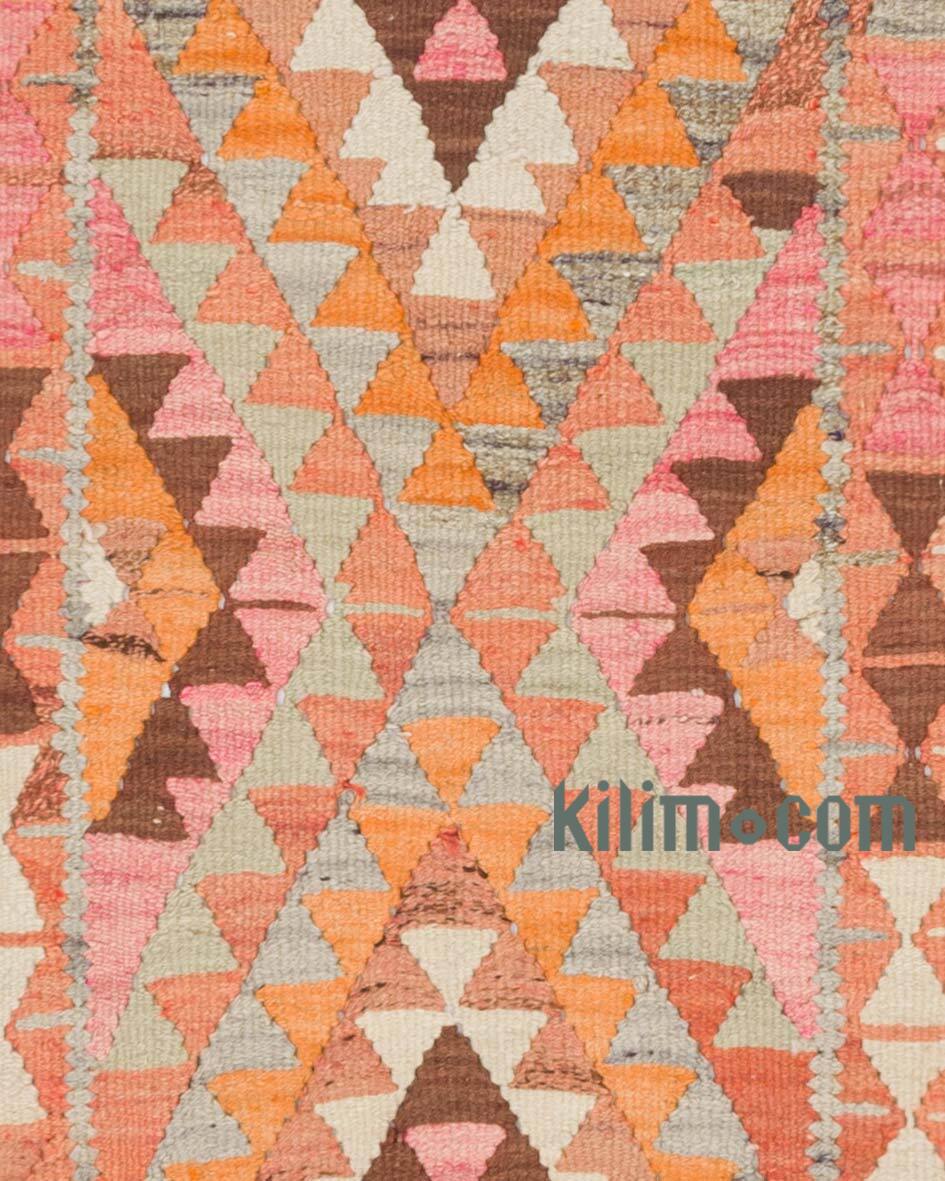
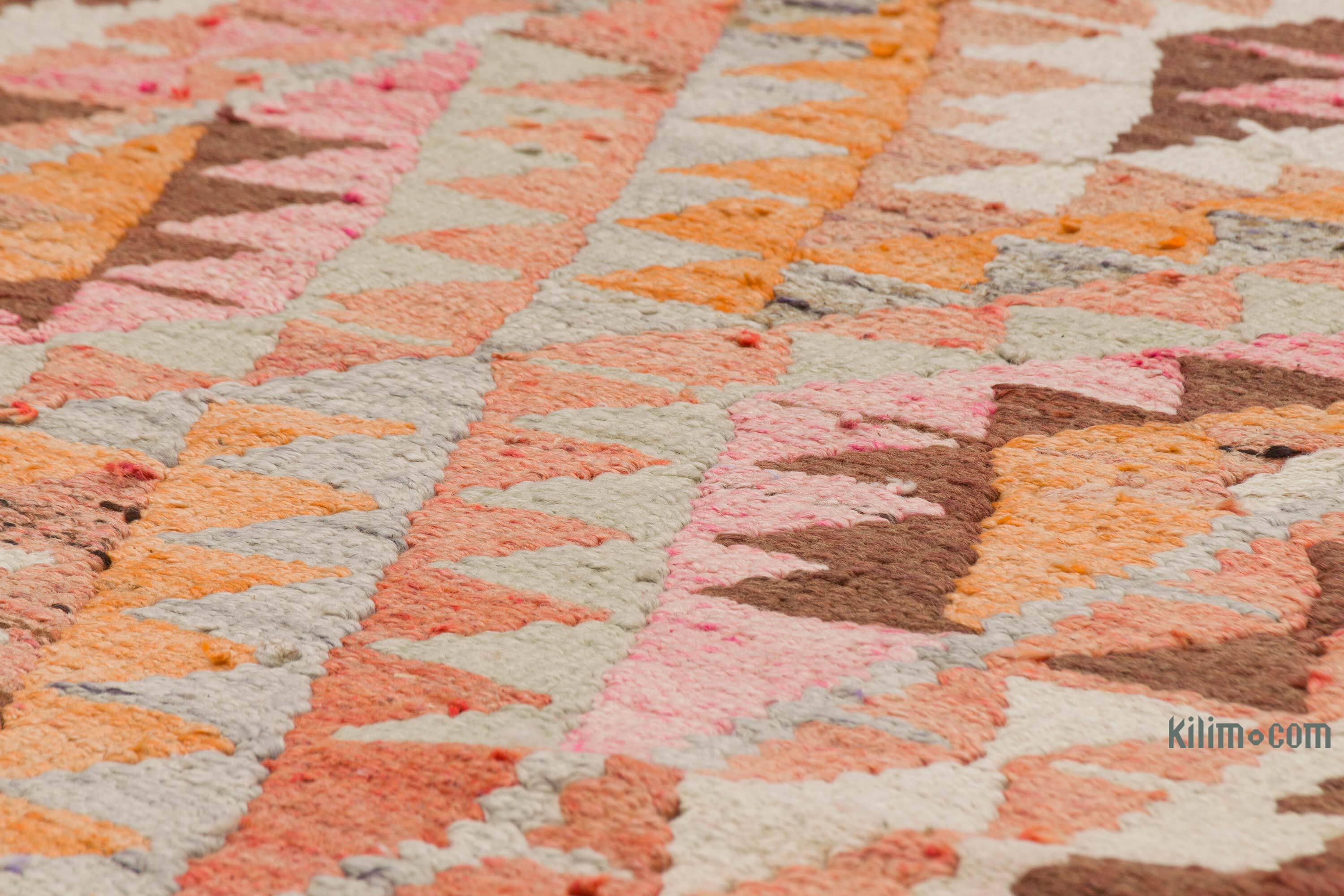
- Handwoven with a flatweave technique, giving it a smooth yet durable texture.
- Adds tactile interest, as the surface can vary depending on the type of weaving used.
- Borders
- The edges are framed with a solid color border, highlighting the central motifs and adding to the overall structure of the runner.
- The border design often mirrors the internal motifs, creating a cohesive and integrated look.
Colors
- Warm Tones
- Predominantly features hues of warm colors like terracotta, orange, and blush, which evoke feelings of comfort and earthiness.
- These colors reflect the natural environment, often associated with warmth and nature.
- Contrasting Colors
- Warm colored motifs are contrasted by the softer, cooler tones of beige and brown, maintaining visual interest.
- This contrast enhances the definition of the geometric patterns, making them stand out.
- Symbolism Through Color
- The choice of colors serves not only an aesthetic purpose but also carries cultural significance, often representing elements of life, fertility, and prosperity.
- Warm tones symbolize connection to the earth and communal living, central themes in many tribal cultures.
Main Motifs and Their Symbolism
- Diamonds
- Symbolize protection and good fortune, often seen as a talisman against negative energies.
- Reflect the interconnected nature of life, representing the unity of different tribes and cultures.
- Triangles
- Often signify strength and stability, resembling mountains which are sacred in many tribal beliefs.
- Form an upward motion, representing growth and aspiration.
- Lines and Borders
- Horizontal and vertical lines represent pathways and direction, emphasizing the importance of journeys in both a physical and metaphysical sense.
- Thicker border patterns provide boundaries, reflecting the idea of community and protection.
Summary
The vintage tribal kilim runner showcases a beautiful interplay of geometric patterns and warm color palettes. The design elements such as symmetrical balance, texture, and framing borders contribute to its aesthetic richness. The use of color is intentional, with warm tones symbolizing comfort and connection to nature. The motifs, including diamonds and triangles, encapsulate deeper meanings related to protection, strength, and communal ties, making the rug a significant cultural artifact.
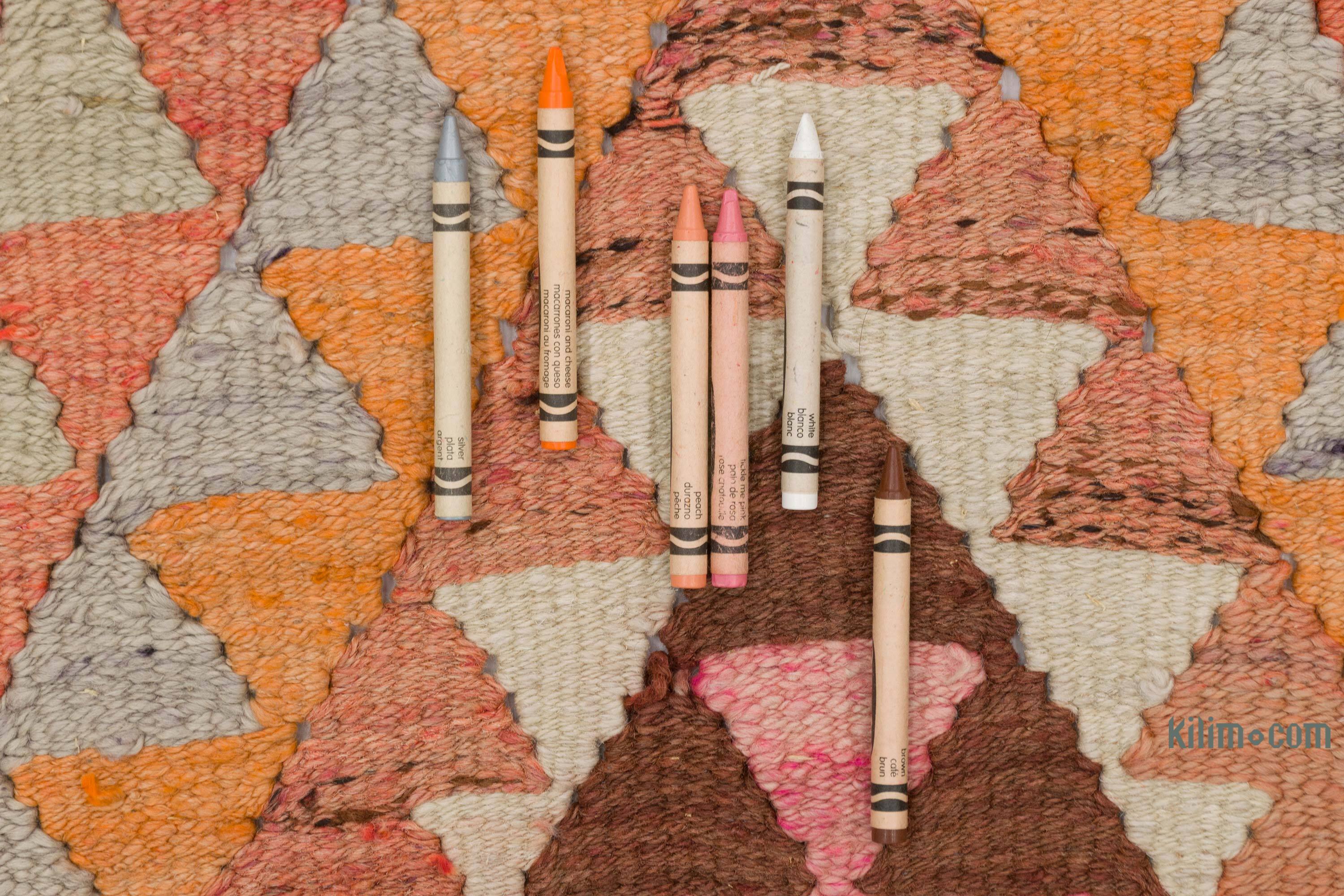
Colors may appear slightly different across various monitors due to screen settings device differences, and external lighting conditions. If color accuracy is important for your space, we recommend viewing the rug on multiple devices or contacting us for a detailed color description. We can provide detailed photos and references using Sherwin-Williams, Benjamin Moore, Pantone, or even Crayola crayons.
You can also visualize most of our products in your own room with AR (augmented reality) on an iPhone or iPad.
Return Policy
Need a rug pad? We recommend RugPadUSA