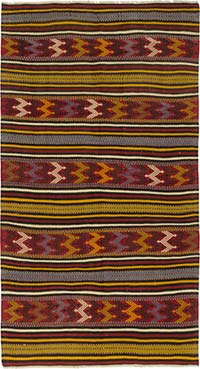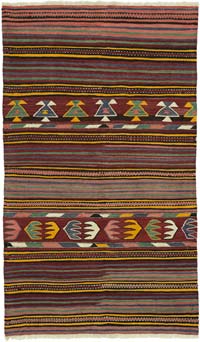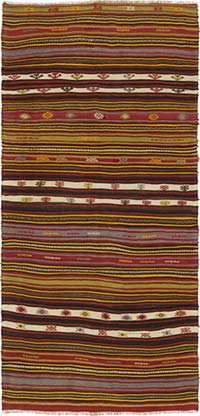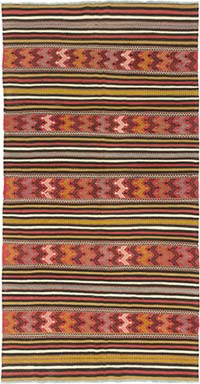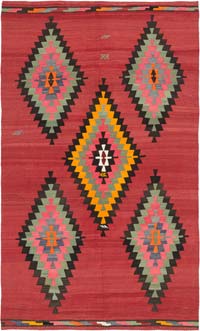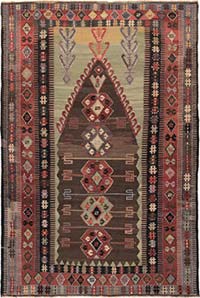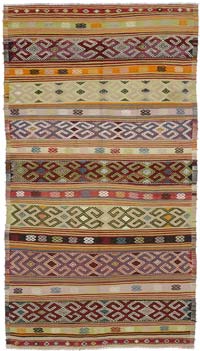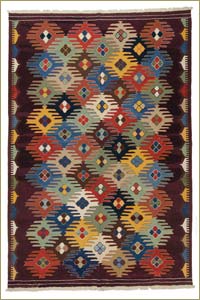
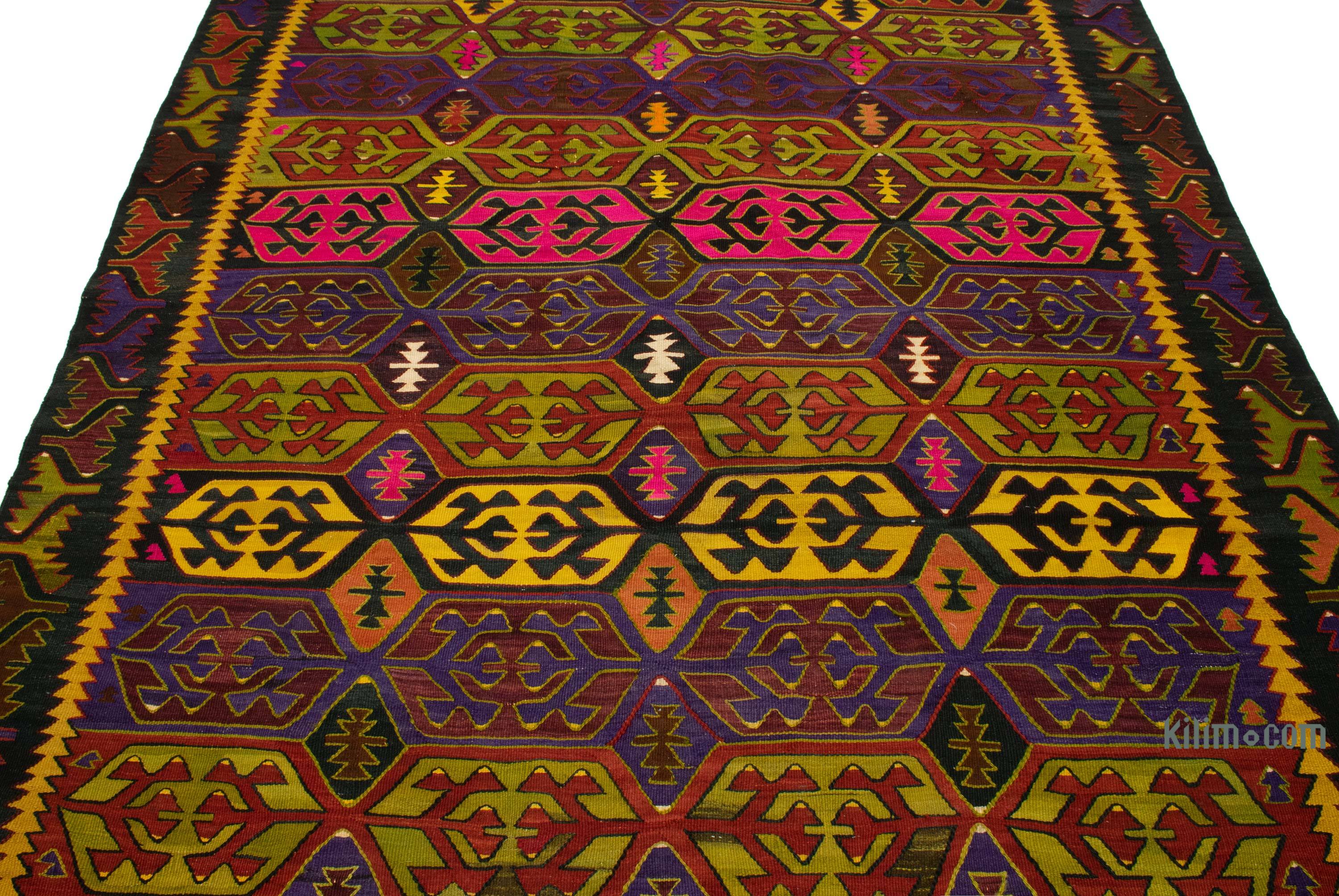
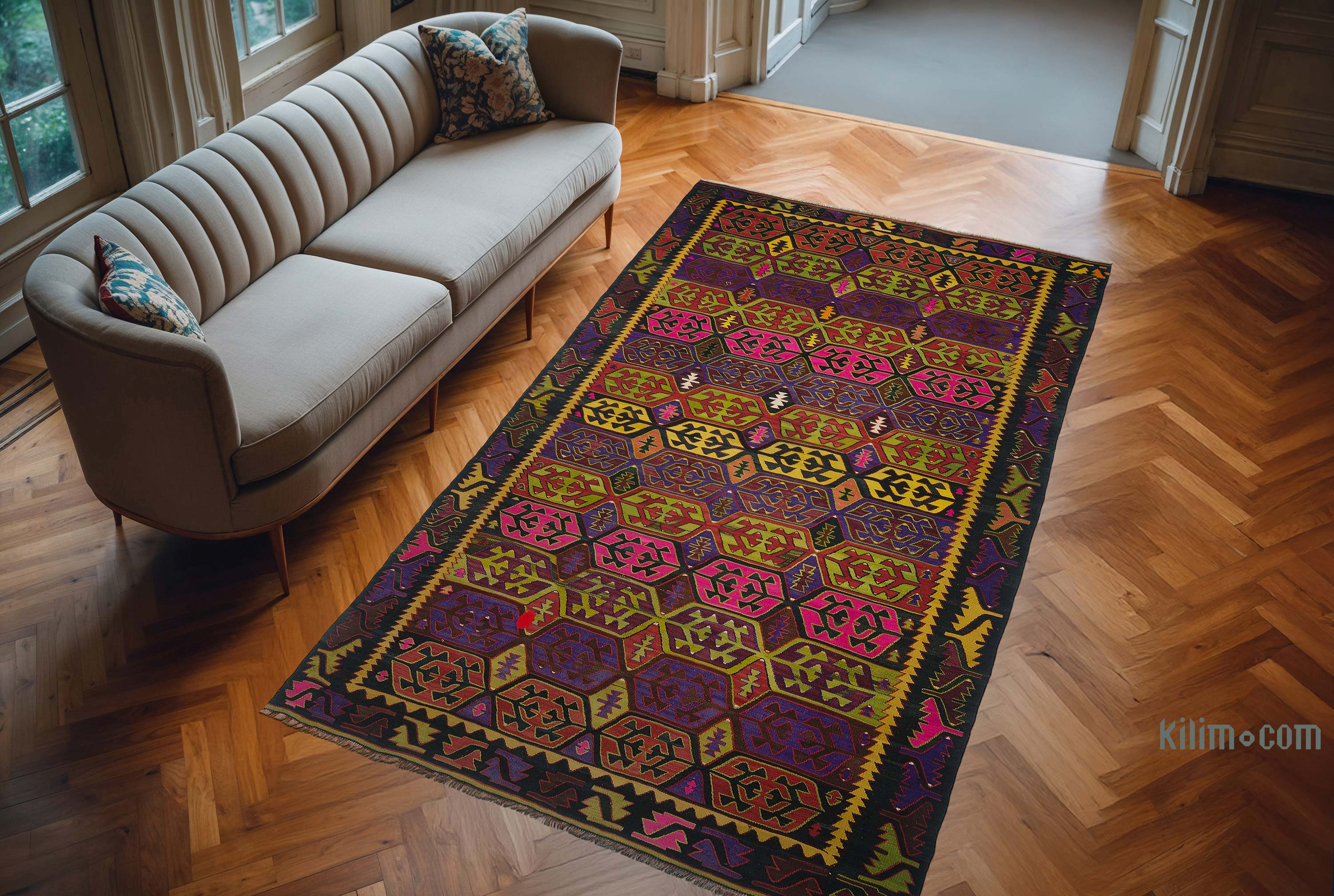
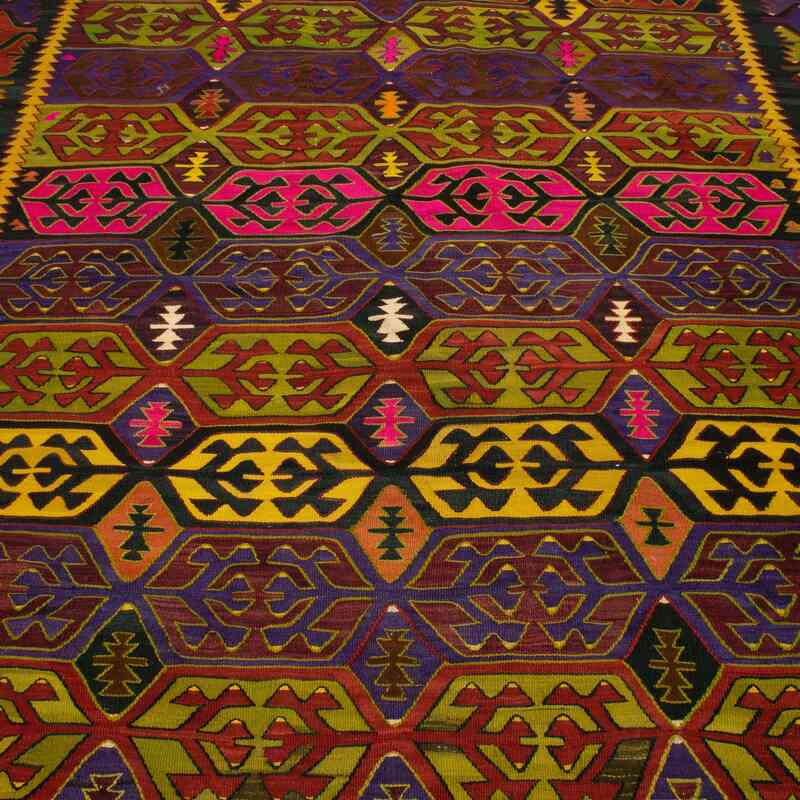

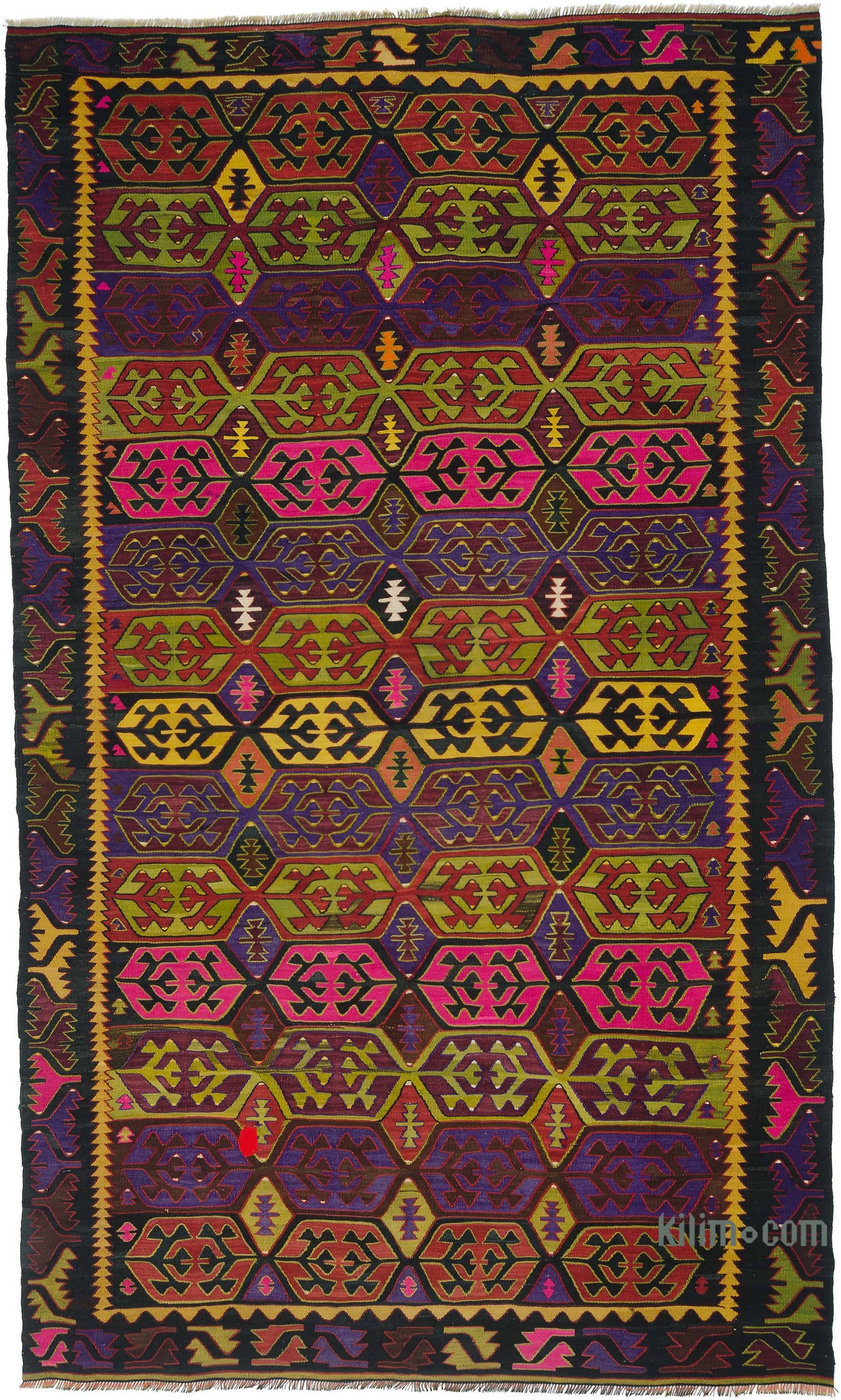
Vintage Konya Kilim Rug 5' 4" x 9' 1" (64" x 109")
Type:
Kilim RugsStyle:
TribalID:
K0050513Size:
Material:
- Ships in 2-5 business days
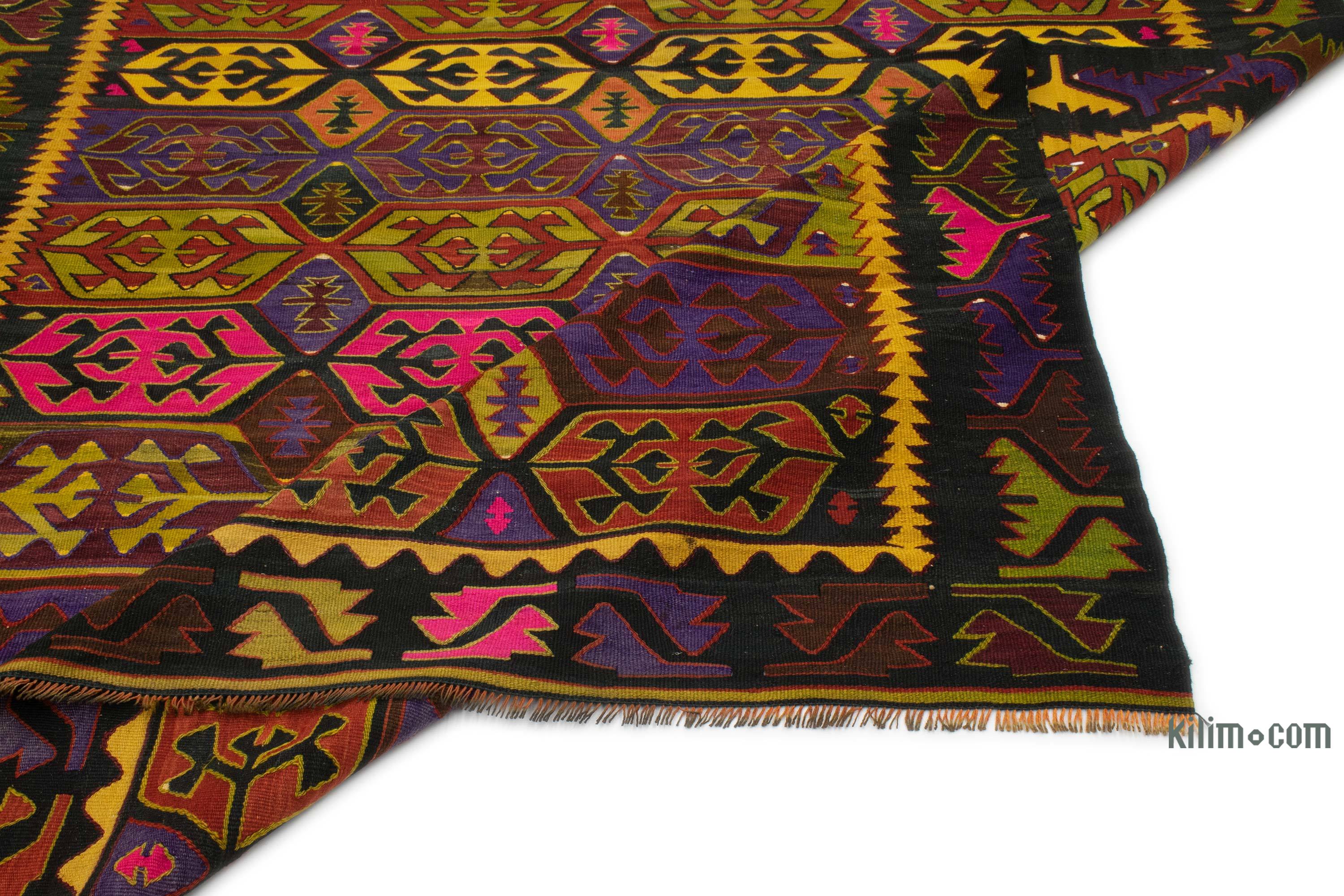
- All of our rugs are professionally cleaned; gentle wear from age and natural irregularities are inherent features of these one-of-a-kind handwoven vintage rugs.
- Only one in stock, handmade, unique
- Free shipping via FedEx Express. Returns & exchanges
- Contact us or add a note to your order if you want us to delay your shipping.
- Request more info if you want this rug shorter or narrower
Design Elements
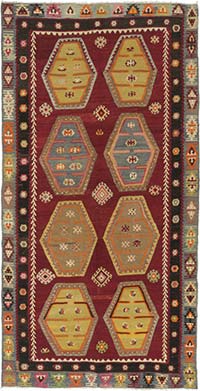
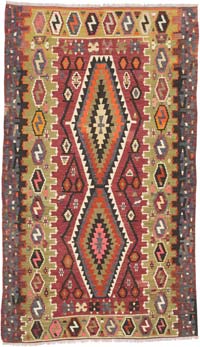
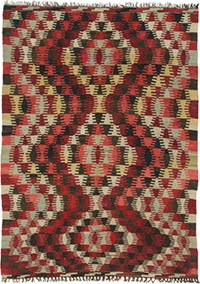
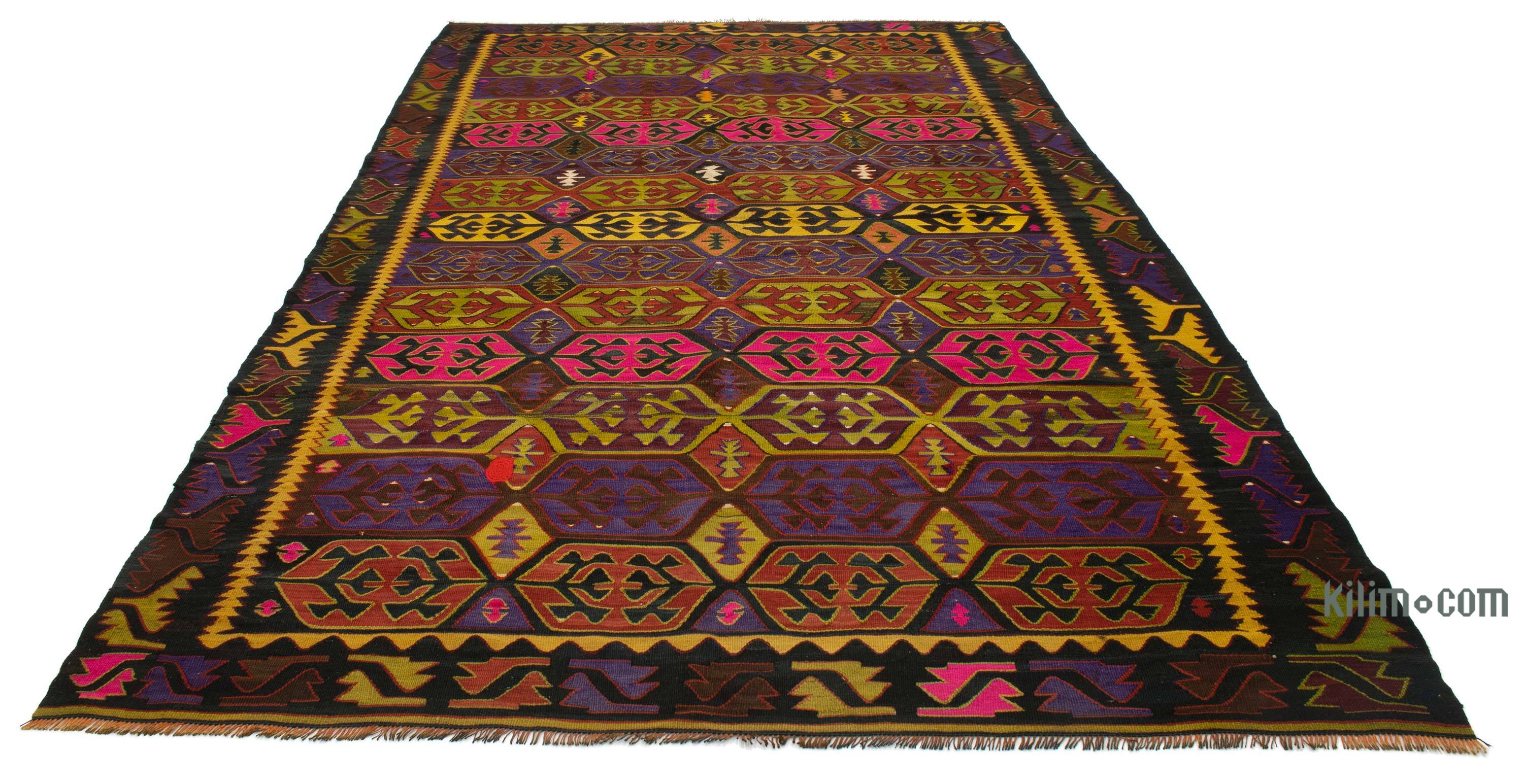
- Geometric Patterns: The rug features a series of intricate geometric shapes, primarily hexagons and diamonds, which are traditionally significant in Kilim design.
- Symmetric Layout: The layout is highly symmetrical, suggesting balance and harmony, which are key principles in traditional Turkish art.
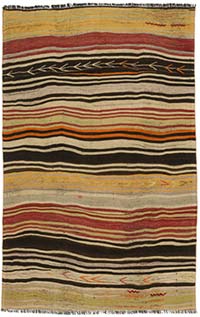
- Color Blocking: The design employs distinct color blocks, allowing for clarity and vibrancy in the overall aesthetic.
- Borders: The borders consist of a repeated pattern that delineates the central motifs, creating a frame that enhances the overall composition.
Colors in the Vintage Konya Kilim Rug
- Bright Pink: Symbolizes joy and warmth; often used in Turkish textiles to evoke happiness.
- Deep Purple: Represents nobility and spirituality; it adds depth and richness to the design.
- Vibrant Green: Reflects nature and renewal, promoting feelings of growth and revitalization.
- Orange: Associated with abundance and energy, these colors bring liveliness and a sense of enthusiasm to the rug.
- Dark Brown: Used as a grounding element, it balances the brighter colors, enhancing overall stability and coherence of the design.
Main Motifs and Their Symbolism
- Hexagons: Represent the unity and interconnectedness of life, symbolizing strength and resilience.
- Fertility Symbols: These patterns indicate prosperity and abundance, reflecting the importance of agriculture and family in Turkish culture.
- Diamond Shapes: Representing protection and power, these shapes serve as amulets against negative energies.
- Curved Lines: Suggest fluidity and adaptability, perceived as a symbol of harmony and balance within nature.
Summary
The vintage Konya Kilim rug showcases an array of vibrant colors and geometric patterns, embodying harmony and cultural symbolism. The interplay of bright pink, deep purple, and energetic gold along with its main motifs, such as hexagons and fertility symbols, conveys deeper meanings related to life, protection, and prosperity. This piece not only serves as a decorative item but also holds a rich tapestry of cultural significance that connects its history and the essences it represents.
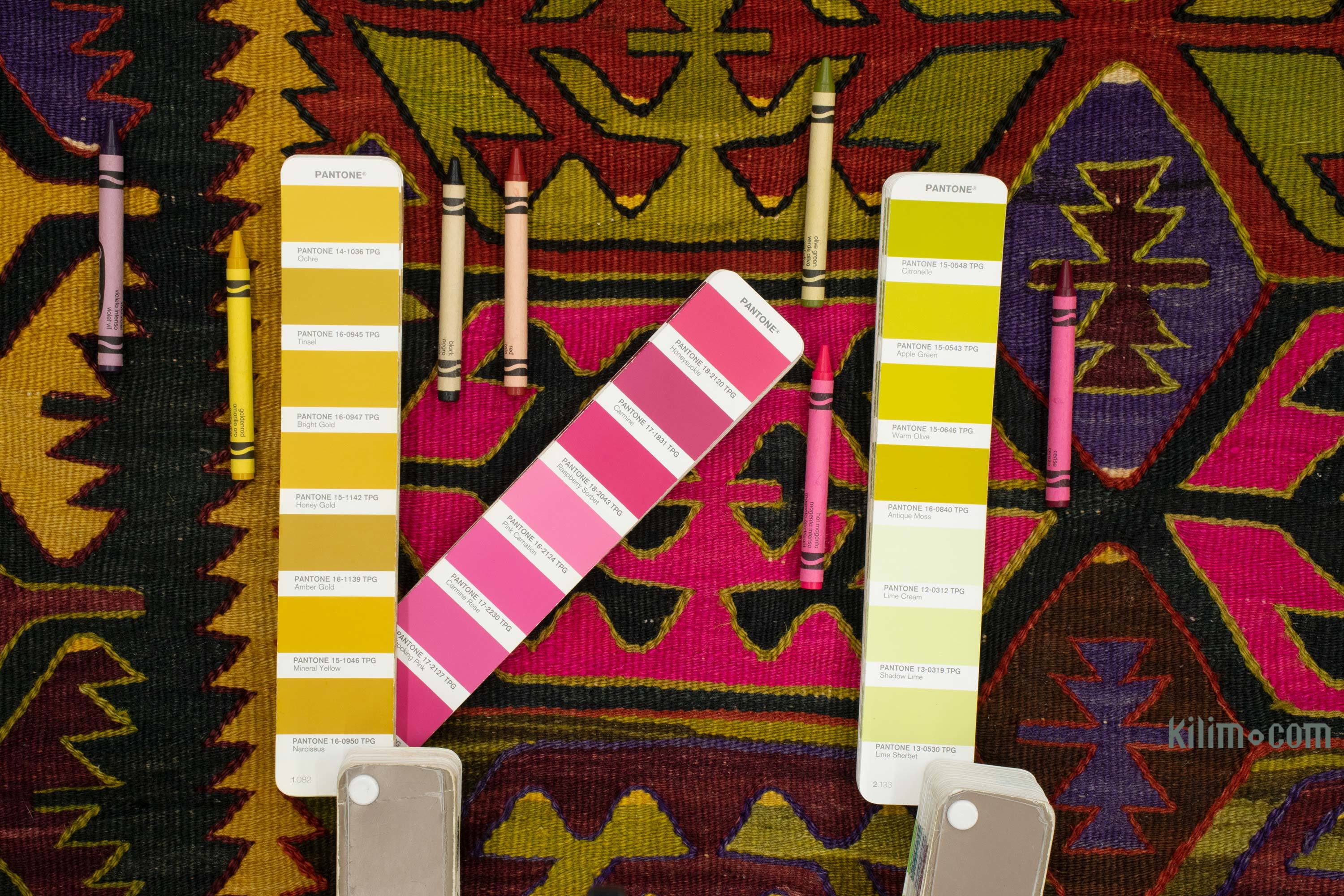
Colors may appear slightly different across various monitors due to screen settings device differences, and external lighting conditions. If color accuracy is important for your space, we recommend viewing the rug on multiple devices or contacting us for a detailed color description. We can provide detailed photos and references using Sherwin-Williams, Benjamin Moore, Pantone, or even Crayola crayons.
You can also visualize most of our products in your own room with AR (augmented reality) on an iPhone or iPad.
Return Policy
Need a rug pad? We recommend RugPadUSA