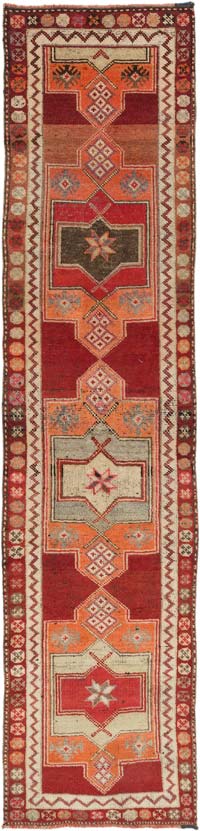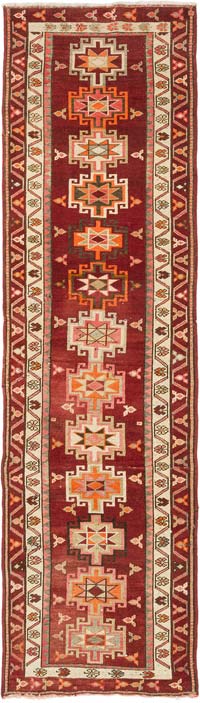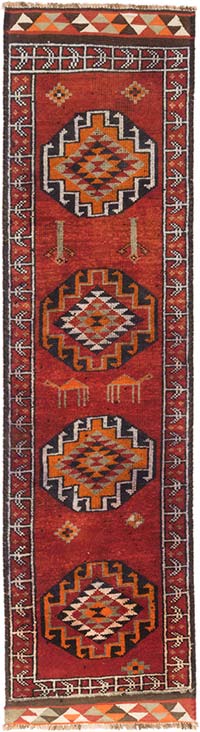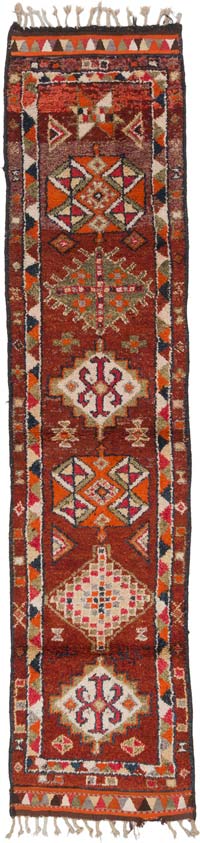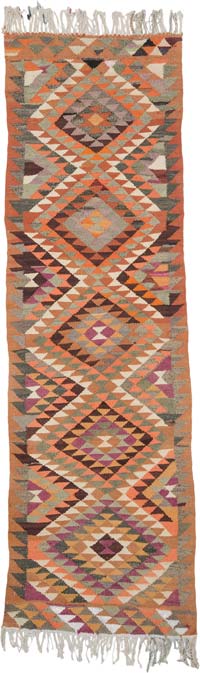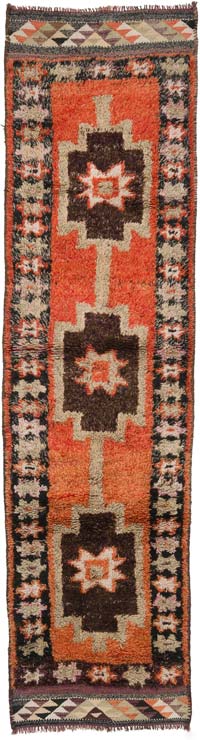

Vintage Tribal Runner Rug 2' 11" x 12' (35" x 144")
Type:
Hand-Knotted RugsCollection:
Tribal RunnersStyle:
TribalID:
K0085285Size:
Material:
- Ships in 2-5 business days
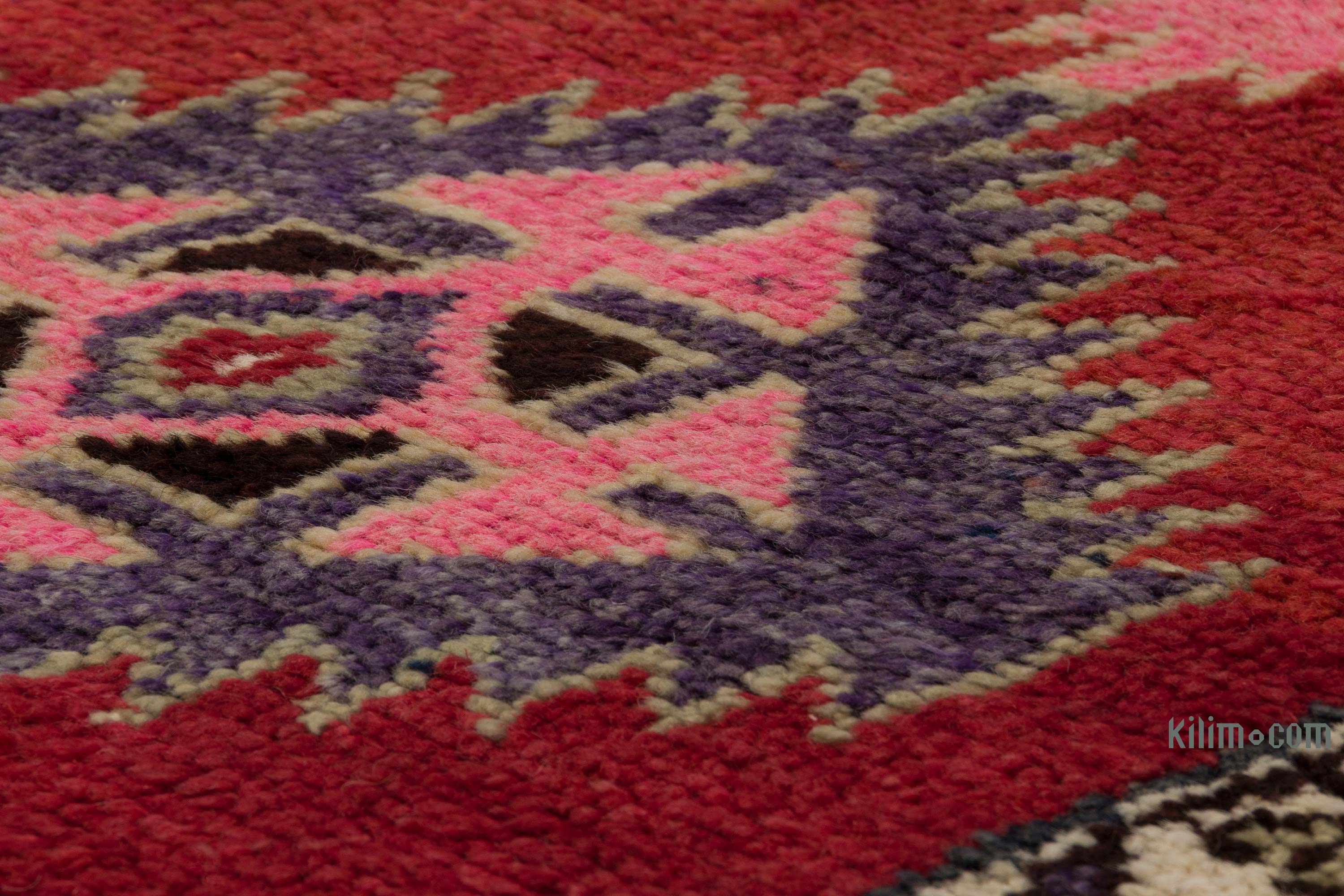
- All of our rugs are professionally cleaned; gentle wear from age and natural irregularities are inherent features of these one-of-a-kind handwoven vintage rugs.
- Only one in stock, handmade, unique
- Free shipping via FedEx Express. Returns & exchanges
- Contact us or add a note to your order if you want us to delay your shipping.
- Request more info if you want this rug shorter or narrower
The designs often feature geometric patterns, symbolic motifs, and a harmonious blend of colors, reflecting the natural landscapes and cultural heritage of the area. These runners not only serve as functional pieces but also as a testament to the enduring legacy of tribal craftsmanship, adding a touch of history and elegance to any space.
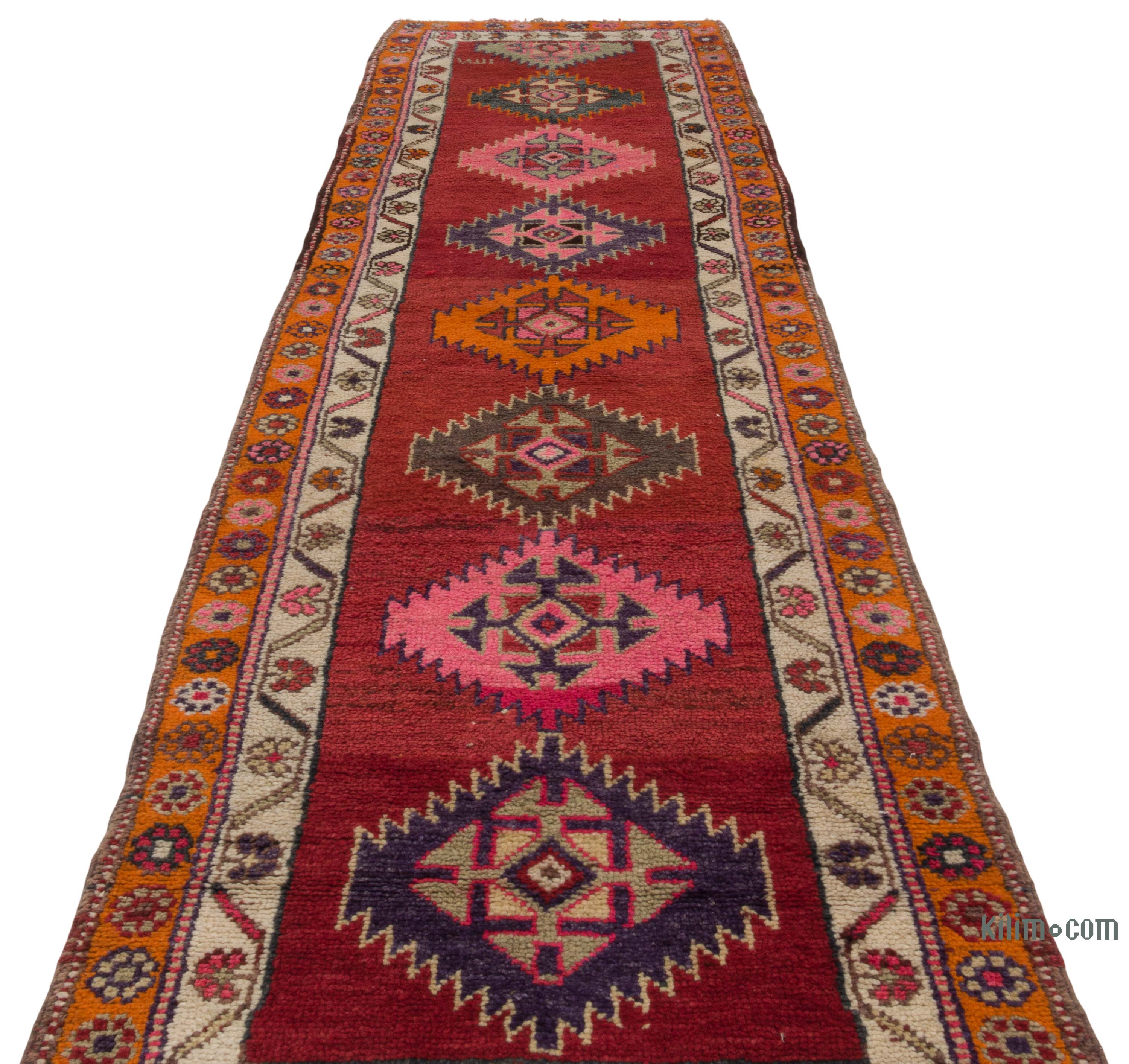
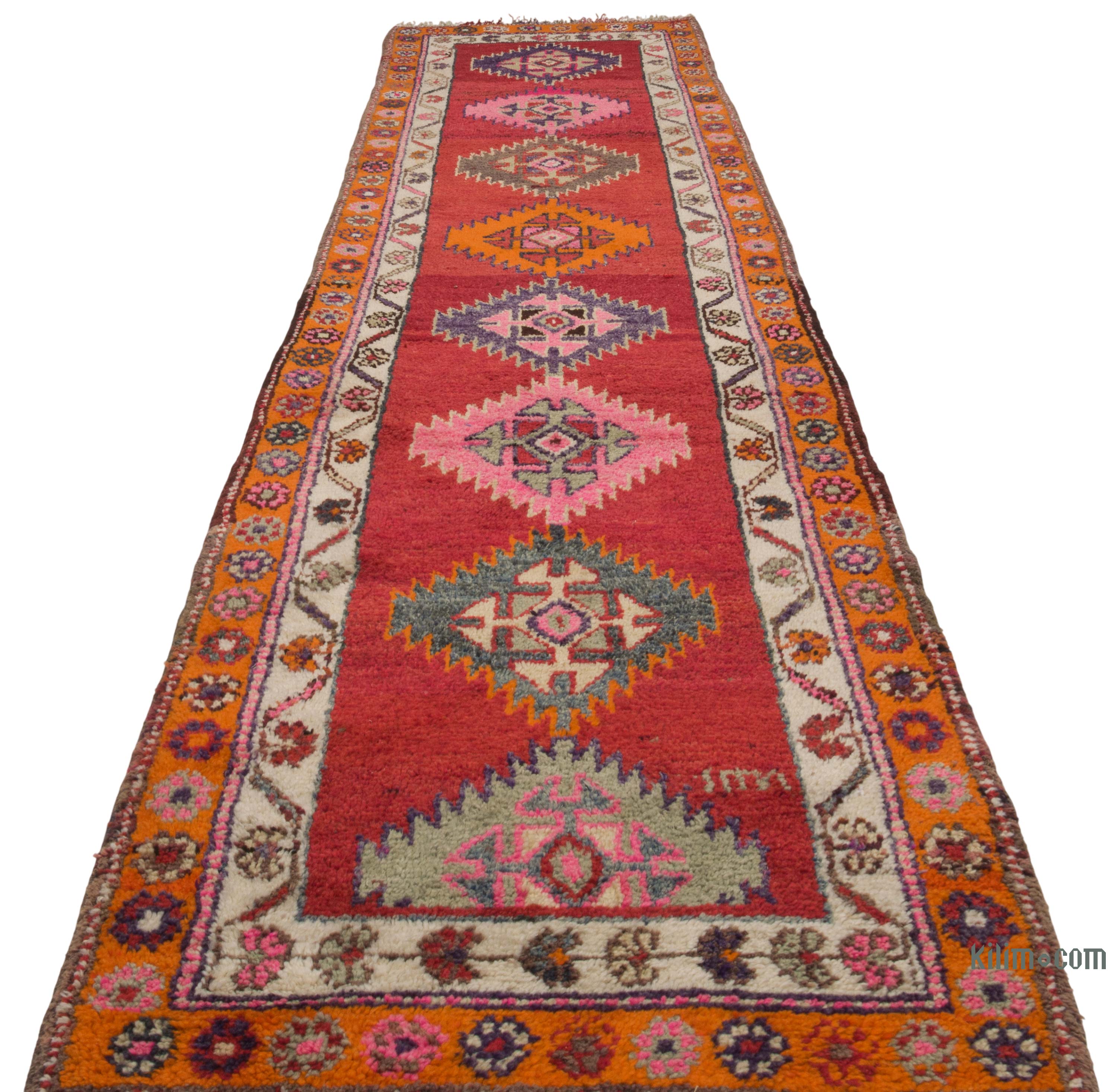
Indulge in vintage charm and bring a piece of Anatolian patterns into your living space with this attractive runner that measures 2' 11" x 12' (35" x 144").
Design and Motifs of This Kilim Rug
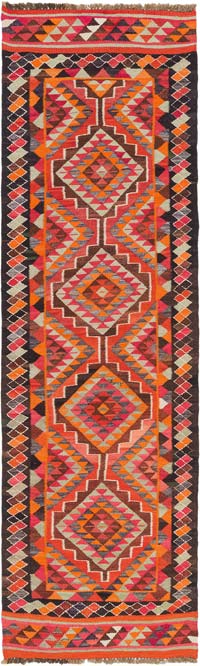
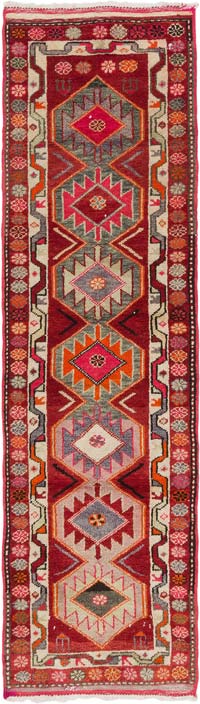
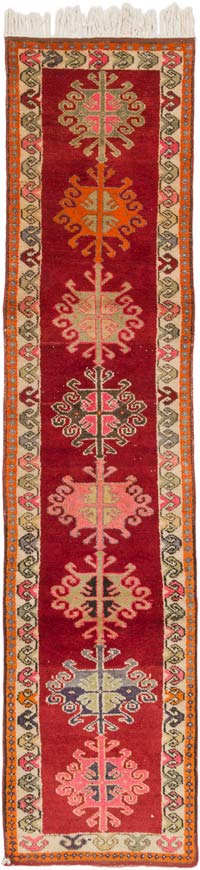
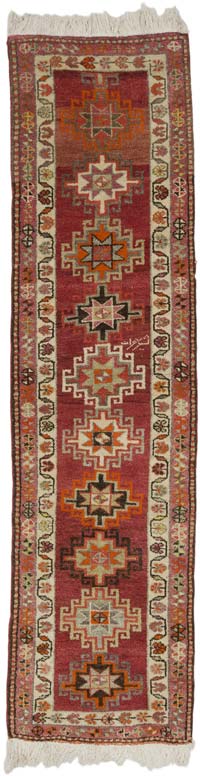
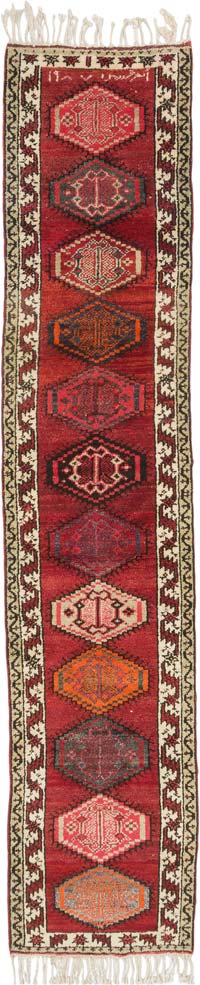
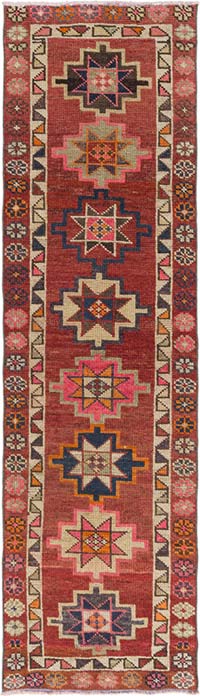
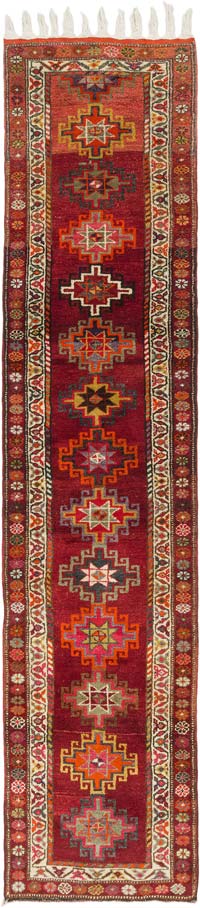
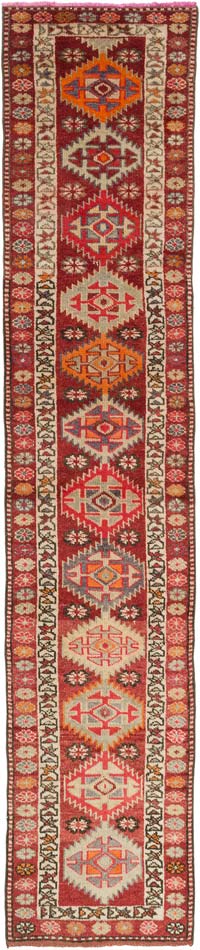
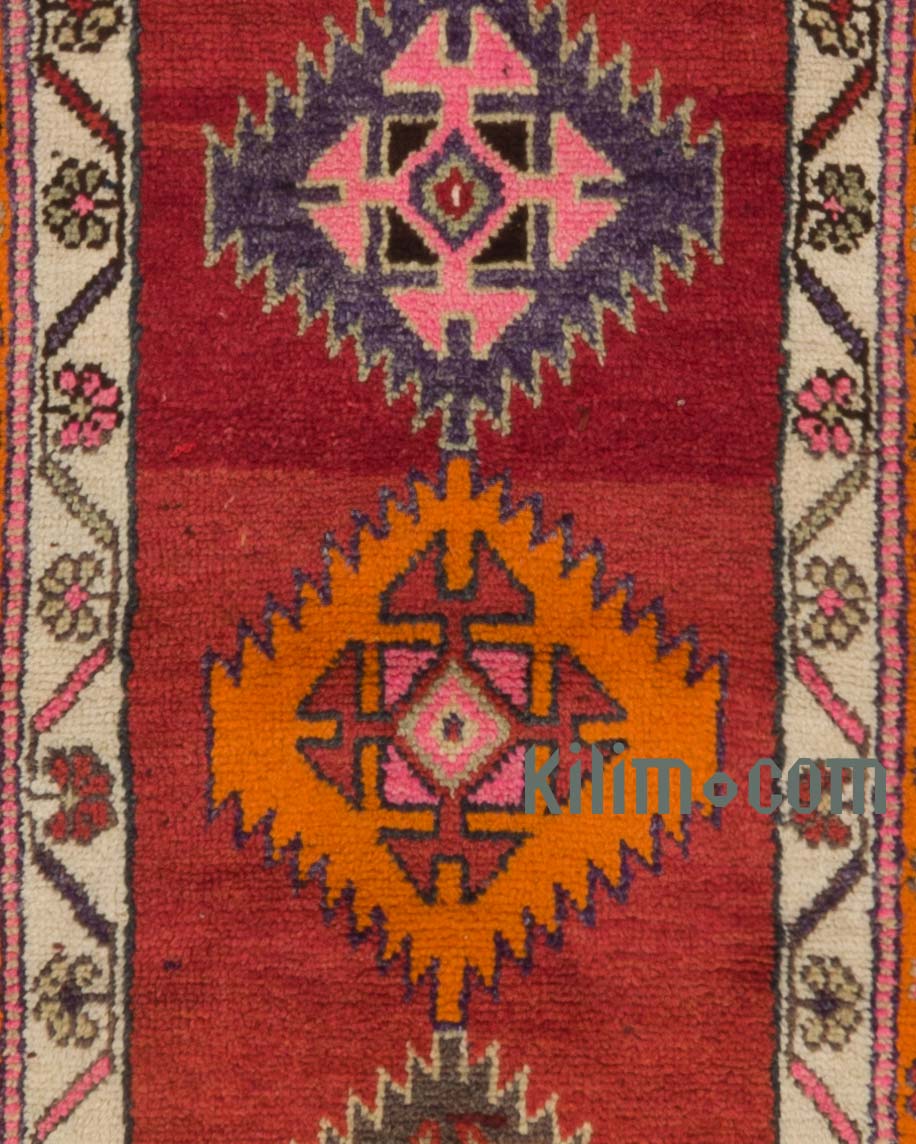
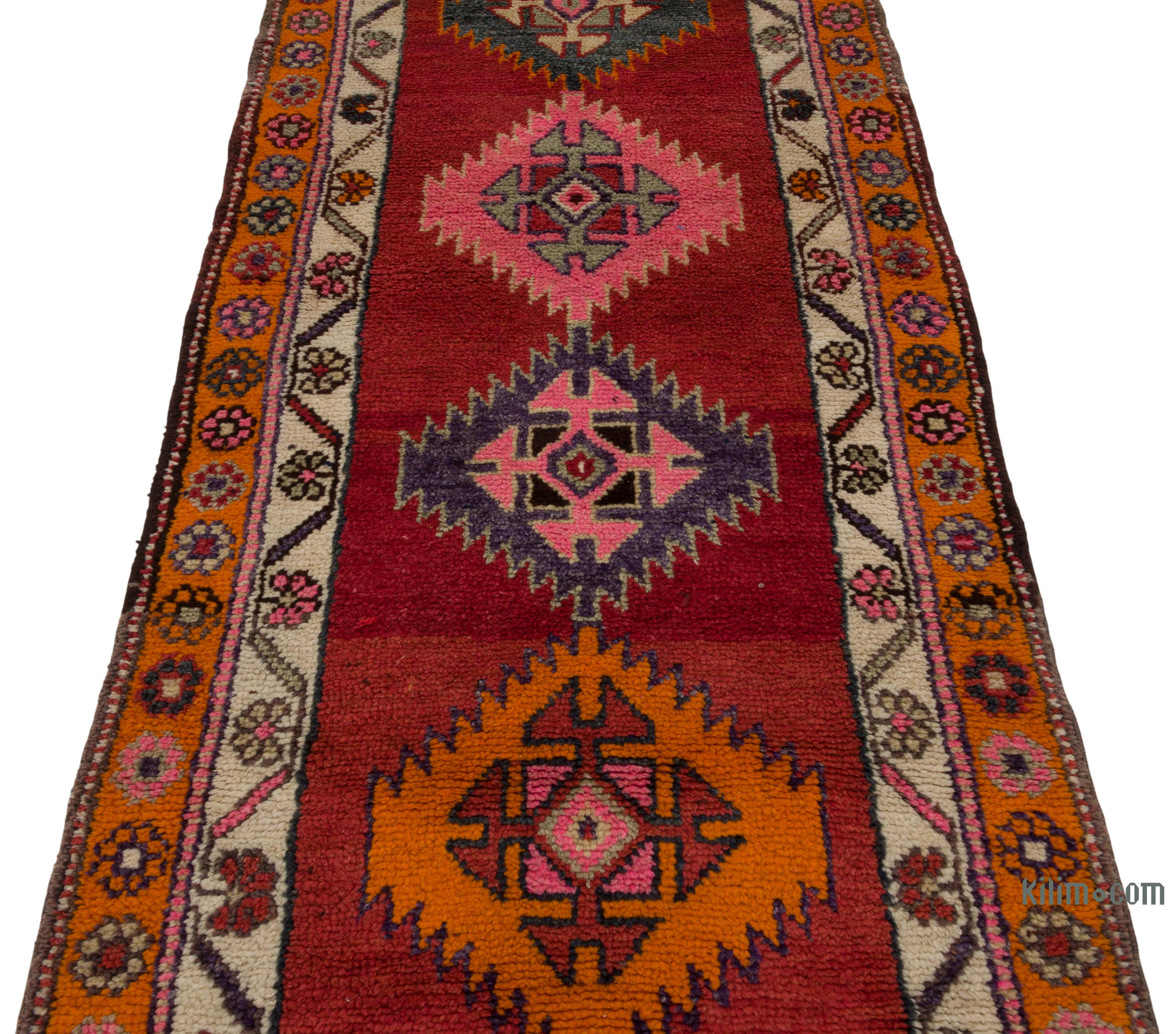
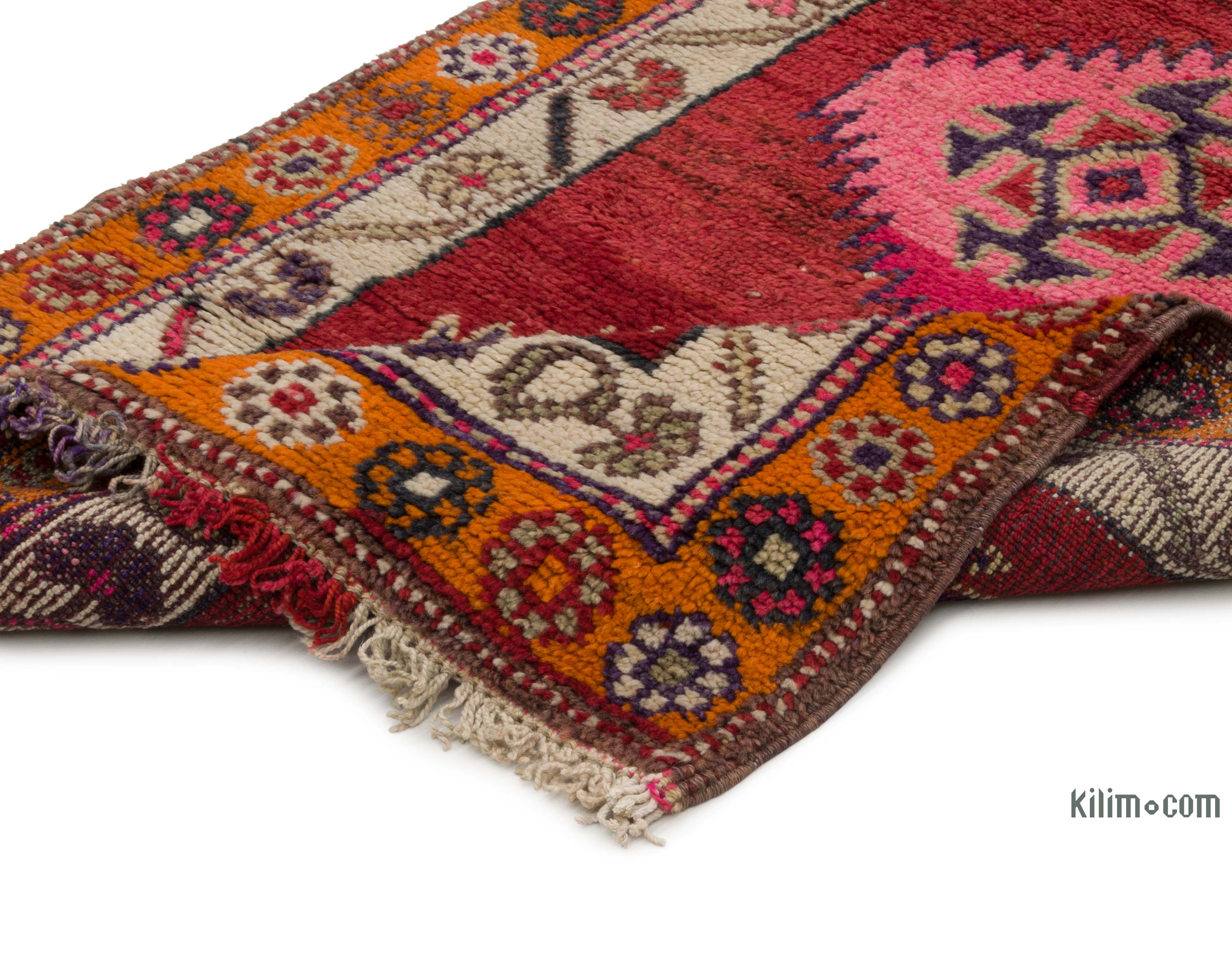
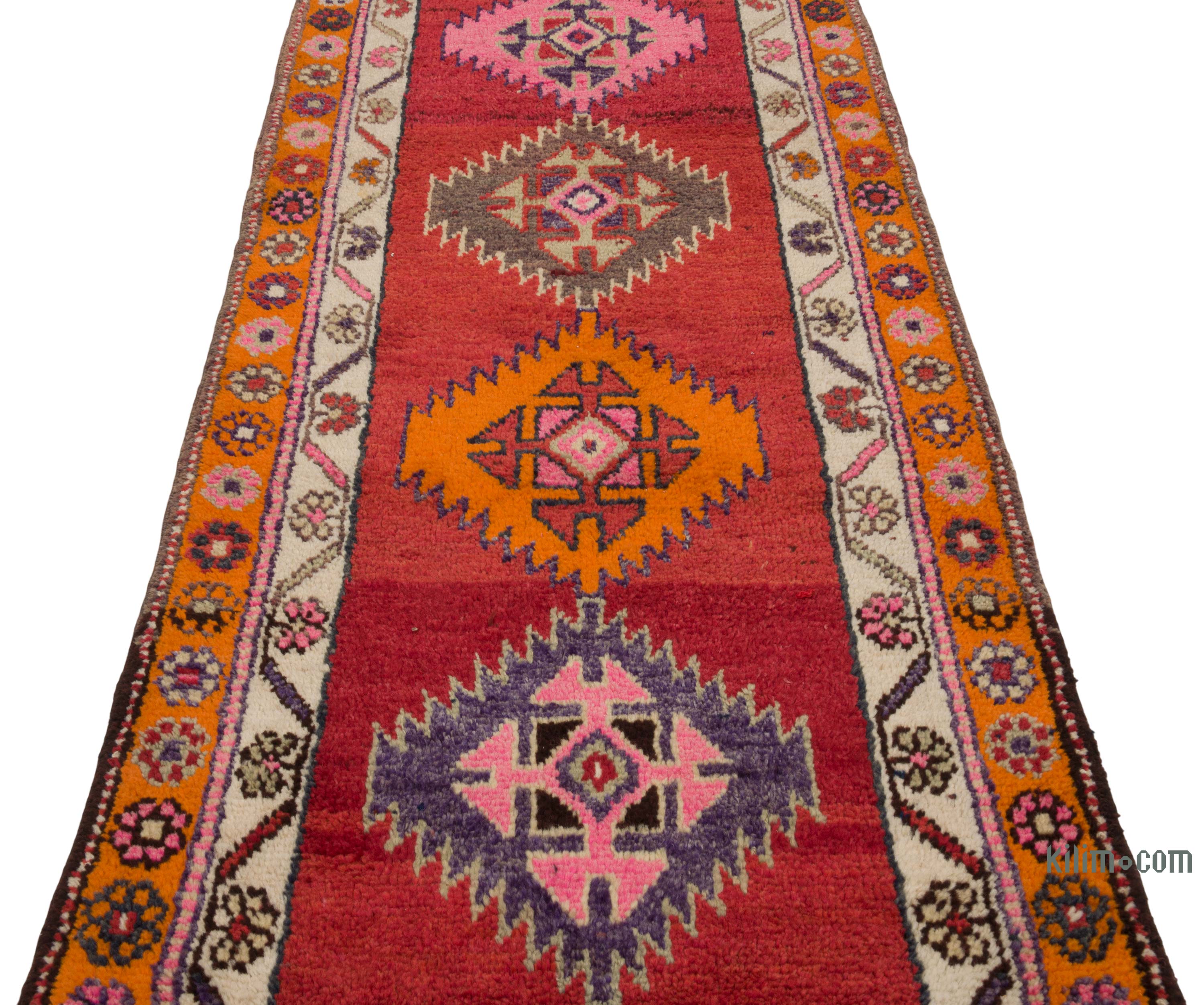
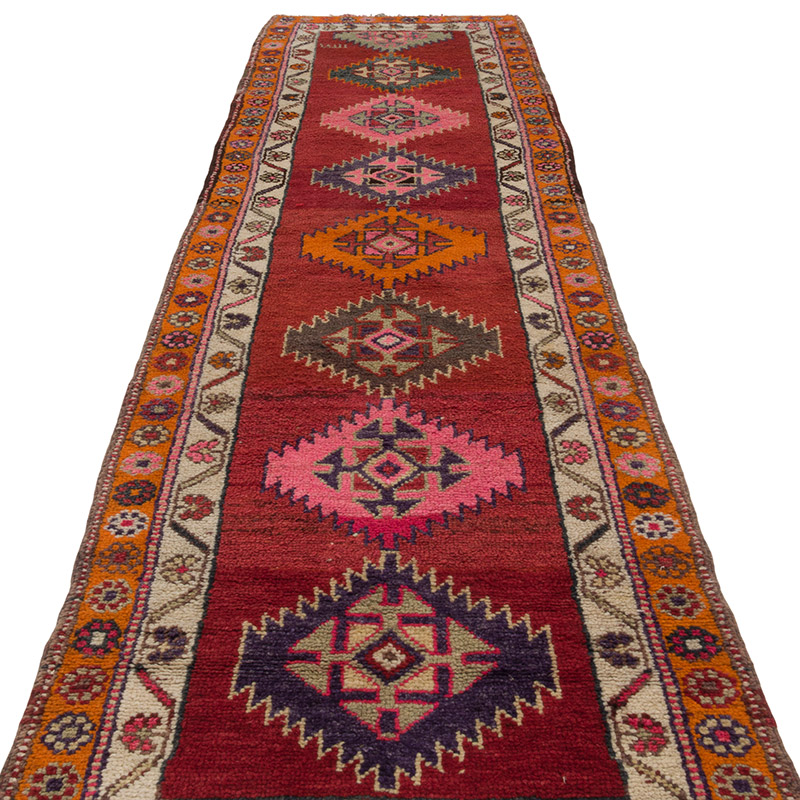
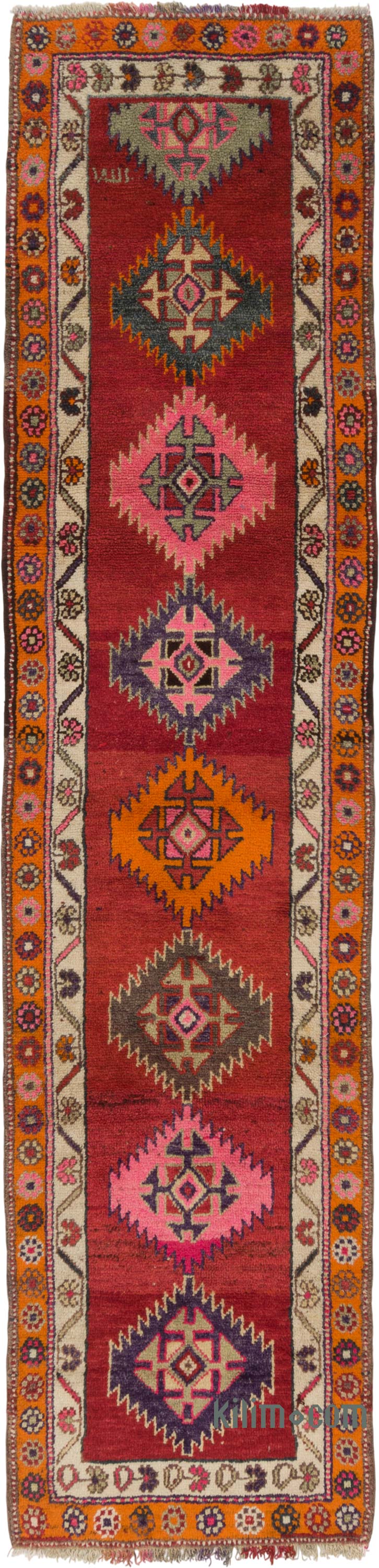
This striking Anatolian kilim rug features a bold, deep red field adorned with a series of colorful diamond medallions that run vertically along its length. Each diamond is a geometric composition filled with intricate tribal patterns rendered in vibrant hues of pink, orange, purple, grey, and navy. The outer borders set off the central field with a floral-themed pattern on an orange background, lending a warm, lively frame to the entire piece.
The central diamonds are jagged-edged, which is a hallmark of traditional weaving techniques that add a dynamic energy to the design. These motifs symbolize protection and resilience, reflecting the weavers’ intent to safeguard their households and ensure strength through adversity.
- Elibelinde Motif: Some diamond shapes evoke the "elibelinde" (hands on hips) motif, an ancient emblem of motherhood and fertility celebrated throughout Anatolia. It expresses a nurturing life force and the hope for abundance.
- Ram’s Horn: Within the geometric patterns, the angular hooks resemble the "ram’s horn," symbolizing power, masculinity, and heroism, often invoked to guard against negative influences.
- Flower Motifs in Borders: The delicate floral circles in the borders represent renewal and beauty, a nod to nature’s continuous cycle that the nomadic tribes cherished deeply.
Each motif is woven with intention and emotion. They capture stories of the weaver’s daily life, spirituality, and aspirations—woven into every thread and color. To explore the symbolism further, visit the Kilim motifs and symbols page.
Integrating This Rug with Various Interior Design Styles
This kilim’s dynamic color palette and timeless patterns make it a versatile piece suitable for numerous design aesthetics:
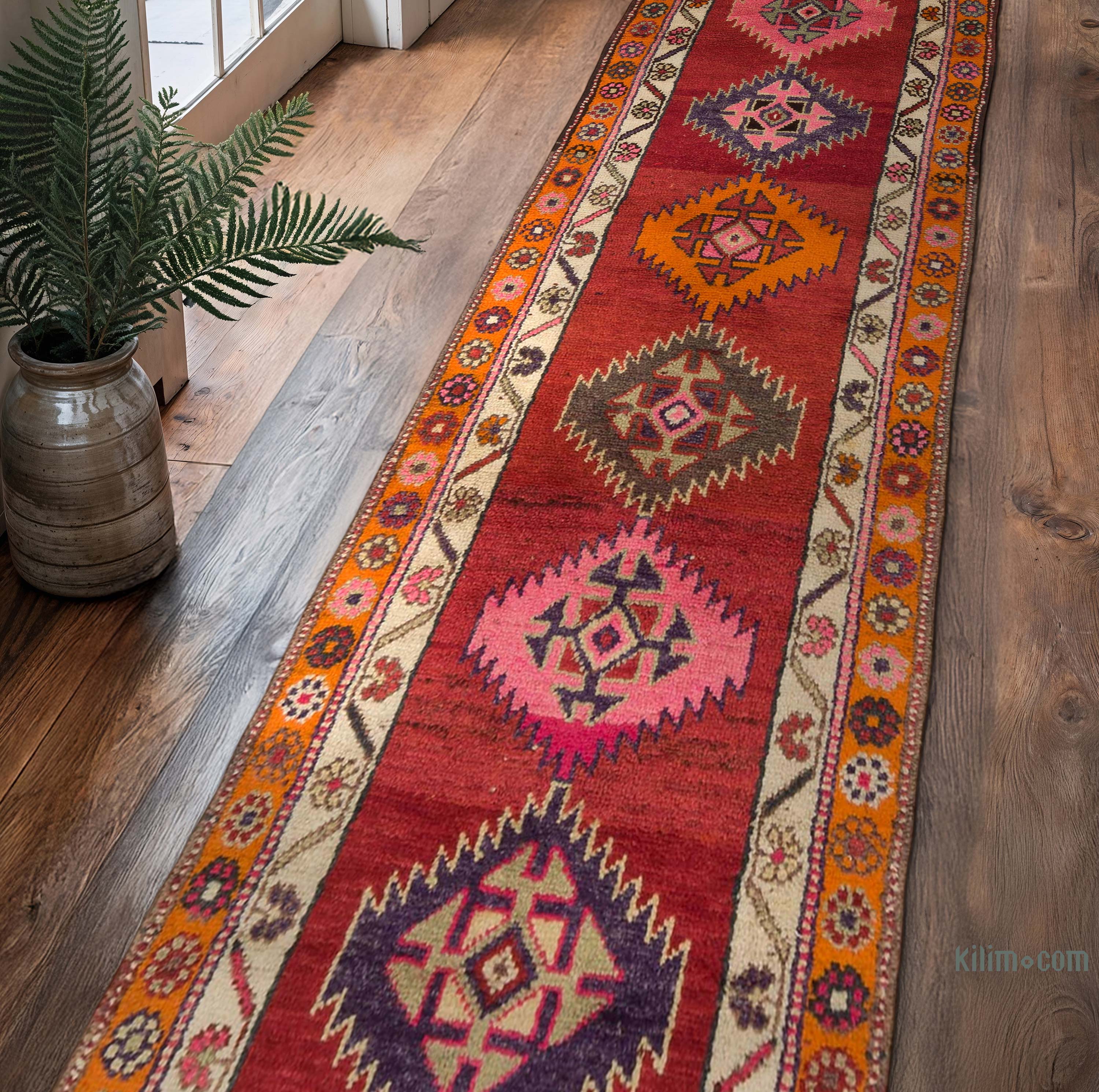
- Bohemian: The rug’s vibrant colors and eclectic motifs pair perfectly with boho interiors, mixing effortlessly with an array of textures, plants, and global artifacts to amplify a free-spirited vibe.
- Modern Contemporary: Against minimalist, clean-lined furnishings, this rug adds a splash of warmth and layered cultural depth, creating a compelling focal point that softens stark modern interiors.
- Rustic and Farmhouse: The earthy tones and handwoven texture complement wooden furniture and natural fibers, enhancing the cozy, lived-in charm typical of rustic designs.
- Eclectic: If you enjoy mixing styles, patterns, and eras, this rug provides a unifying narrative with its rich story and colors, anchoring diverse decorative elements into a harmonious whole.
- Mid-Century Modern: When framed by tapered furniture and clean geometric forms, the rug’s motifs resonate well with mid-century’s love for inspired craftsmanship and graphic patterns.
Beyond the visual appeal, this rug carries the spirit of its makers, creating spaces where history meets daily life. It gives interiors a soul and connects past traditions with present-day comfort.
Rolling Up
- The rug exhibits vibrant geometric diamonds with motifs such as elibelinde for motherhood and ram’s horn for protection.
- Floral borders add freshness and symbolize renewal within a striking orange frame.
- It suits a wide range of interiors including bohemian, modern, rustic, eclectic, and mid-century styles.
- The motifs reveal the weaver’s cultural narratives, offering more than decoration—they embody tradition, emotion, and protection.
- Exploring Kilim motifs and symbols enriches appreciation for the deeper meanings woven into the textile.
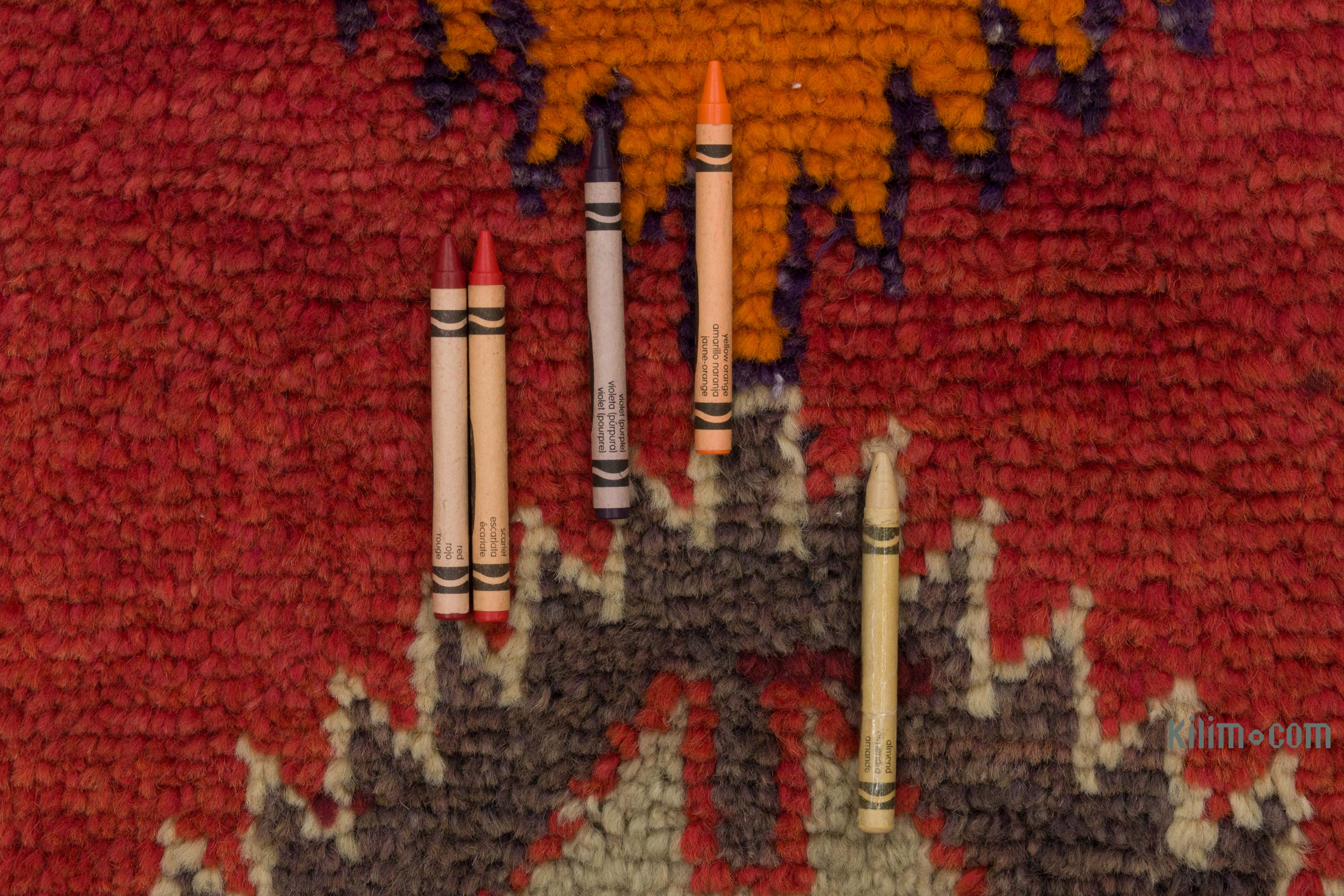
Colors may appear slightly different across various monitors due to screen settings device differences, and external lighting conditions. If color accuracy is important for your space, we recommend viewing the rug on multiple devices or contacting us for a detailed color description. We can provide detailed photos and references using Sherwin-Williams, Benjamin Moore, Pantone, or even Crayola crayons.
You can also visualize most of our products in your own room with AR (augmented reality) on an iPhone or iPad.
Return Policy
Need a rug pad? We recommend RugPadUSA