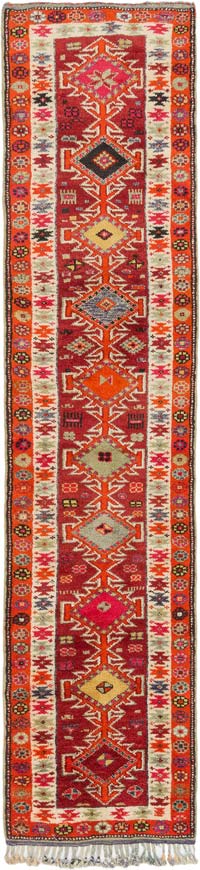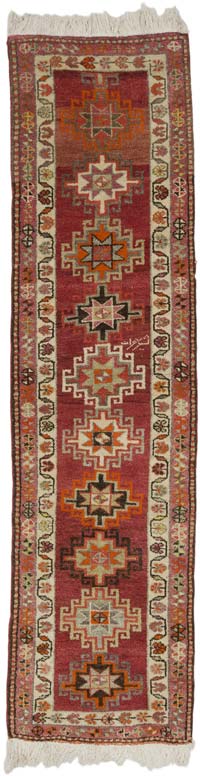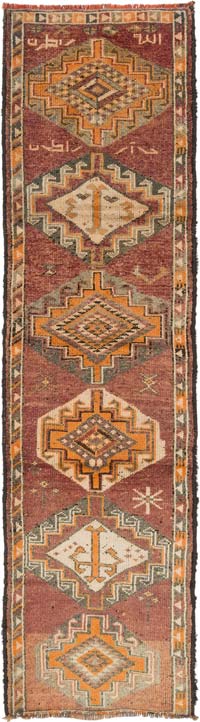
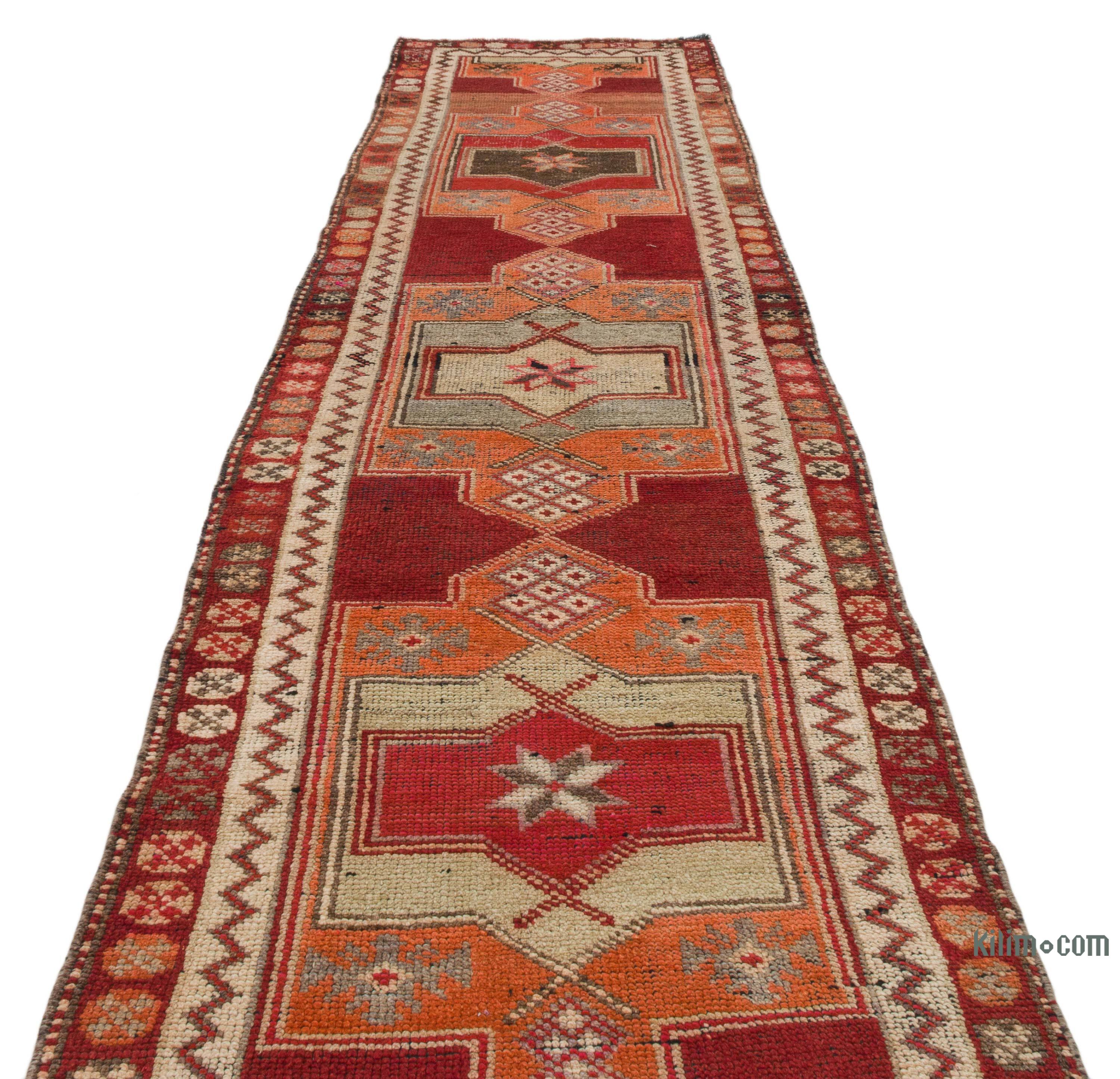

Vintage Tribal Runner Rug 3' x 12' 6" (36" x 150")
Type:
Hand-Knotted RugsCollection:
Tribal RunnersStyle:
TribalID:
K0074631Size:
Material:
- Ships in 2-5 business days
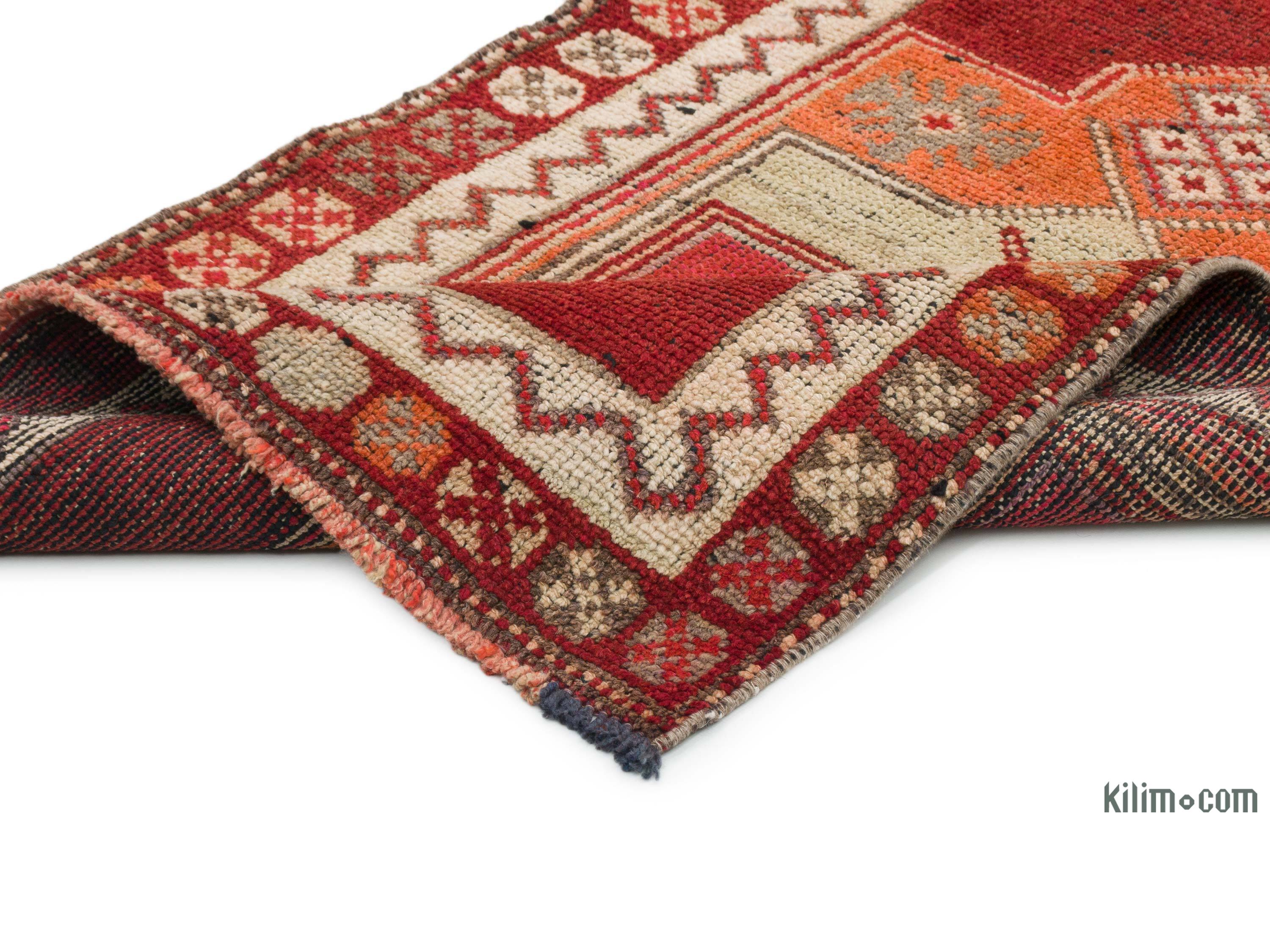
- All of our rugs are professionally cleaned; gentle wear from age and natural irregularities are inherent features of these one-of-a-kind handwoven vintage rugs.
- Only one in stock, handmade, unique
- Free shipping via FedEx Express. Returns & exchanges
- Contact us or add a note to your order if you want us to delay your shipping.
- Request more info if you want this rug shorter or narrower
The designs often feature geometric patterns, symbolic motifs, and a harmonious blend of colors, reflecting the natural landscapes and cultural heritage of the area. These runners not only serve as functional pieces but also as a testament to the enduring legacy of tribal craftsmanship, adding a touch of history and elegance to any space.
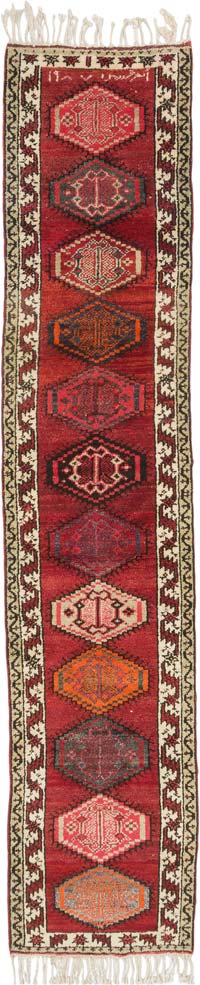
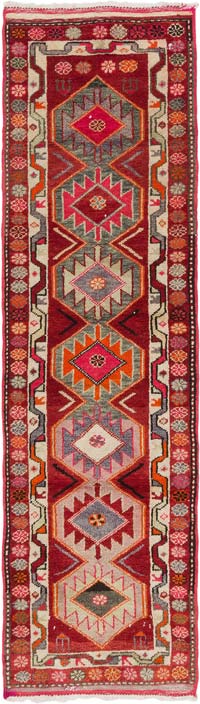
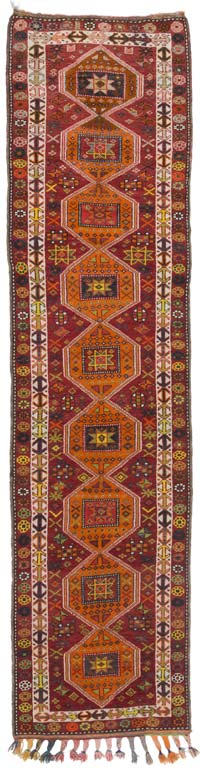
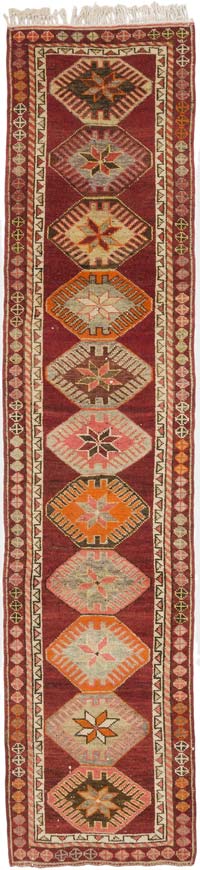
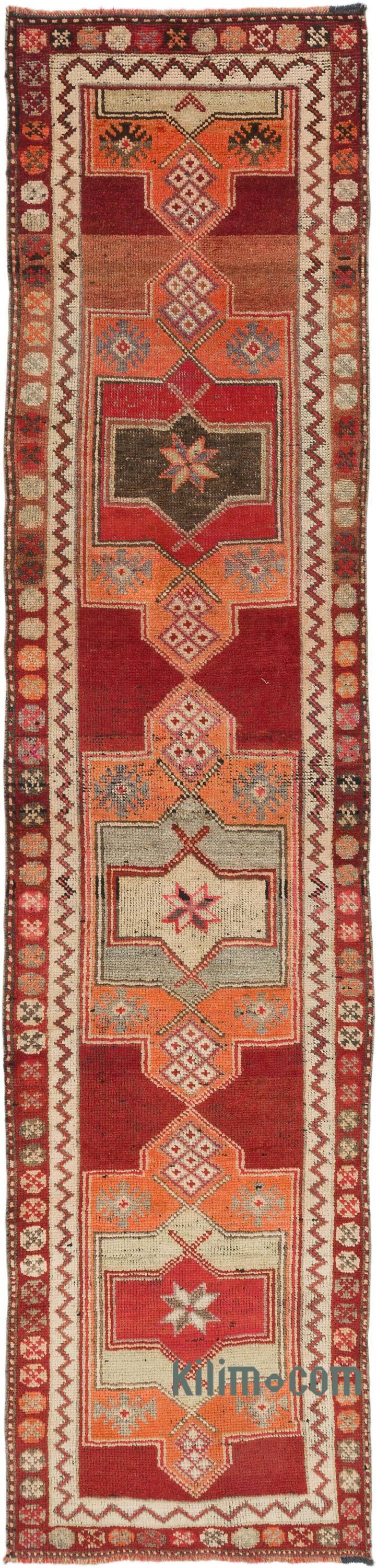
Indulge in vintage charm and bring a piece of Anatolian patterns into your living space with this attractive runner that measures 3' x 12' 6" (36" x 150").
Design and Motifs of This Kilim Rug
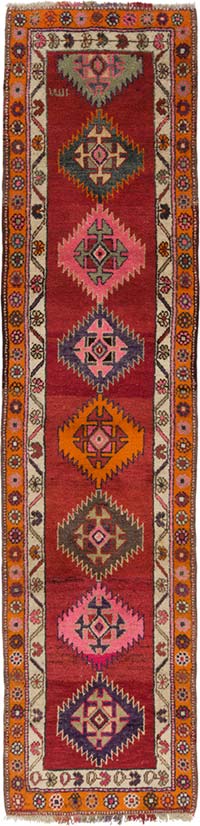
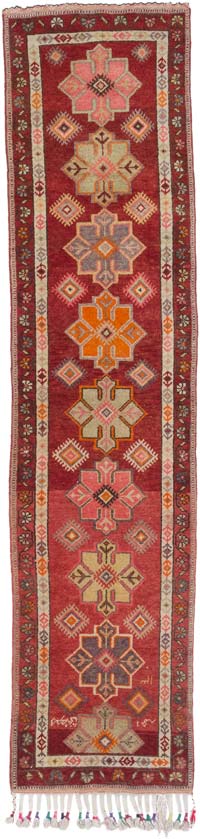
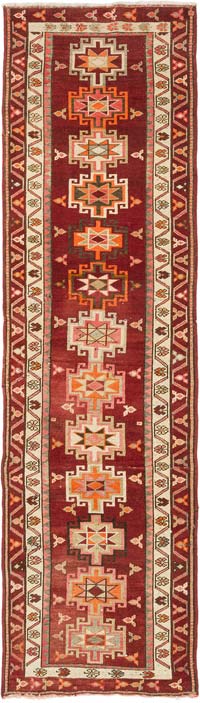
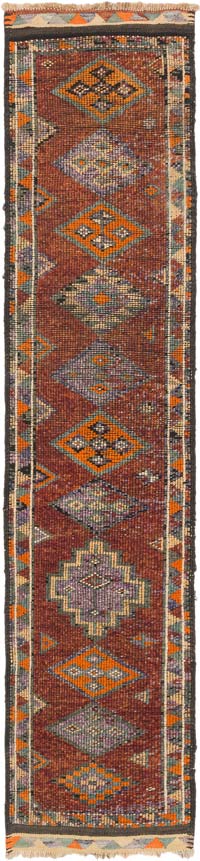
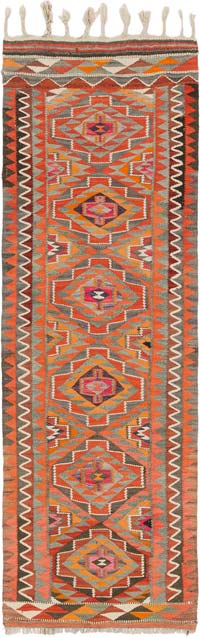
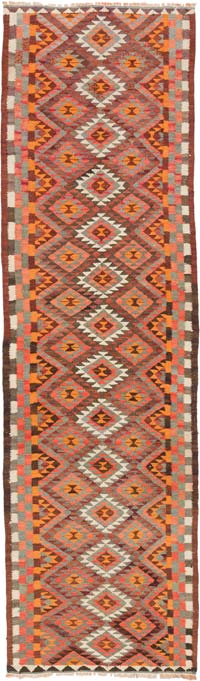
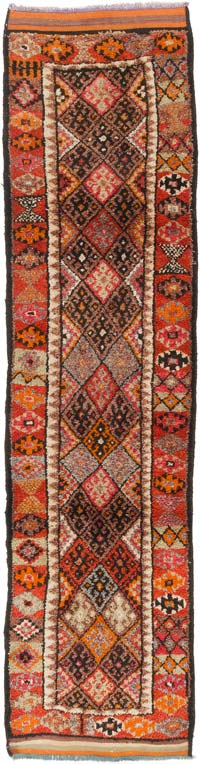
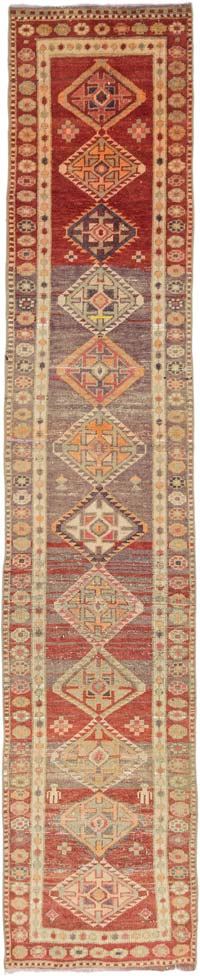
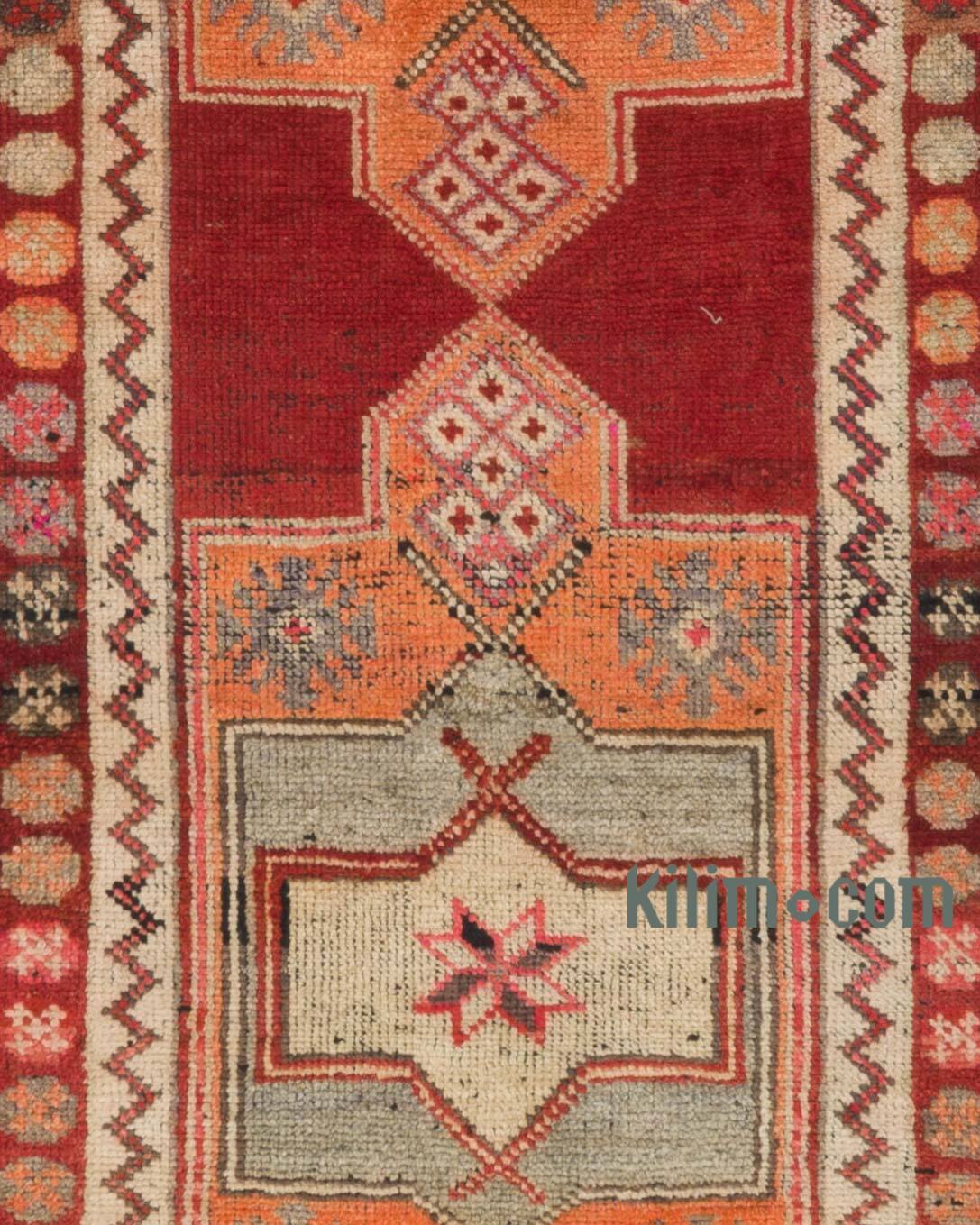
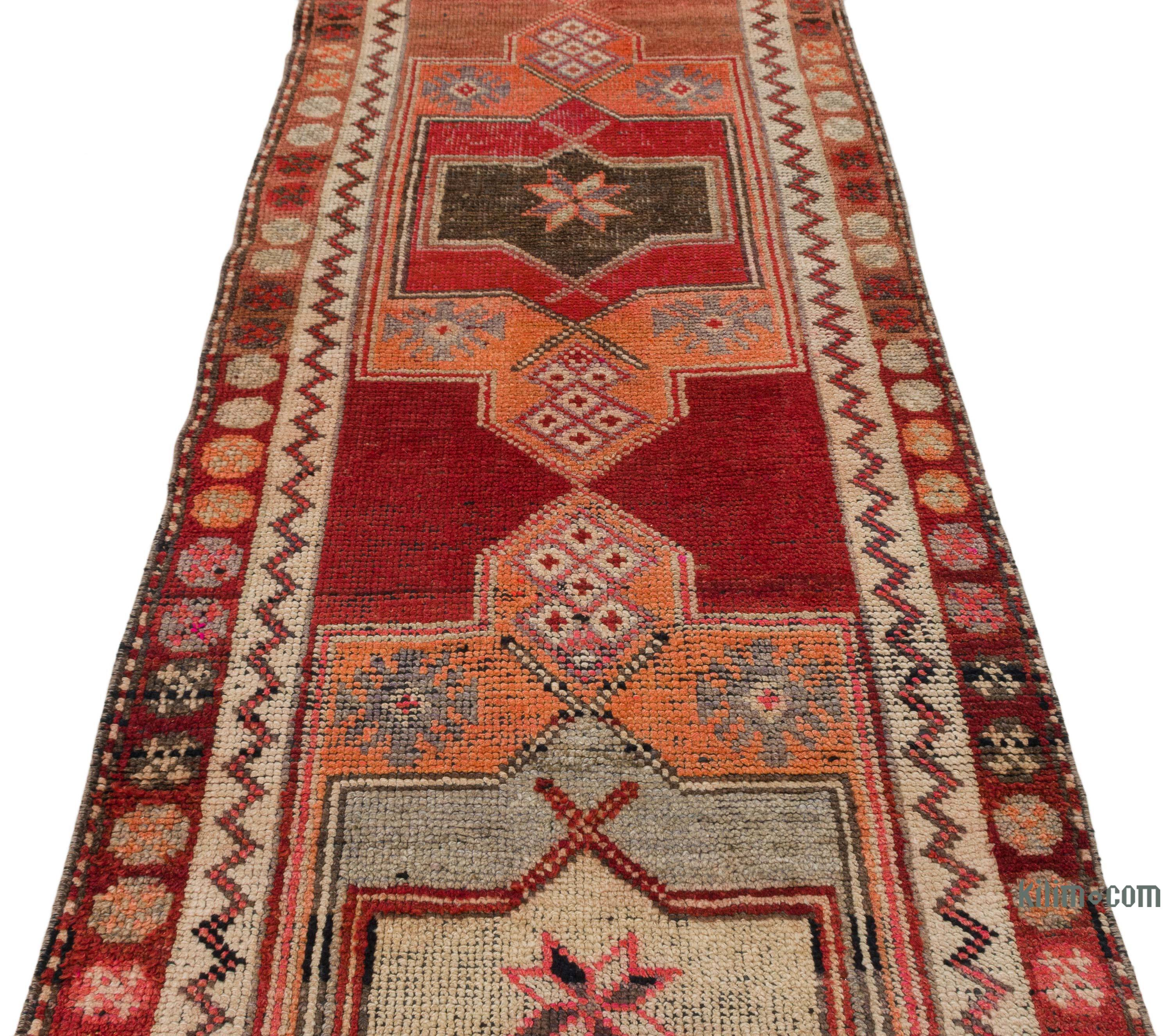
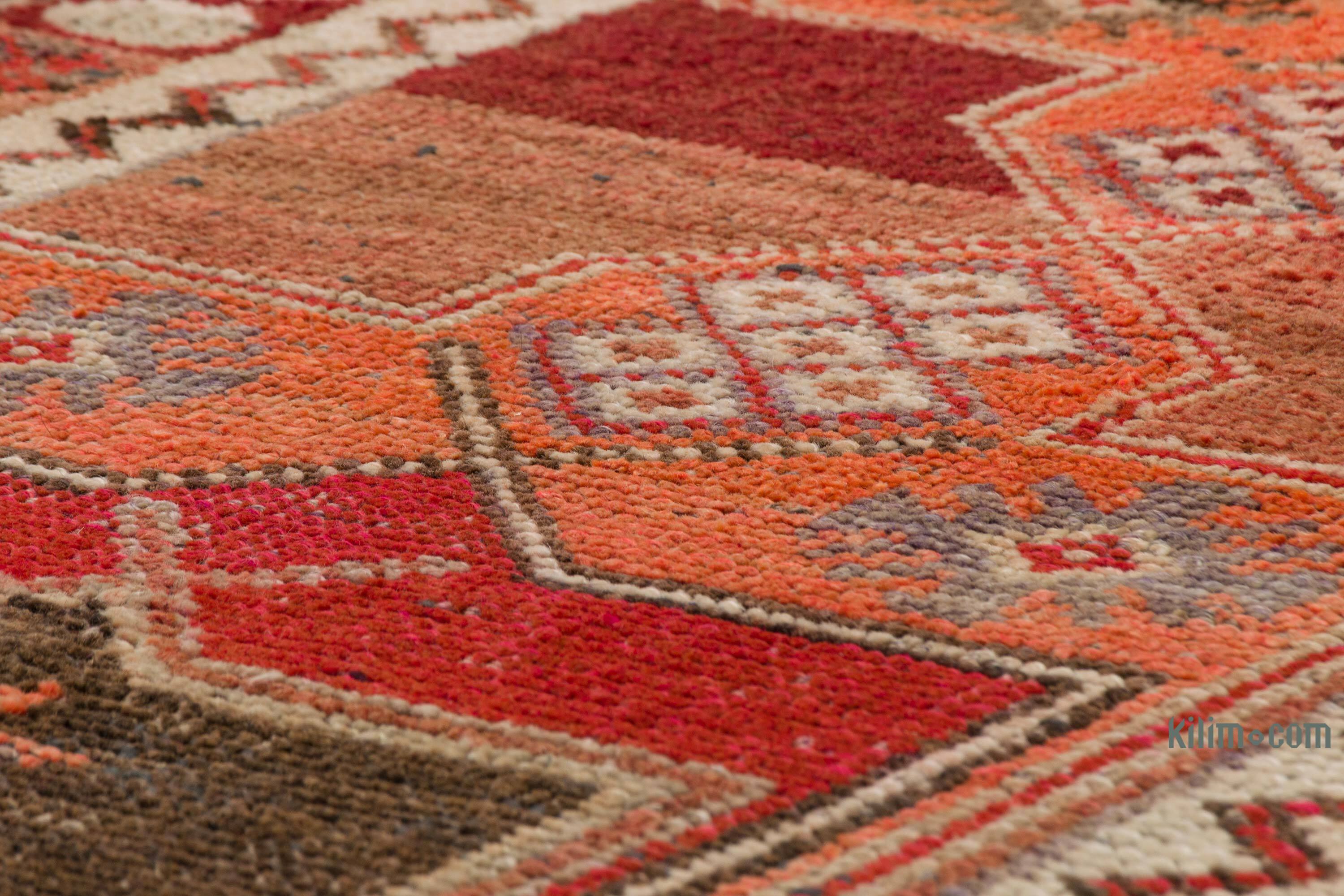
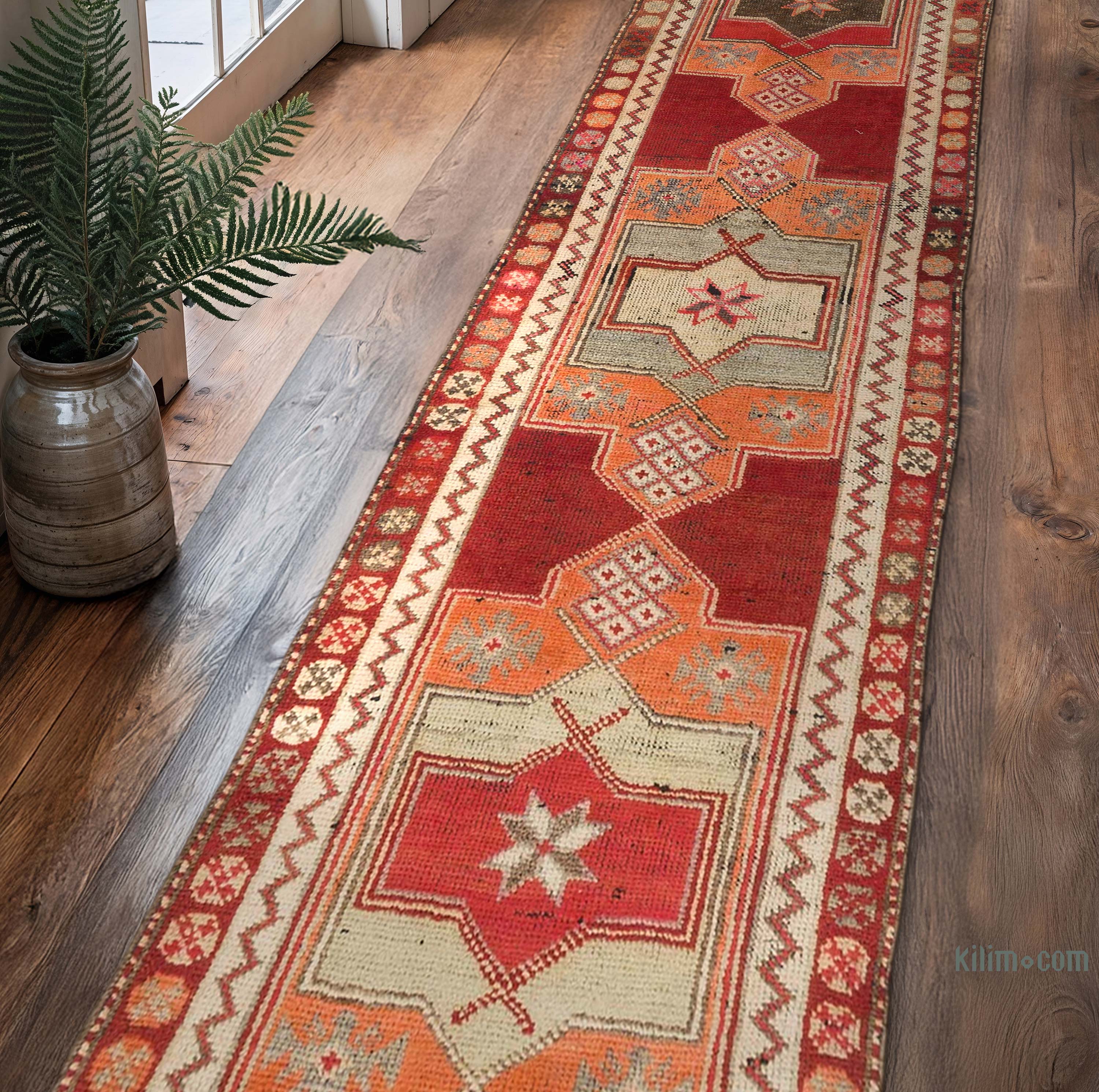
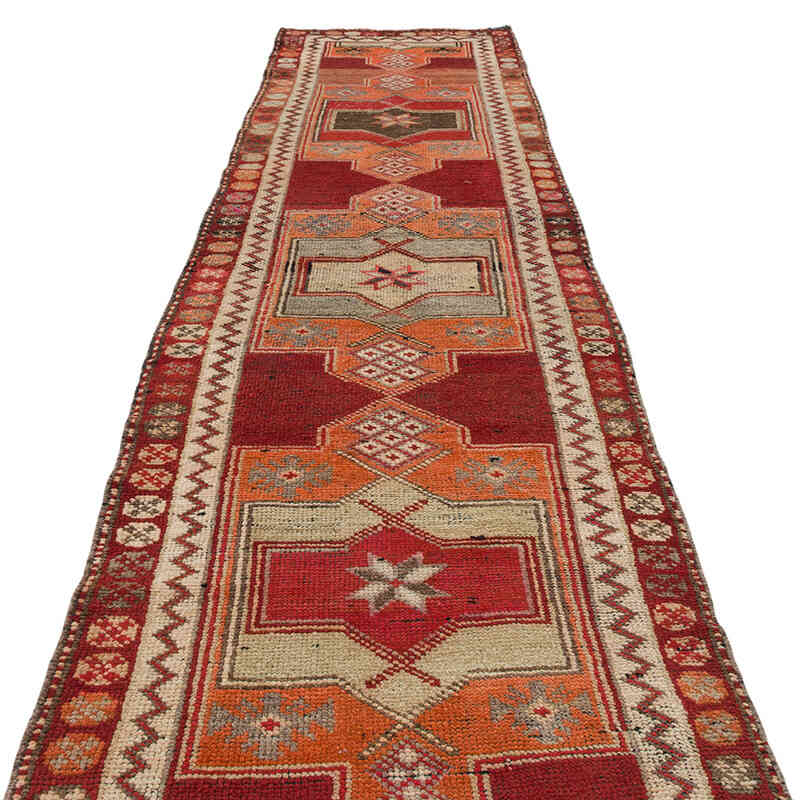
The design captures a rich tapestry of traditional Anatolian artistry, presented through a vibrant palette of reds, oranges, browns, and creams. The central axis of this runner is defined by a series of interconnected diamond-shaped medallions, each containing intricate smaller geometric details that draw the eye inward. Surrounding these are star-like floral motifs, which soften the sharp geometry and add a natural rhythm to the composition. The border features a repeating pattern of rounded shapes and zigzag lines, framing the principal motifs and lending a cohesive feel to the piece.
Several notable motifs stand out:
- Diamond Shapes: Symbolize protection and the idea of the "evil eye," guarding the home and its inhabitants.
- Stars and Flowers: Represent fertility, abundance, and the beauty of life—a celebration of growth and natural cycles.
- Zigzag Lines: Often interpreted as water or lightning, these lines bring energy and flow to the design, reminding viewers of resilience and transformation.
- Rounded Border Elements: Echo unity and continuity, emphasizing the connection between past, present, and future in the weaving tradition.
These motifs do more than decorate; they are emblems of the weavers’ cultural identity and emotional world, reflecting hopes, protection, and a sense of belonging passed down through generations. For a deeper dive into these symbols and their meanings, visit the Kilim motifs and symbols page.
Integration with Interior Design Styles
This Kilim rug’s versatile colors and patterns provide a bridge between traditional craftsmanship and contemporary decor. Here is how it complements various interior design styles:
- Bohemian: Its vibrant hues and eclectic motifs add depth and texture, enhancing the layered, global-inspired vibe found in Boho interiors.
- Scandinavian: The rug’s geometric patterns and warm palette bring cozy warmth and visual interest to the clean, minimalist lines typical of Scandinavian design.
- Rustic and Farmhouse: The earthy tones and handmade feel enrich spaces that emphasize natural materials and a lived-in, authentic atmosphere.
- Eclectic: Adds a well-curated, worldly touch that anchors diverse furnishings and artwork, making the space feel intentional rather than random.
- Mid-Century Modern: The bold shapes and warm colors serve as a striking contrast to sleek furniture, offering an organic softness that balances mid-century’s often sharp lines.
Because the rug strikes a beautiful balance between ornamental detail and geometric clarity, it suits both intimate hallways and larger living spaces. It invites touch, sparks conversation, and evokes a connection to shared human stories.
Rolling Up
- This Kilim features strong geometric diamond motifs and floral stars symbolizing protection, fertility, and abundance.
- The border’s zigzag and rounded elements bring energy, unity, and cultural depth to its design.
- Its warm color palette and traditional weaving techniques create a tactile heritage piece that complements diverse interiors from Bohemian to Mid-Century Modern.
- The rug offers both aesthetic richness and emotional resonance, weaving old-world symbolism into modern homes.
- Explore more about these meaningful motifs on the Kilim motifs and symbols page to fully appreciate their stories and significance.
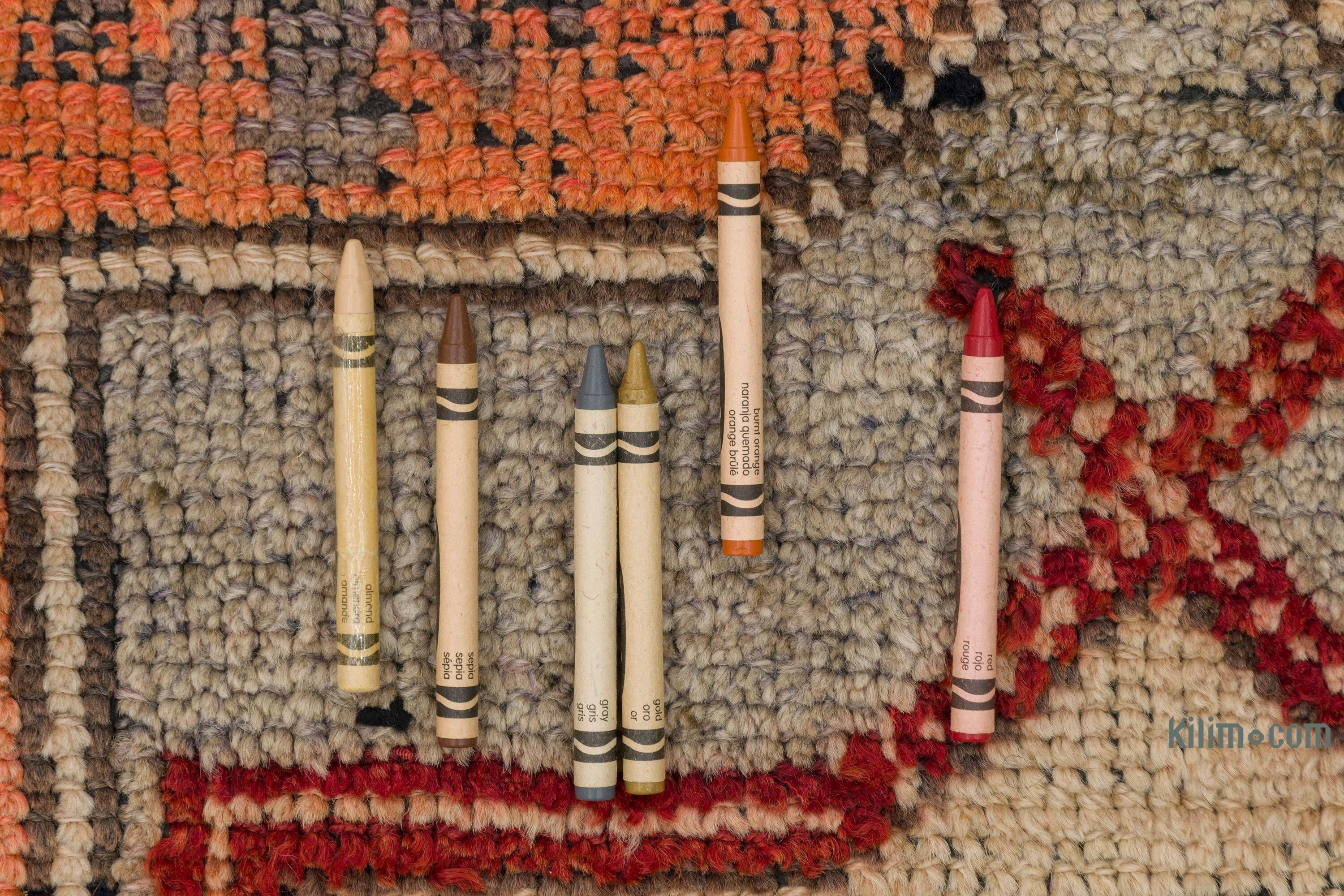
Colors may appear slightly different across various monitors due to screen settings device differences, and external lighting conditions. If color accuracy is important for your space, we recommend viewing the rug on multiple devices or contacting us for a detailed color description. We can provide detailed photos and references using Sherwin-Williams, Benjamin Moore, Pantone, or even Crayola crayons.
You can also visualize most of our products in your own room with AR (augmented reality) on an iPhone or iPad.
Return Policy
Need a rug pad? We recommend RugPadUSA