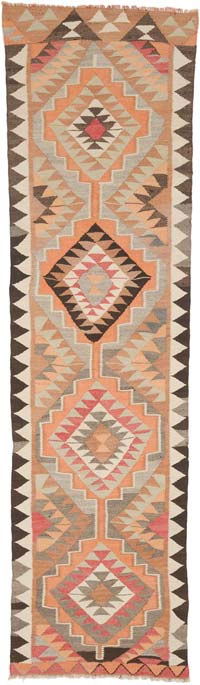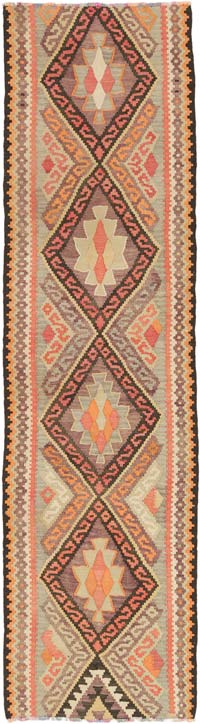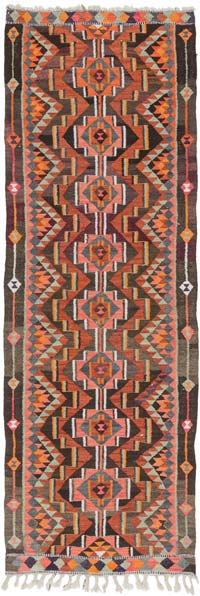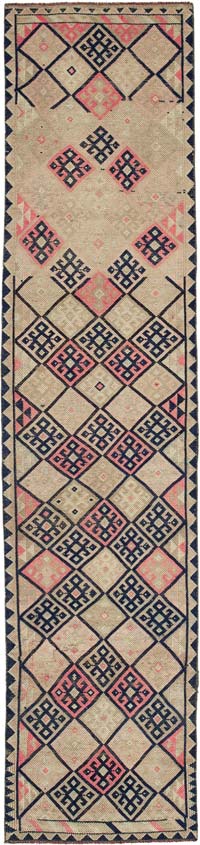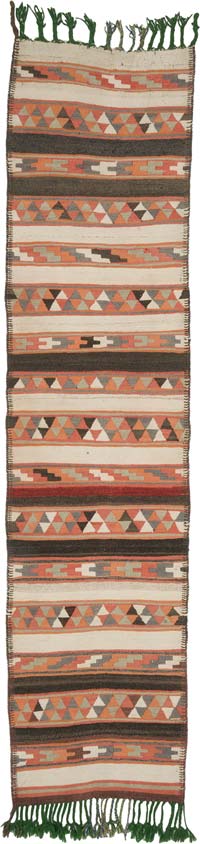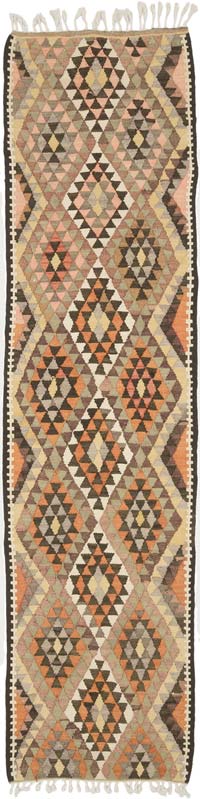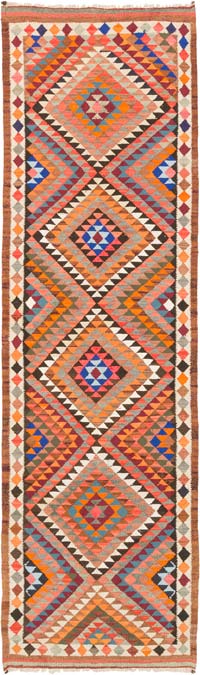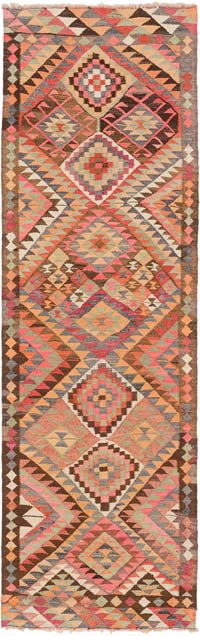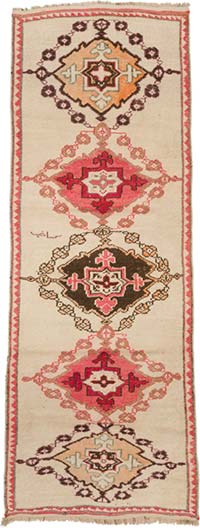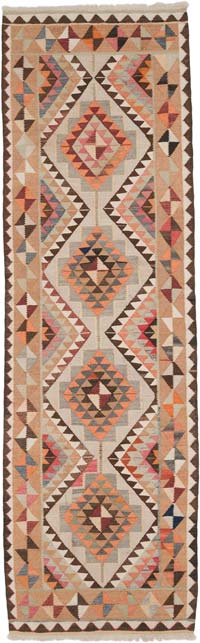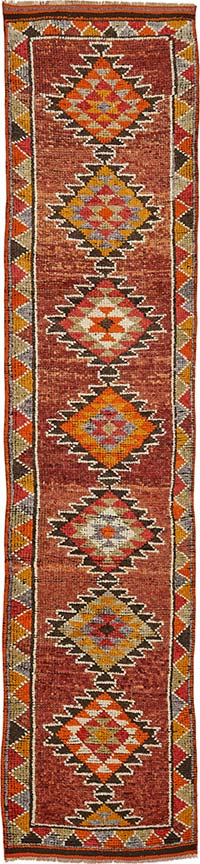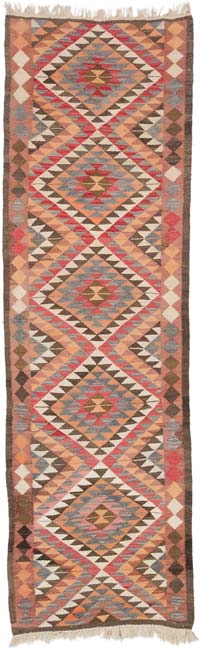
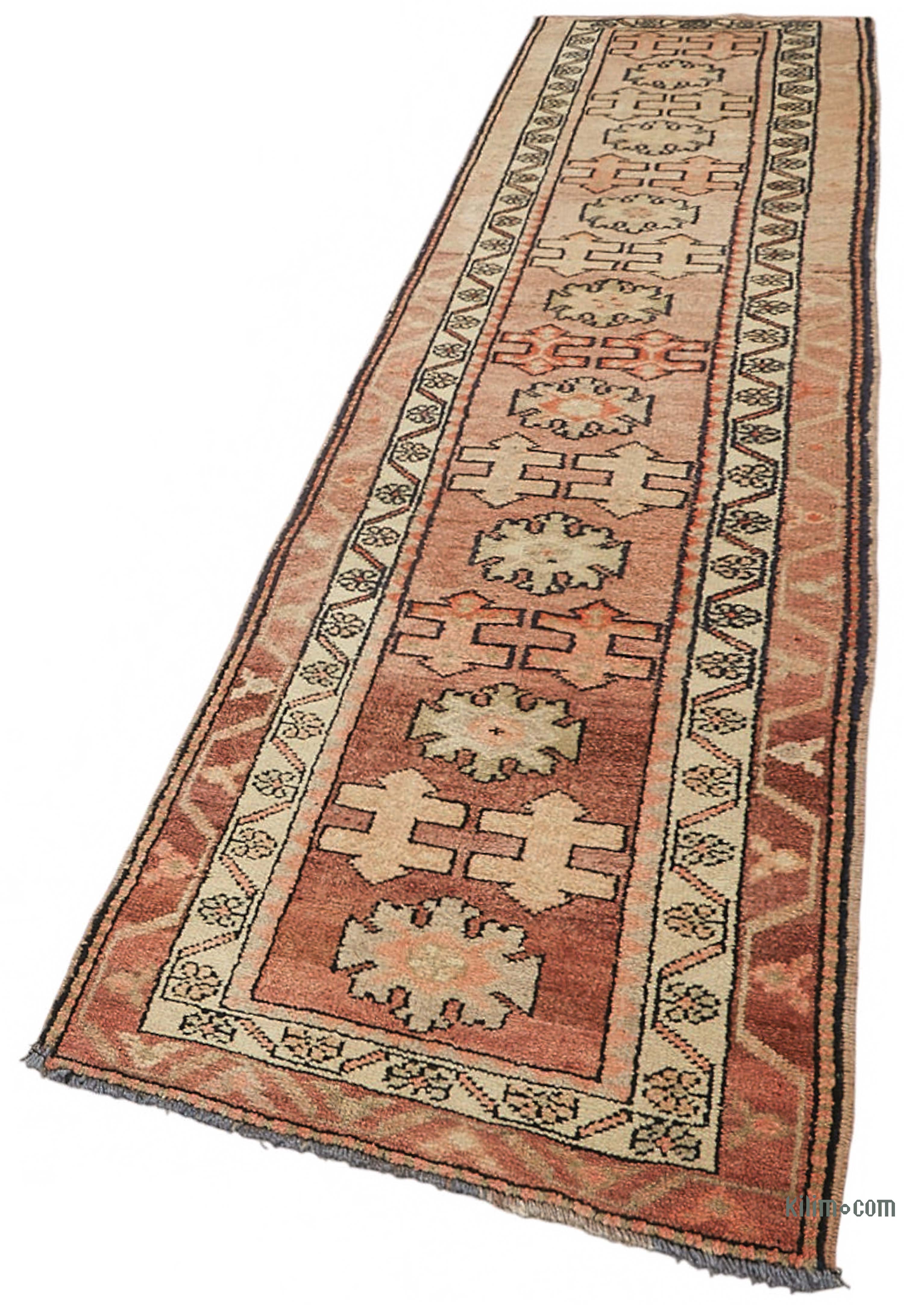

Vintage Tribal Runner Rug 2' 11" x 13' 1" (35" x 157")
Type:
Hand-Knotted RugsCollection:
Tribal RunnersStyle:
TribalID:
K0085050Size:
Thickness:
0.4"Material:
- Ships in 2-5 business days
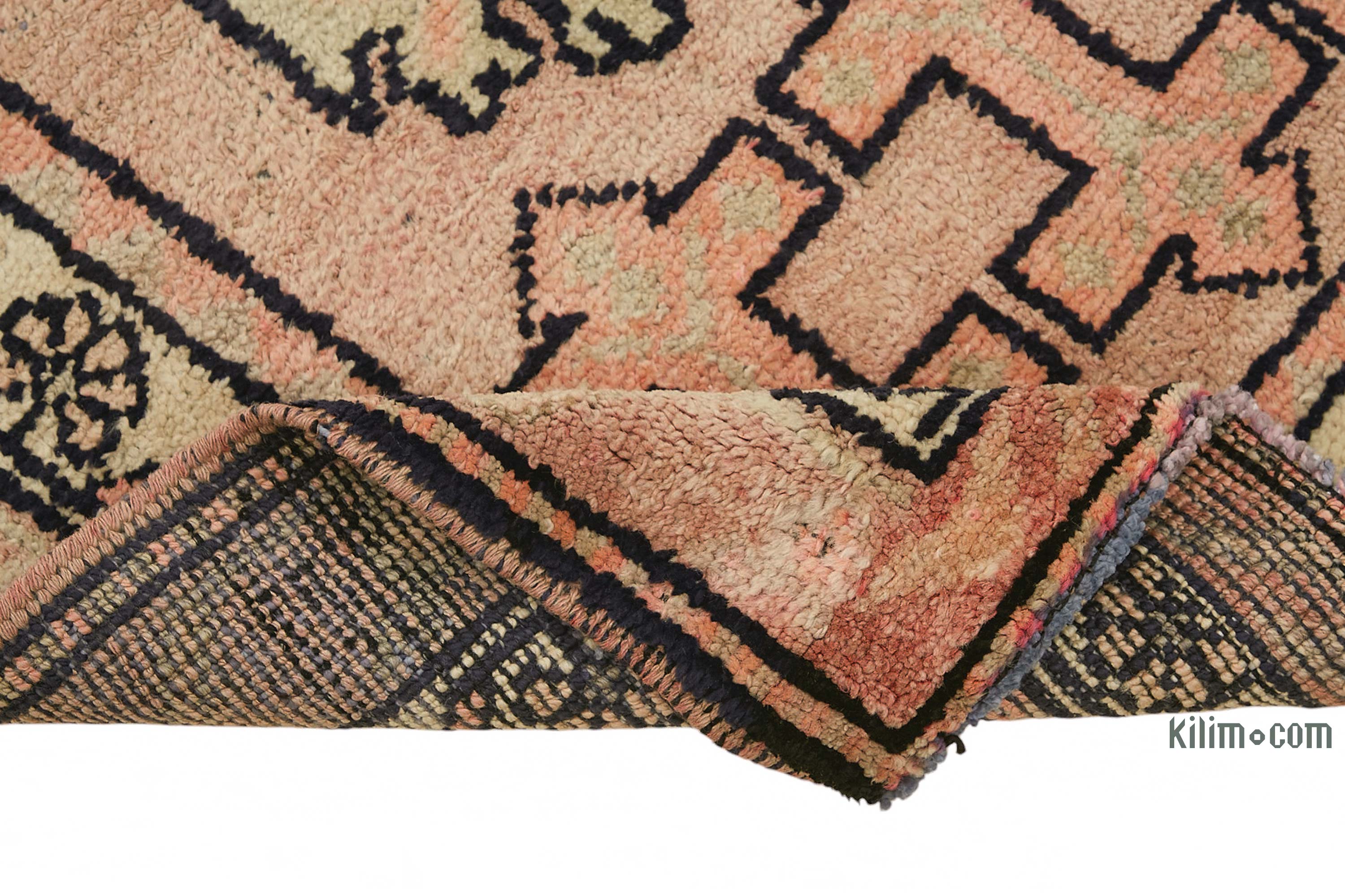
- All of our rugs are professionally cleaned; gentle wear from age and natural irregularities are inherent features of these one-of-a-kind handwoven vintage rugs.
- Only one in stock, handmade, unique
- Free shipping via FedEx Express. Returns & exchanges
- Contact us or add a note to your order if you want us to delay your shipping.
- Request more info if you want this rug shorter or narrower
The designs often feature geometric patterns, symbolic motifs, and a harmonious blend of colors, reflecting the natural landscapes and cultural heritage of the area. These runners not only serve as functional pieces but also as a testament to the enduring legacy of tribal craftsmanship, adding a touch of history and elegance to any space.
Indulge in vintage charm and bring a piece of Anatolian patterns into your living space with this attractive runner that measures 2' 11" x 13' 1" (35" x 157").
Design and Motifs
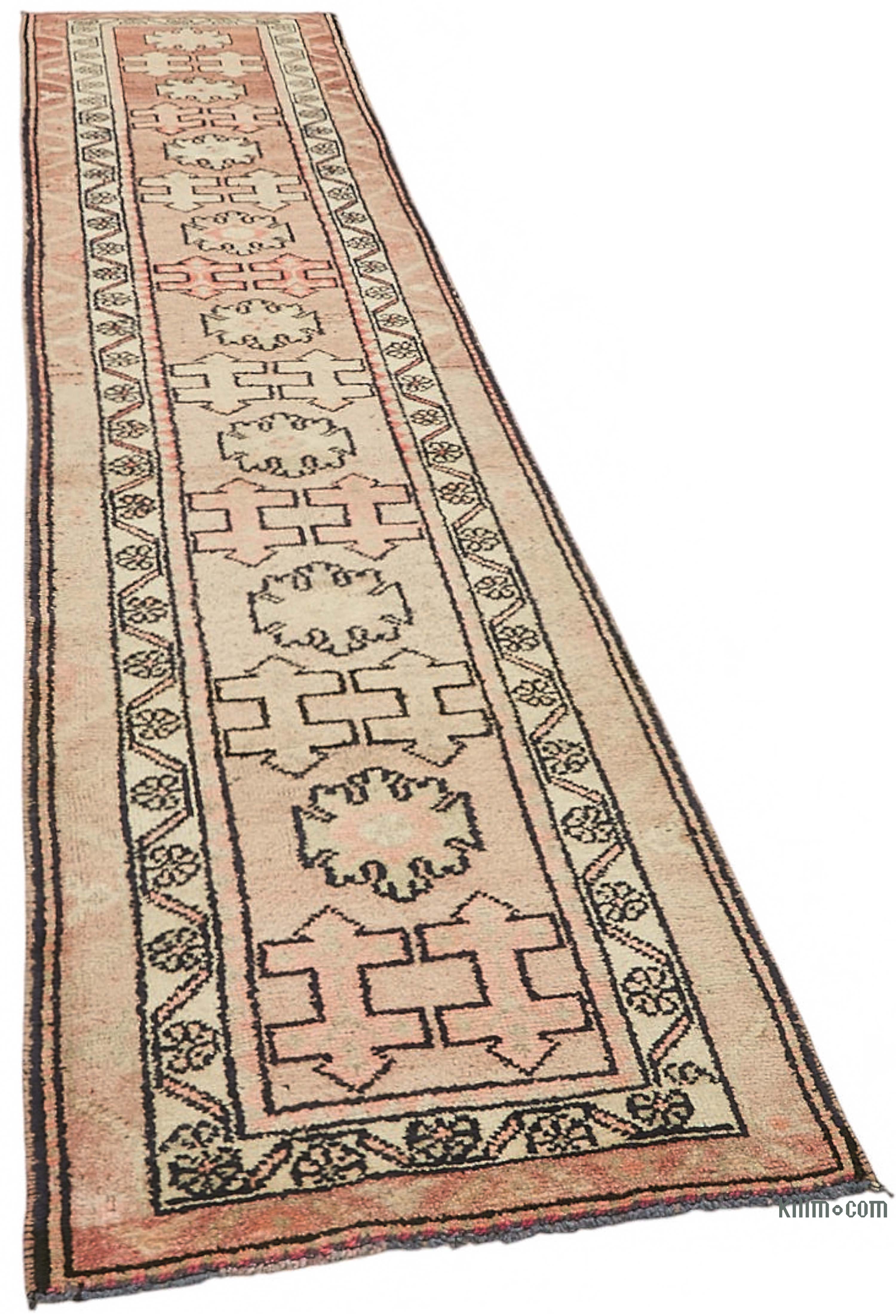
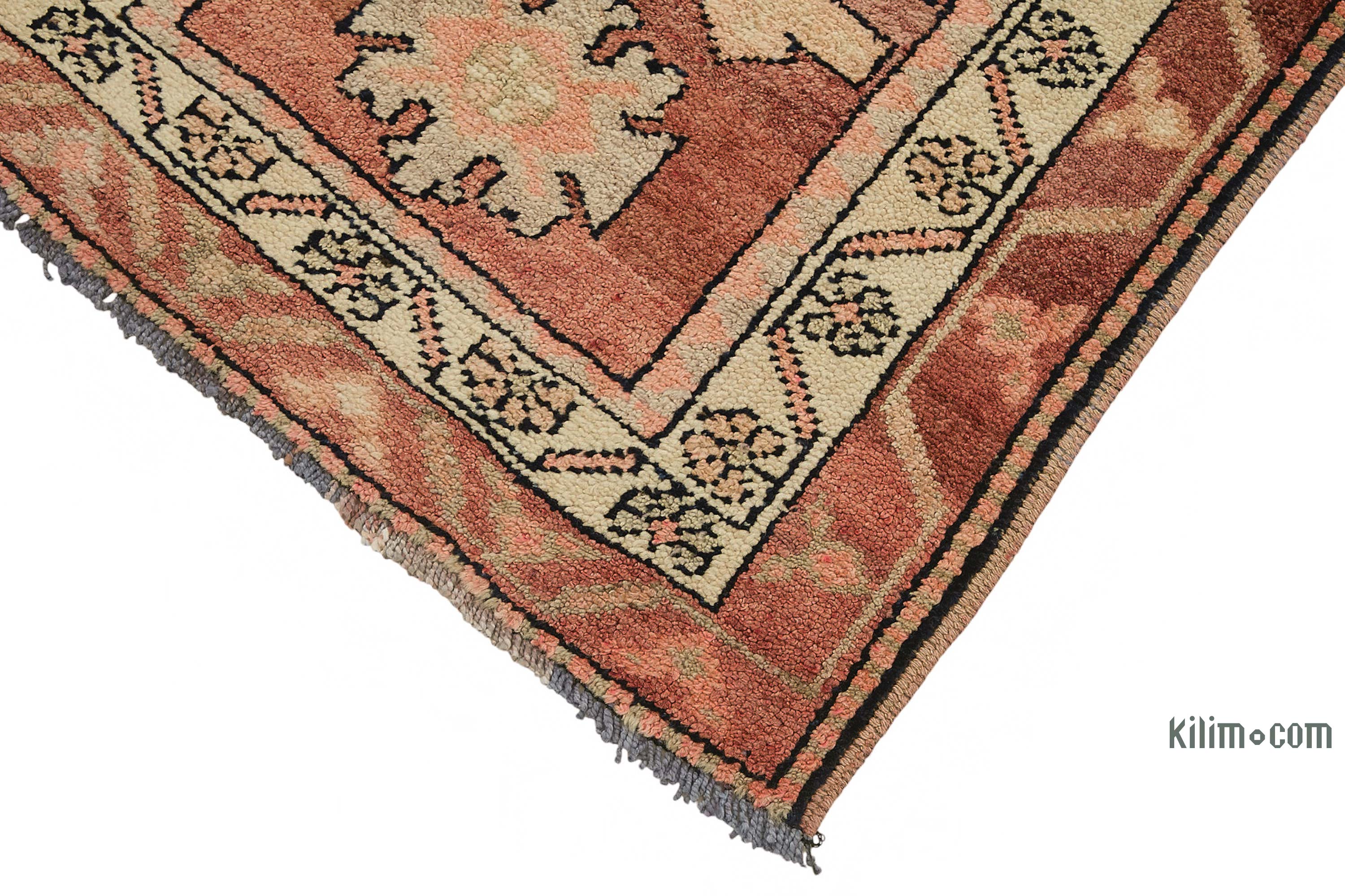
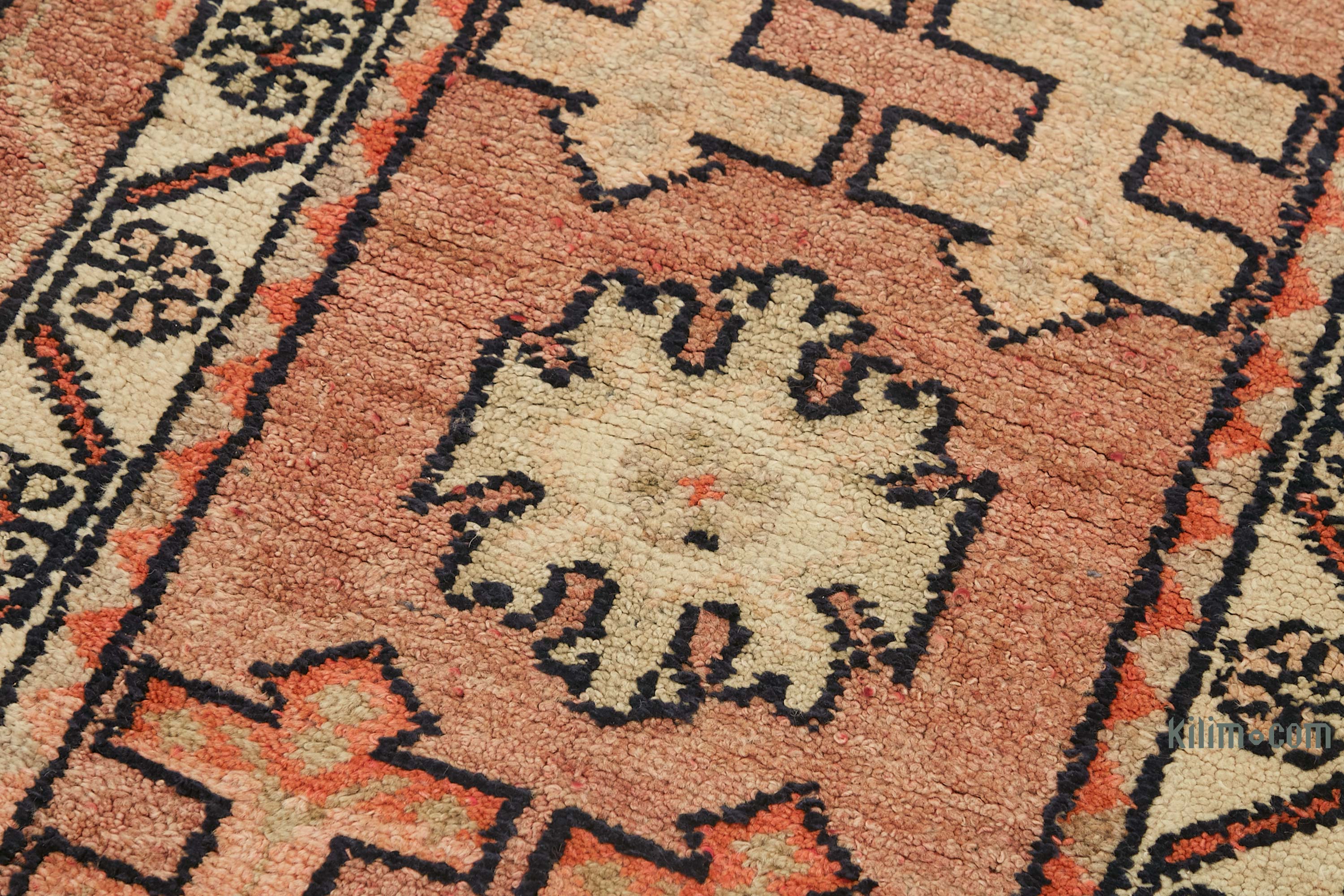
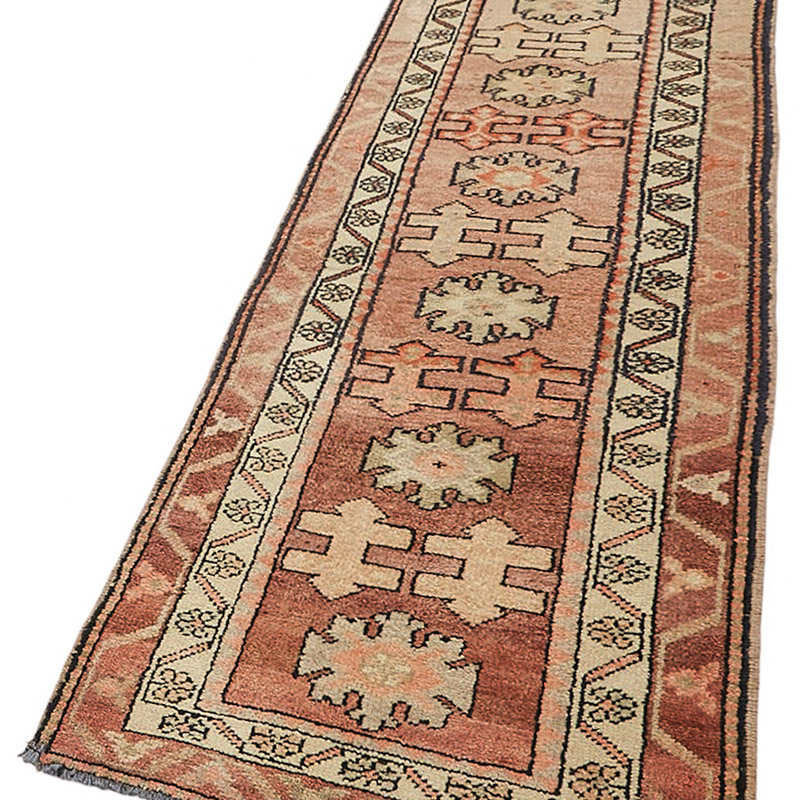
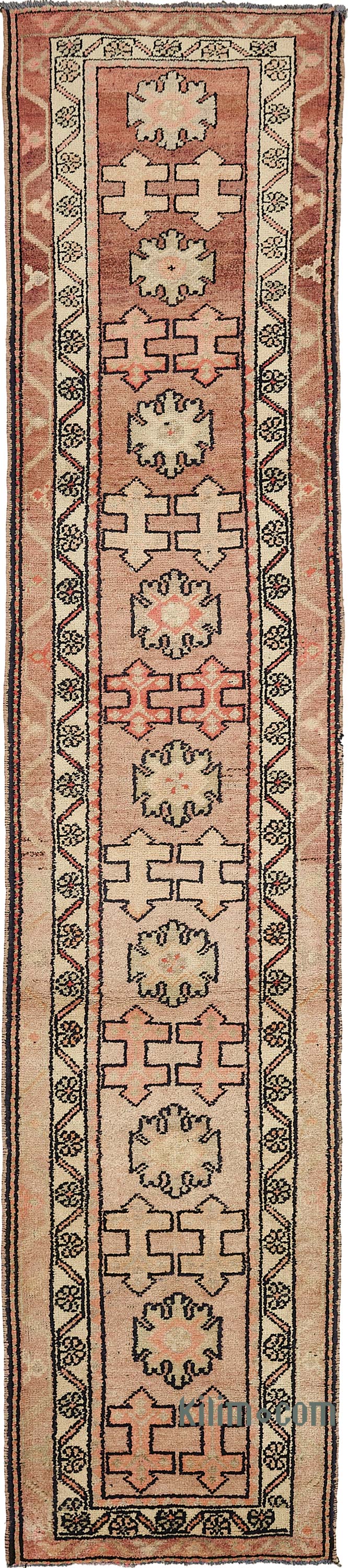
This beautiful kilim runner displays a classic arrangement of geometric motifs set against a warm, earthy palette of soft browns, creams, and subtle hints of coral. The central field is defined by alternating medallion-like motifs with sharp, angular contours paired with twin triangular or arrow-shaped figures often referred to as “elibelinde,” which symbolize motherhood and fertility in Anatolian weaving traditions.
The border features a delicate sequence of small rosettes interlinked by thin zigzag lines, evoking a sense of continuity and protection. Each motif on this rug is crafted with clarity, outlined in dark hues that make the patterns stand out while maintaining the organic softness typical of handwoven textiles.
Understanding these symbols reveals a tapestry of meaning deeply woven into daily life:
- Elibelinde motif: Symbolizes motherhood, abundance, and the creative force of women, reflecting the hope and prayers for family prosperity.
- Rosettes: Represent blossoming life and spiritual protection, creating a shield around the central story the rug tells.
- Zigzag lines: These likely connote water or life’s flow, reminding us of resilience and continuity through change.
For those eager to dive deeper into the rich language of these Anatolian designs and discover more about the tradition behind their meanings, visit our Kilim motifs and symbols page.
Integration with Interior Design Styles
This kilim works harmoniously in a variety of interior spaces due to its balanced color scheme and meaningful motifs. Here’s how it complements different decor themes:
- Bohemian and Eclectic: Its artisanal aesthetic and earthy tones meld naturally with layered textiles, plants, and vintage furnishings, adding a handcrafted authenticity and warmth.
- Rustic and Farmhouse: The muted, natural colors and geometric patterns enhance the simplicity and comfort of rustic interiors, grounding spaces with heritage and a human touch.
- Modern Minimalist: When paired with sleek furniture and neutral walls, this rug introduces subtle texture and narrative without overpowering clean lines and open spaces.
- Traditional and Classic: The culturally rich motifs echo timeless crafts and narratives, enriching formal settings with cultural depth and inviting curiosity.
Because of its runner shape, it’s ideal for hallways, kitchens, or narrow entryways, where it can visually elongate spaces while conveying a story through each motif. The gentle contrast between its calming earth tones and crisp designs invites a soothing yet stimulating aesthetic presence.
Rolling Up
- This kilim showcases Anatolian symbolism through motifs related to motherhood, protection, and resilience.
- The subtle yet rich color palette blends easily with diverse interior styles, from boho to modern minimalist.
- Its runner format makes it perfect for hallways and transitional spaces, marrying practicality with narrative beauty.
- Each element in the carpet reflects centuries of tradition and the personal hopes of the weavers, contributing to a deeply meaningful decorative piece.
- Explore the full range of Kilim motifs and symbols to enrich your understanding and appreciation of these handcrafted artworks.
Colors may appear slightly different across various monitors due to screen settings device differences, and external lighting conditions. If color accuracy is important for your space, we recommend viewing the rug on multiple devices or contacting us for a detailed color description. We can provide detailed photos and references using Sherwin-Williams, Benjamin Moore, Pantone, or even Crayola crayons.
You can also visualize most of our products in your own room with AR (augmented reality) on an iPhone or iPad.
Return Policy
Need a rug pad? We recommend RugPadUSA