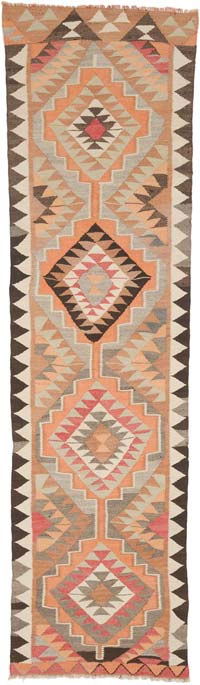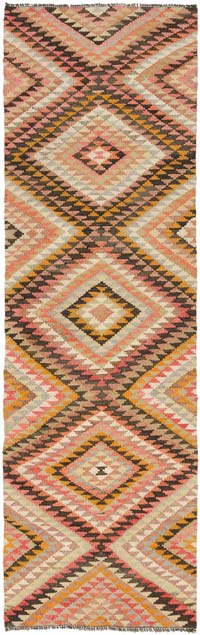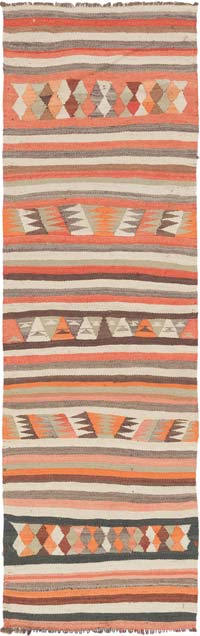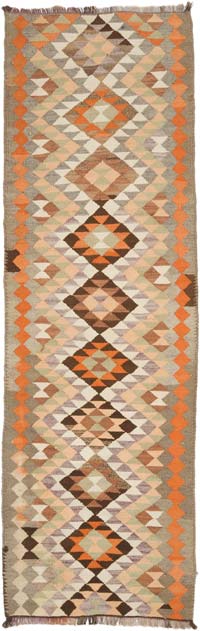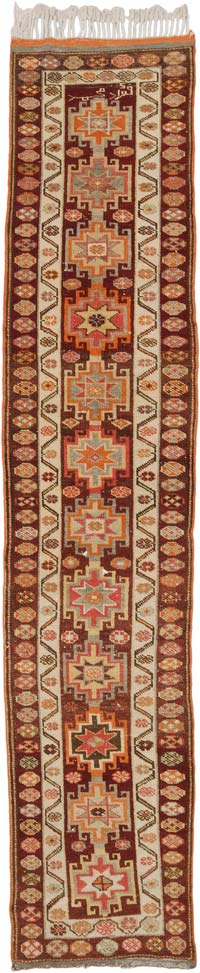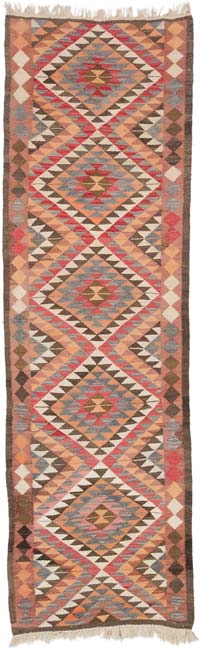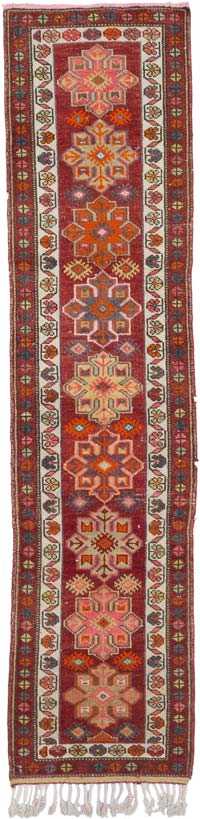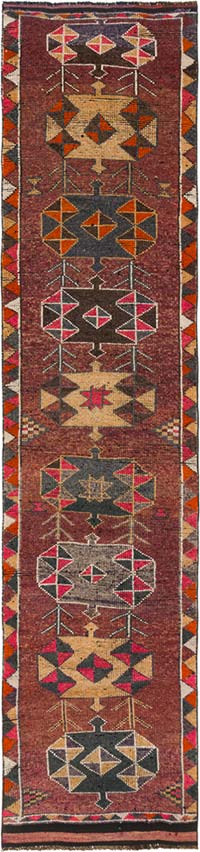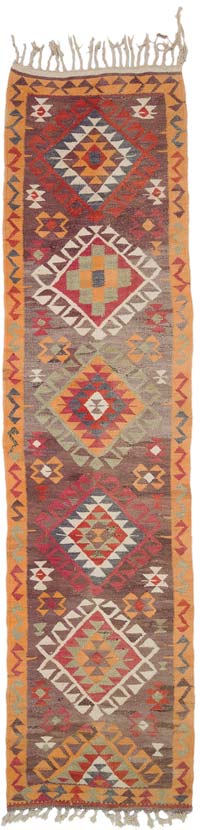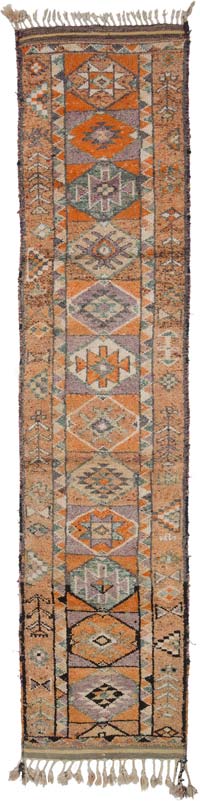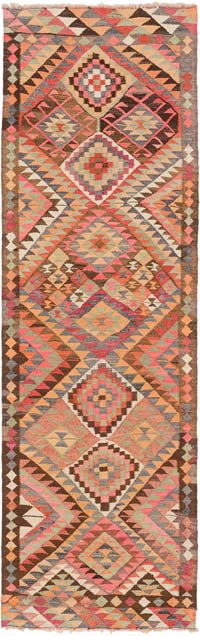
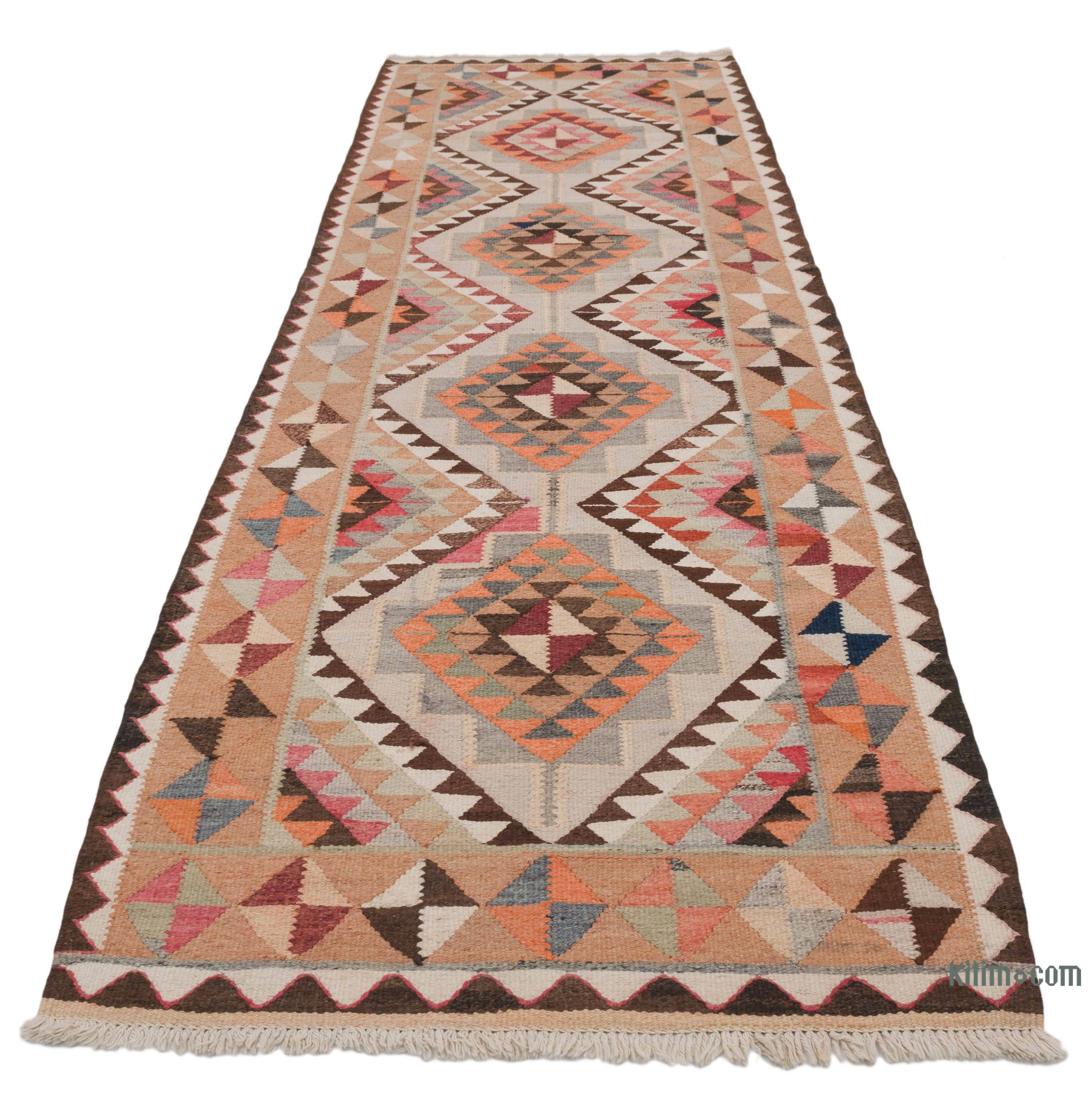

Vintage Tribal Kilim Runner 3' 1" x 10' (37" x 120")
Type:
Kilim RugsCollection:
Tribal RunnersStyle:
TribalID:
K0068847Size:
Material:
- Ships in 2-5 business days
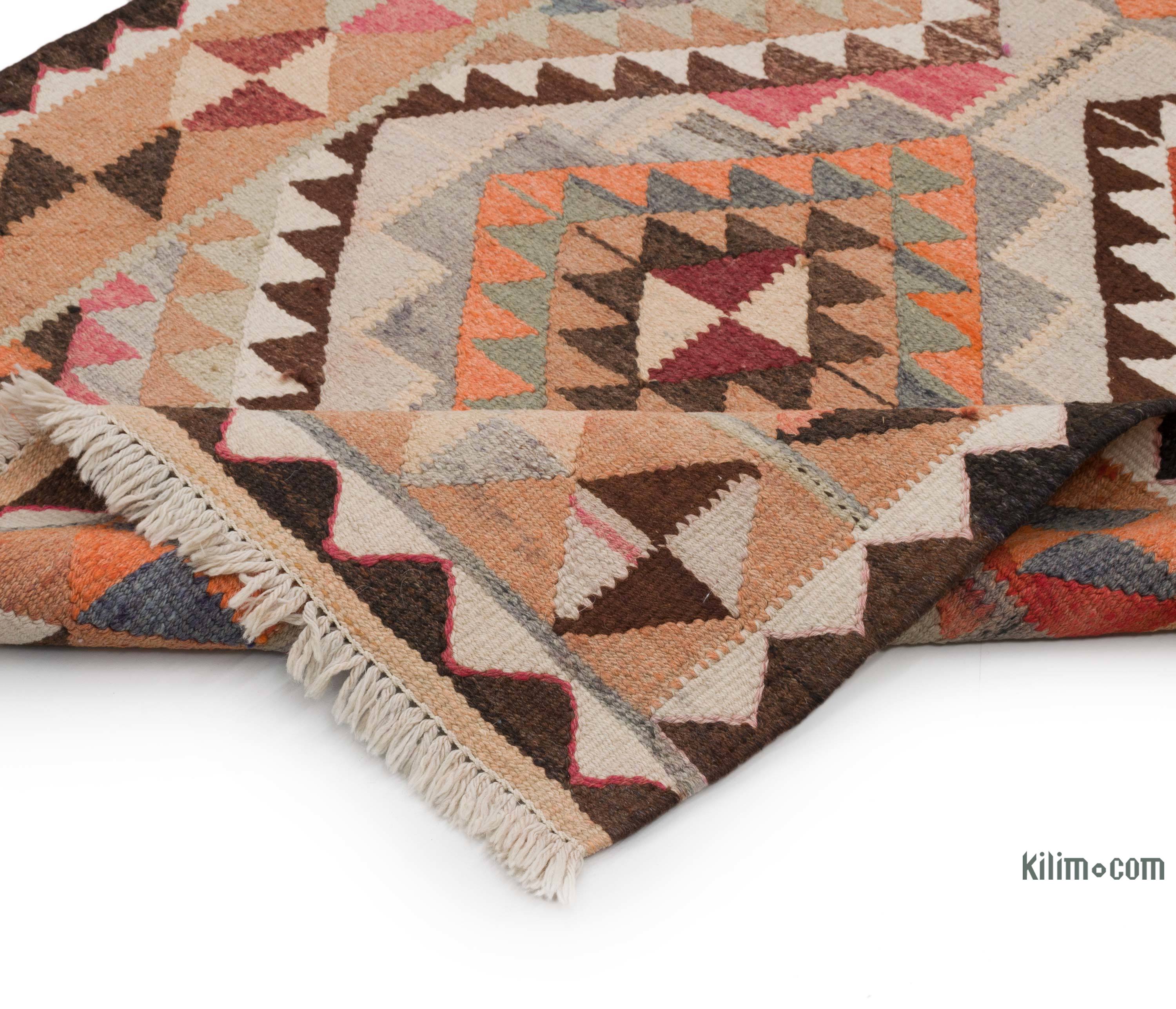
- All of our rugs are professionally cleaned; gentle wear from age and natural irregularities are inherent features of these one-of-a-kind handwoven vintage rugs.
- Only one in stock, handmade, unique
- Free shipping via FedEx Express. Returns & exchanges
- Contact us or add a note to your order if you want us to delay your shipping.
- Request more info if you want this rug shorter or narrower
The designs feature a rich array of symbols representing tribal culture and Anatolian motifs, often in the form of medallions, diamonds, and other geometric shapes. These kilim runners are ideal for hallways and narrow spaces, offering a touch of ethnic charm and artisanal quality to any interior.
Herki kilims not only serve as functional floor coverings but also as artistic expressions of tribal identity, making each rug a unique cultural artifact.
Design and Motifs of This Kilim Rug
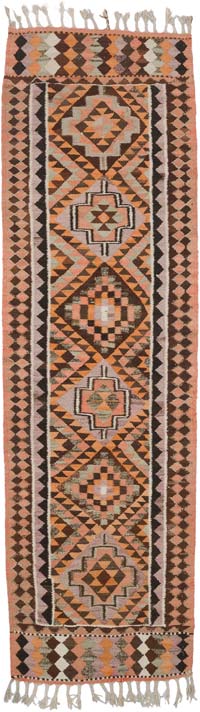
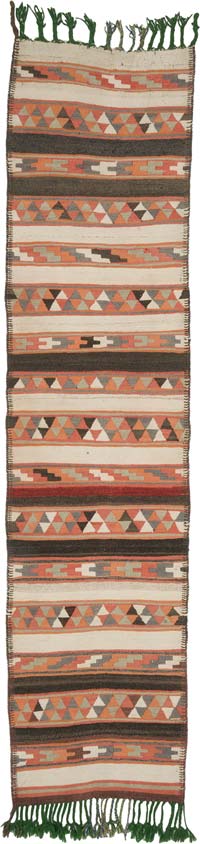
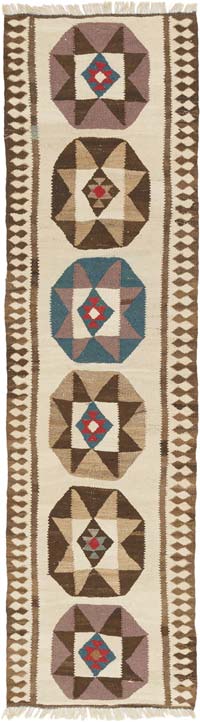
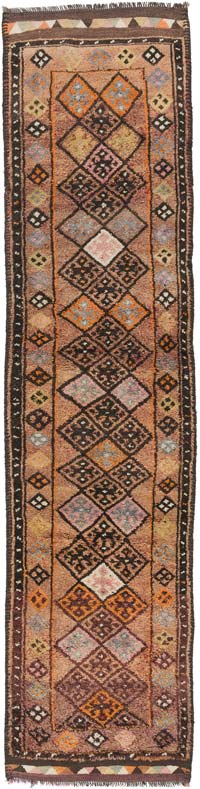
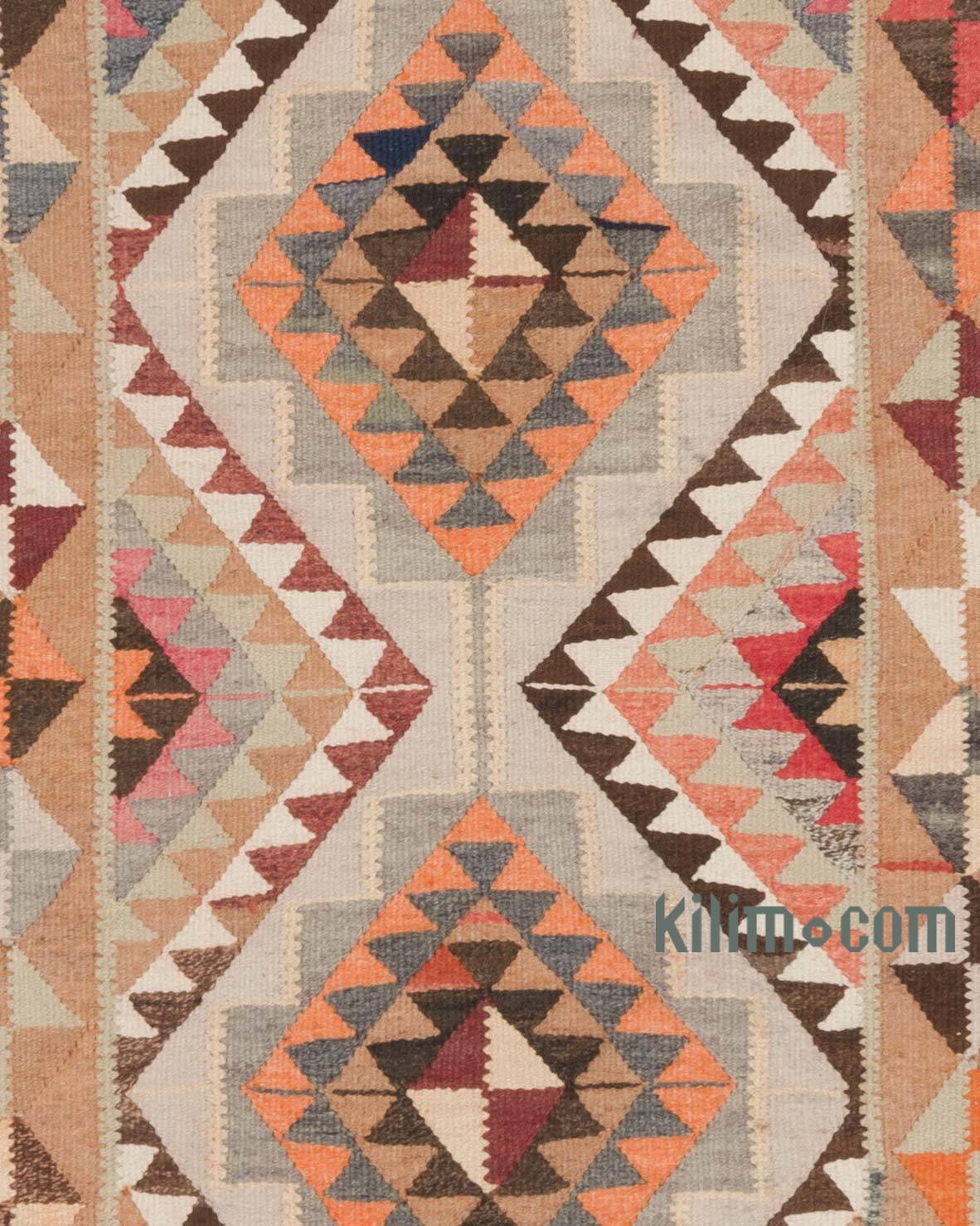
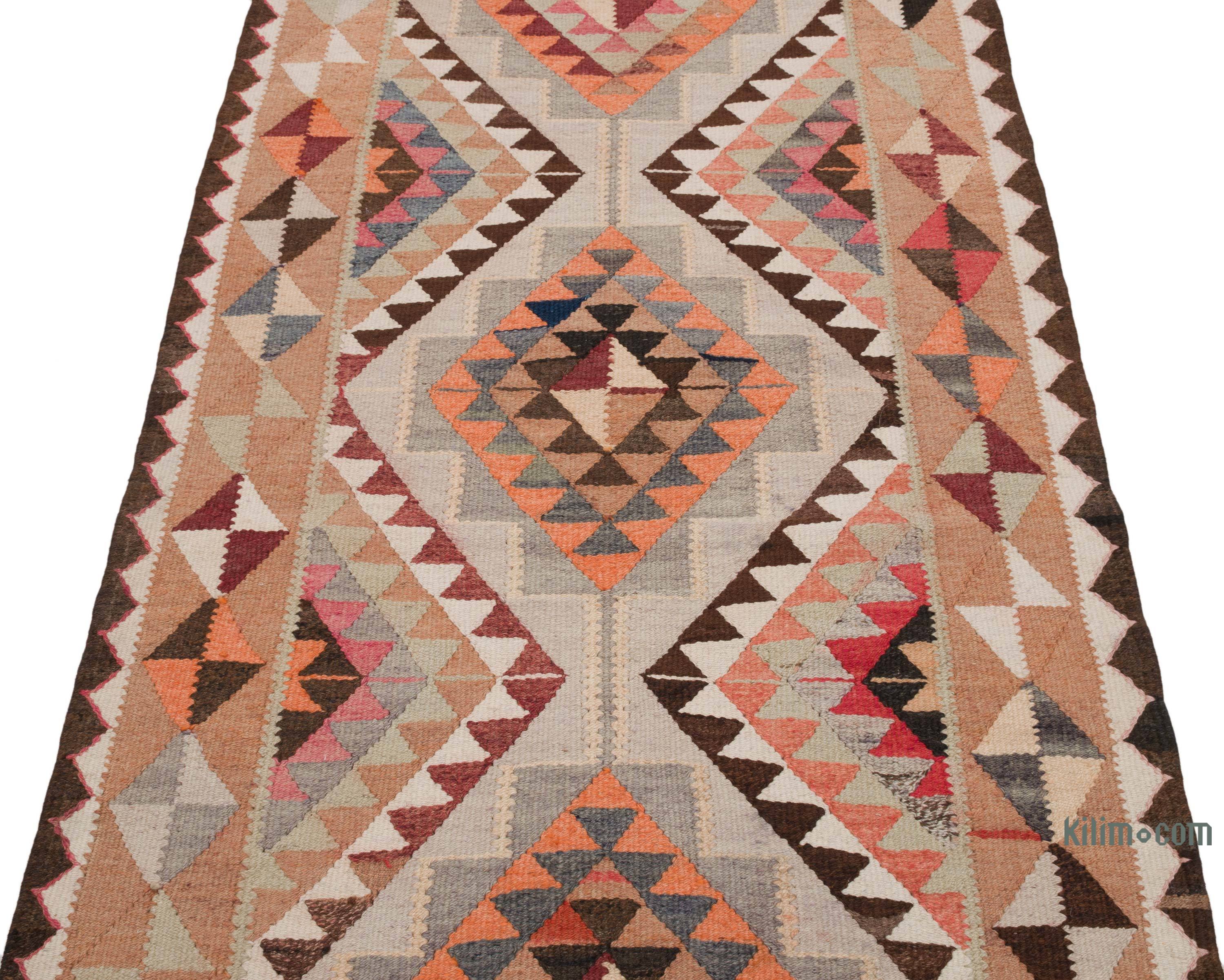
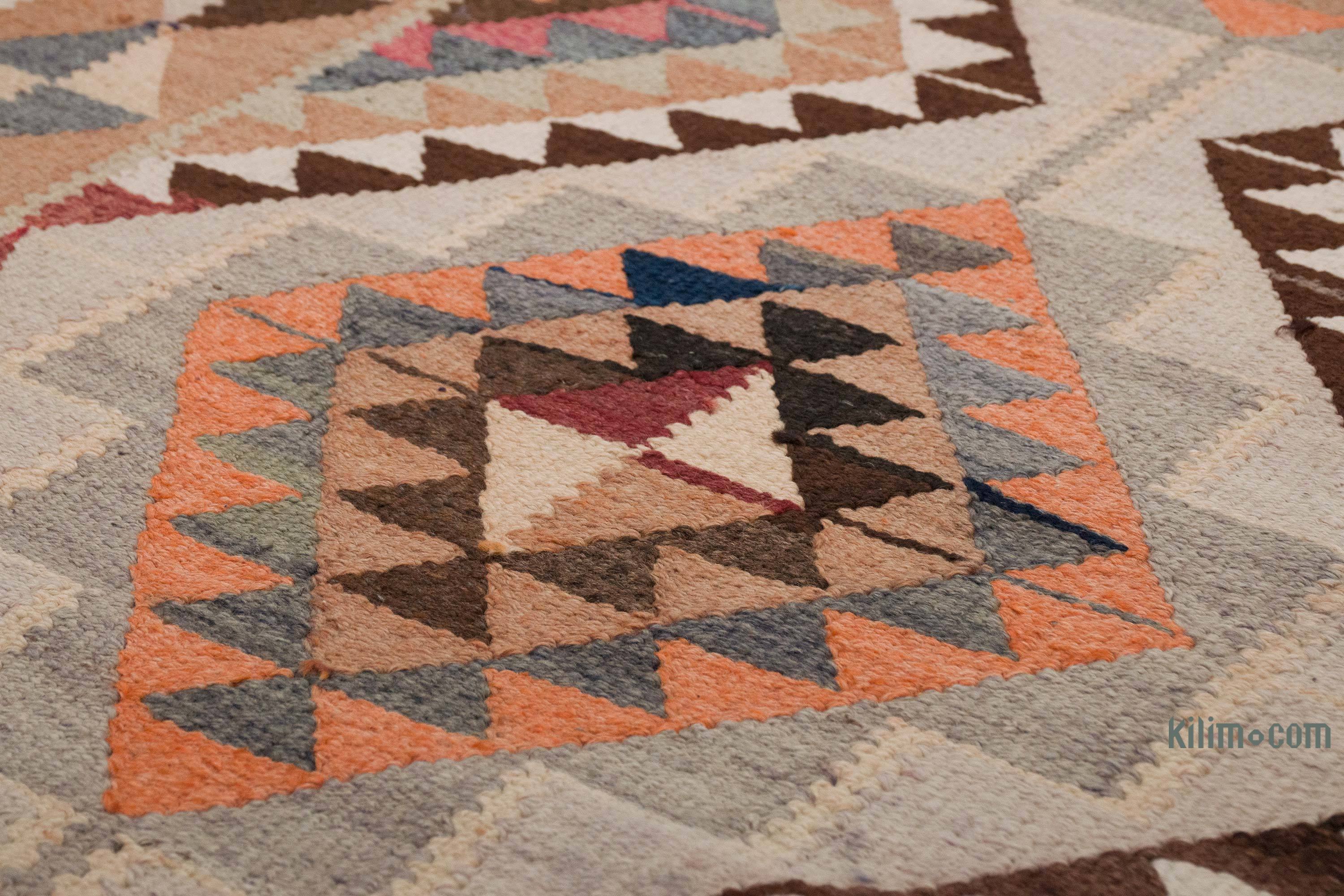
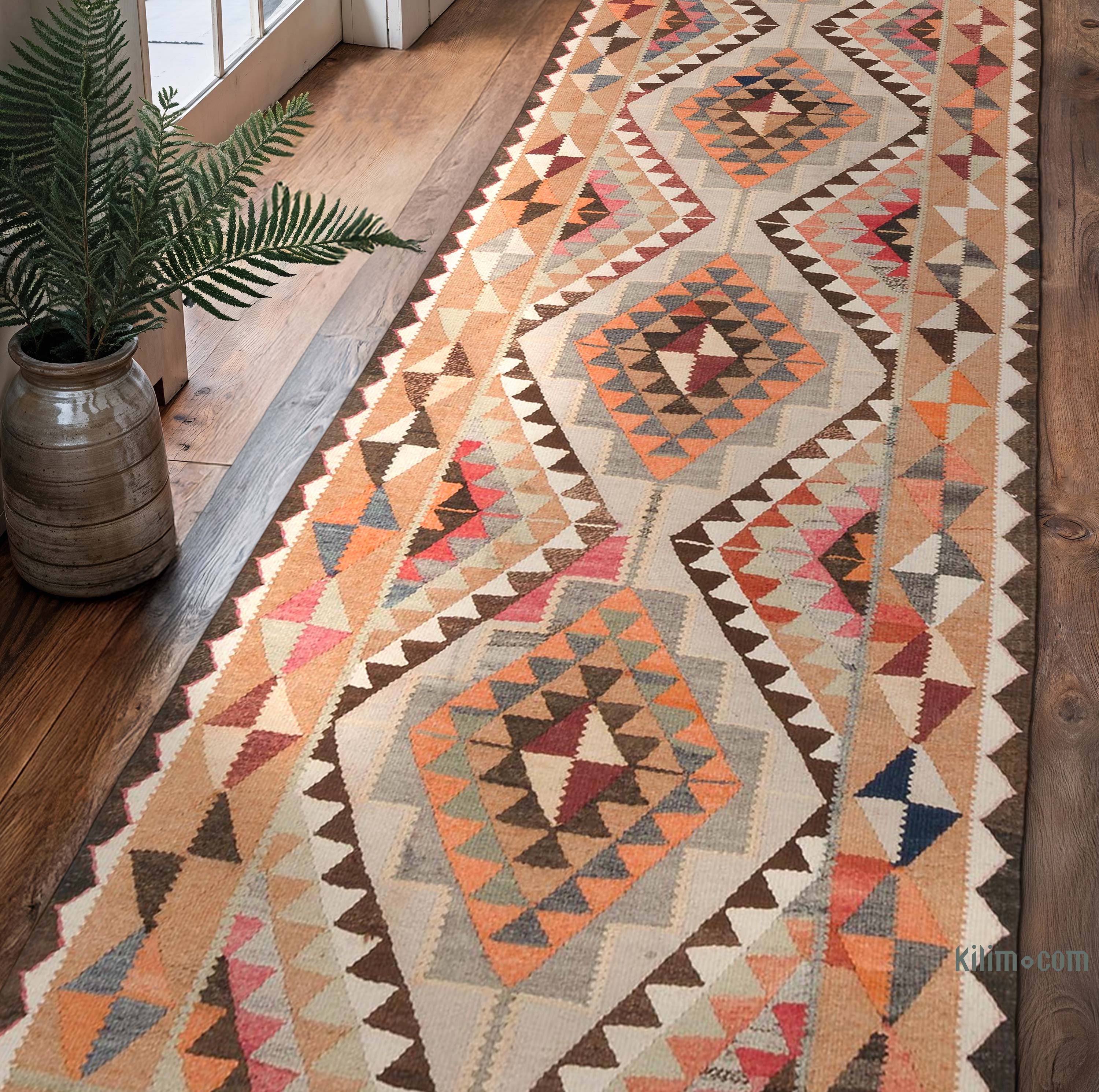
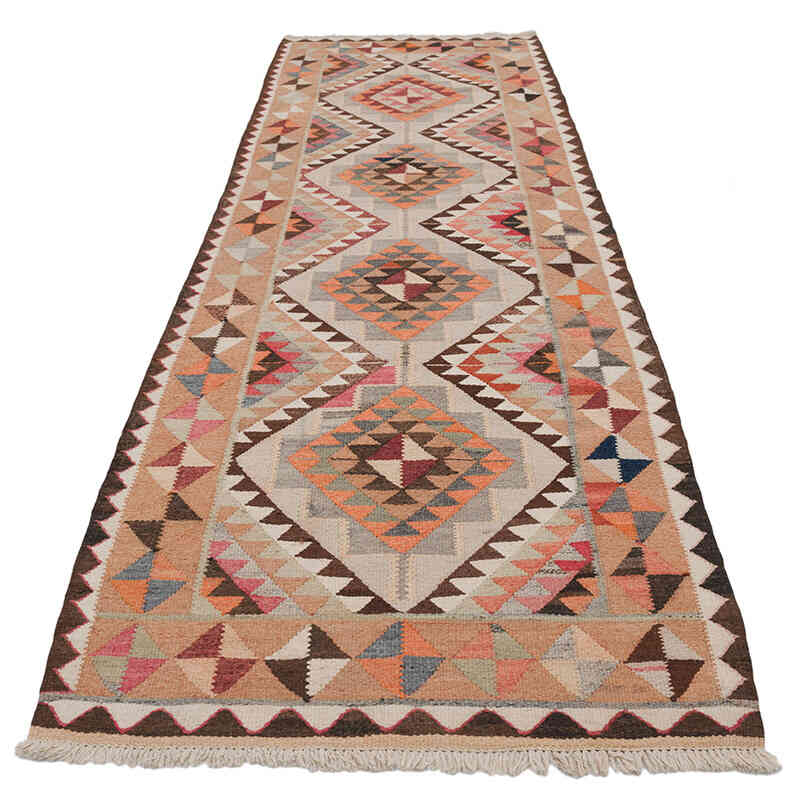
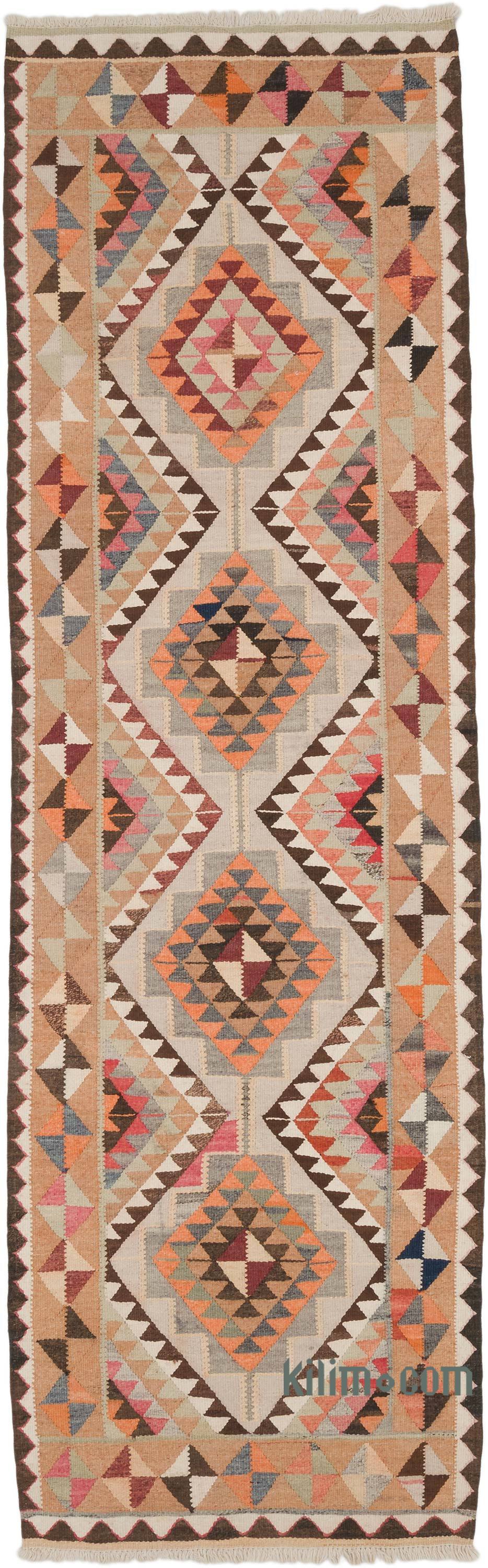
This remarkable kilim features a traditional geometric design dominated by diamond shapes centrally lined along the rug’s length. The diamonds themselves contain smaller, intricate triangles and stepped motifs, creating layers of depth and complexity in the pattern. The color palette brings together warm terracotta oranges, earthy browns, soft greys, and subtle pinks, accented by occasional splashes of blue and black. These subtle contrasts offer a balanced harmony that feels both vibrant and grounded.
The motifs include:
- Elibelinde (Hands on Hips): Represented through the diamond shapes and triangular compositions, this symbol celebrates femininity, motherhood, and fertility, reflecting the weaver’s connection to family and life’s continuation.
- Hooked Triangles: Edging the central diamonds, these shapes symbolize protection and ward off the evil eye, emphasizing the rug’s role as an emblem of safety within the home.
- Ram’s Horn: Visible in some of the layered triangles, this motif stands for power, heroism, and masculinity, balancing the feminine symbols and underscoring strength and resilience.
- Running Water Borders: The serrated edges surrounding the rug symbolize life’s flow and continuity, a gentle reminder of renewal and persistence woven into the fabric.
Each motif expresses a story or a hope from the artisan’s life, turning the rug into a heartfelt narrative woven in wool. The interplay of geometric shapes with natural colors evokes a sense of belonging and tradition intertwined with visual excitement.
Integrating This Kilim Rug into Interior Design Styles
This kilim works beautifully with a wide variety of interior aesthetics. Here’s how it blends and elevates different spaces:
- Bohemian: The rug’s vibrant but earthy tones and symbolic motifs add a global, handcrafted vibe perfect for boho settings. Layer it with eclectic furnishings and textiles for an inviting, worldly touch.
- Scandinavian: Its subtle pastel hues and clean geometric lines complement the minimalist, light-filled Scandinavian interiors, adding gentle warmth without overwhelming simplicity.
- Rustic and Farmhouse: The natural wool textures and warm tones harmonize with wooden furniture and vintage decor, enhancing homeliness and authenticity spirited by traditional craft.
- Modern Eclectic: Use this kilim as a striking focal point against neutral walls and sleek furniture to bring in cultural richness, texture, and a story that sparks conversation.
- Mid-Century Modern: The angular geometry and restrained color palette resonate with mid-century modern’s love for form and function, offering a nuanced contrast to smooth, retro furnishings.
Thanks to its combination of symbolic design and earthy but lively colors, this kilim adds depth, personality, and a tactile narrative dimension to nearly any room style.
Explore more about Kilim motifs and symbols here to uncover the rich cultural heritage behind these fascinating designs.
Rolling Up
- This kilim is a vibrant cultural artifact blending layered geometric motifs, each with deep symbolic meaning related to protection, fertility, power, and continuity.
- The warm, earthy colors create an inviting yet dynamic visual presence, perfect for a variety of interior styles from bohemian to Scandinavian.
- Motifs like the Elibelinde and Ram’s Horn tell stories of strength, motherhood, and resilience, transforming the rug into more than decoration—it's a woven narrative of life.
- Its versatile design integrates well, offering texture, warmth, and cultural authenticity that enrich contemporary, rustic, or eclectic décors.
- Discovering these motifs adds a layer of appreciation for the traditional skills and stories embedded in the rug’s fabric.
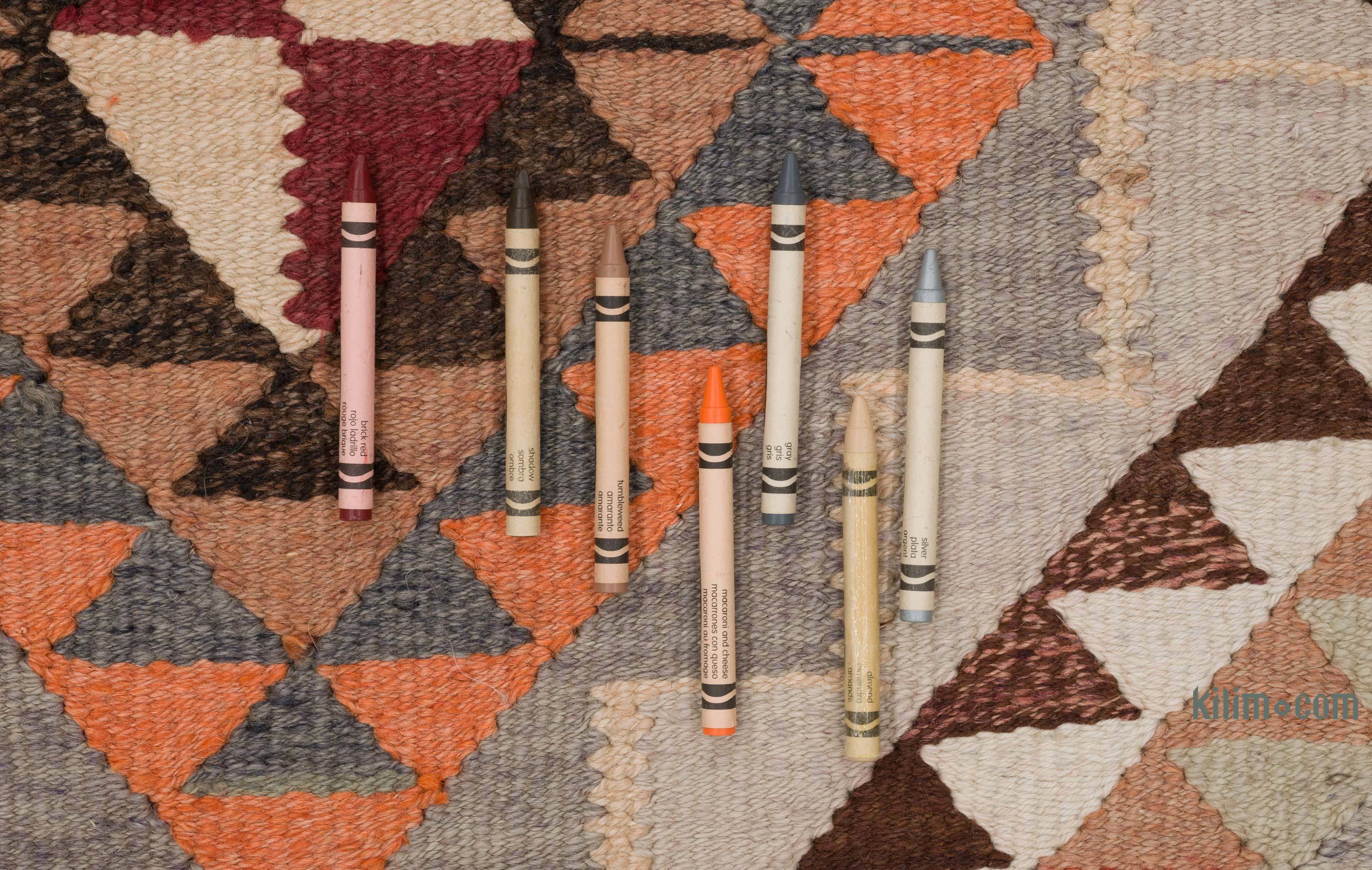
Colors may appear slightly different across various monitors due to screen settings device differences, and external lighting conditions. If color accuracy is important for your space, we recommend viewing the rug on multiple devices or contacting us for a detailed color description. We can provide detailed photos and references using Sherwin-Williams, Benjamin Moore, Pantone, or even Crayola crayons.
You can also visualize most of our products in your own room with AR (augmented reality) on an iPhone or iPad.
Return Policy
Need a rug pad? We recommend RugPadUSA