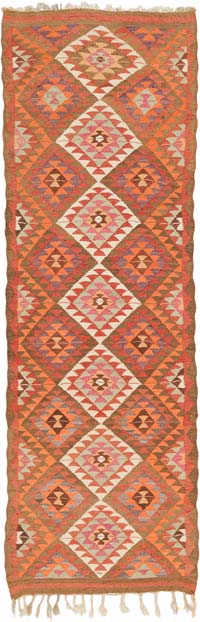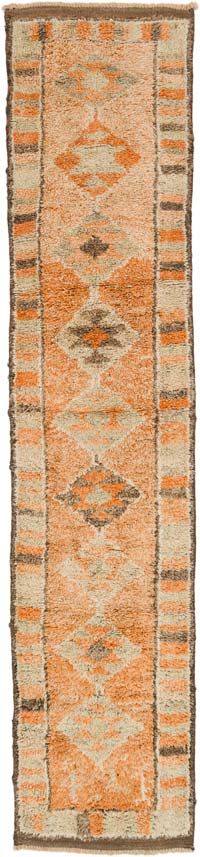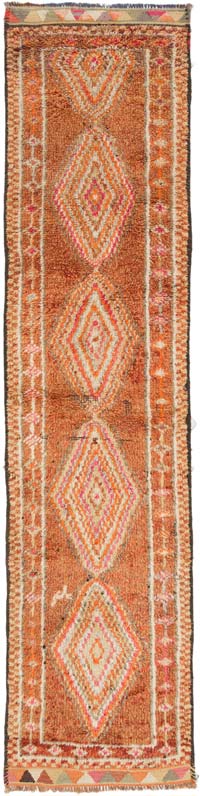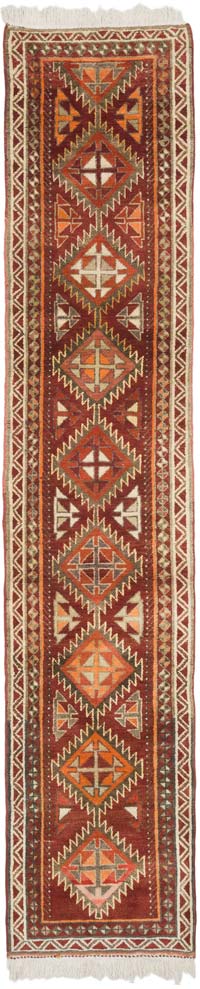
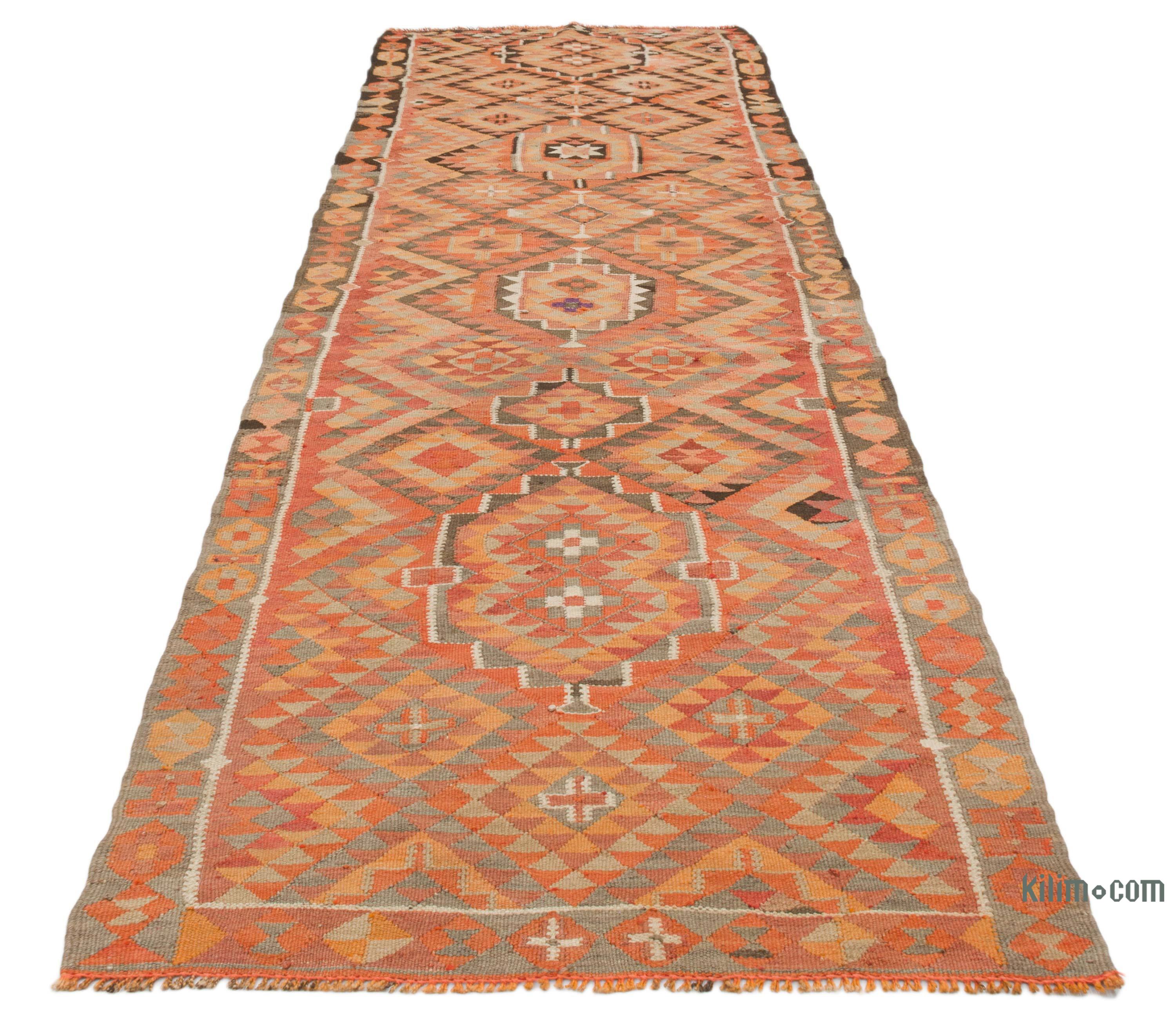


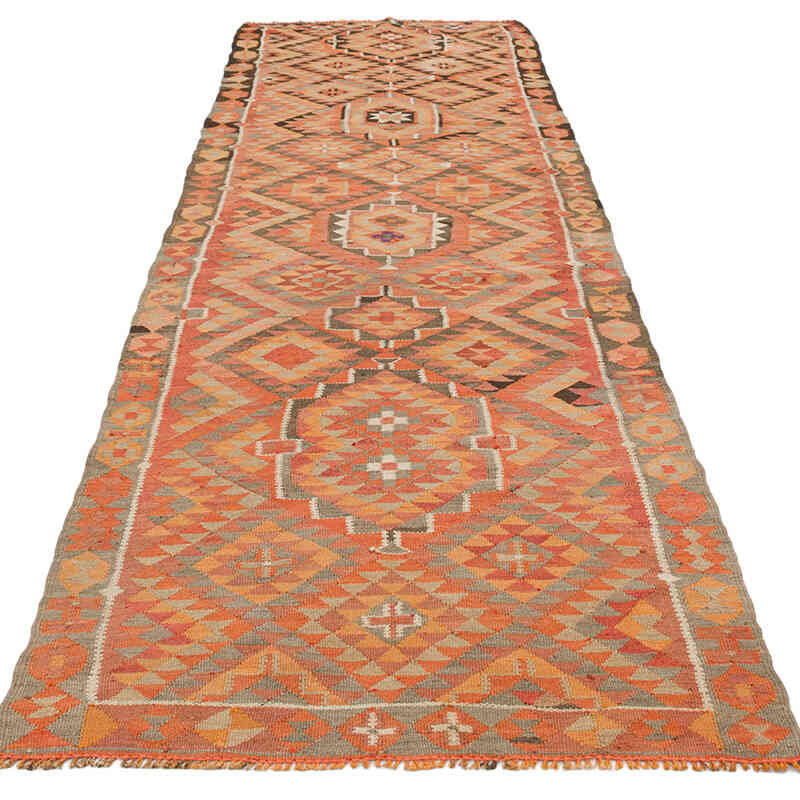

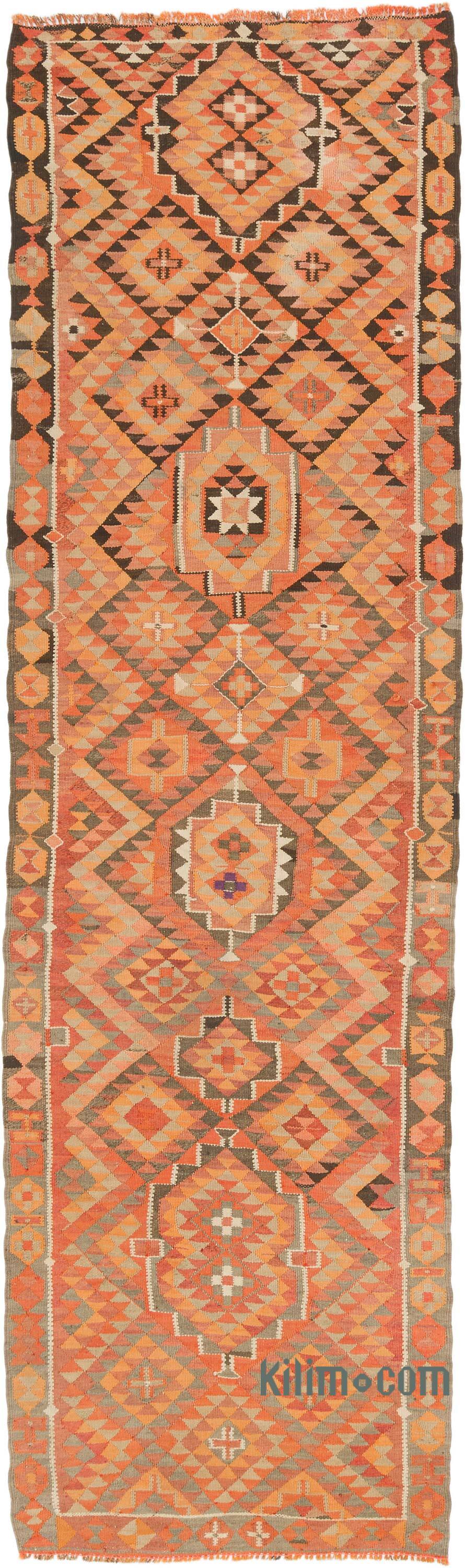
Vintage Tribal Kilim Runner 3' 3" x 11' (39" x 132")
Type:
Kilim RugsCollection:
Tribal RunnersStyle:
TribalID:
K0077193Size:
Material:
- Ships in 2-5 business days
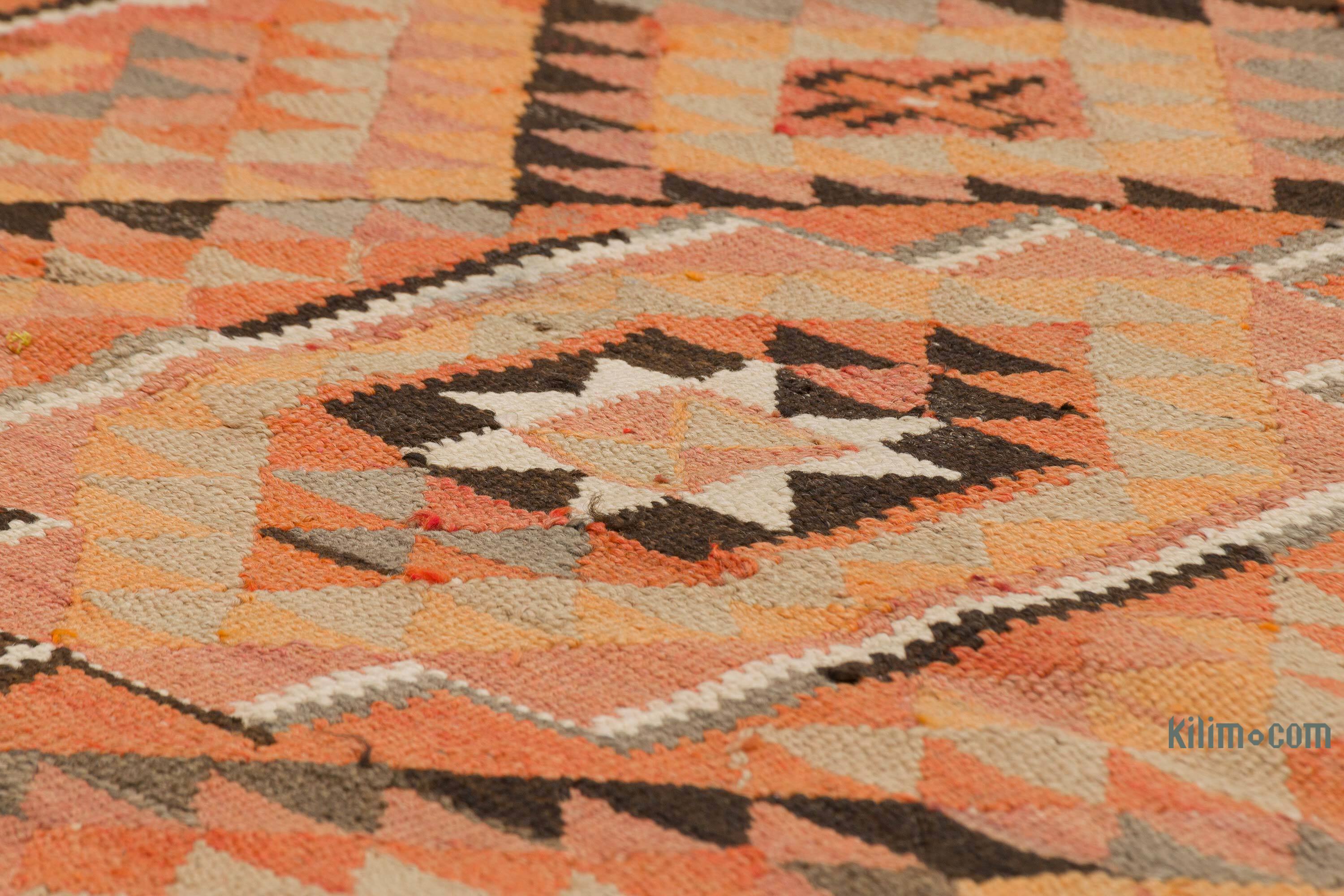
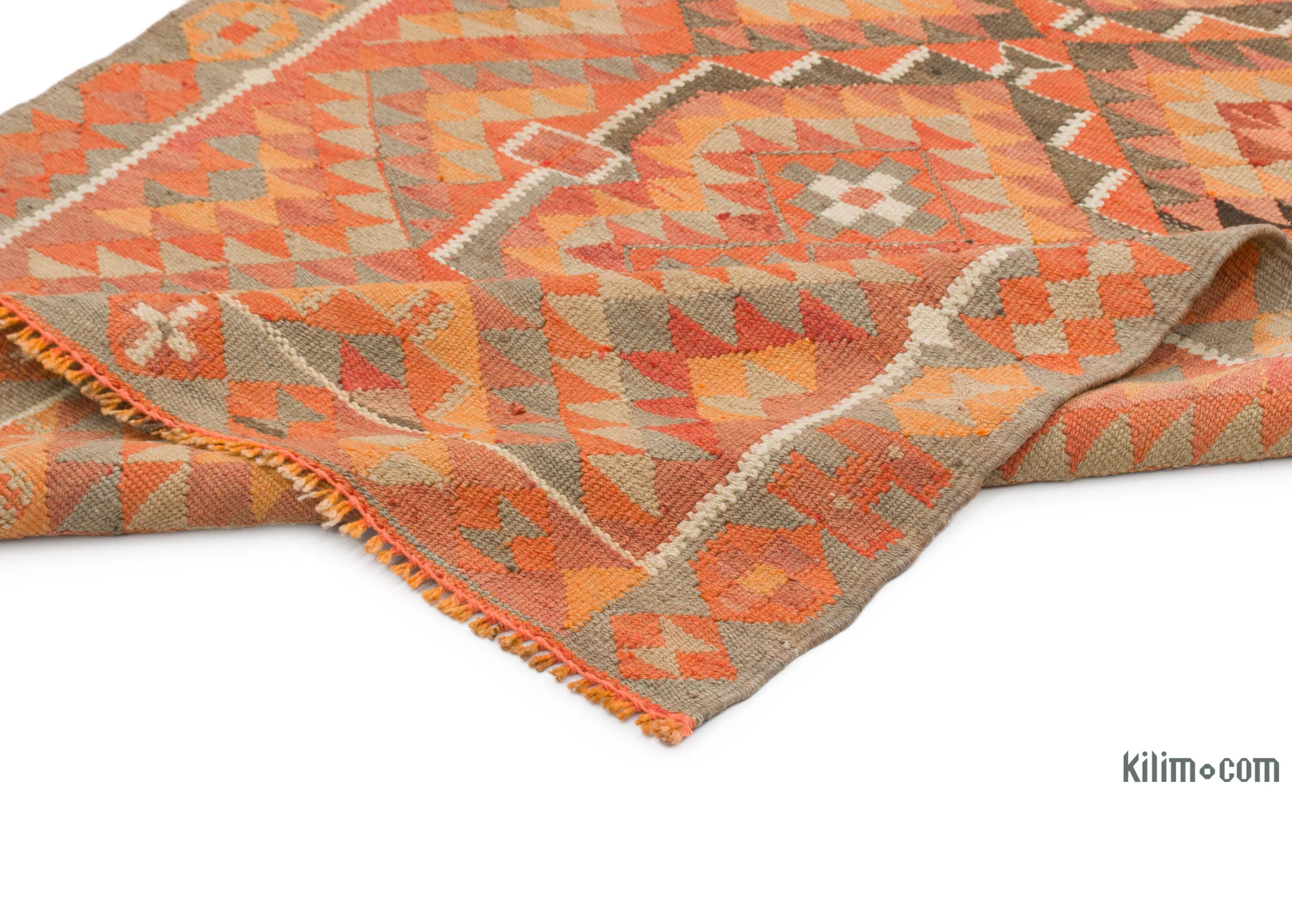
- All of our rugs are professionally cleaned; gentle wear from age and natural irregularities are inherent features of these one-of-a-kind handwoven vintage rugs.
- Only one in stock, handmade, unique
- Free shipping via FedEx Express. Returns & exchanges
- Contact us or add a note to your order if you want us to delay your shipping.
- Request more info if you want this rug shorter or narrower
The designs feature a rich array of symbols representing tribal culture and Anatolian motifs, often in the form of medallions, diamonds, and other geometric shapes. These kilim runners are ideal for hallways and narrow spaces, offering a touch of ethnic charm and artisanal quality to any interior.
Herki kilims not only serve as functional floor coverings but also as artistic expressions of tribal identity, making each rug a unique cultural artifact.
Design and Motifs of This Kilim Rug
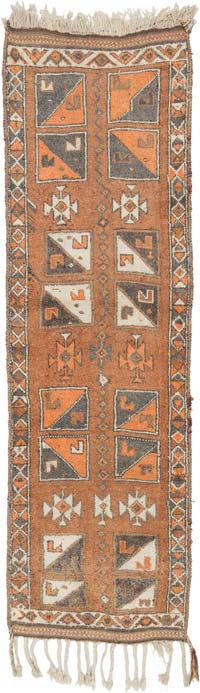
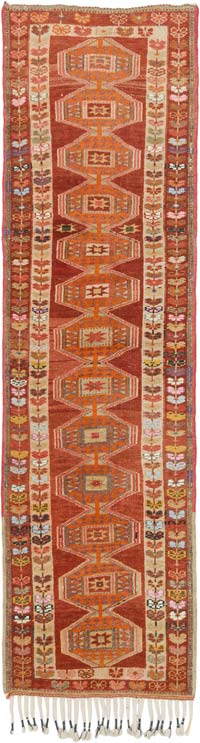
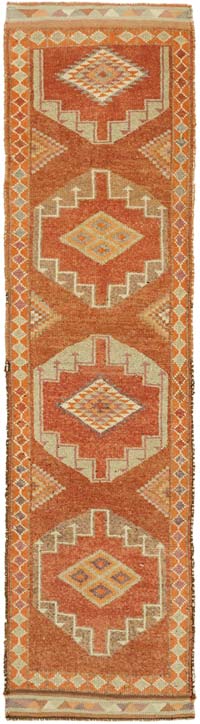
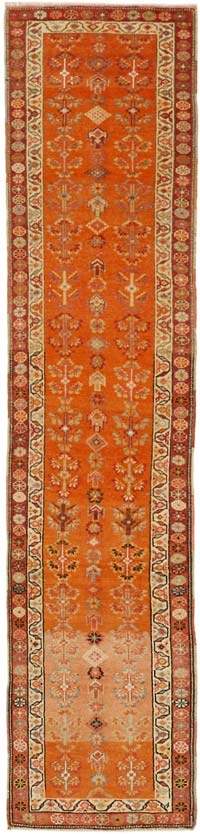
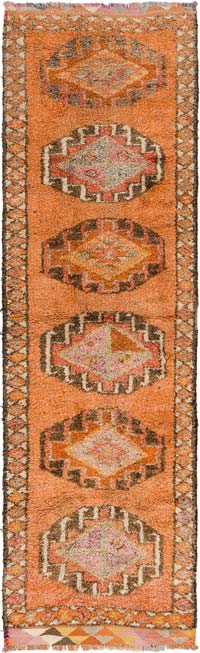
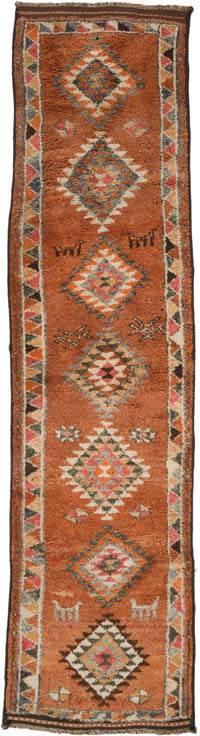
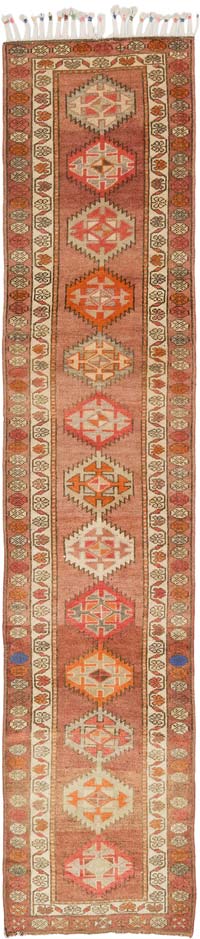
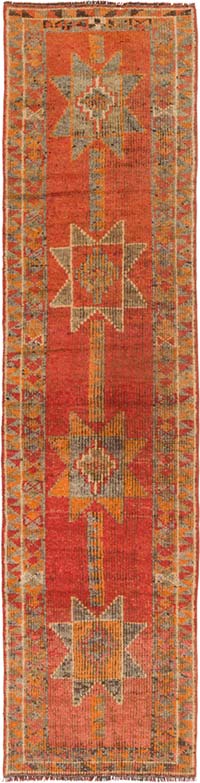
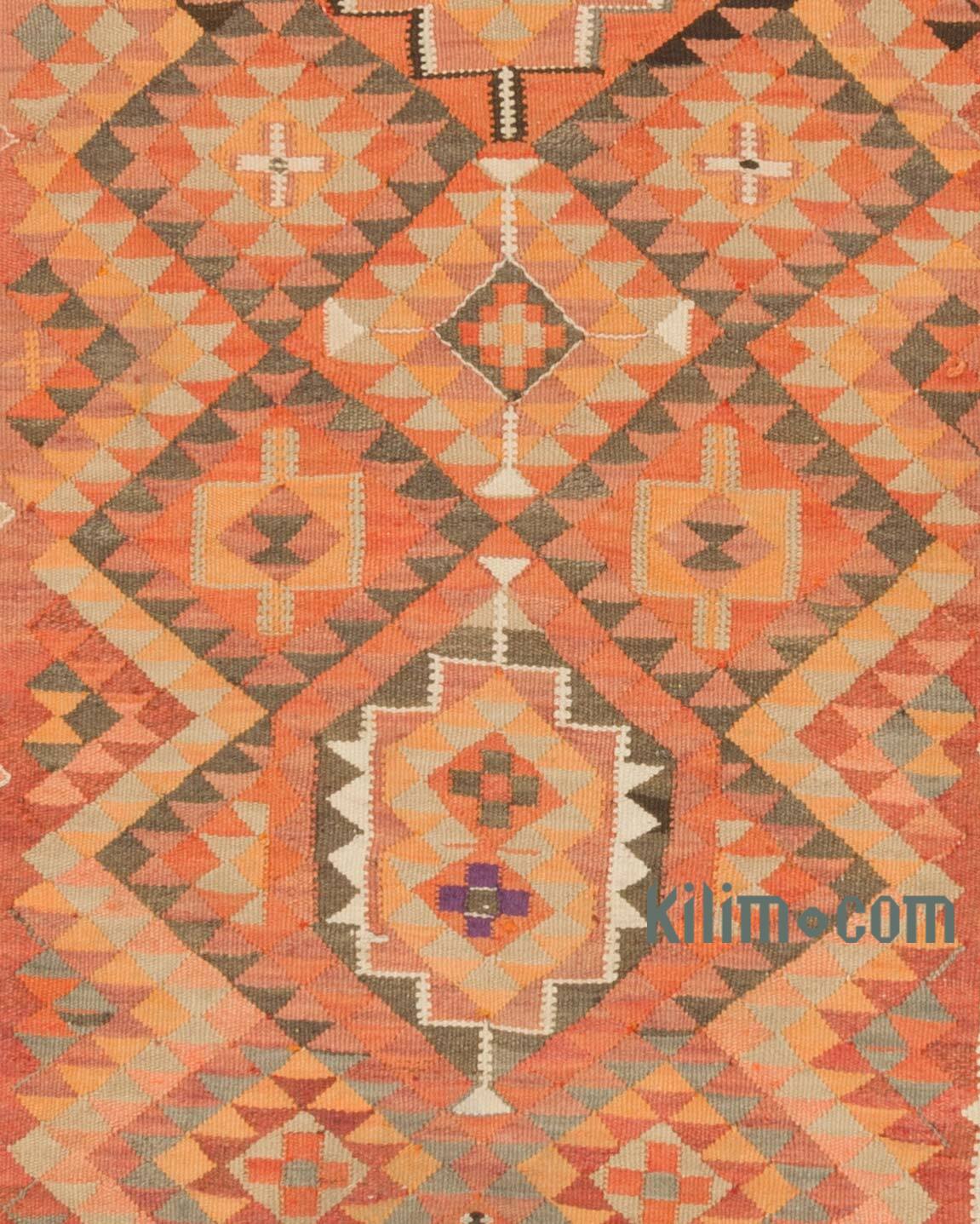
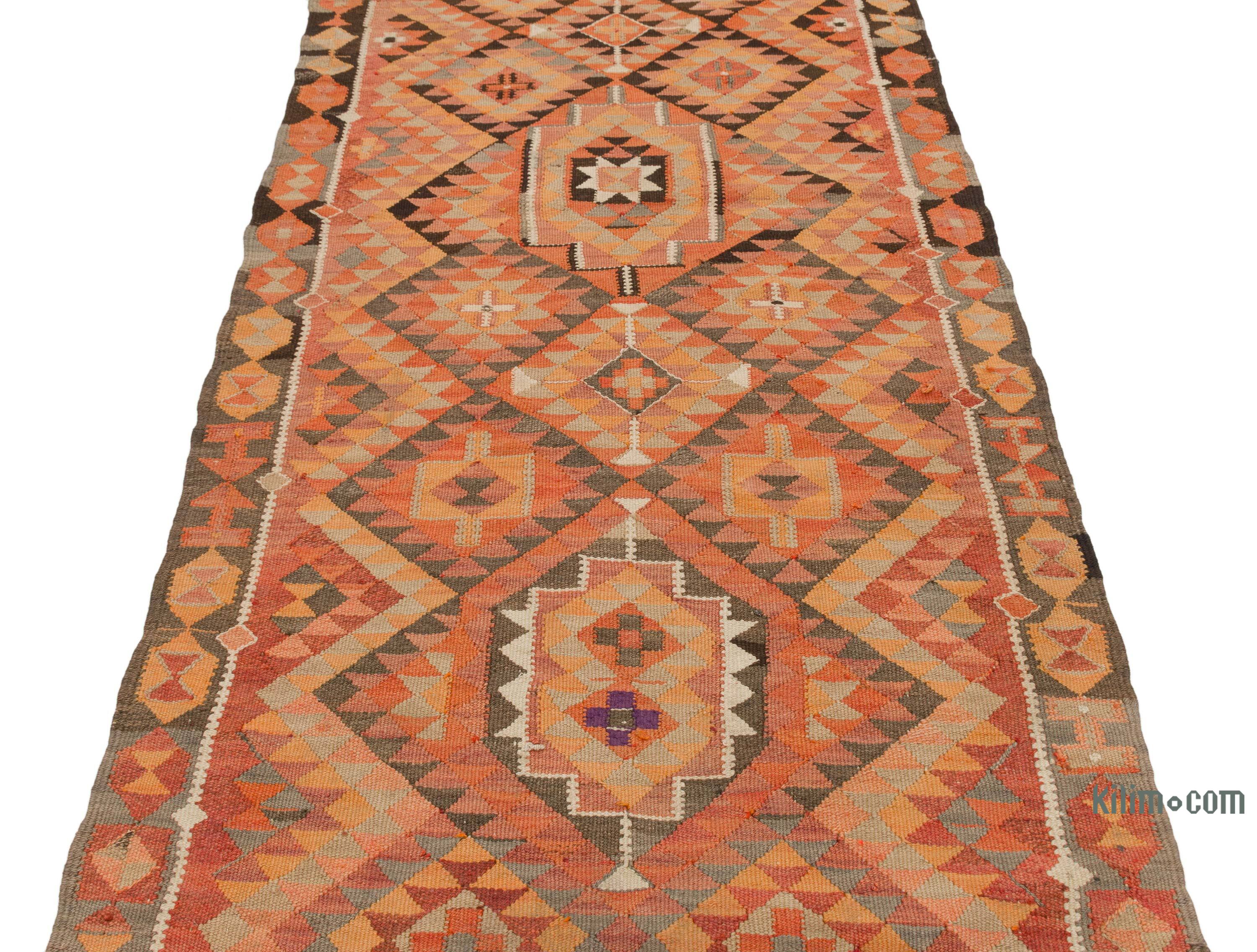
This vibrant kilim rug displays a harmonious blend of warm hues like terracotta, peach, brown, and soft pastel highlights, bringing an inviting energy to any space. The design revolves around a series of interconnected diamond and geometric medallions that run vertically, creating a rhythmic and balanced flow. Each diamond contains smaller motifs such as crosses and hooked patterns, all arranged with precision and balance. This visual language tells a story deeply rooted in Anatolian weaving traditions.
- Elibelinde (Hands on Hips): This motif appears within the central diamonds and symbolizes motherhood, fertility, and feminine strength, reflecting the importance of nurturing energy in daily life.
- Ram's Horns: Frequently seen throughout the borders and within the diamonds, this motif epitomizes power, masculinity, and protection, evoking resilience and safeguarding the home.
- Crosses and Hooked Patterns: These shapes carry protective qualities meant to ward off evil and symbolize balance between the spiritual and material worlds.
- Triangles and Zigzags: Along the edges and within the composition, these geometric forms represent mountains and water—elements symbolizing stability and life’s continuous flow.
Every motif woven into this rug is a reflection of the weaver’s aspirations, beliefs, and the cultural landscape of Anatolia. The interplay of warm earth tones enhances the emotional warmth conveyed by the symbolic imagery, making it a meaningful piece beyond its decorative function.
Integration with Various Interior Design Styles
This kilim adapts effortlessly to multiple interior design settings, adding character, texture, and a touch of history.
- Bohemian Spaces: The rich colors and intricate patterns complement layered textiles and eclectic décor, enhancing the free-spirited and cozy vibe.
- Modern Minimalism: Paired with clean lines and neutral furnishings, this rug introduces warmth and visual interest, preventing the space from feeling too stark or cold.
- Rustic and Farmhouse: The earthy palette and handcrafted nature align perfectly with natural wood elements and organic materials, grounding the space in tradition.
- Mid-Century Modern: Its geometric motifs echo the clean shapes of mid-century furniture, creating a sophisticated yet comfortable environment.
- Global and Ethnic Interiors: This rug serves as an authentic centerpiece, enhancing rooms filled with world-inspired objects and cultural artifacts.
In all these contexts, the rug becomes a focal point that invites stories and evokes a sense of connection to a timeless craft. Imagine this kilim underfoot in your living area or hallway, its energy resonating with both daily life and special moments.
Rolling Up
- This kilim’s geometric medallions and motifs reveal a rich tapestry of meanings centered on protection, motherhood, and resilience.
- Its warm, earthy color palette adds inviting warmth to diverse interior environments from bohemian to modern minimalist.
- The rug serves as a tangible link to Anatolian culture and symbolism, enriching spaces with both beauty and deeper significance.
- Versatile by nature, it complements a wide range of decor styles while providing visual intrigue and a tactile experience.
Discover more about these meaningful motifs and their origins by visiting our Kilim motifs and symbols page.
Colors may appear slightly different across various monitors due to screen settings device differences, and external lighting conditions. If color accuracy is important for your space, we recommend viewing the rug on multiple devices or contacting us for a detailed color description. We can provide detailed photos and references using Sherwin-Williams, Benjamin Moore, Pantone, or even Crayola crayons.
You can also visualize most of our products in your own room with AR (augmented reality) on an iPhone or iPad.
Return Policy
Need a rug pad? We recommend RugPadUSA