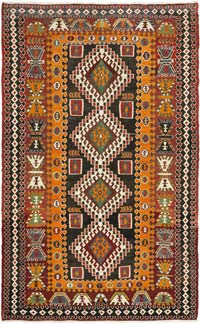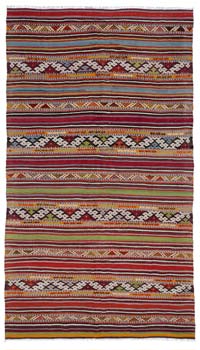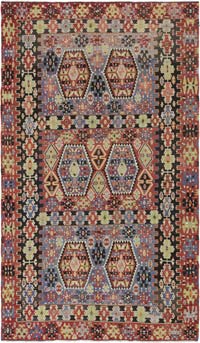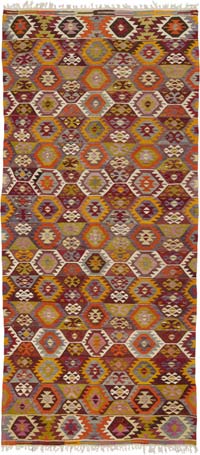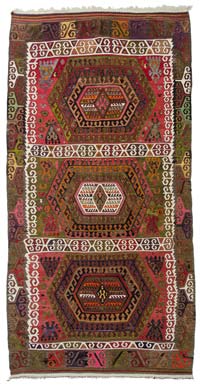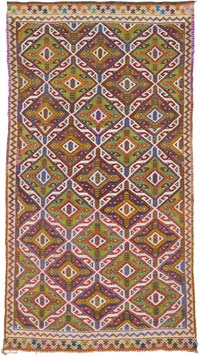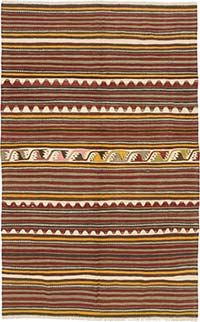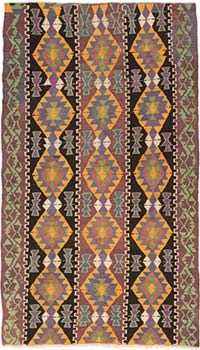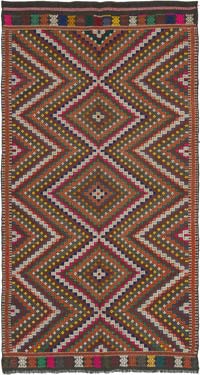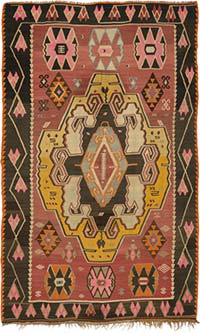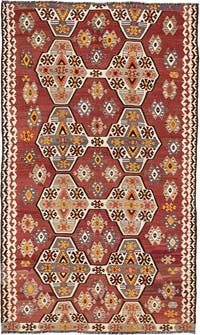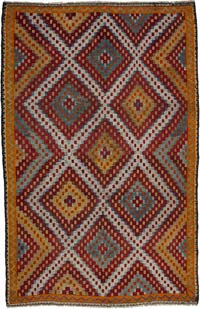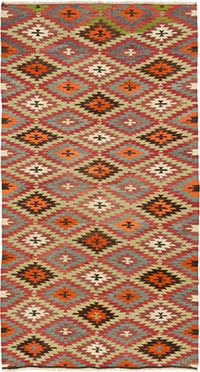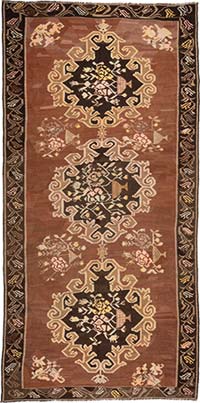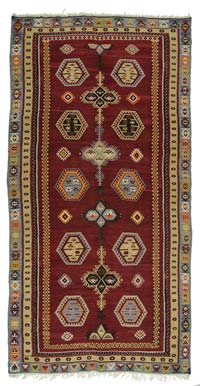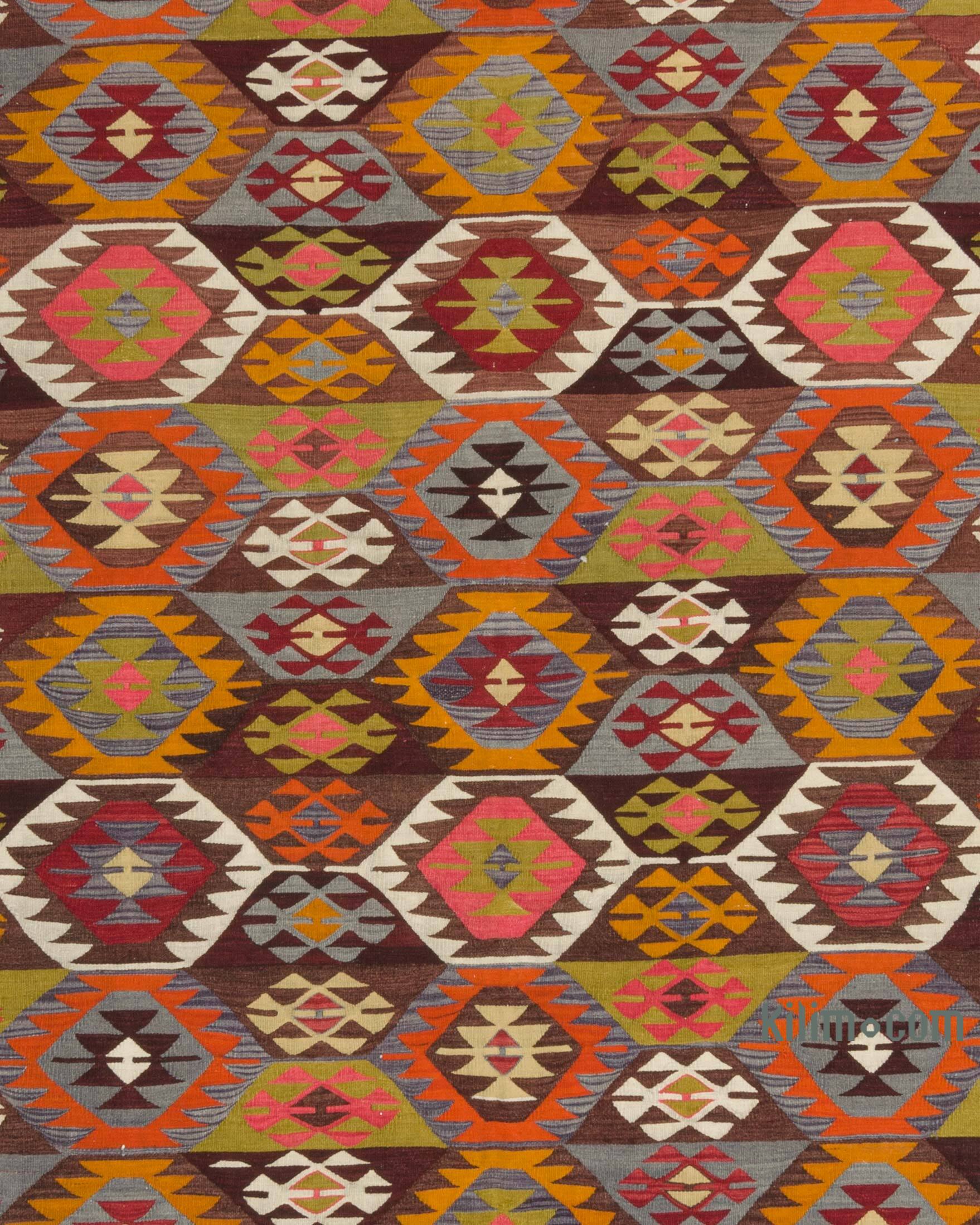
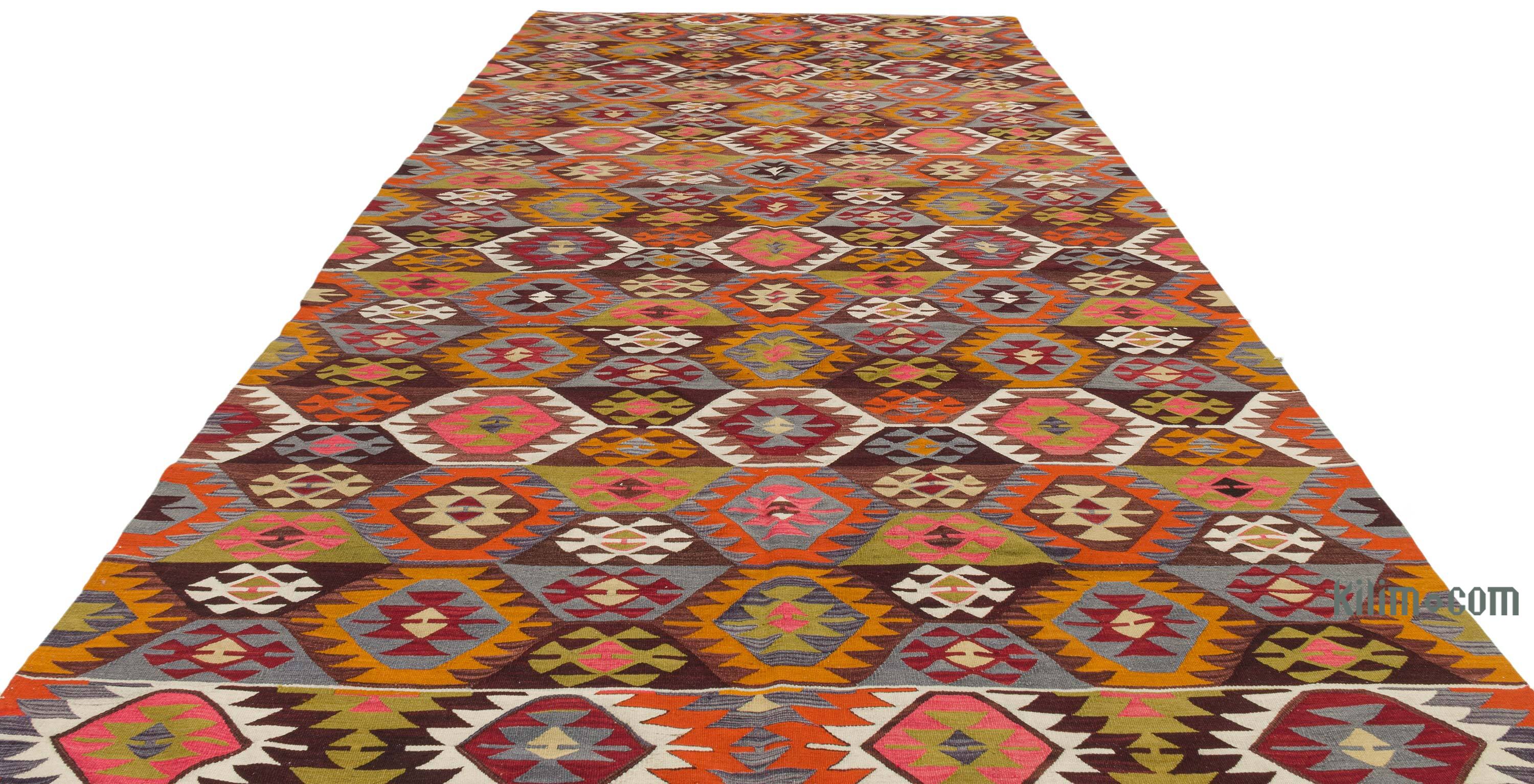
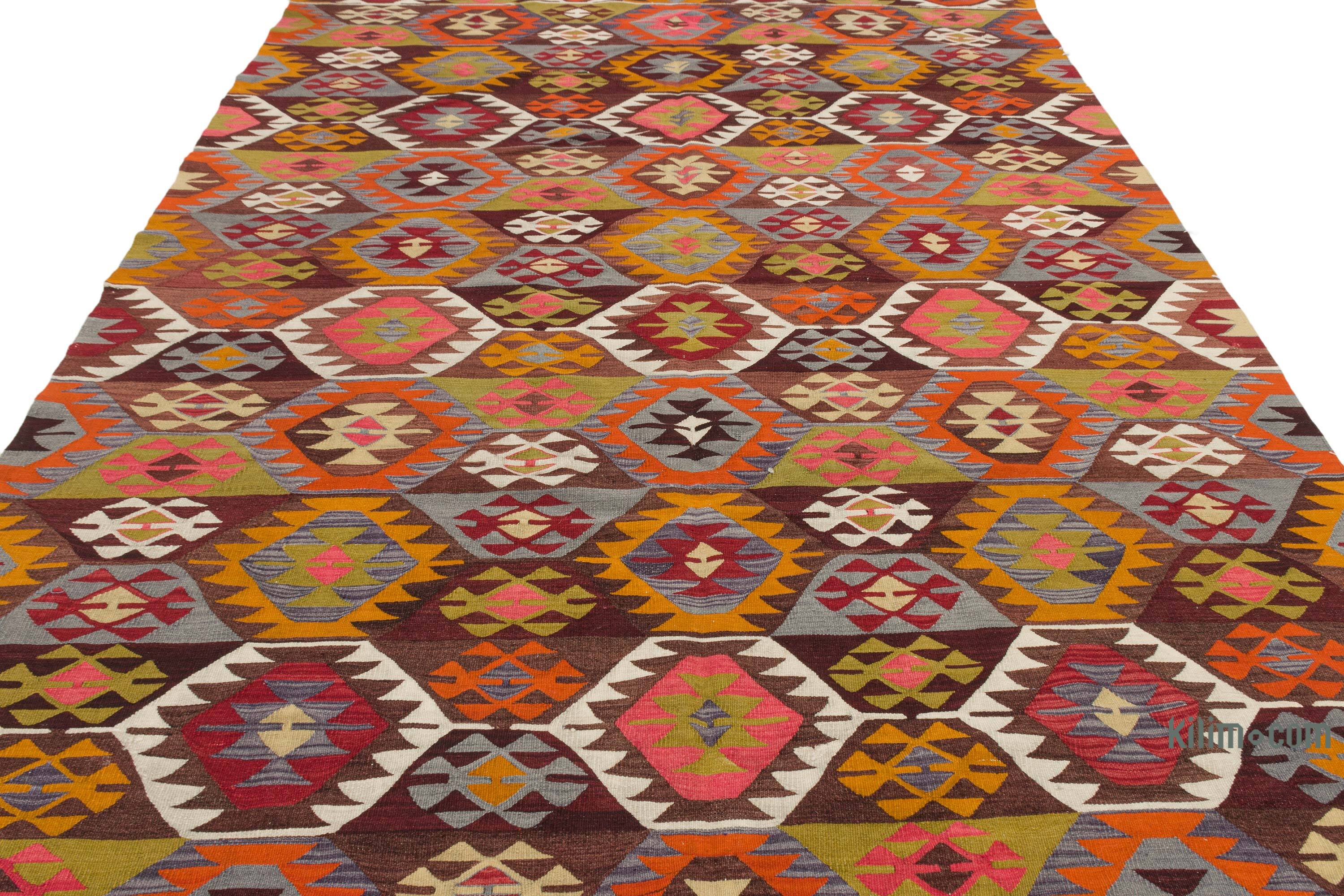
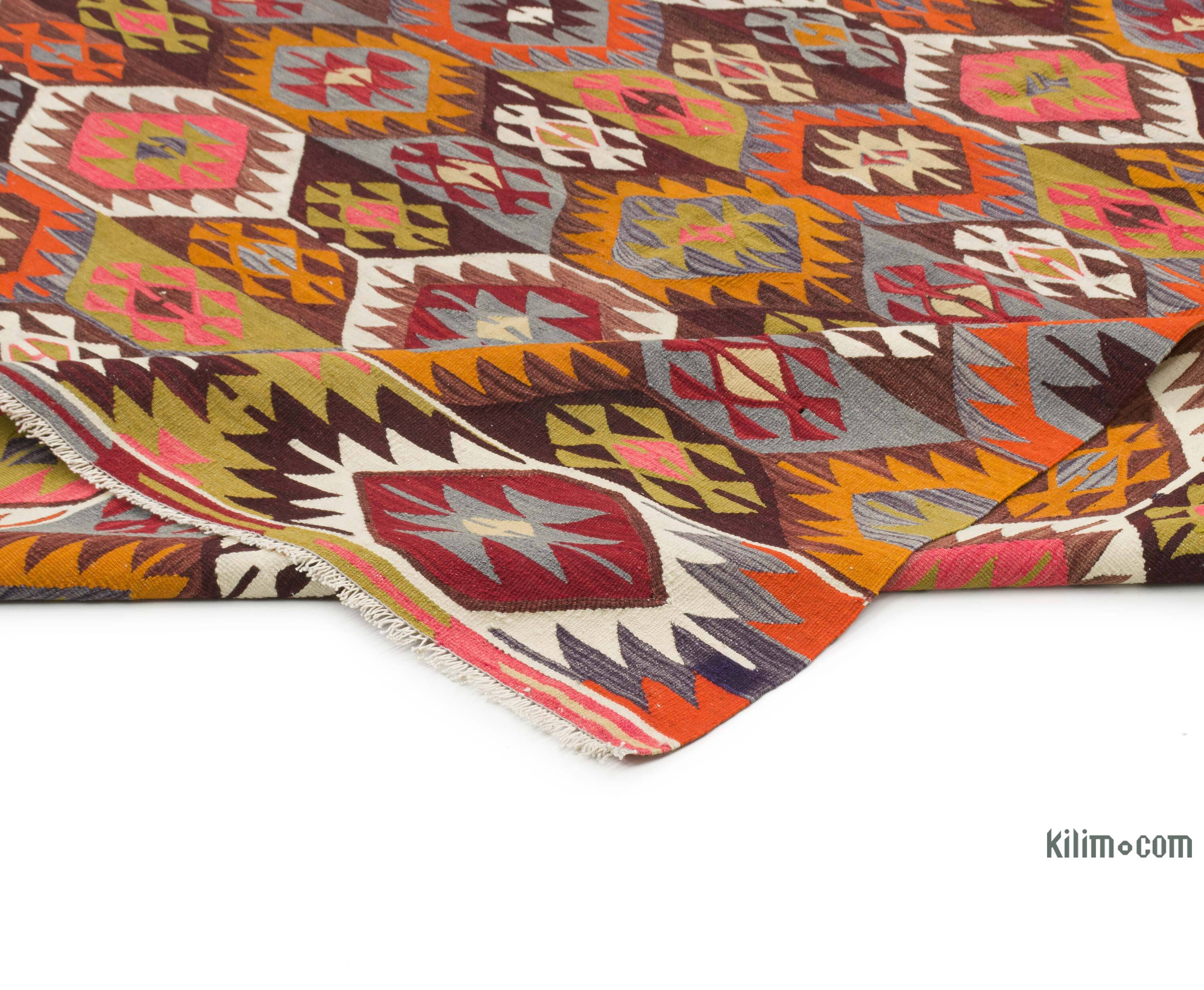
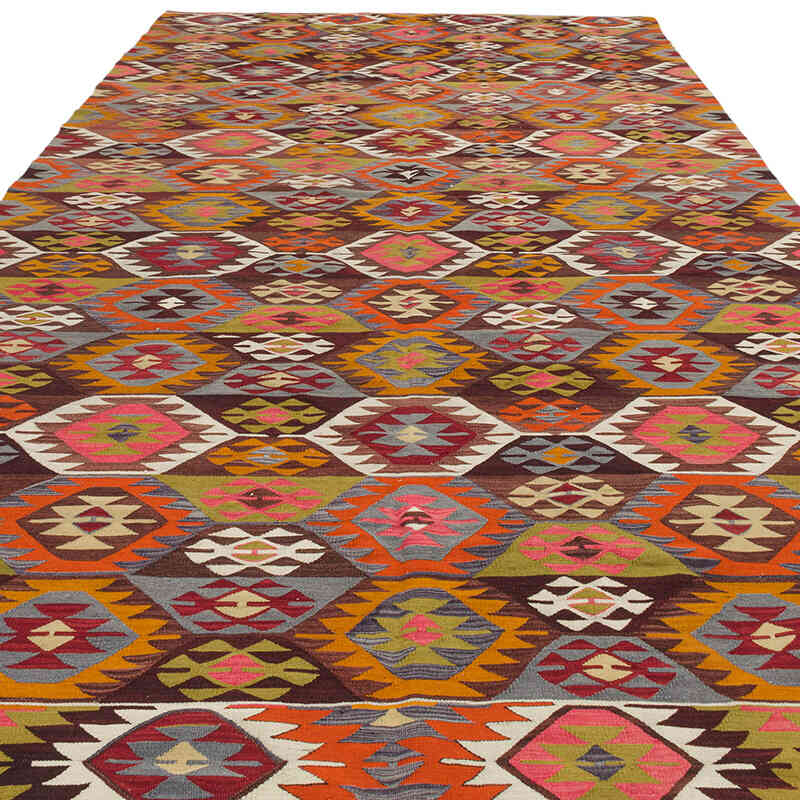

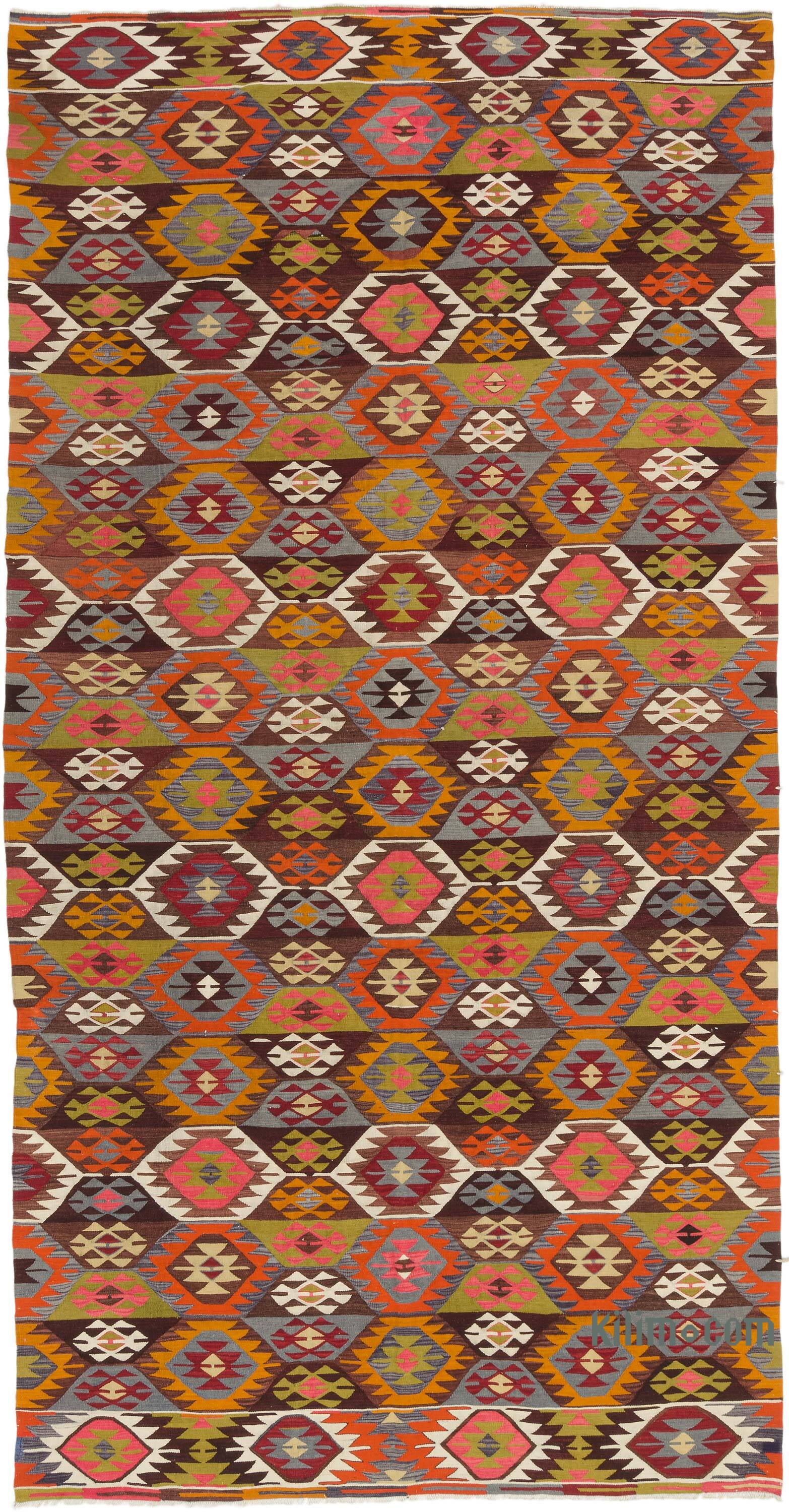
Vintage Tavas Kilim Rug 6' 3" x 12' (75" x 144")
Type:
Kilim RugsStyle:
TribalID:
K0074106Size:
Material:
- Ships in 2-5 business days
- All of our rugs are professionally cleaned; gentle wear from age and natural irregularities are inherent features of these one-of-a-kind handwoven vintage rugs.
- Free shipping via FedEx or UPS
- Contact us or add a note to your order if you want us to delay your shipping.
- Only one in stock, handmade, unique
- Easy returns, 100% satisfaction guaranteed
- Available for US only
Design Elements
- Shape and Layout
- The rug features a repeated diamond pattern, creating a rhythmic visual flow.
- Each diamond shape is often surrounded by contrasting colors, making the designs pop.
- Motifs
- The main motifs include geometric shapes, such as diamonds and triangles, which symbolize balance and harmony.
- Additional patterns, like zigzags, represent the journey of life or movement.
- Texture
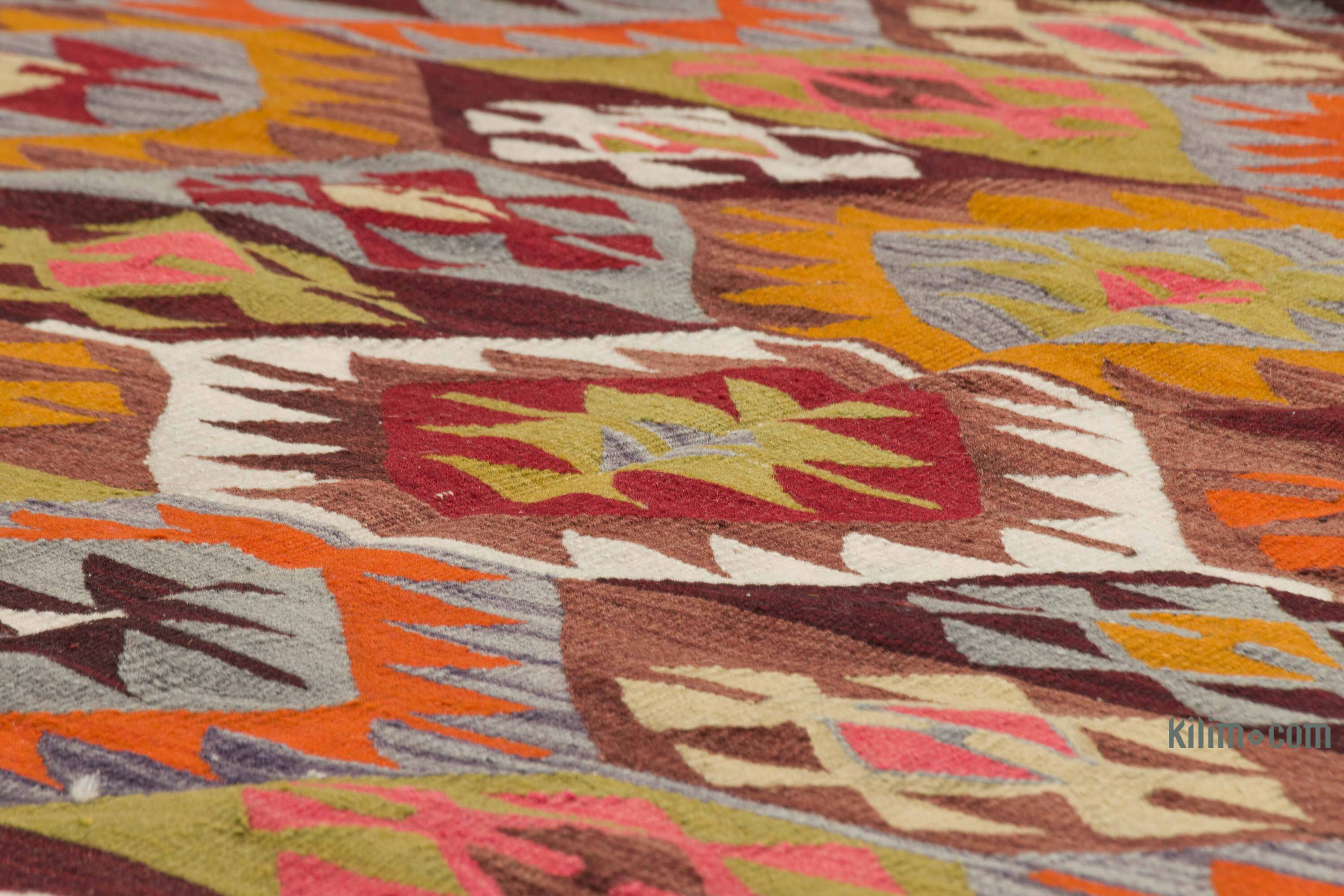
- The handwoven nature of kilim creates a flat weave, providing a soft texture but durability.
- This texture adds tactile interest and enhances the visual complexity of the patterns.
Colors
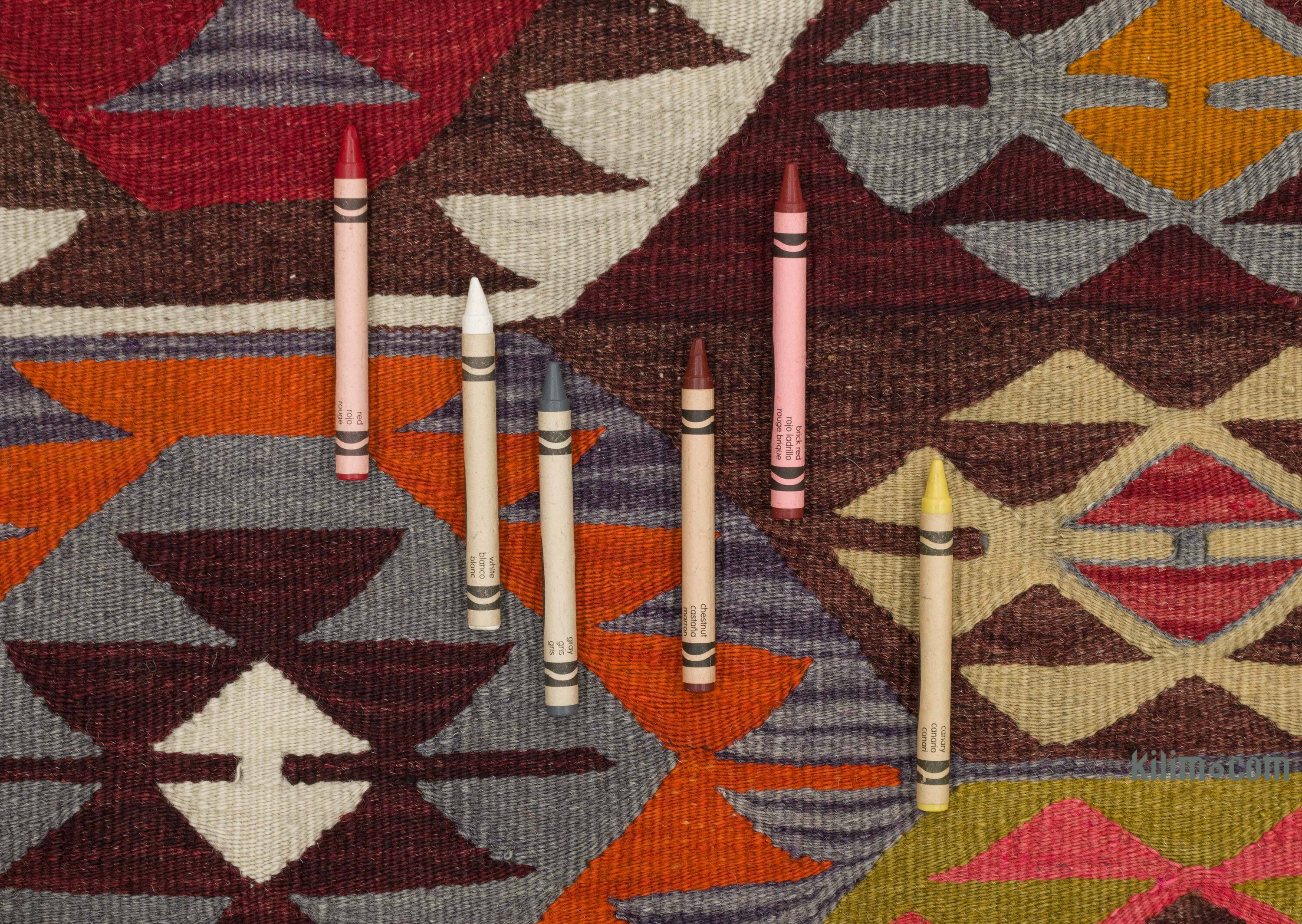
- Color Palette
- The rug features warm tones, such as reds, oranges, and yellows, which evoke feelings of warmth and energy.
- Cool tones, including blues and greys, provide contrast, balancing the overall aesthetic.
- Symbolic Meanings of Colors
- Red often symbolizes passion and strength, representing vitality.
- Yellow signifies joy and optimism, adding a cheerful aspect to the design.
- Brown and earth tones connect to nature and stability, grounding the vibrant colors.
- Blue and grey reflect tranquility and peace, serving as calming elements among the warmer hues.
Symbolism of Main Motifs
- Diamond Motifs
- Diamonds represent prosperity, wealth, and the feminine aspects of life.
- The interlocking nature of the diamonds suggests connectivity and community.
- Geometric Patterns
- Triangular shapes symbolize strength and stability, often associated with protective qualities.
- The zigzag patterns signify the journey of life, symbolizing the ups and downs faced throughout.
Summary
The Vintage Tavas Kilim Rug is characterized by its vibrant color palette, which includes warm shades like reds, yellows, and cool tones such as blues. This combination of colors and geometric design elements, such as diamonds and triangles, conveys themes of prosperity, strength, and community. The motifs serve as symbolic representations of life's journey, stability, and connection to nature, making the rug not only a decorative piece but also a bearer of rich cultural meanings.
Send an image of your room with the dimensions to sales1@kilim.com and we will do a Photoshop simulation with the rugs or furniture you choose.
You can also visualize most of our products in your own room with AR (augmented reality) on an iPhone or iPad. Just click the "AR View in Your Room" button below the item photo.