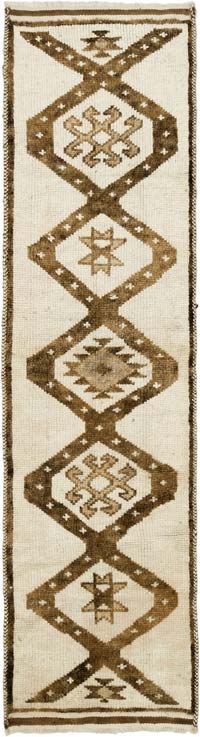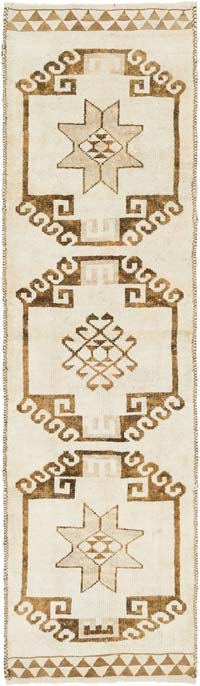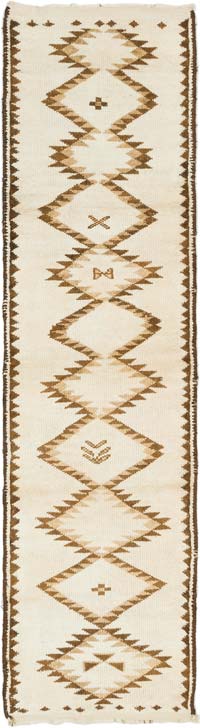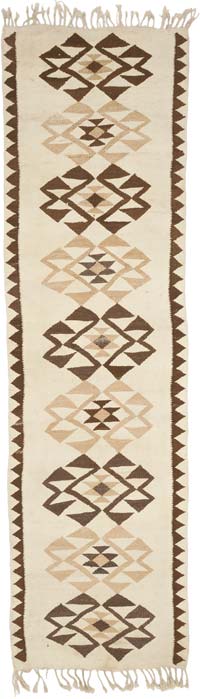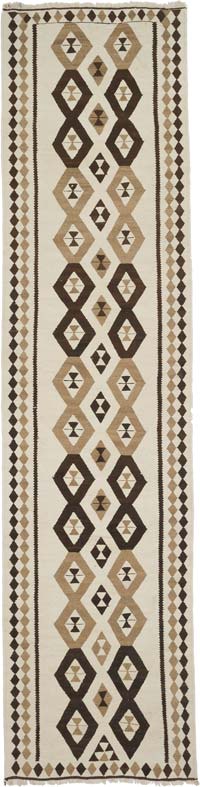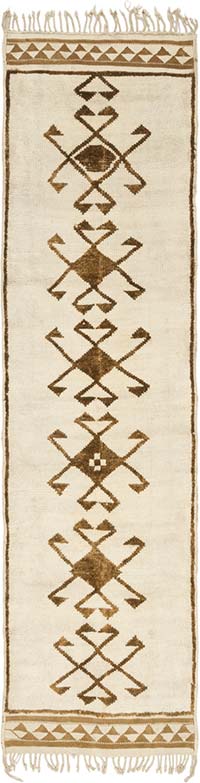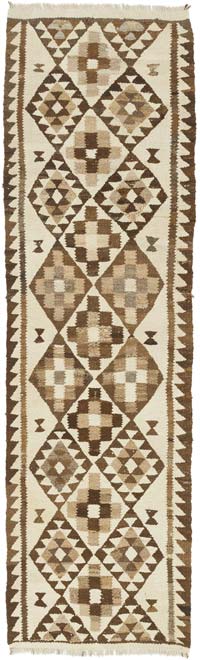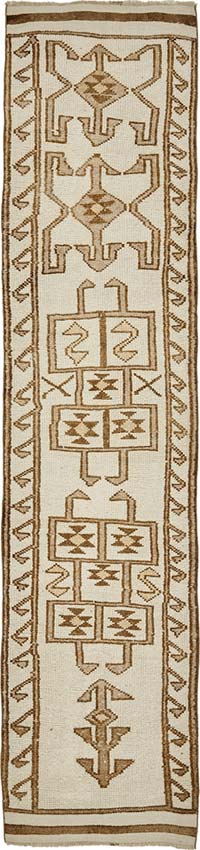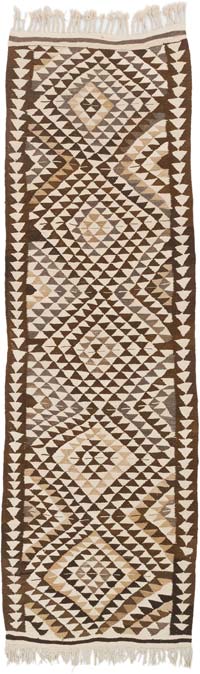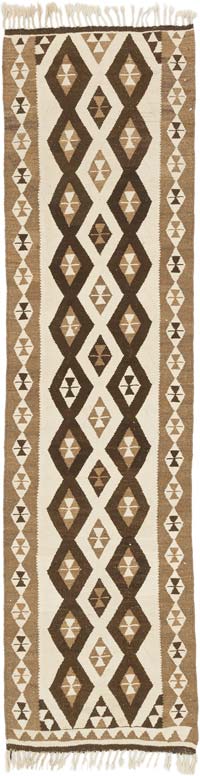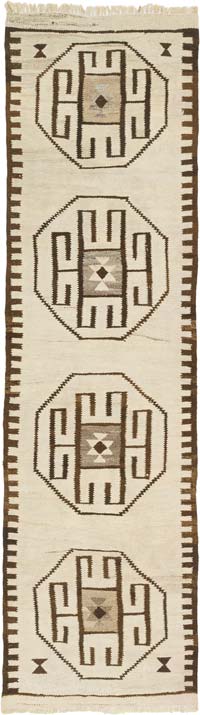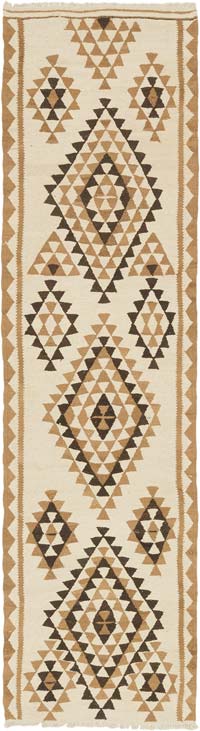
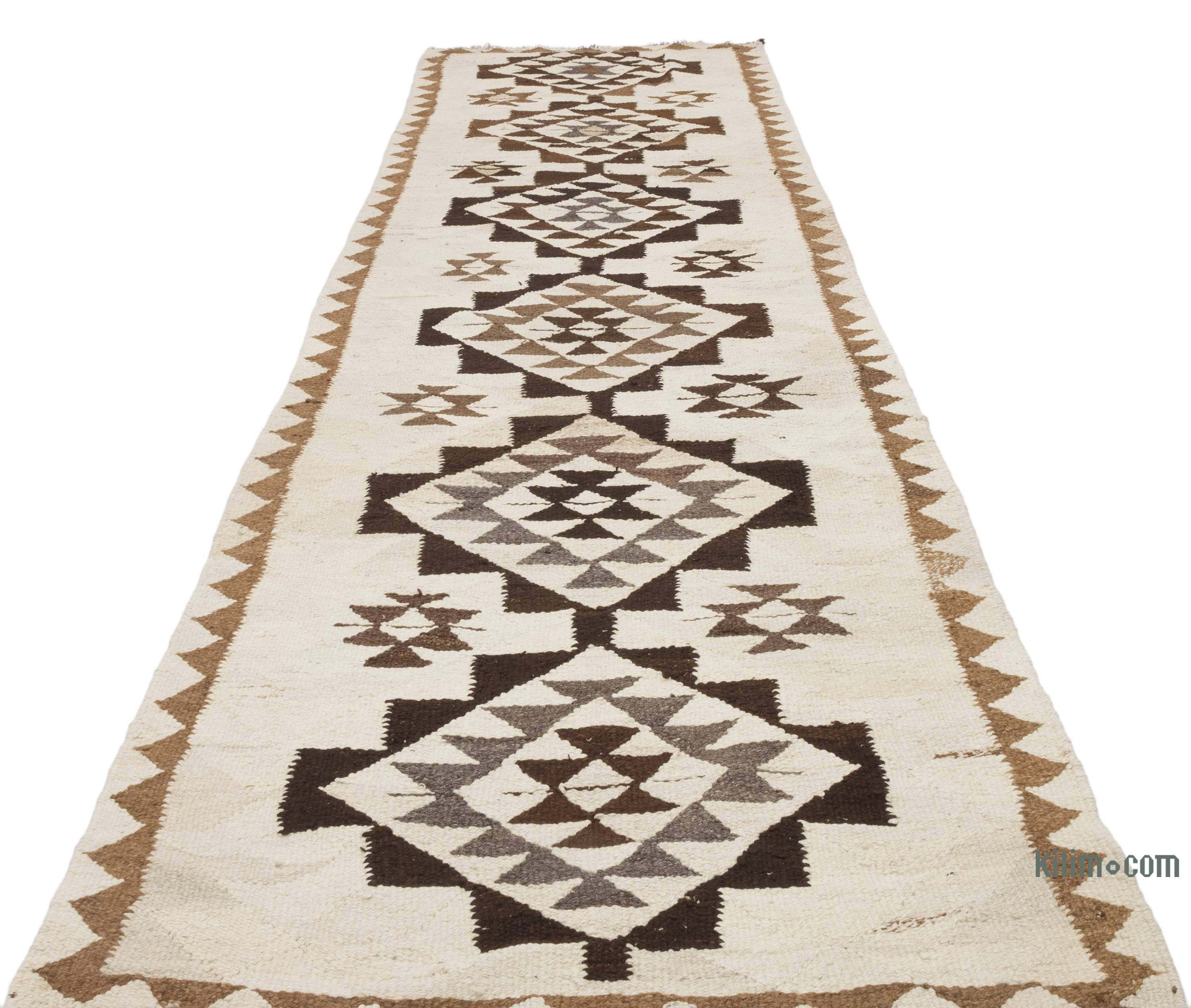

Vintage Tribal Kilim Runner 3' 6" x 11' (42" x 132")
Type:
Kilim RugsCollection:
Tribal Runners, ClearanceStyle:
TribalID:
K0071255Size:
Material:
- Ships in 2-5 business days
- All of our rugs are professionally cleaned; gentle wear from age and natural irregularities are inherent features of these one-of-a-kind handwoven vintage rugs.
- Only one in stock, handmade, unique
- Free shipping via FedEx Express. Returns & exchanges
- Contact us or add a note to your order if you want us to delay your shipping.
- Request more info if you want this rug shorter or narrower
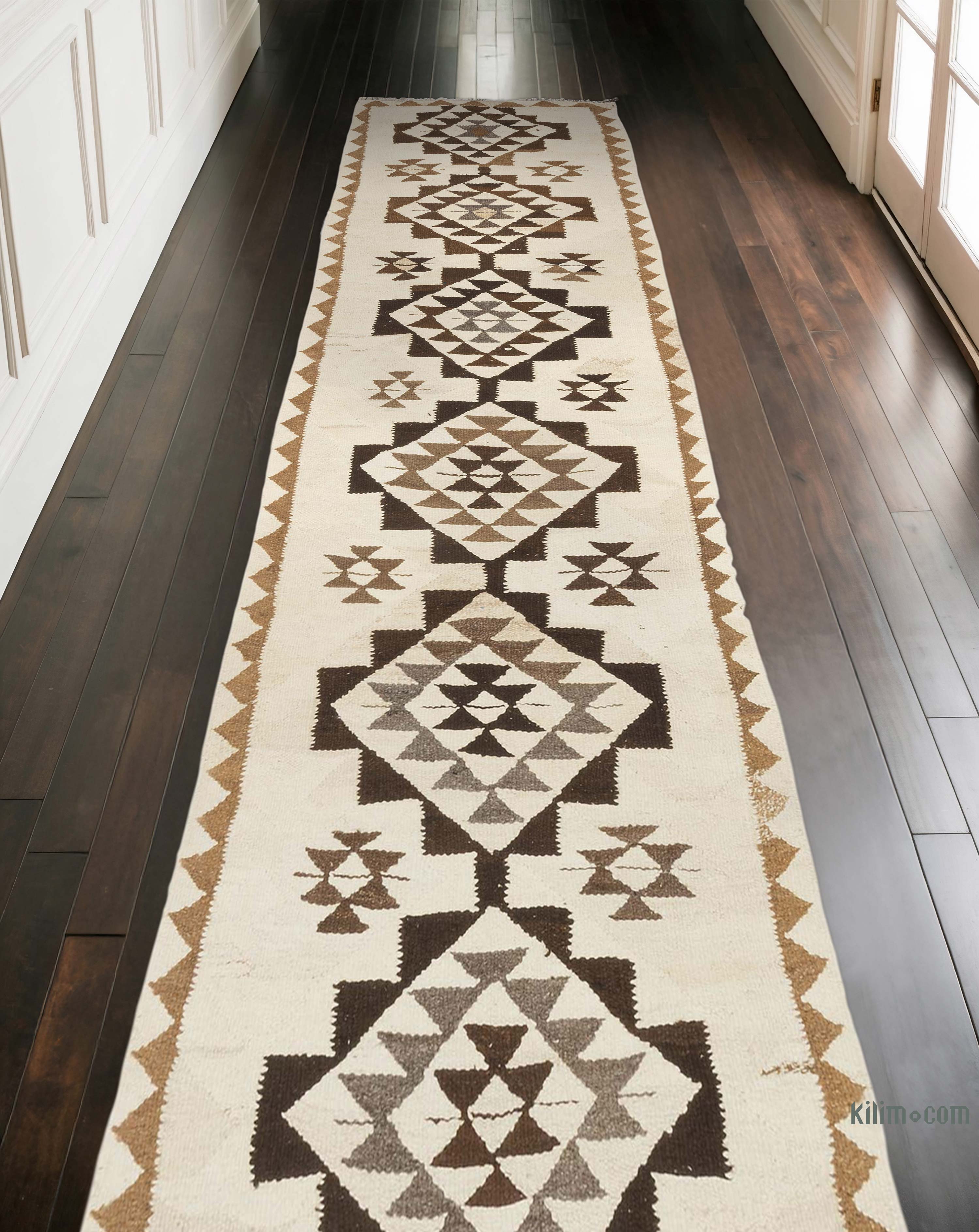
The designs feature a rich array of symbols representing tribal culture and Anatolian motifs, often in the form of medallions, diamonds, and other geometric shapes. These kilim runners are ideal for hallways and narrow spaces, offering a touch of ethnic charm and artisanal quality to any interior.
Herki kilims not only serve as functional floor coverings but also as artistic expressions of tribal identity, making each rug a unique cultural artifact.
Design Elements
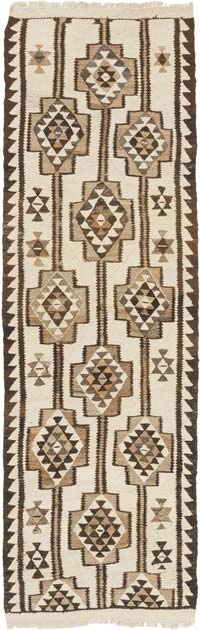
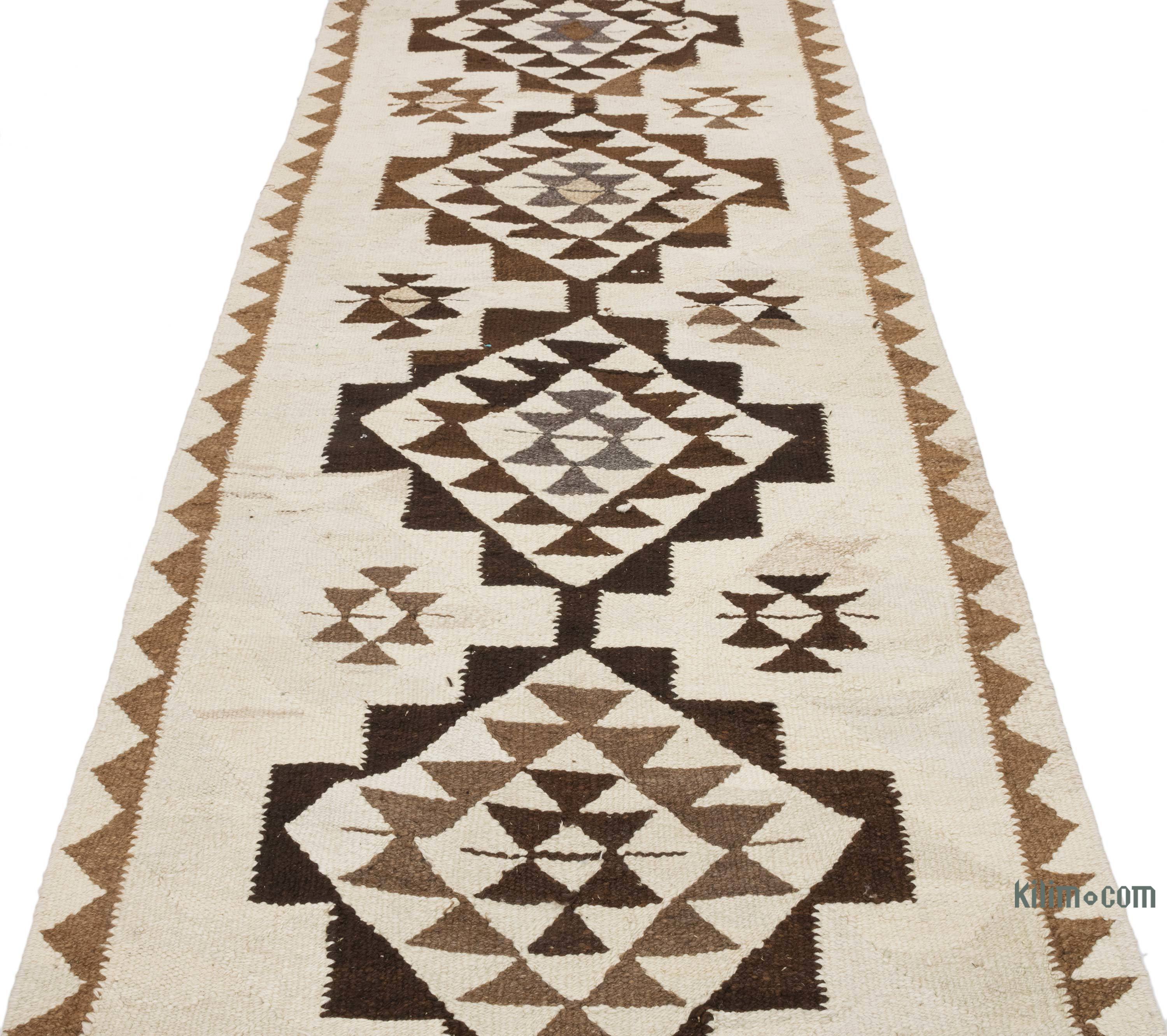
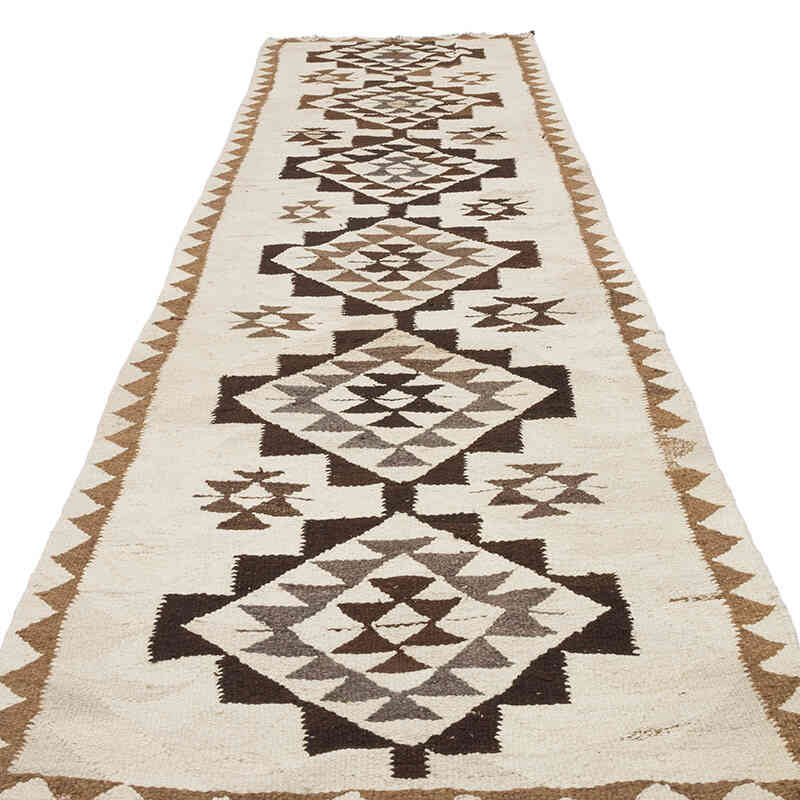
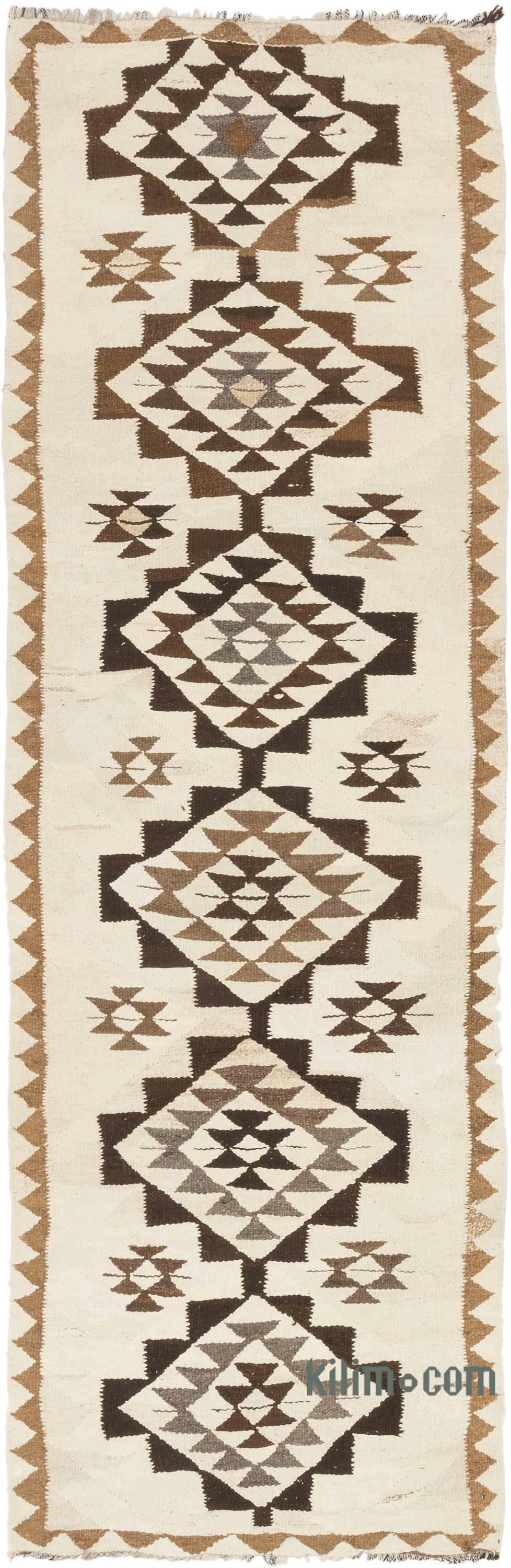
- Repetitive Patterns: The runner features a series of elongated diamond shapes arranged vertically, creating a sense of rhythm and harmony.
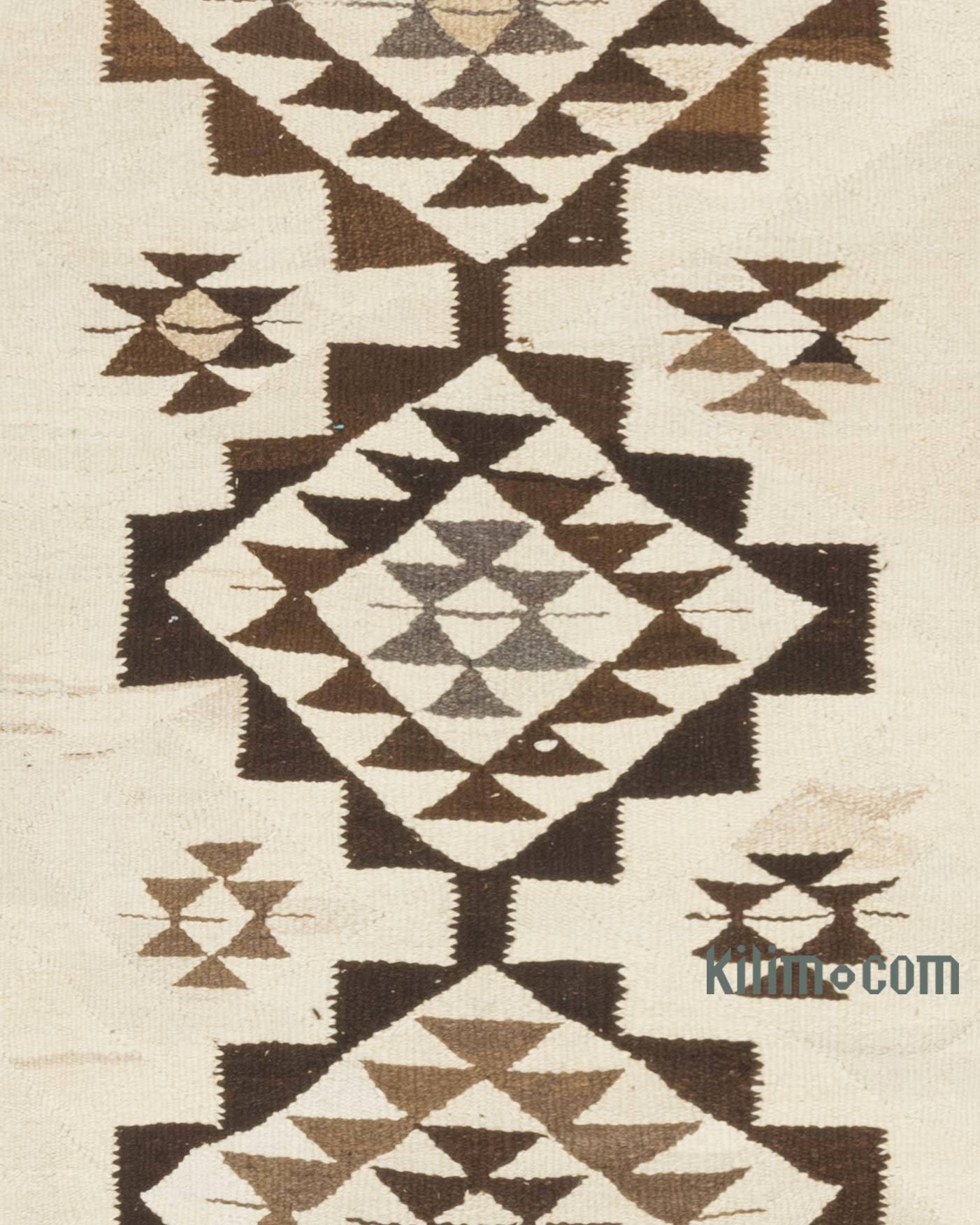
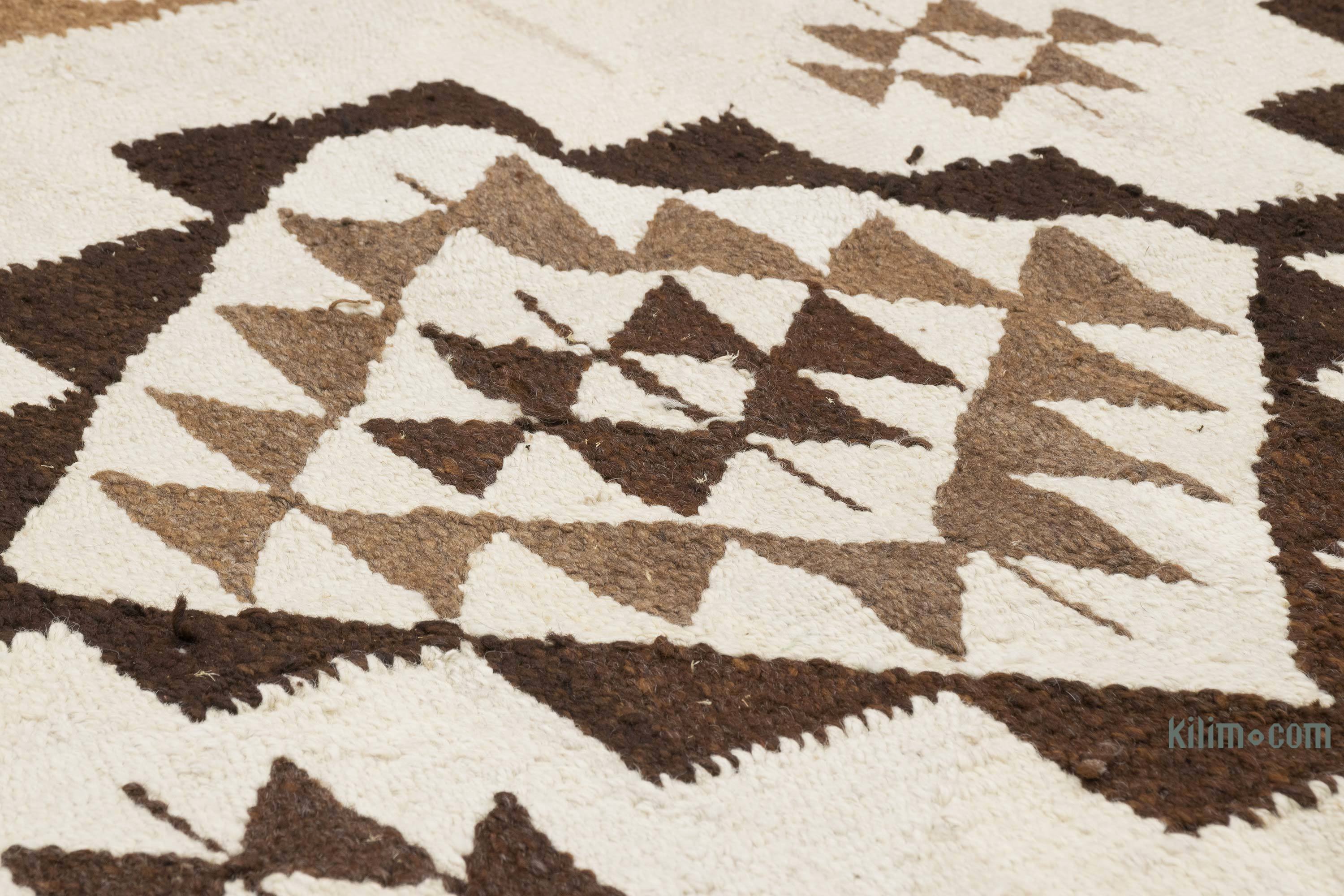
- Geometric Motifs: The geometric shapes are precise, showcasing the artisan's skill and the cultural significance of each design.
- Symmetry and Balance: The equally spaced motifs provide visual stability, drawing the viewer’s eye along the length of the runner.
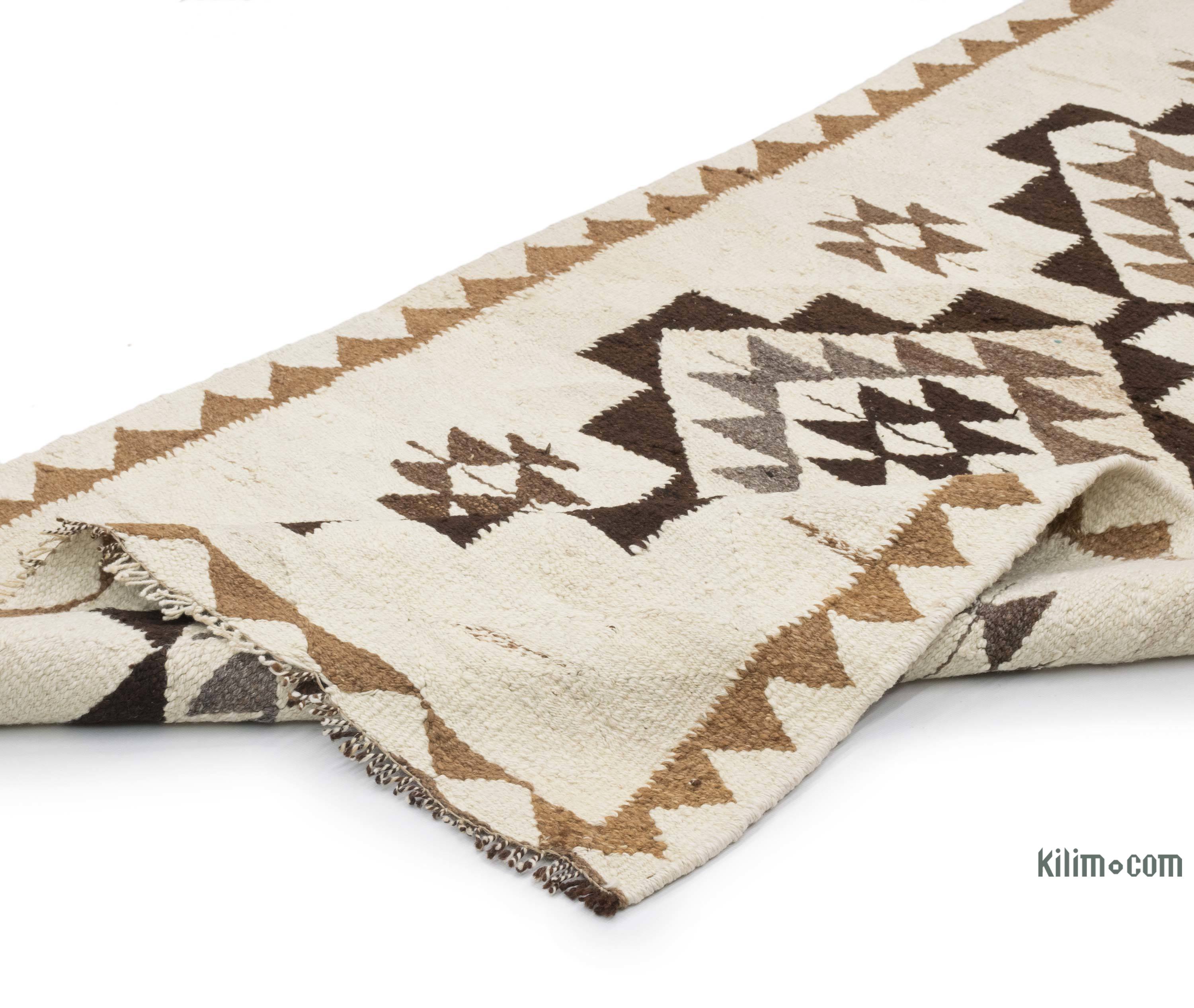
- Fringe Detail: The fringes at both ends add to the authenticity and traditional craftsmanship of the piece, enhancing its vintage appeal.
Colors
- Natural Colors: The color palette is composed of earthy tones, primarily cream, brown, and various shades of taupe.
- Contrast: The use of light cream against darker browns creates a striking contrast that enhances the visual interest of the design.
- Warmth: The warm tones evoke feelings of comfort and connection to nature, typical of traditional tribal designs.
- Subtle Variation: The slight variations in the shades within the same color family add depth and textural interest to the overall appearance.
Main Motifs and Their Symbolism
- Diamonds: Often symbolize prosperity and protection. The diamond shapes in the design represent fertility and abundance, making it a common motif in tribal art.
- Geometric Patterns: These shapes reflect the natural world and the universe, symbolizing harmony, balance, and unity in the surroundings.
- Color Scheme: The earthy colors embody the connection to the earth and the creator’s identity, representing stability and grounding energies.
- Lines and Borders: The borders surrounding the main motifs signify a protective boundary, often representing the home and safety for the inhabitants.
Summary
This vintage tribal kilim runner features a combination of geometric patterns and earthy colors that embody cultural significance through its distinctive design and symbolism. The use of repetitive diamond motifs symbolizes prosperity and protection, while the overall warm color palette creates a sense of comfort and connection to nature. The design elements and their meanings offer insight into the story and heritage woven into the very fabric of the rug.
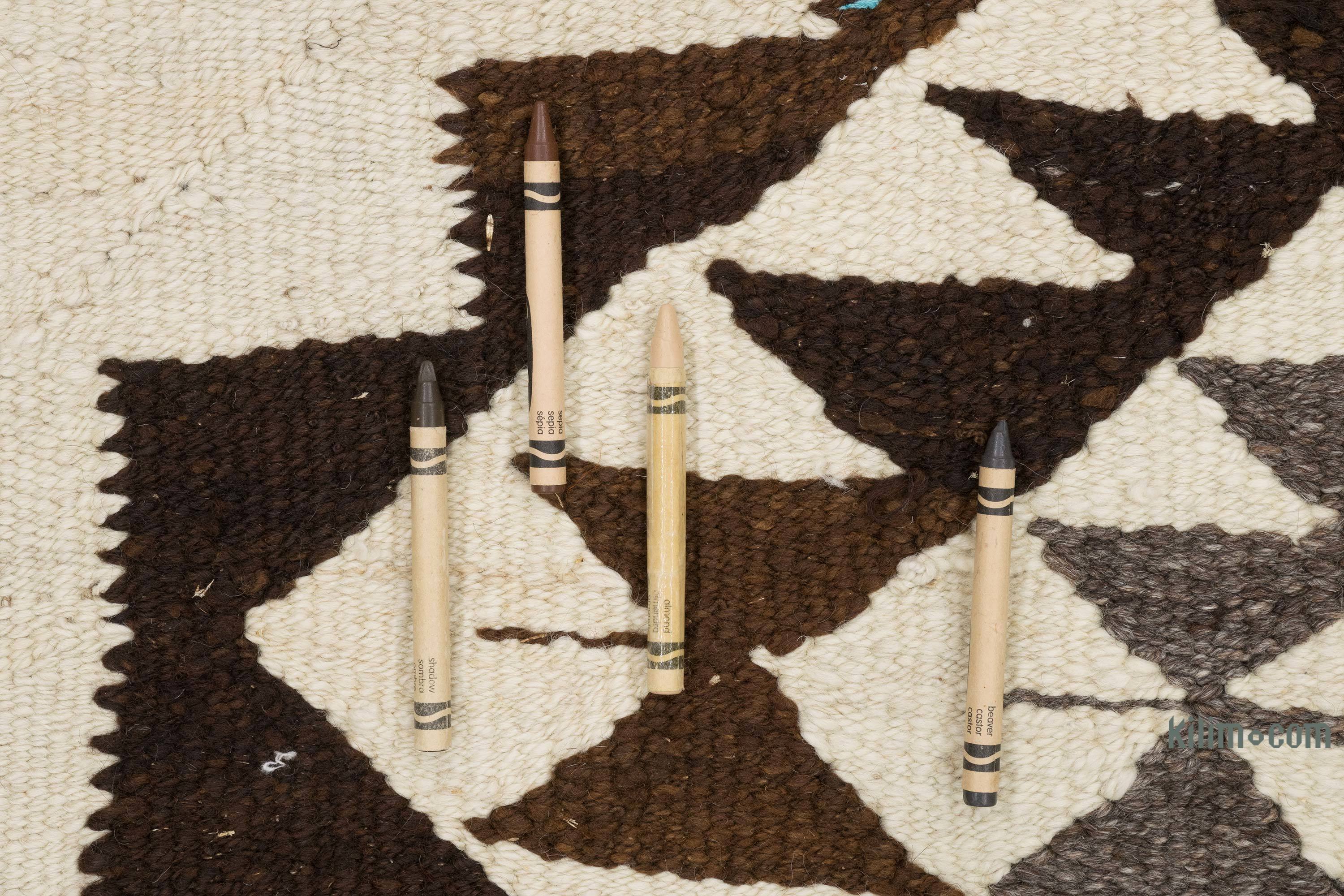
Colors may appear slightly different across various monitors due to screen settings device differences, and external lighting conditions. If color accuracy is important for your space, we recommend viewing the rug on multiple devices or contacting us for a detailed color description. We can provide detailed photos and references using Sherwin-Williams, Benjamin Moore, Pantone, or even Crayola crayons.
You can also visualize most of our products in your own room with AR (augmented reality) on an iPhone or iPad.
Return Policy
Need a rug pad? We recommend RugPadUSA