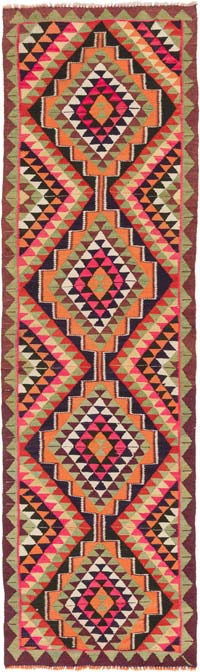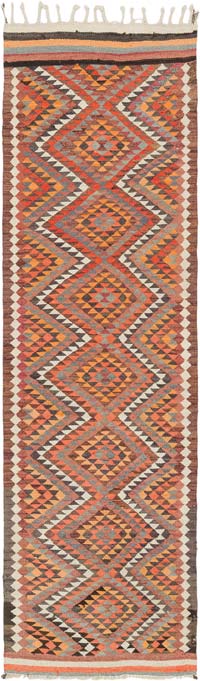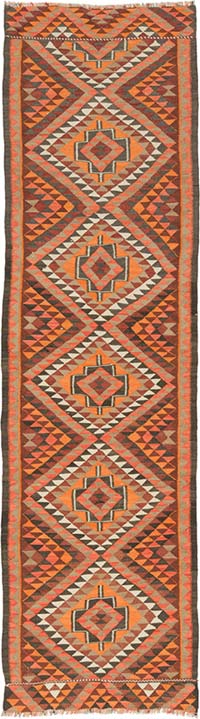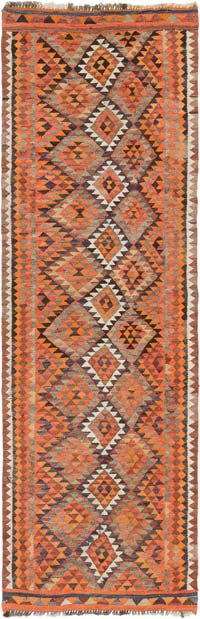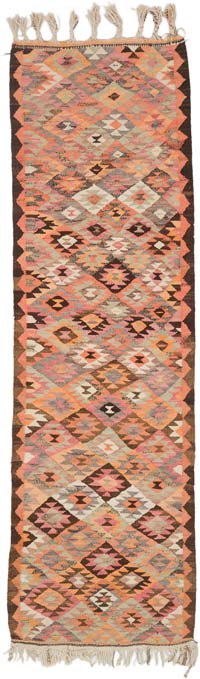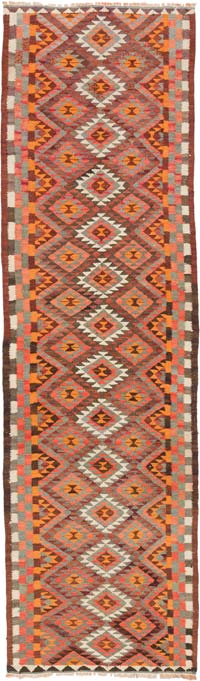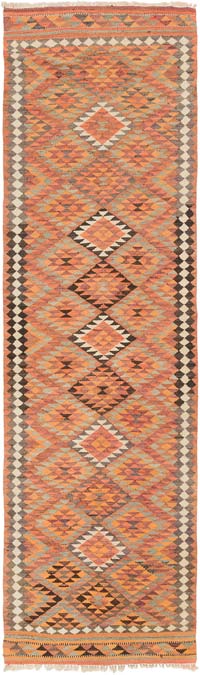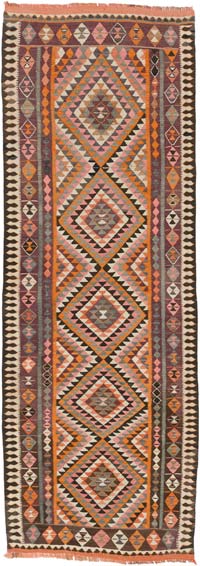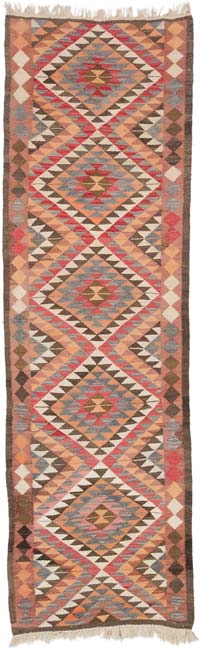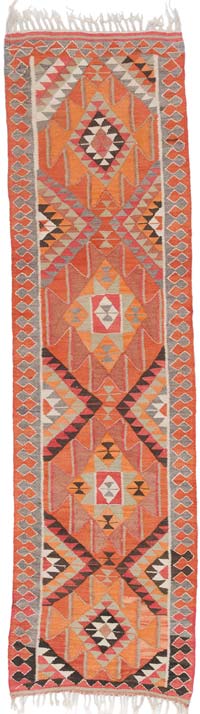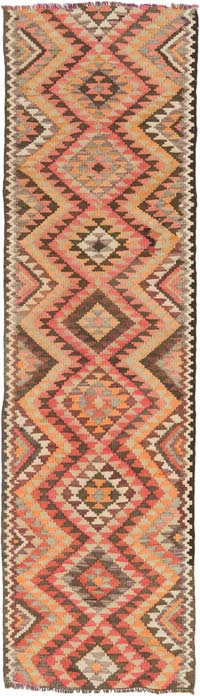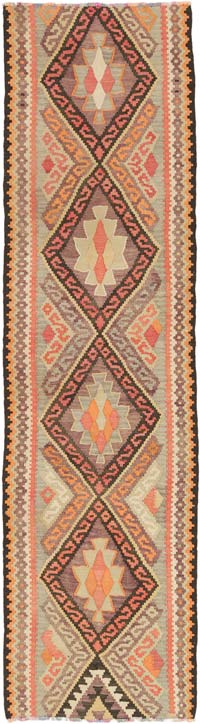
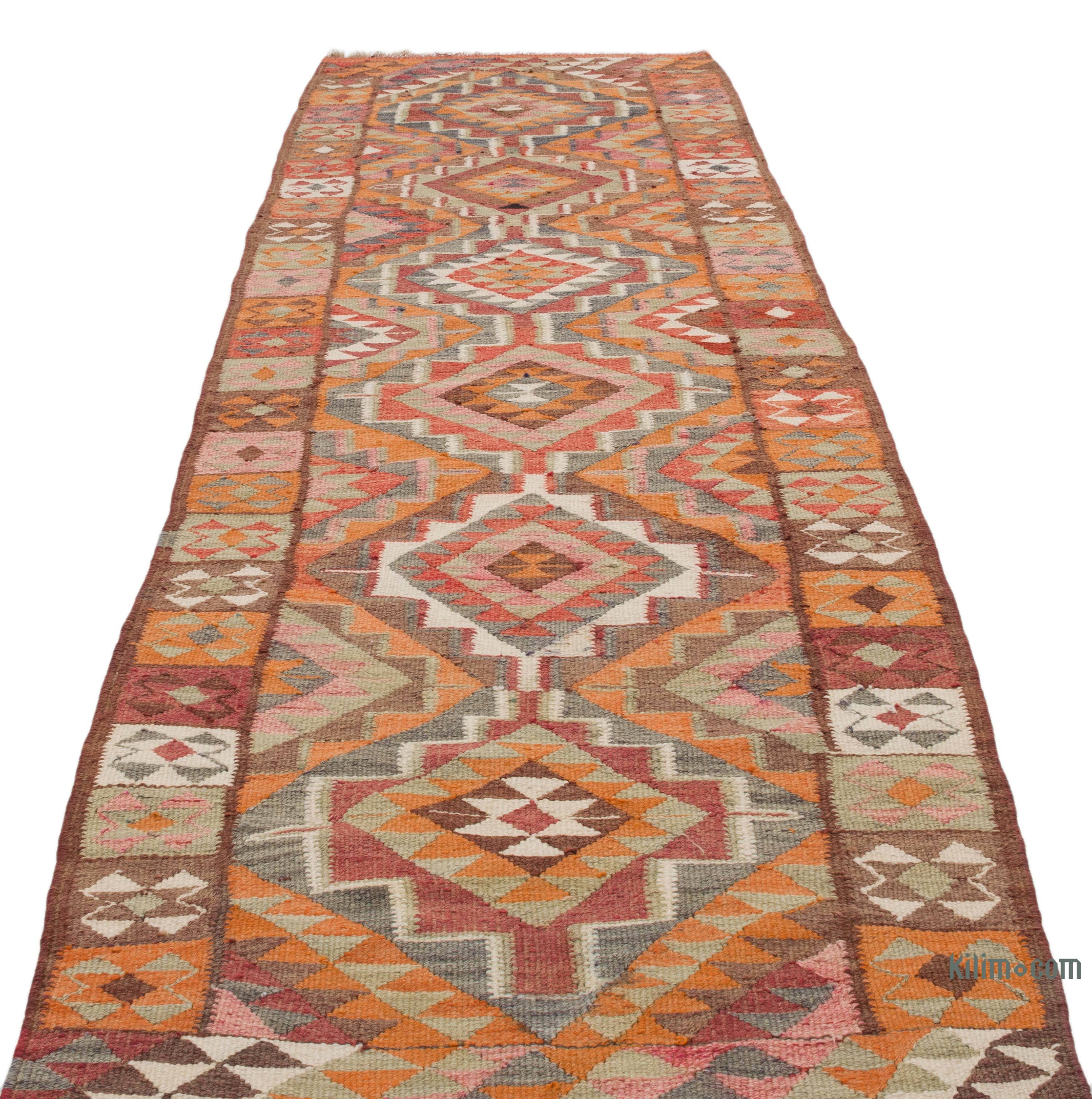

Vintage Tribal Kilim Runner 3' 1" x 10' 6" (37" x 126")
Type:
Kilim RugsCollection:
Tribal Runners, ClearanceStyle:
TribalID:
K0069692Size:
Material:
- Ships in 2-5 business days
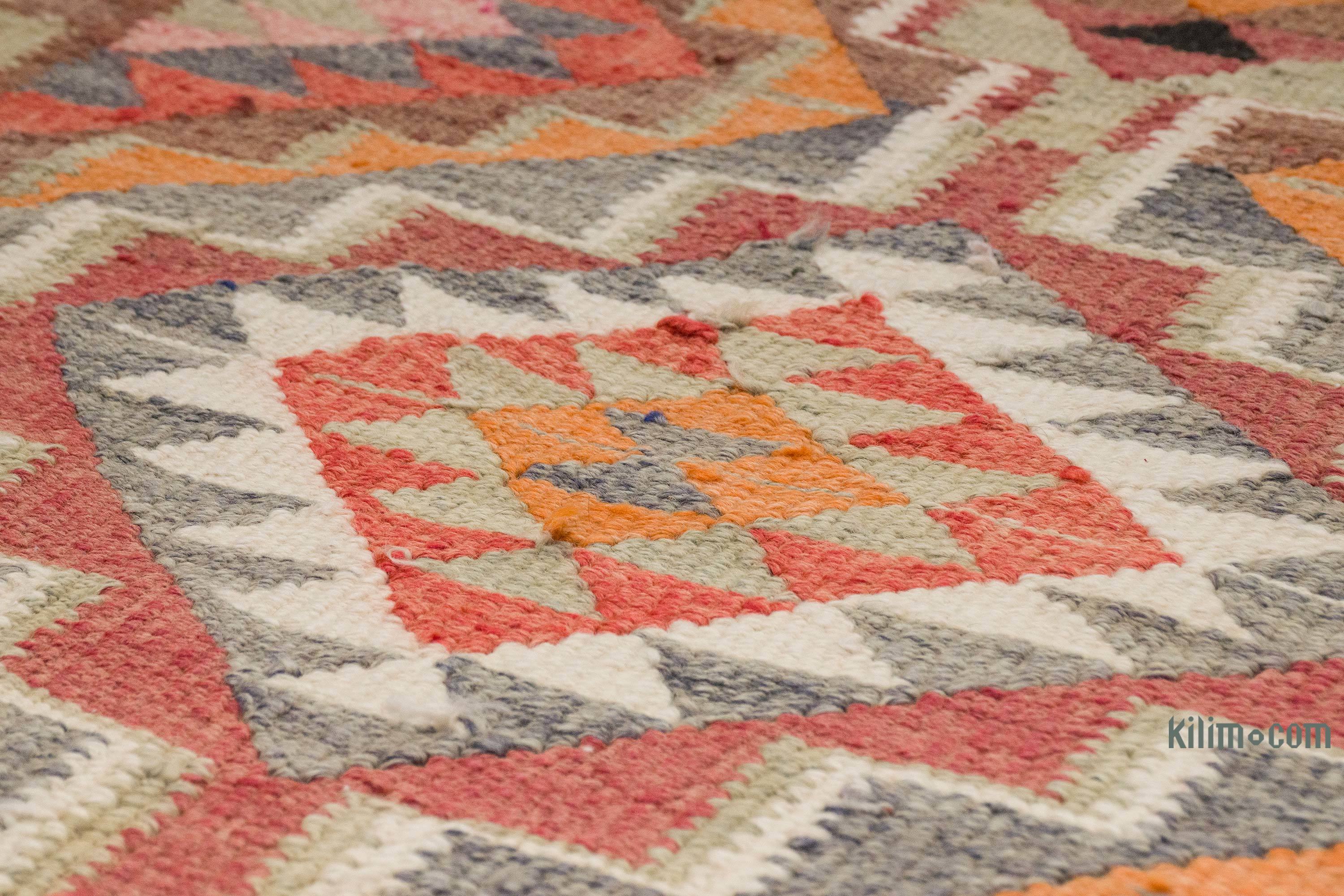
- All of our rugs are professionally cleaned; gentle wear from age and natural irregularities are inherent features of these one-of-a-kind handwoven vintage rugs.
- Only one in stock, handmade, unique
- Free shipping via FedEx Express. Returns & exchanges
- Contact us or add a note to your order if you want us to delay your shipping.
- Request more info if you want this rug shorter or narrower
The designs feature a rich array of symbols representing tribal culture and Anatolian motifs, often in the form of medallions, diamonds, and other geometric shapes. These kilim runners are ideal for hallways and narrow spaces, offering a touch of ethnic charm and artisanal quality to any interior.
Herki kilims not only serve as functional floor coverings but also as artistic expressions of tribal identity, making each rug a unique cultural artifact.
Design and Motifs
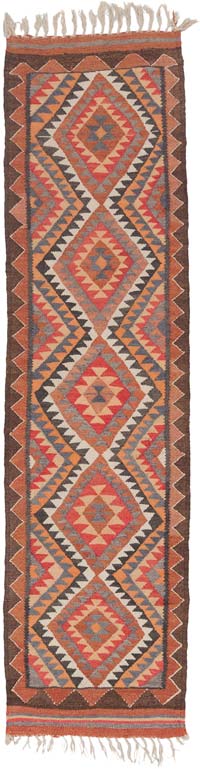
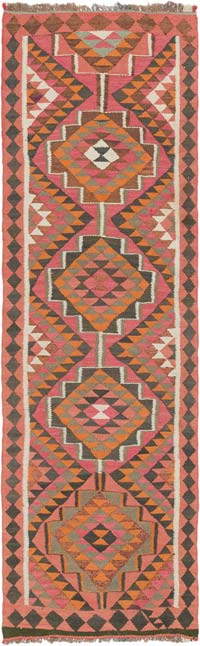
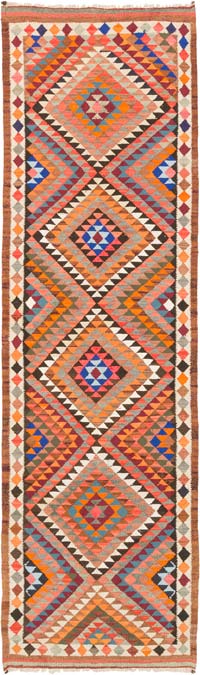
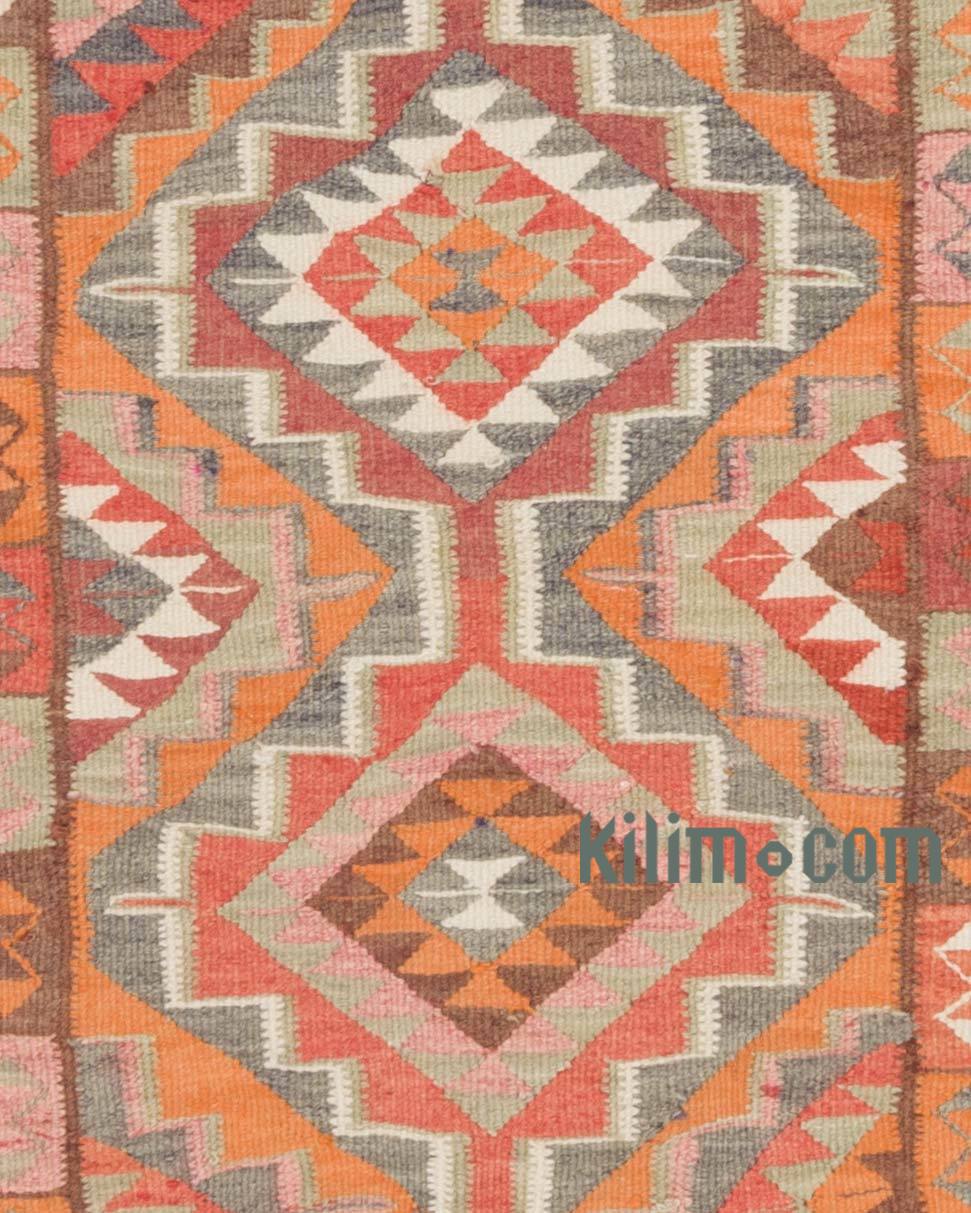
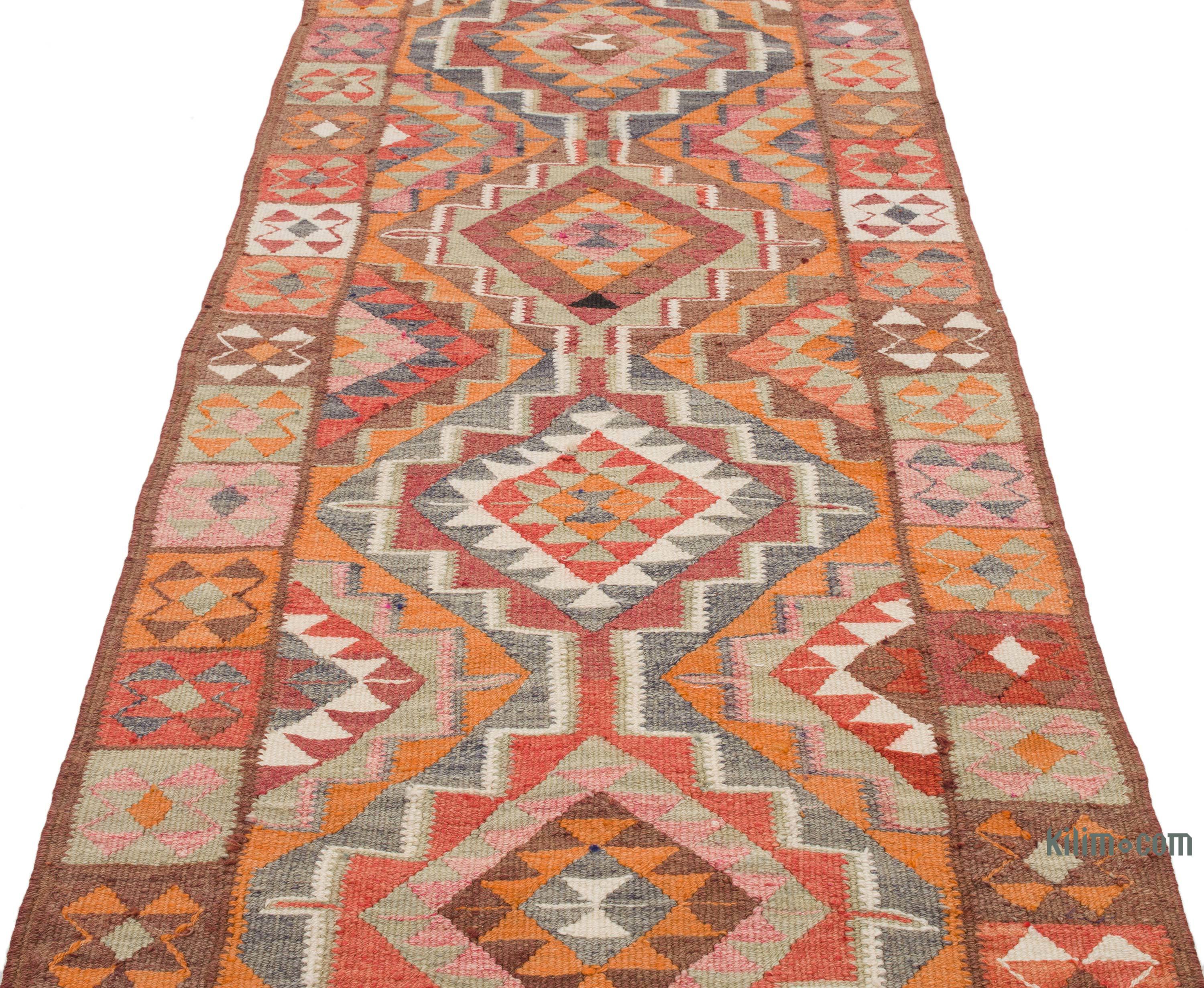
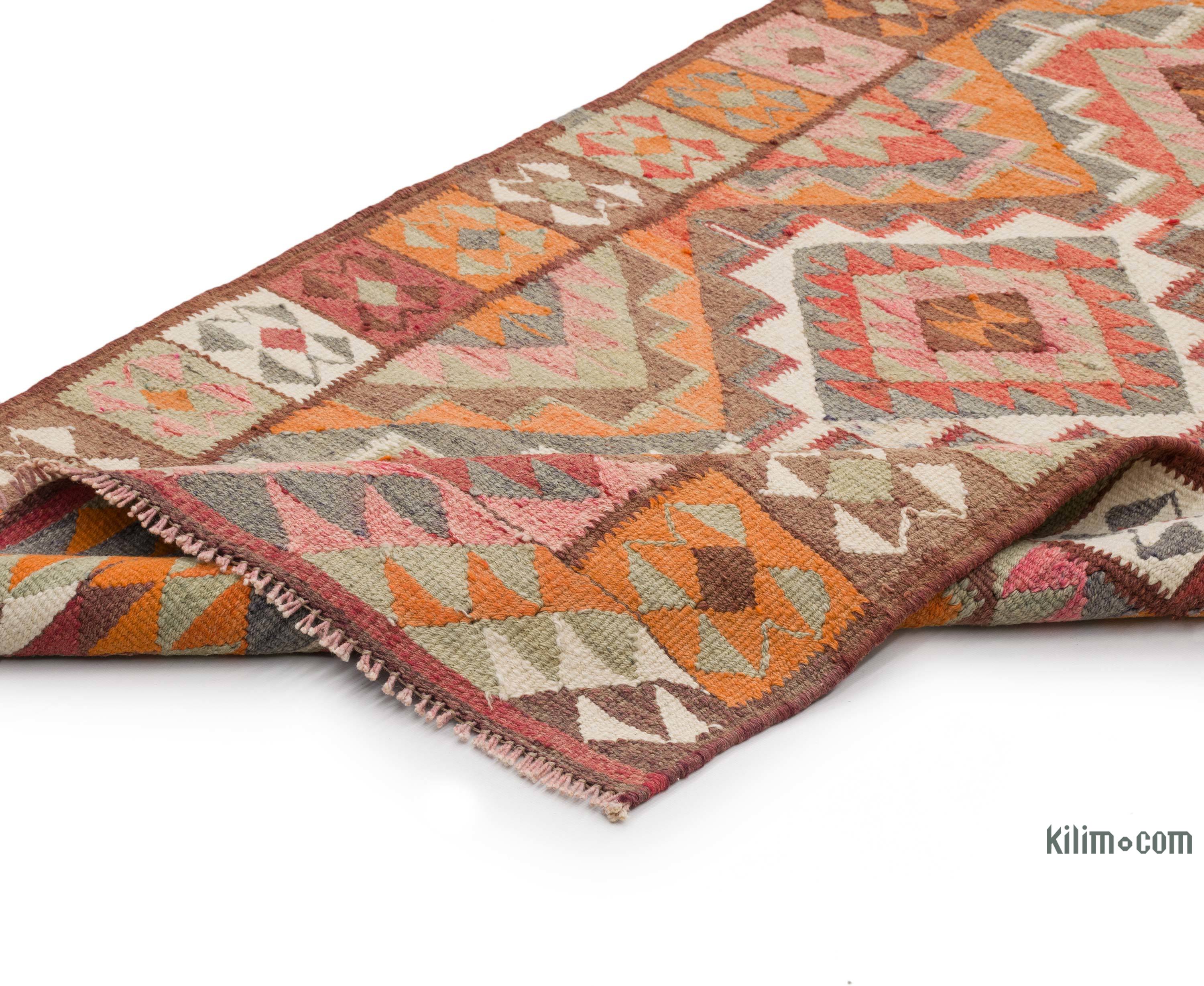
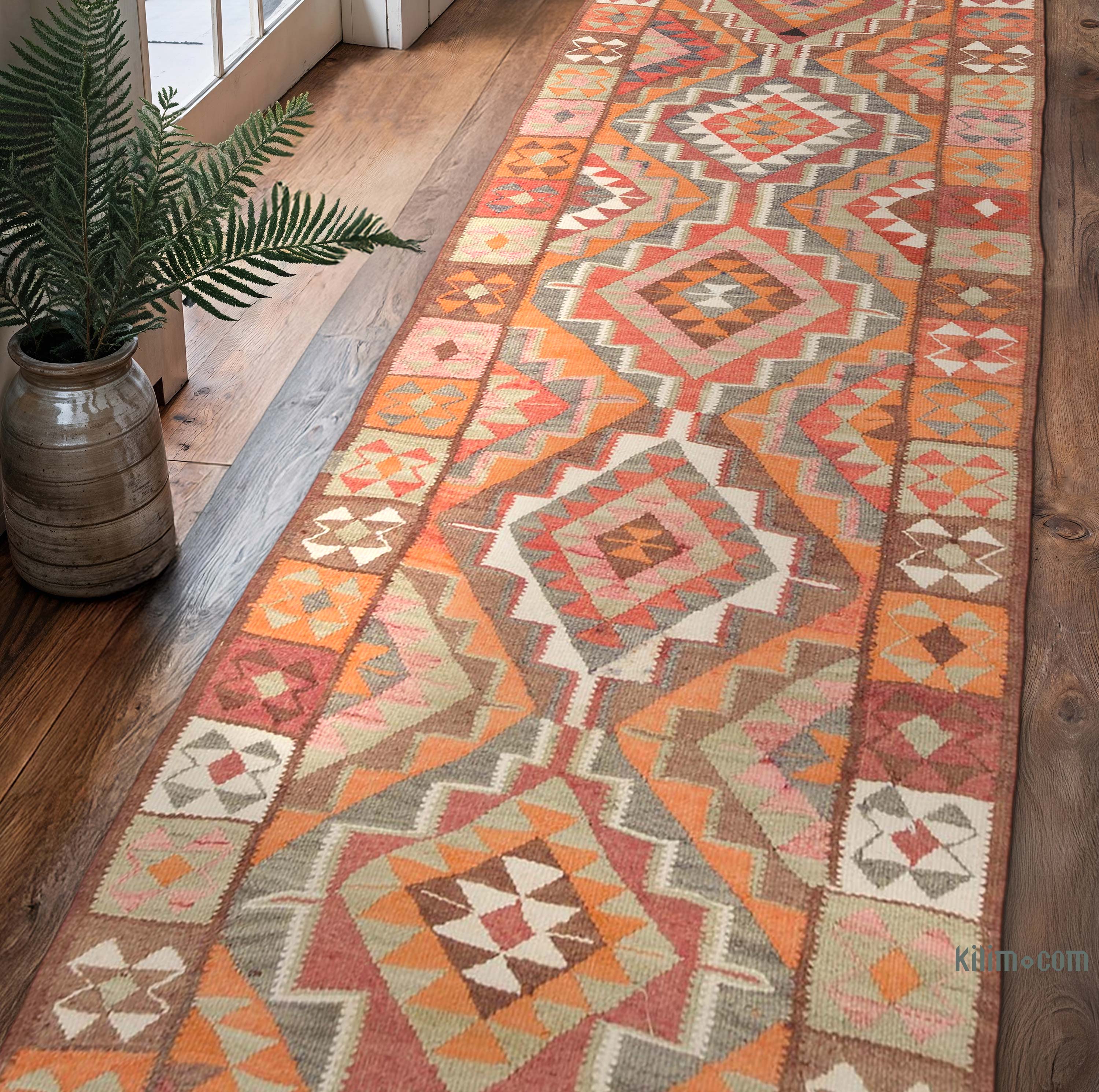
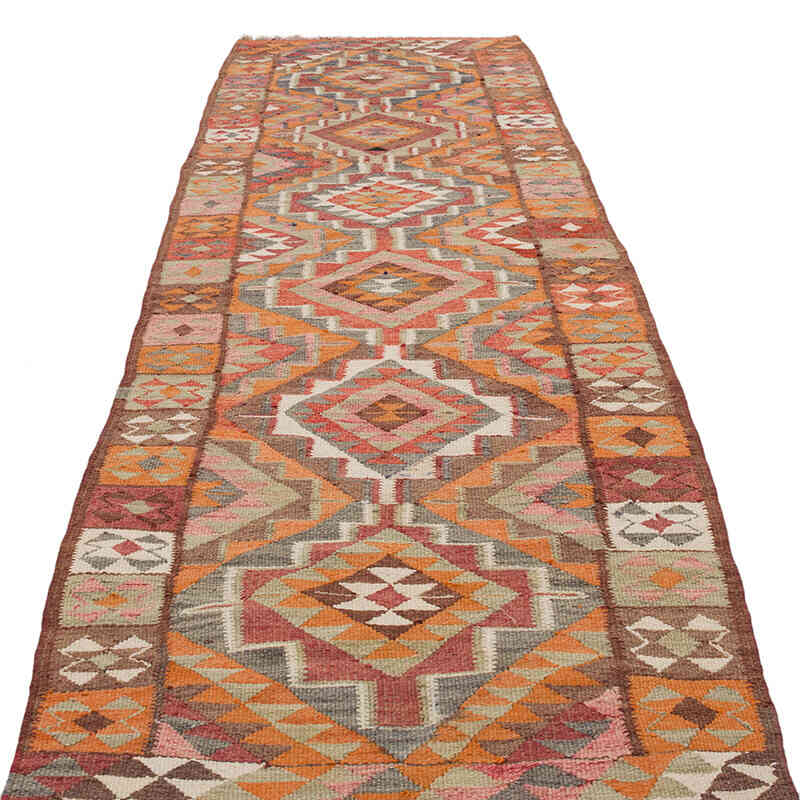
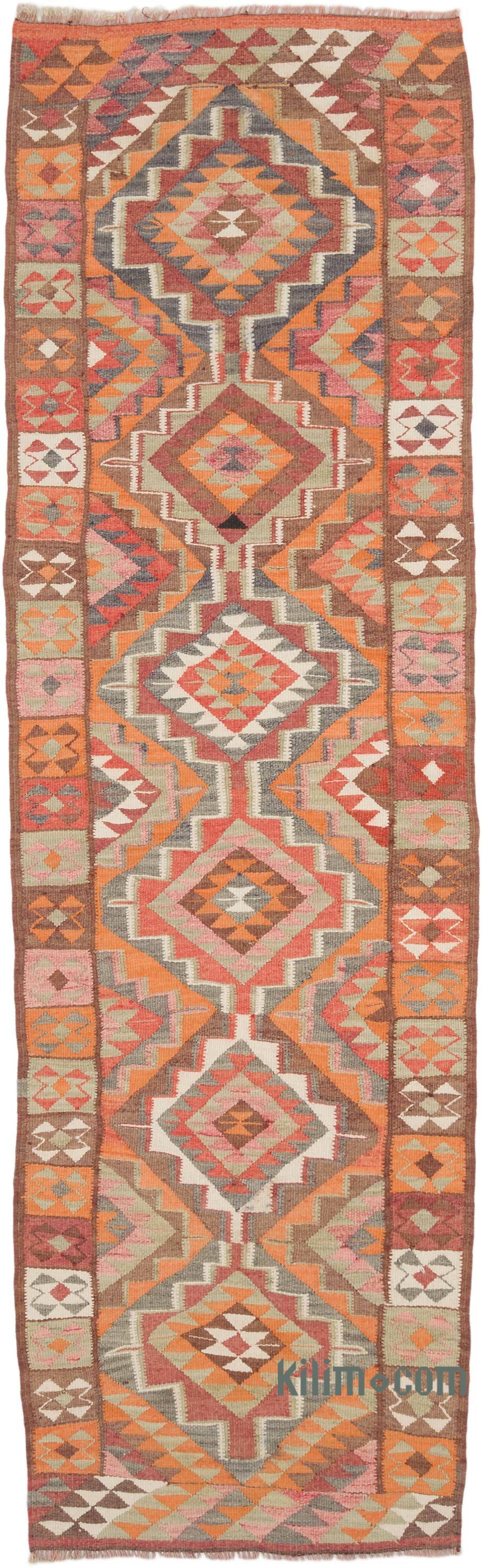
This runner presents a fascinating interplay of geometric forms rendered in warm tones of burnt orange, soft pinks, earthy browns, and muted grays. The central field of the rug features seven large diamond medallions arranged longitudinally, each framed with stepped outlines that create a dynamic zigzag effect. The diamonds house nested smaller geometric shapes—triangles and smaller diamonds—adding layers of depth and intricacy to the overall design.
Along the borders, a repeated row of smaller square motifs complements the central diamonds, maintaining a rhythm and balance that guides the eyes seamlessly across the rug. These border motifs, echoing varieties of hooked and hooked diamonds, symbolize protection and ward off evil according to traditional Anatolian weaving beliefs.
Symbolism Behind the Motifs
- Diamond motifs reflect fertility, womanhood, and protection. They're often seen as talismans guarding the home, emphasizing abundance and safety.
- Stepped patterns symbolize mountains or barriers, representing perseverance and resilience—the idea that one overcomes challenges through strength and determination.
- Triangles within the diamonds may denote elements such as water or fire, symbolizing cleansing, transformation, and life energy.
- The border squares embody stability and continuity, a frame that supports the inner narrative of the rug.
Each motif tells a story of Anatolian weavers’ lived experiences, hopes for prosperity, and spiritual beliefs. They reflect a profound connection to nature, protection, and life's cyclical rhythms.
Integration with Interior Design Styles
- Bohemian and Eclectic Spaces: The dynamic patterns and earthy palette perfectly complement eclectic interiors filled with layered textures, plants, and globally inspired décor. It adds warmth and narrative depth to an already vibrant setting.
- Mid-Century Modern: The geometric clarity and muted tones offer a nostalgic yet timeless accent. Using this rug in a mid-century space enhances visual interest without overpowering the sleek, minimal furniture.
- Rustic and Farmhouse: The natural wool fibers and handcrafted look harmonize with rustic elements like exposed wood beams or vintage furniture, emphasizing authenticity and craftsmanship.
- Contemporary Minimalism: Placing this rug in a minimalist room injects subtle color and cultural richness, preventing the space from feeling cold or impersonal. Its pattern offers a focal point that invites closer attention.
- Traditional and Transitional Interiors: The historic motifs lend character and connect traditional décor with modern sensibilities, bridging old-world charm with today’s design preferences seamlessly.
For those who appreciate the richness of symbolism and ancient craftsmanship, this rug is more than decoration—it is a dialogue between tradition and contemporary living.
Discover more about Kilim motifs and symbols to deepen your appreciation of the timeless stories woven into these stunning textiles.
Rolling Up
- This rug combines striking geometric diamond medallions with intricate border squares, creating a balanced and dynamic visual narrative.
- The motifs evoke themes of protection, resilience, fertility, and connection to nature, reflecting the heritage and hopes of Anatolian weavers.
- Its warm, earthy palette complements a variety of interiors, from bohemian and rustic to mid-century modern and contemporary minimalist.
- The rug serves as a meaningful cultural artifact that enhances both aesthetic appeal and emotional warmth in a space.
- Exploring the symbolism behind each motif enriches the experience of this rug beyond its visual beauty, connecting the past with present-day design.
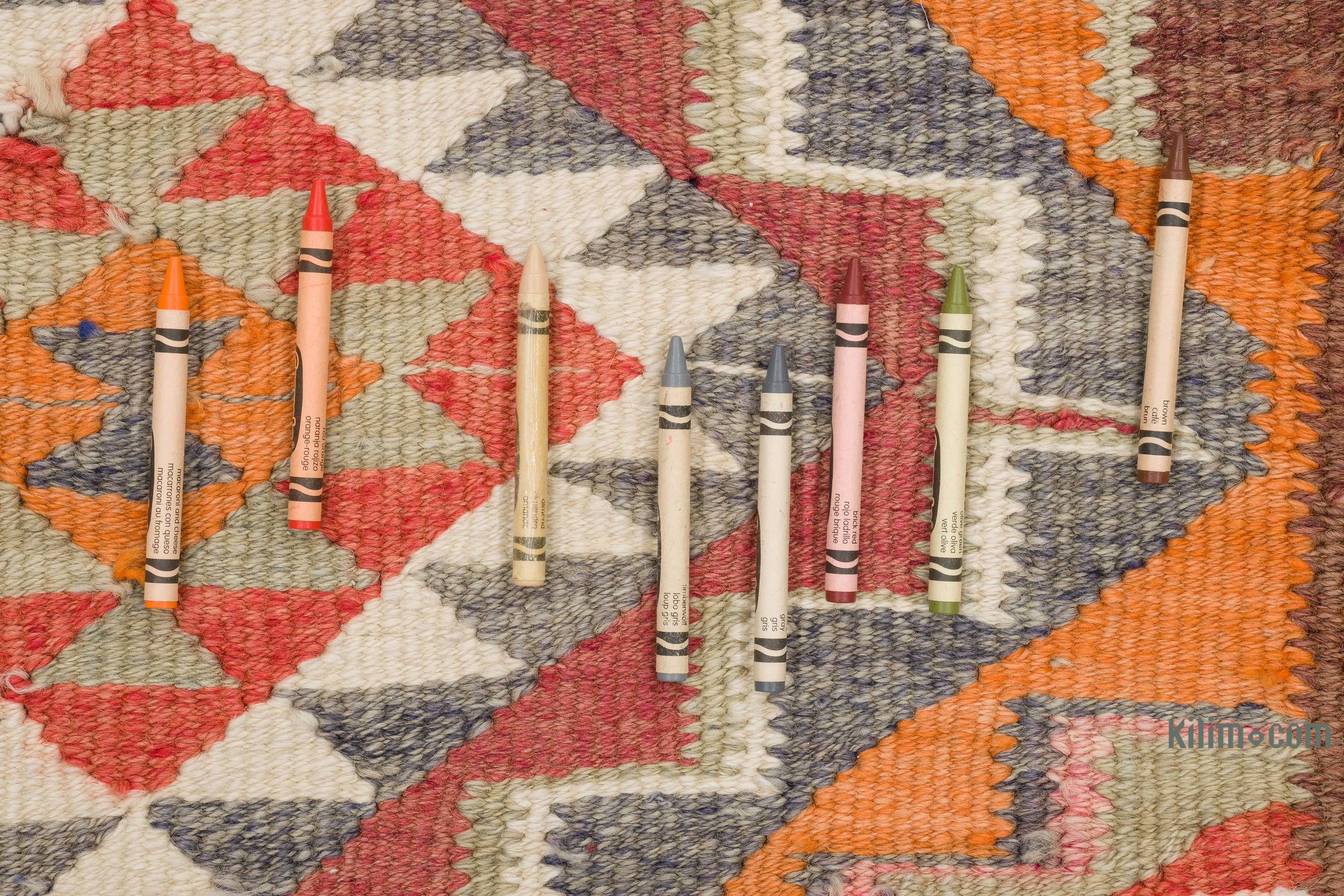
Colors may appear slightly different across various monitors due to screen settings device differences, and external lighting conditions. If color accuracy is important for your space, we recommend viewing the rug on multiple devices or contacting us for a detailed color description. We can provide detailed photos and references using Sherwin-Williams, Benjamin Moore, Pantone, or even Crayola crayons.
You can also visualize most of our products in your own room with AR (augmented reality) on an iPhone or iPad.
Return Policy
Need a rug pad? We recommend RugPadUSA