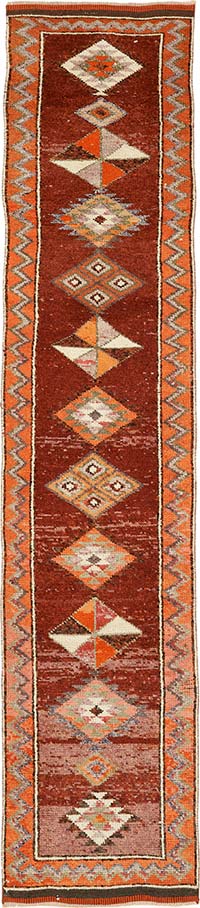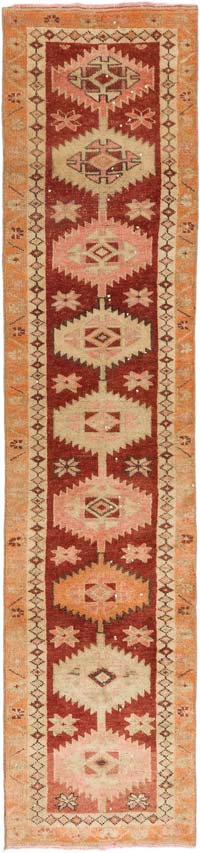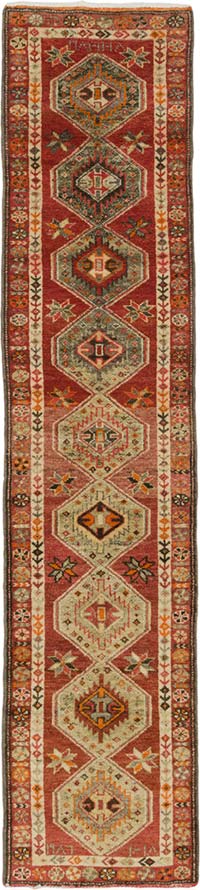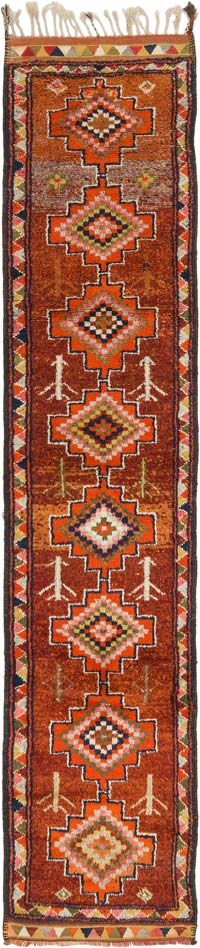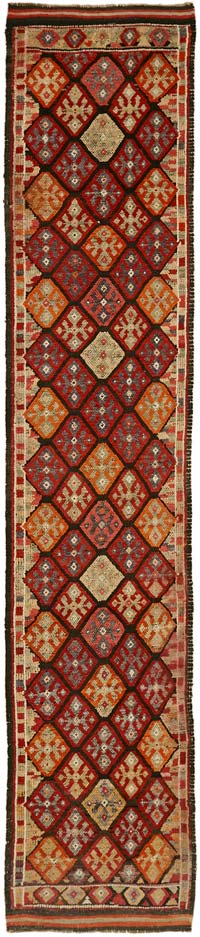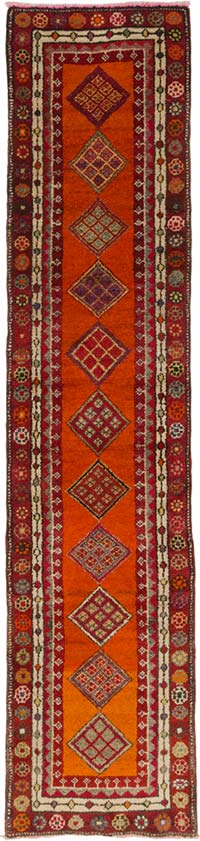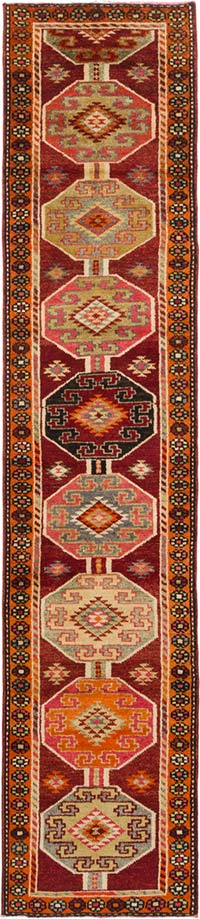
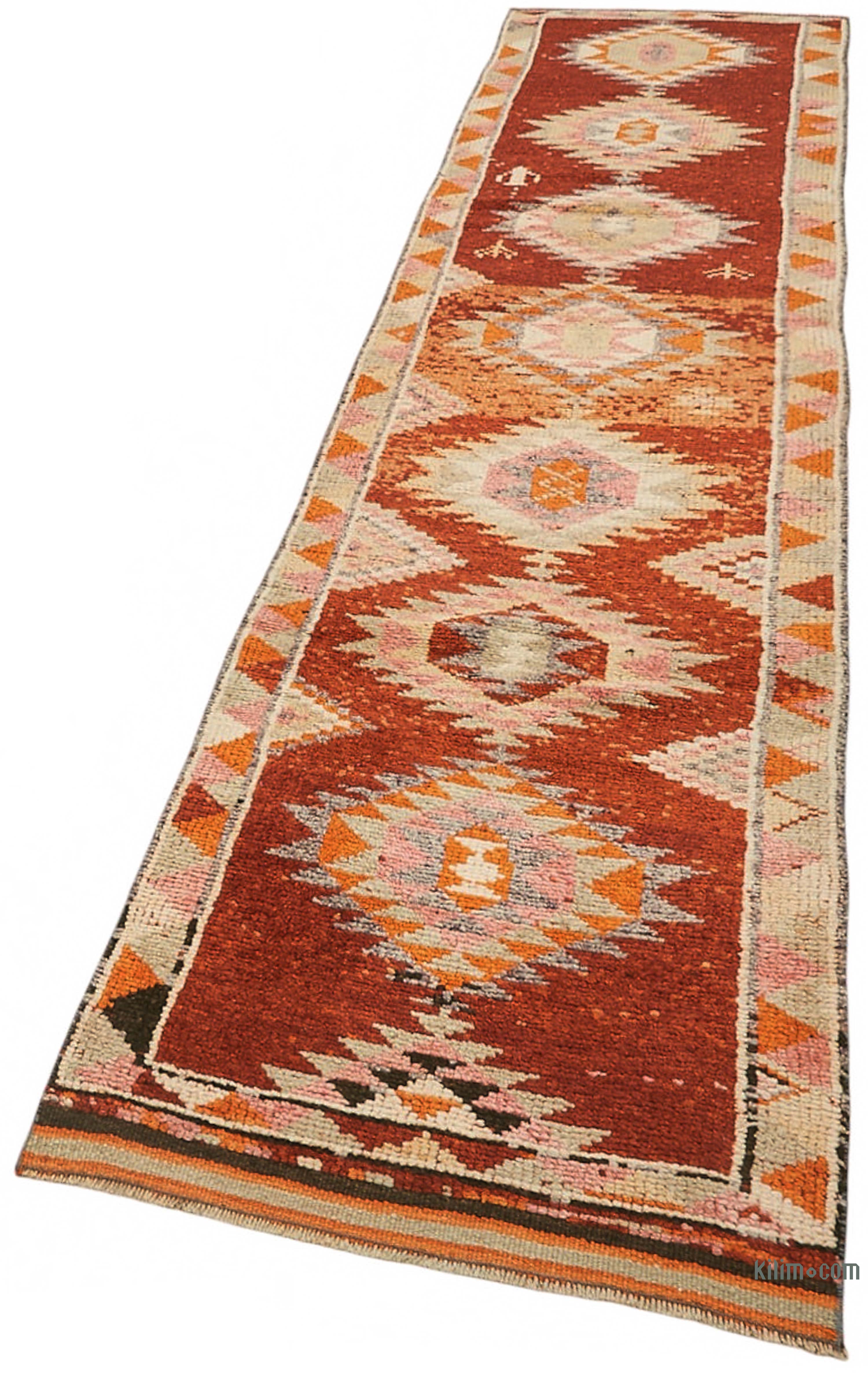

Vintage Tribal Runner Rug 2' 7" x 11' 6" (31" x 138")
Type:
Hand-Knotted RugsCollection:
Tribal RunnersStyle:
TribalID:
K0085118Size:
Thickness:
0.4"Material:
- Ships in 2-5 business days
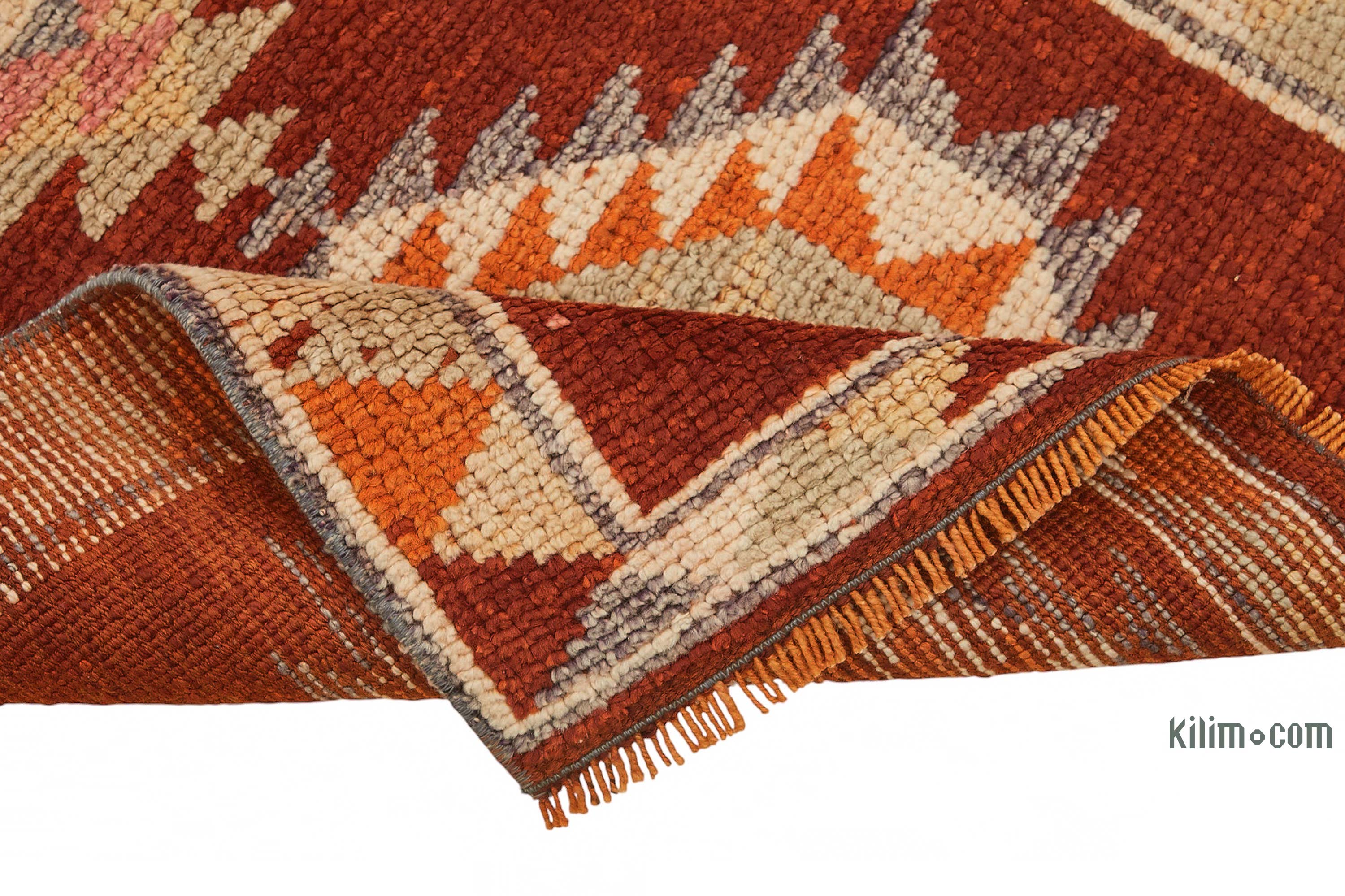
- All of our rugs are professionally cleaned; gentle wear from age and natural irregularities are inherent features of these one-of-a-kind handwoven vintage rugs.
- Only one in stock, handmade, unique
- Free shipping via FedEx Express. Returns & exchanges
- Contact us or add a note to your order if you want us to delay your shipping.
- Request more info if you want this rug shorter or narrower
The designs often feature geometric patterns, symbolic motifs, and a harmonious blend of colors, reflecting the natural landscapes and cultural heritage of the area. These runners not only serve as functional pieces but also as a testament to the enduring legacy of tribal craftsmanship, adding a touch of history and elegance to any space.
Indulge in vintage charm and bring a piece of Anatolian patterns into your living space with this attractive runner that measures 2' 7" x 11' 6" (31" x 138").
Design and Motifs of This Rug
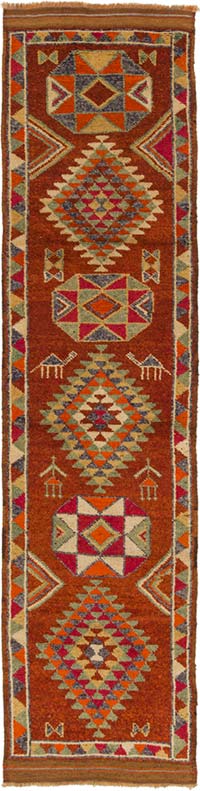
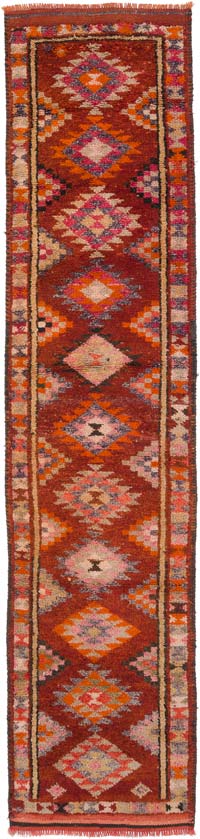
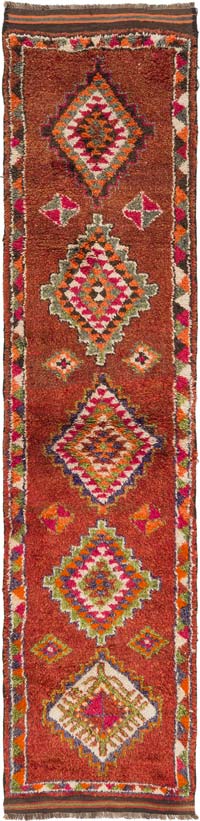
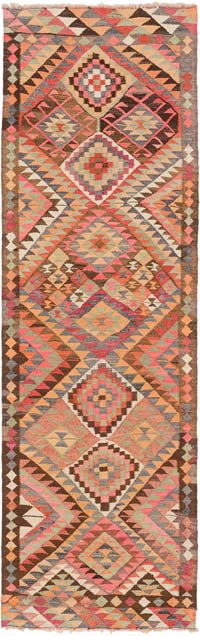
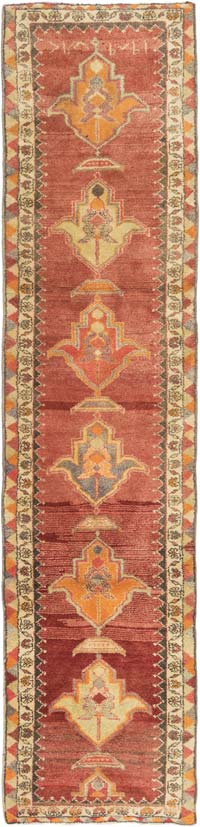
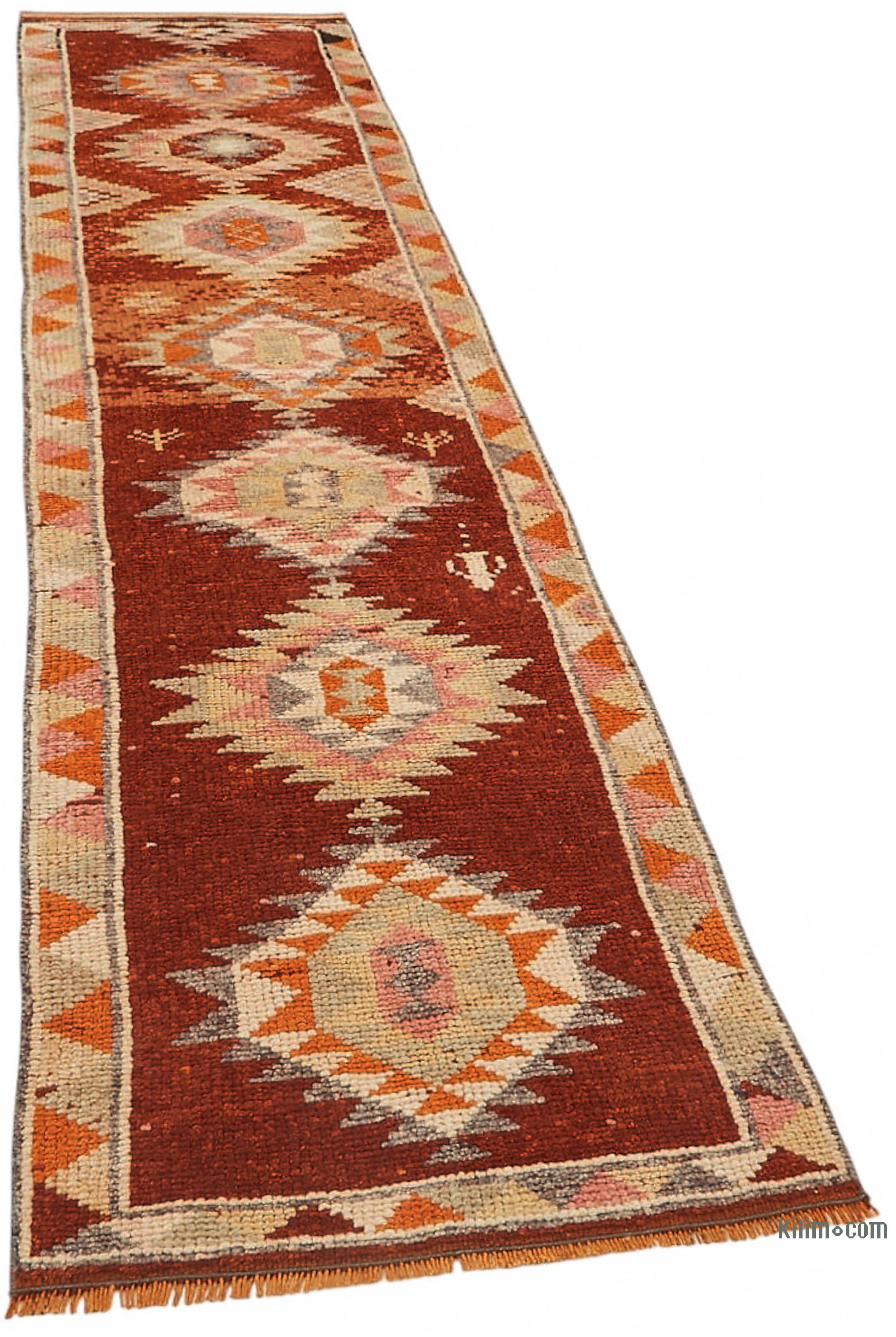
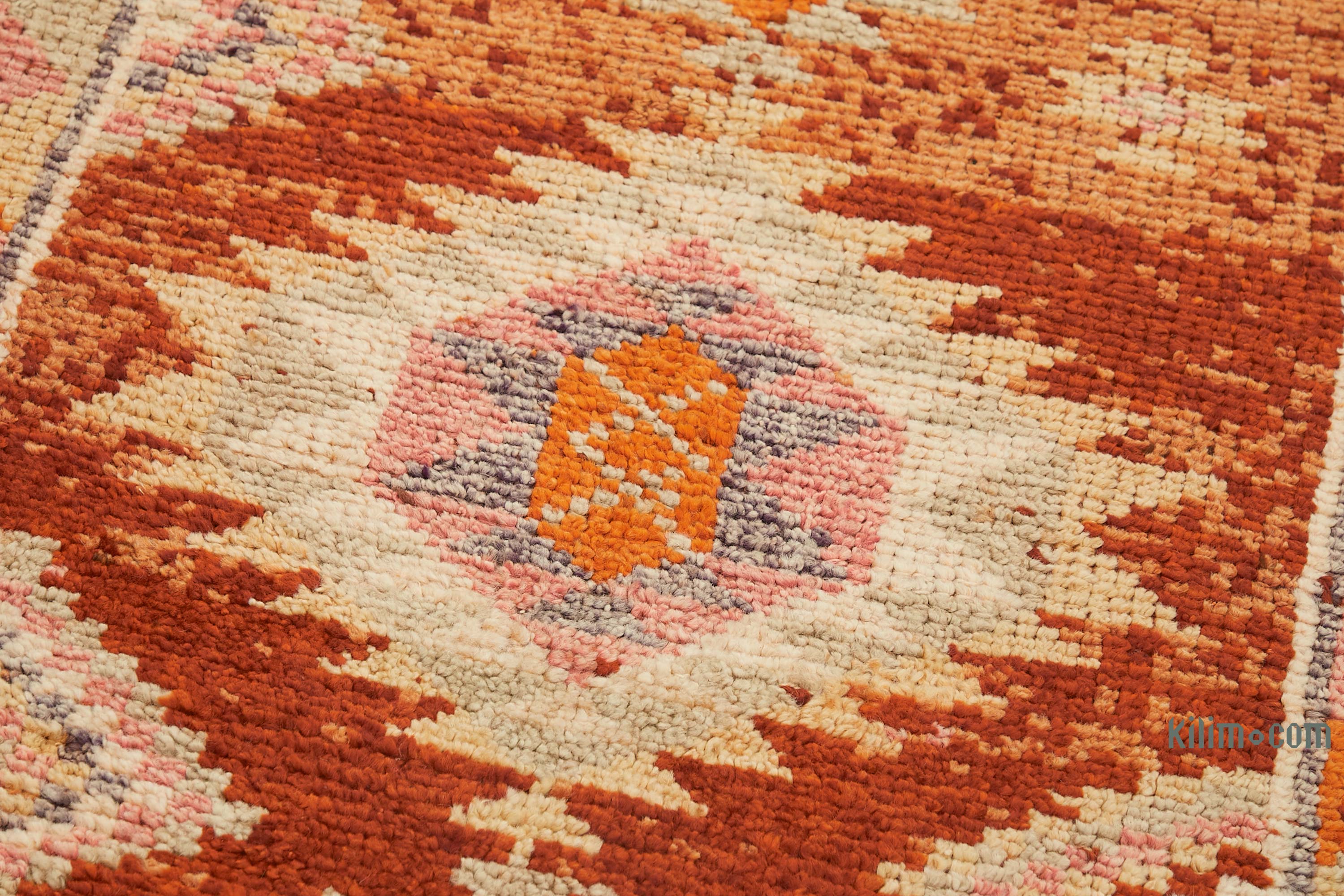
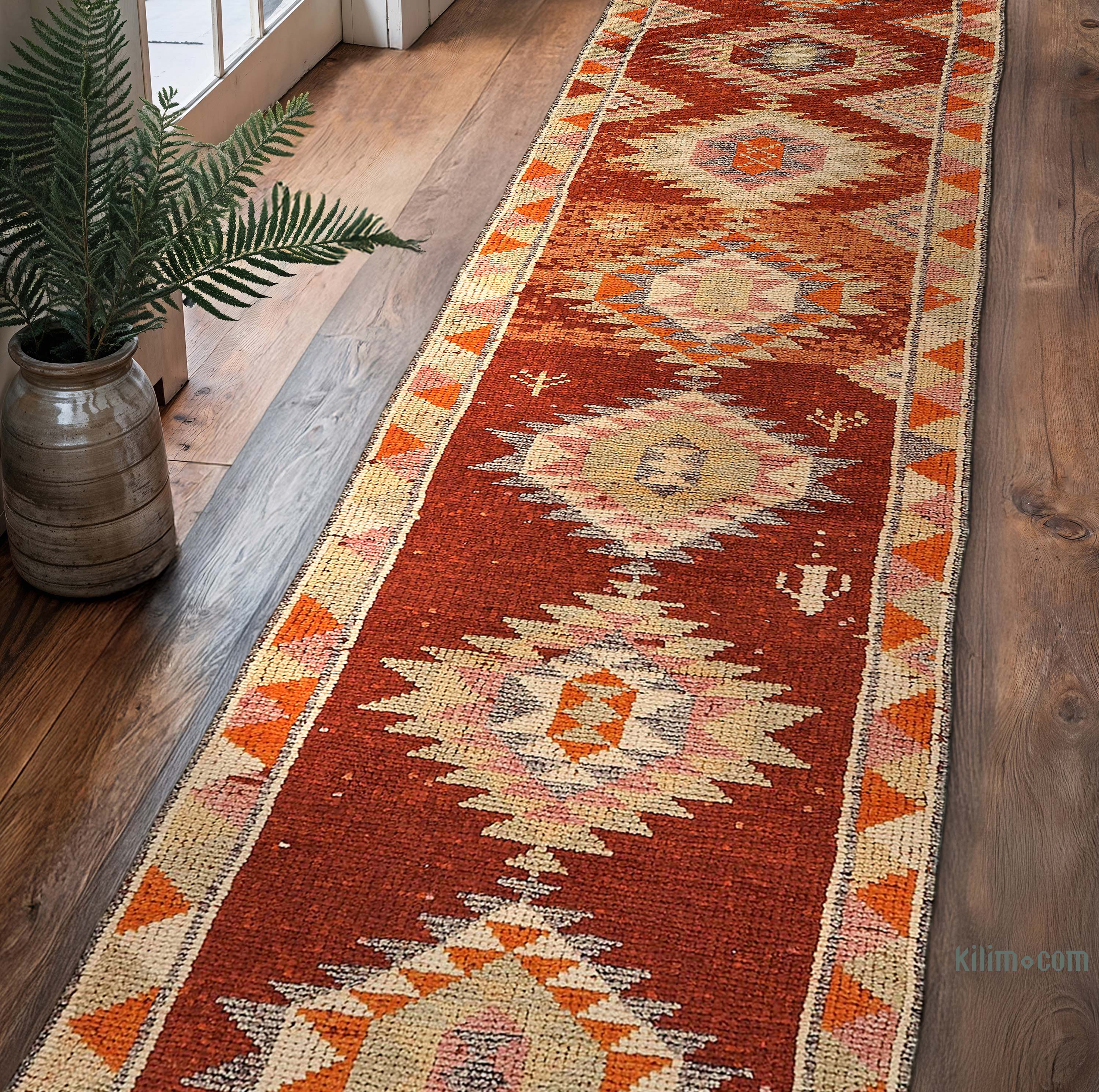
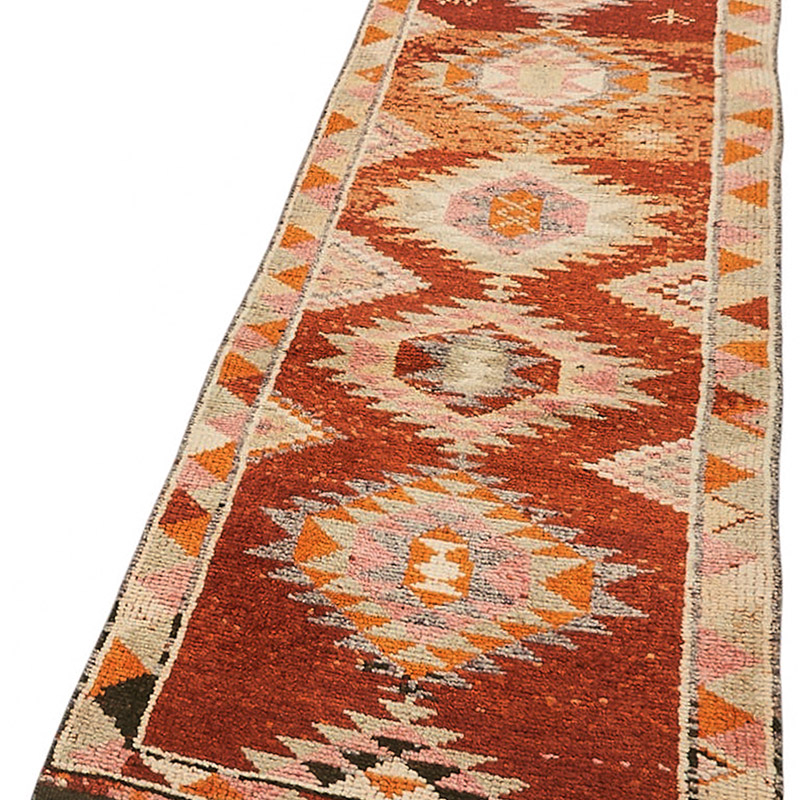
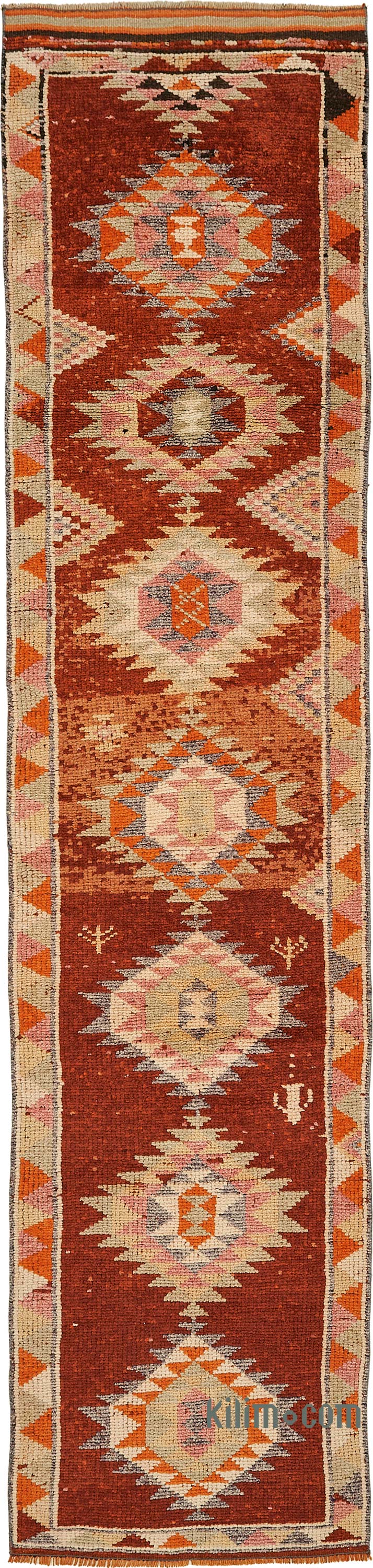
This exquisite kilim features a rich, earthy red field as its canvas, brimming with a harmonious blend of warm tones including orange, soft pinks, cream, and subtle touches of gray. The design centerpiece consists of a sequence of large, intricate medallions arranged vertically, each showcasing a captivating interplay of geometric shapes and vibrant colors.
- Medallions: These elongated diamond shapes are layered with smaller angular patterns inside, symbolizing protection and the weaver’s wish for safeguarding the home and its occupants.
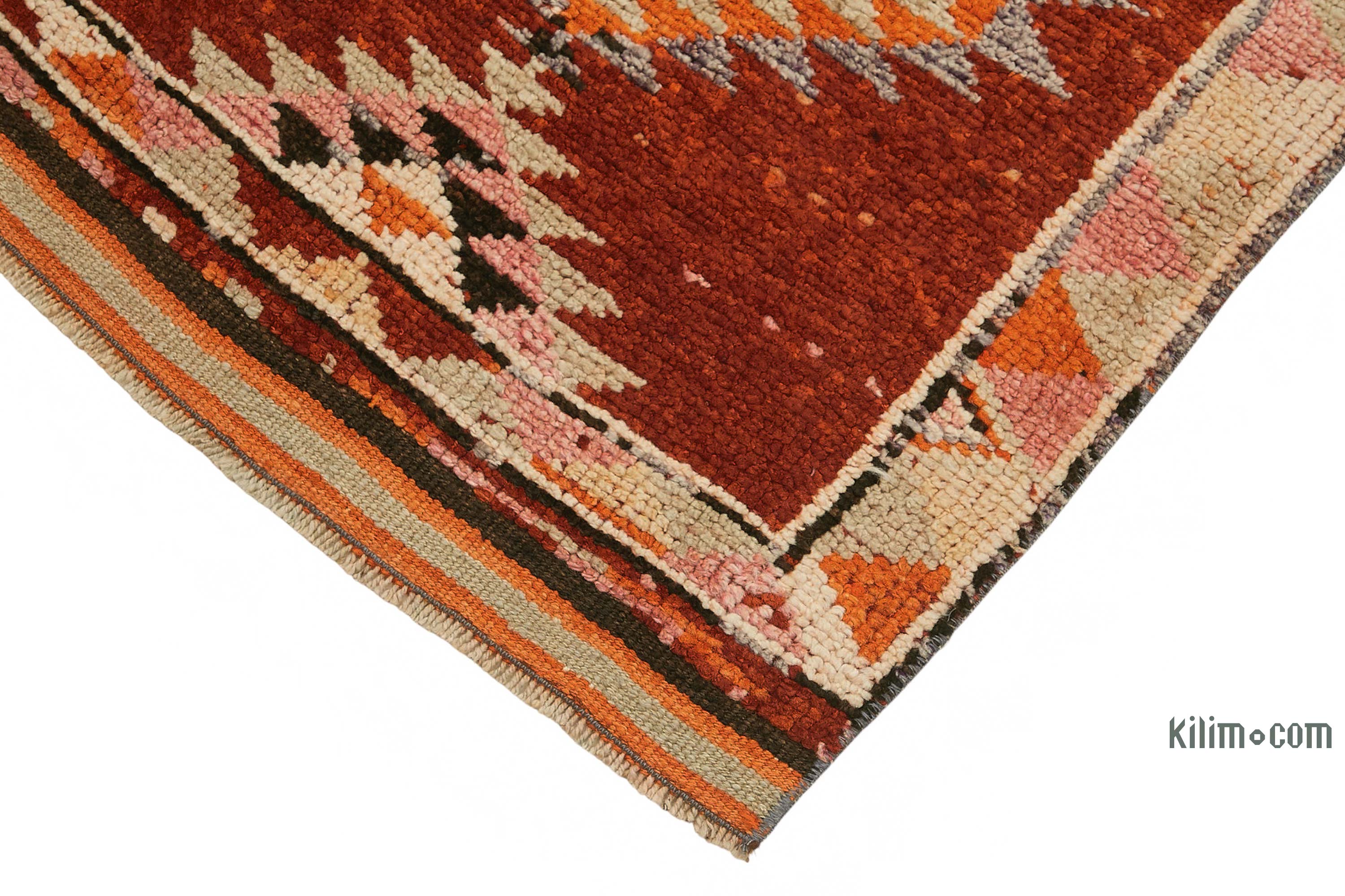
- Border Pattern: The rug’s edges are framed with a series of repeating triangles, reminiscent of arrows or mountains which stand for strength and stability, as well as fertility in Anatolian symbolism.
- Additional Motifs: Scattered around the medallions are subtle tree-like and tulip motifs—these represent life, growth, and abundance. The tulip, in particular, is a symbol of paradise and renewal, common in Anatolian weaving traditions.
Each motif in this rug isn't merely decorative. It acts as a narrative thread from centuries-old heritage, reflecting the values, hopes, and daily life of the artisans who skillfully brought it to life. If you want a deeper understanding of these meaningful symbols, explore our page on Kilim Motifs and Symbols.
Integration with Interior Design Styles
This rug’s vibrant yet earthy palette and bold geometric design make it remarkably adaptable across a variety of interior design aesthetics:
- Bohemian: The rich colors and handcrafted feel naturally complement boho interiors, adding warmth and authenticity to eclectic mixes of textures, patterns, and global influences.
- Mid-Century Modern: Its geometric shapes align beautifully with mid-century modern’s clean lines and structured simplicity, offering a splash of color and cultural depth.
- Rustic or Farmhouse: Earth tones and organic motifs create a welcoming, grounded atmosphere, perfect for spaces emphasizing nature-inspired materials and cozy aesthetics.
- Contemporary: The rug’s pattern creates an inviting focal point amid minimalist furnishings, helping to soften modern spaces with a handcrafted touch and historic resonance.
- Traditional: It complements classic interiors by introducing a layer of cultural storytelling and textured warmth, bridging generational or stylistic gaps gracefully.
Regardless of your style, this piece offers more than floor coverage—it brings character, history, and a vibrant story woven into every knot, enriching your home with timeless artistry.
Rolling Up
- Featuring a deep red background adorned with bold geometric medallions, this kilim blends ancient motifs symbolizing protection, growth, and abundance.
- The intricate border of triangles enhances the blend of symbolism and aesthetic appeal, embodying strength and fertility.
- Versatile in style, this rug complements bohemian, mid-century modern, rustic, contemporary, and traditional interiors alike.
- Its handcrafted nature and meaningful design offer both visual warmth and cultural depth, turning any room into a story-rich space filled with emotion.
- Delve into the symbolism behind these motifs by visiting our detailed Kilim Motifs and Symbols page.
Colors may appear slightly different across various monitors due to screen settings device differences, and external lighting conditions. If color accuracy is important for your space, we recommend viewing the rug on multiple devices or contacting us for a detailed color description. We can provide detailed photos and references using Sherwin-Williams, Benjamin Moore, Pantone, or even Crayola crayons.
You can also visualize most of our products in your own room with AR (augmented reality) on an iPhone or iPad.
Return Policy
Need a rug pad? We recommend RugPadUSA