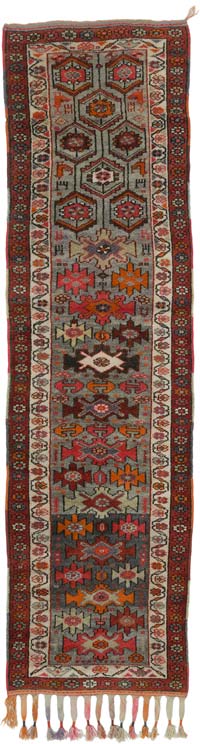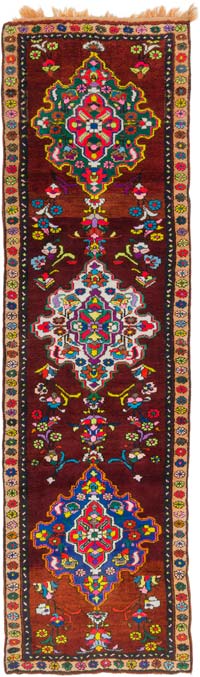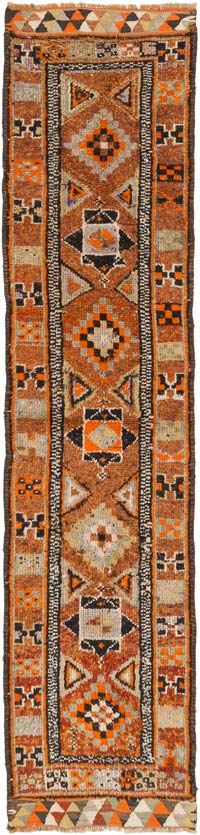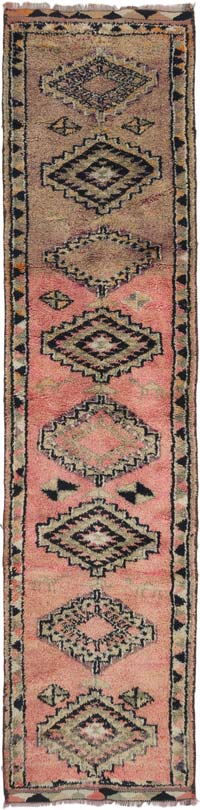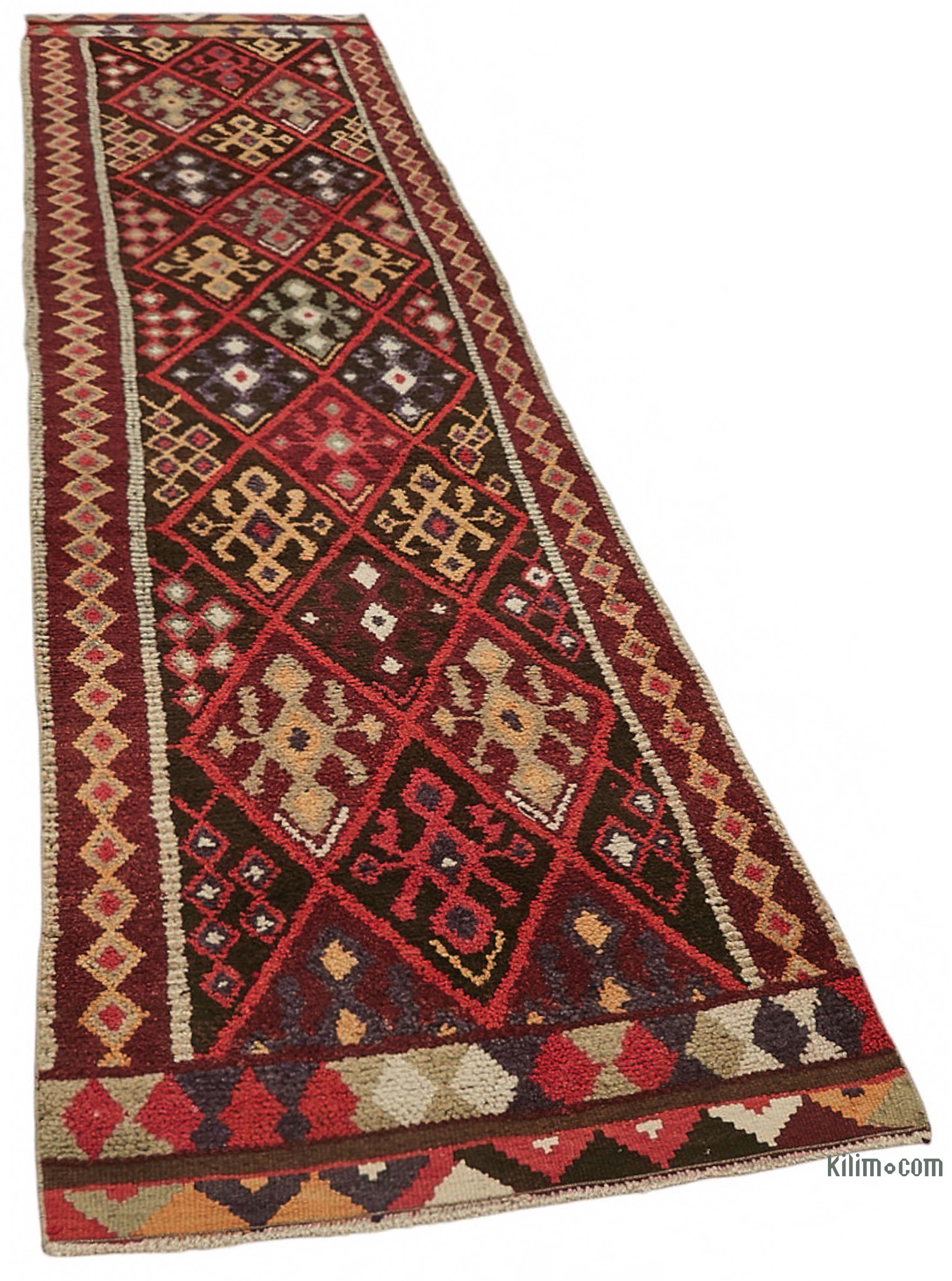
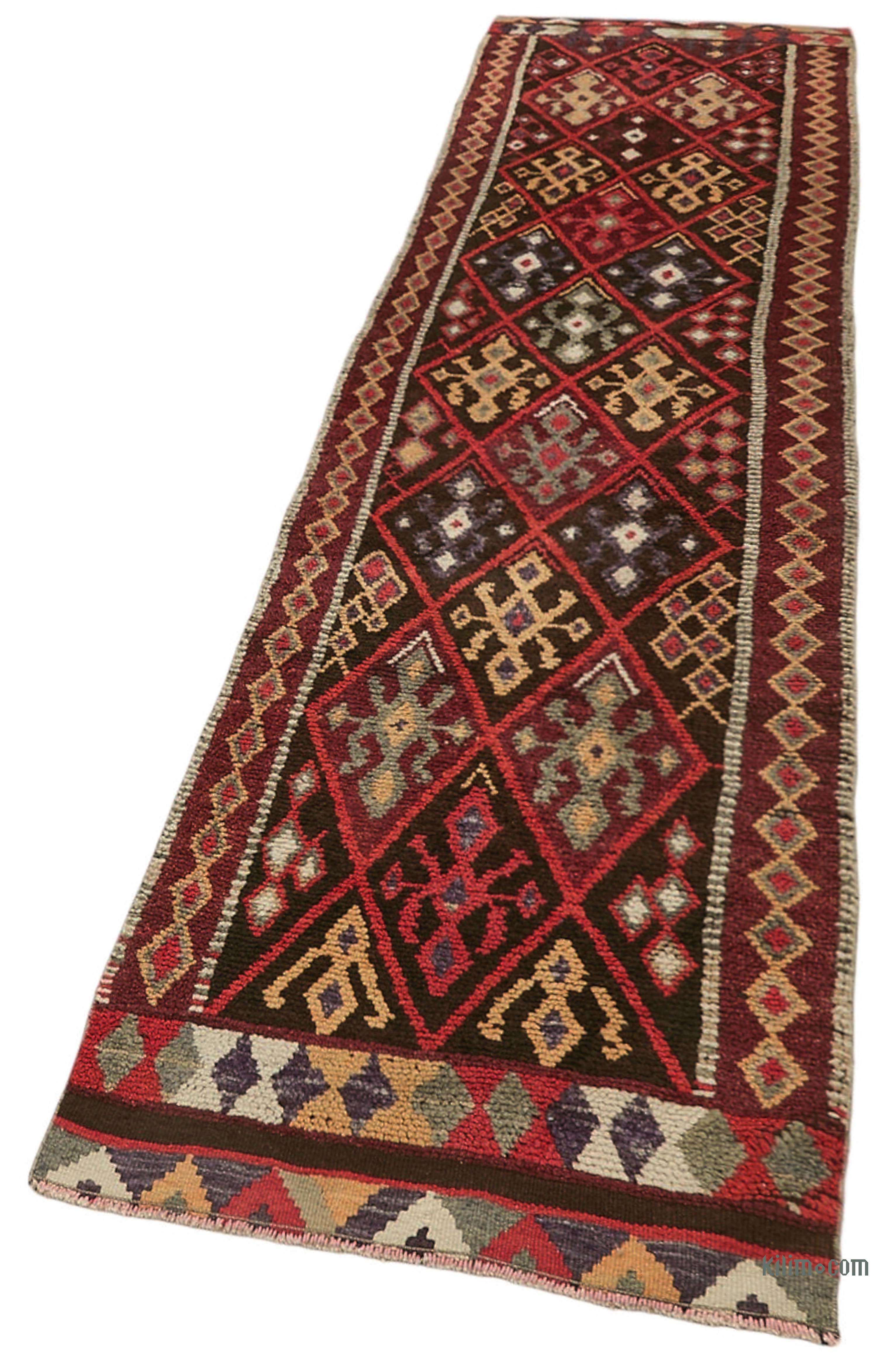

Vintage Tribal Runner Rug 2' 11" x 12' 10" (35" x 154")
Type:
Hand-Knotted RugsCollection:
Tribal RunnersStyle:
TribalID:
K0085109Size:
Thickness:
0.4"Material:
- Ships in 2-5 business days
- All of our rugs are professionally cleaned; gentle wear from age and natural irregularities are inherent features of these one-of-a-kind handwoven vintage rugs.
- Only one in stock, handmade, unique
- Free shipping via FedEx Express. Returns & exchanges
- Contact us or add a note to your order if you want us to delay your shipping.
- Request more info if you want this rug shorter or narrower
The designs often feature geometric patterns, symbolic motifs, and a harmonious blend of colors, reflecting the natural landscapes and cultural heritage of the area. These runners not only serve as functional pieces but also as a testament to the enduring legacy of tribal craftsmanship, adding a touch of history and elegance to any space.
Indulge in vintage charm and bring a piece of Anatolian patterns into your living space with this attractive runner that measures 2' 11" x 12' 10" (35" x 154").
This Is a Stunning Anatolian Kilim Runner
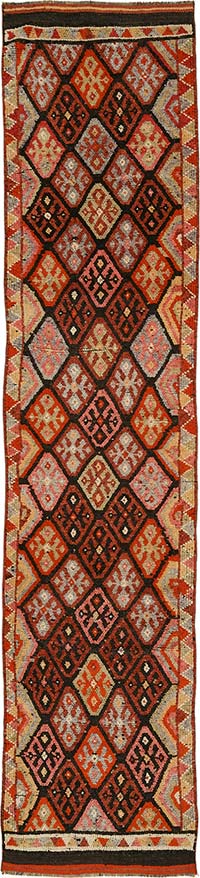
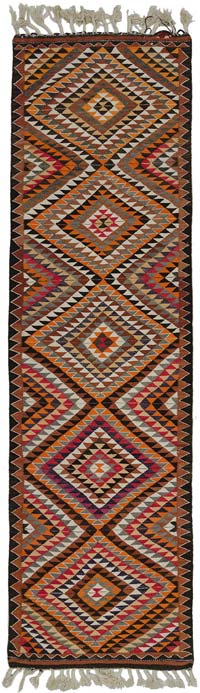
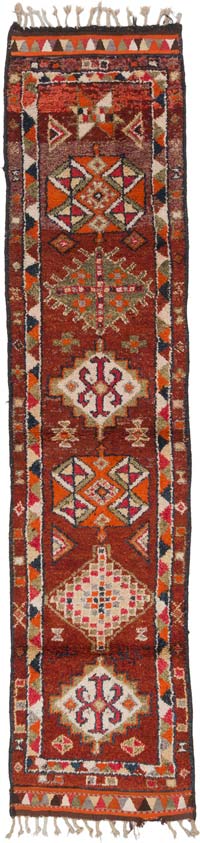
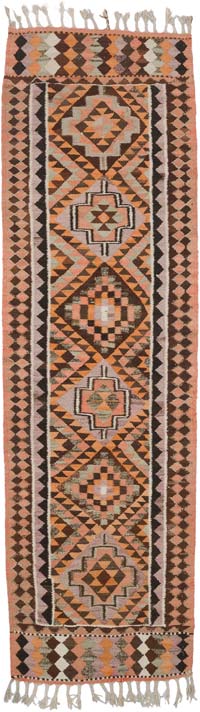
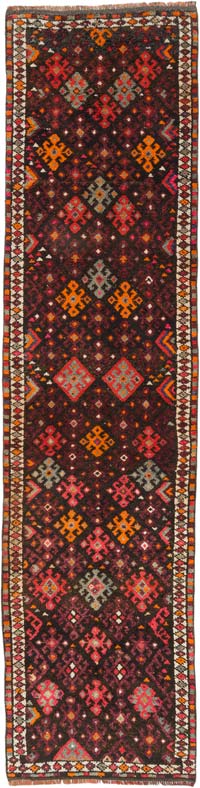
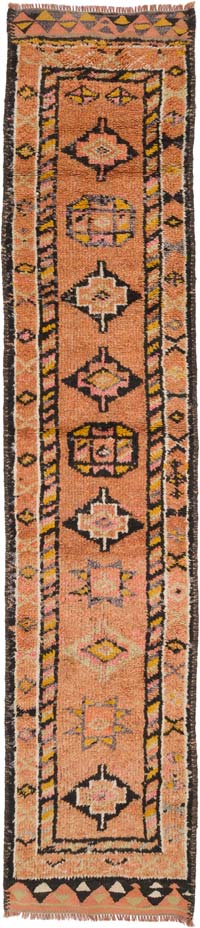
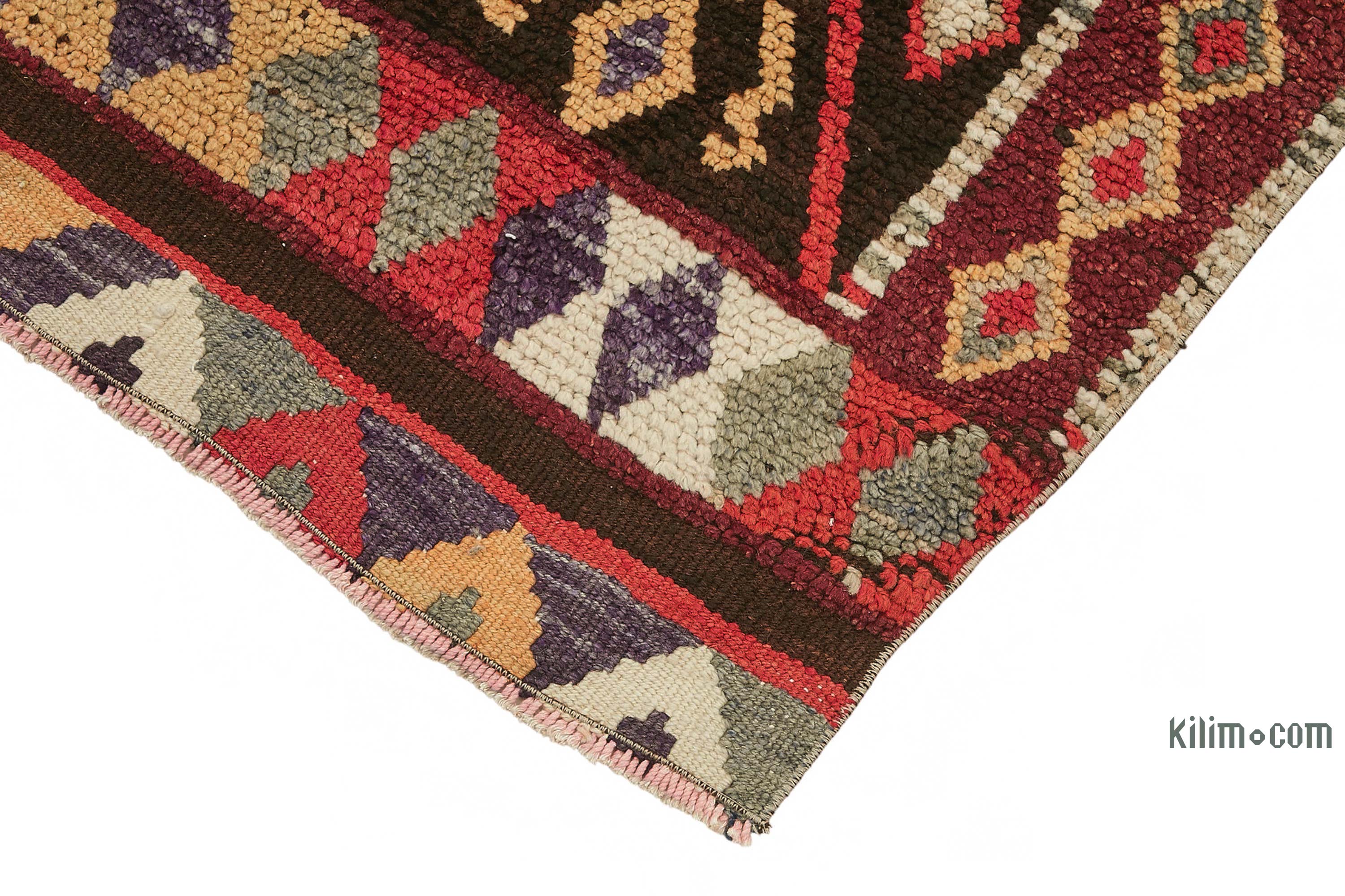
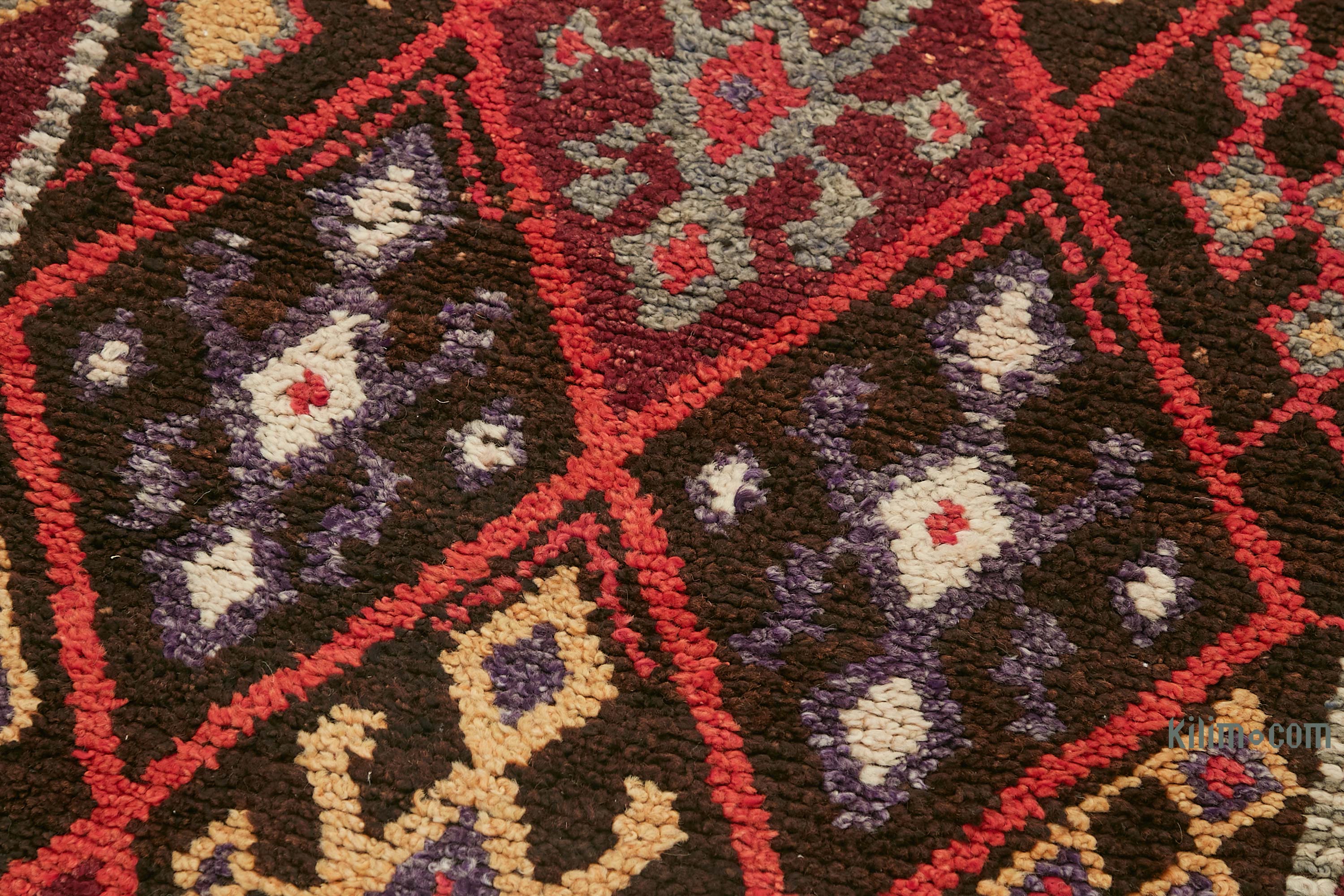
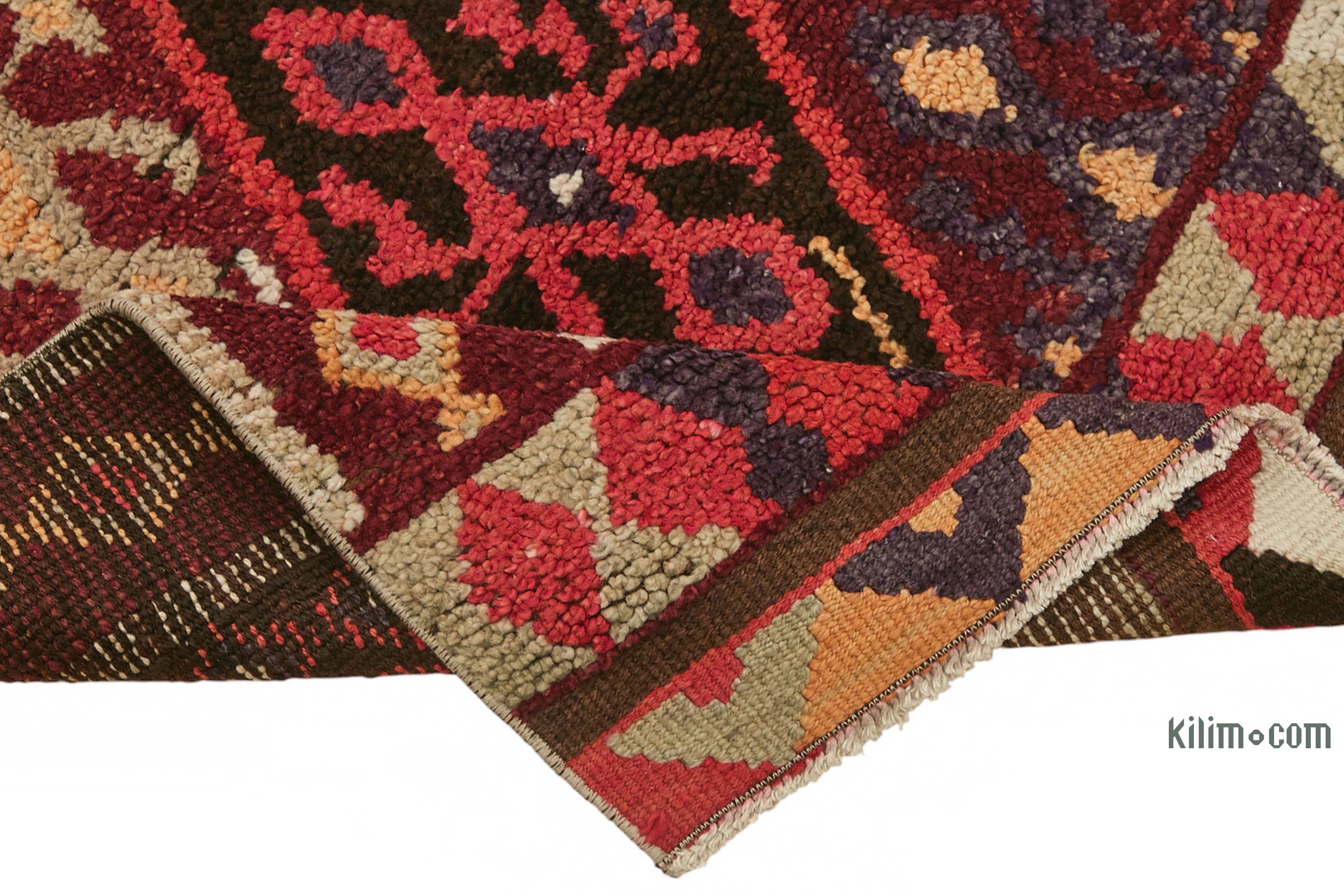
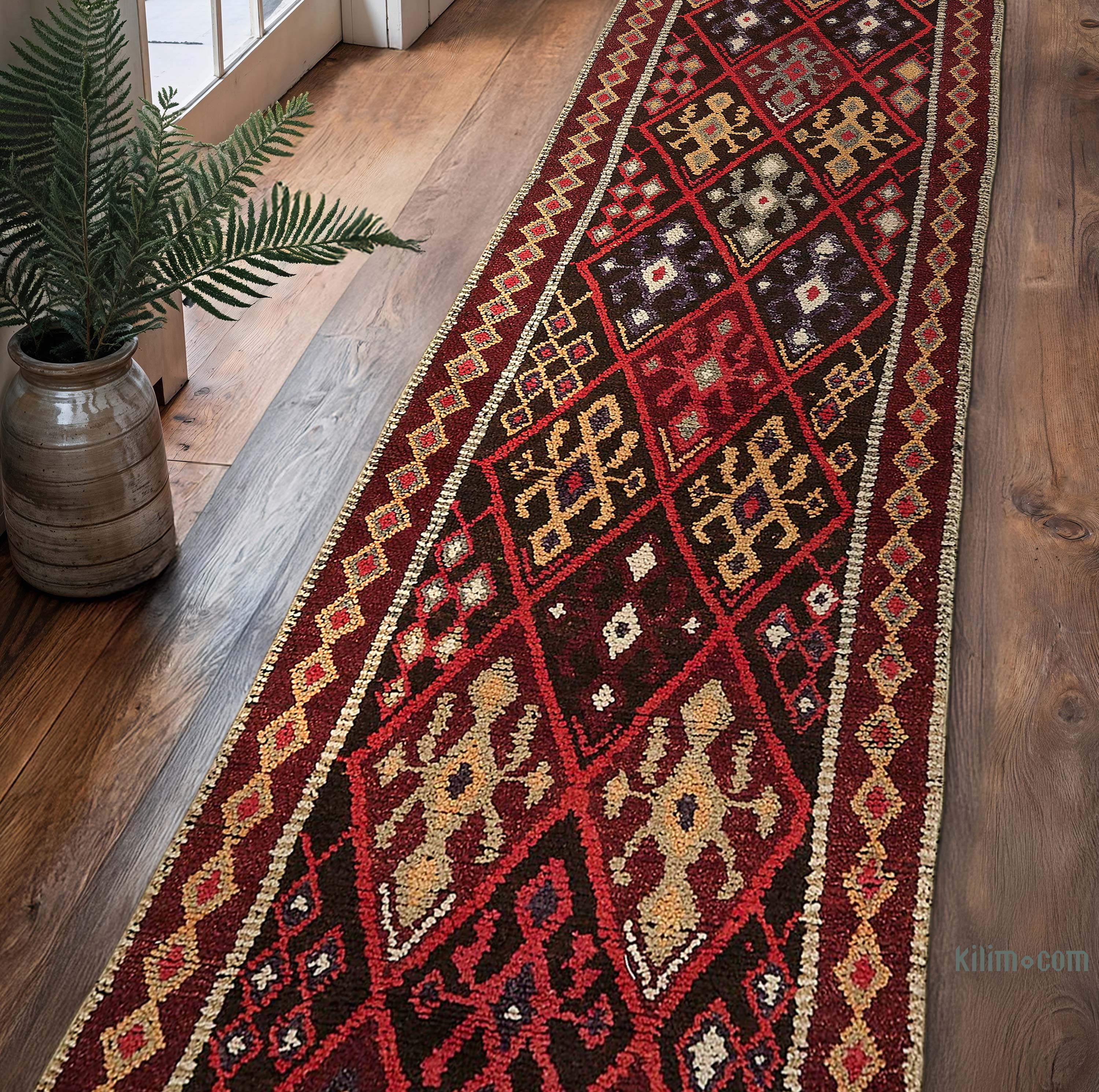
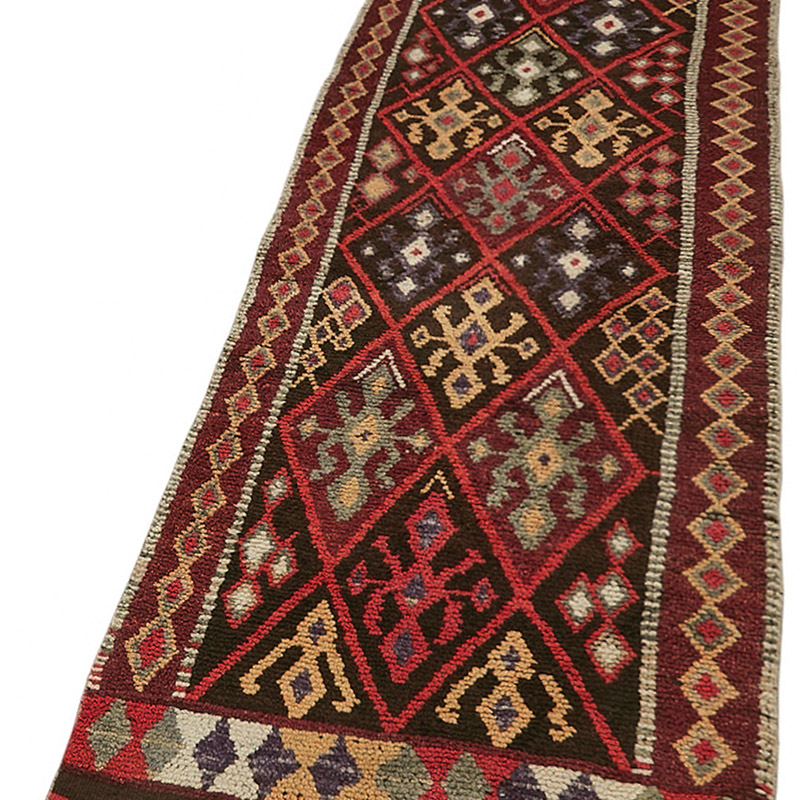
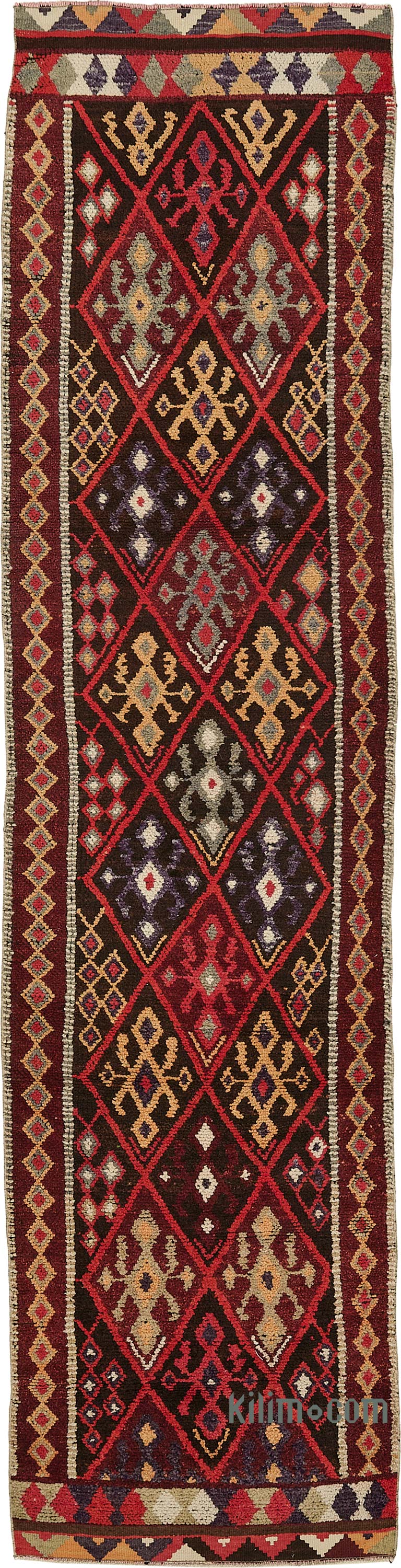
This rug features a captivating array of richly textured diamond motifs arranged in vertical rows, set against a deep, earthy background. The color scheme revolves around warm reds, soft golds, muted purples, and cream tones that contrast beautifully, giving it a timeless vibrancy. Each diamond frame encloses intricate geometric and floral-inspired symbols, weaving a narrative that connects tradition with artistry.
Detailed Look at the Motifs
- Diamond Shapes: These form the main layout and symbolize protection from evil as well as the eye motif, which is believed to guard the home and bring good fortune.
- Elibelinde (Hands on Hips): Seen in several diamonds, this symbol represents motherhood, fertility, and femininity — a heartfelt homage to family and life’s cycles.
- Hooked Motifs: These serrated or hooked forms inside the diamonds suggest resilience and strength, reflecting the weavers’ spirit and ability to overcome challenges.
- Small Crosses and Stars: These scattered throughout add a spiritual dimension, symbolizing faith and hope in everyday life.
- Border Patterns: The repeating zigzag and smaller diamond elements in the borders frame the central motifs while signifying eternal life and continuity.
Each of these elements holds rich emotional and cultural meaning, making the rug a vibrant storybook of Anatolian heritage. For those curious about these traditional designs and their meanings, explore our comprehensive Kilim motifs and symbols page to dive deeper.
Integrating This Kilim into Various Interior Styles
- Bohemian Eclectic: The rug’s bold colors and intricate patterns bring warmth and depth, pairing effortlessly with mixed textures, plants, and global décor accents.
- Modern Minimalist: Place it as a statement piece against neutral furnishings — its vivid motifs break monochrome monotony while maintaining a clean-lined aesthetic.
- Rustic and Farmhouse: The earthy hues and handcrafted appearance complement natural wood finishes and cozy textiles, enhancing a welcoming, lived-in feel.
- Traditional and Classic: Its symbolism and craftsmanship enrich formal settings, adding authenticity and a sense of history to well-curated spaces.
- Industrial Loft: Use this kilim runner to soften raw concrete and metal, balancing hardness with the soft storytelling found in each weave.
From hallway runners to layering pieces, this rug’s size and character make it adaptable across rooms and functions. Its cultural richness infuses any space with soul and a genuine connection to artisan traditions, creating an inviting atmosphere that resonates on a personal and aesthetic level.
Rolling Up
- The diamond-centric design carries powerful motifs such as protection, motherhood, and resilience, making it evocative beyond mere decoration.
- Its warm and contrasting palette offers versatility, harmonizing with diverse interior styles from bohemian to minimalist.
- The antique-inspired aesthetics blend handcrafted tradition with modern living, fostering a unique sense of place and story.
- By connecting with ancient symbolism, this kilim runner transforms floors into cultural narratives that inspire conversation and comfort.
- Discover the deeper meaning behind each motif by visiting our Kilim motifs and symbols page, where tradition meets timeless design.
Colors may appear slightly different across various monitors due to screen settings device differences, and external lighting conditions. If color accuracy is important for your space, we recommend viewing the rug on multiple devices or contacting us for a detailed color description. We can provide detailed photos and references using Sherwin-Williams, Benjamin Moore, Pantone, or even Crayola crayons.
You can also visualize most of our products in your own room with AR (augmented reality) on an iPhone or iPad.
Return Policy
Need a rug pad? We recommend RugPadUSA