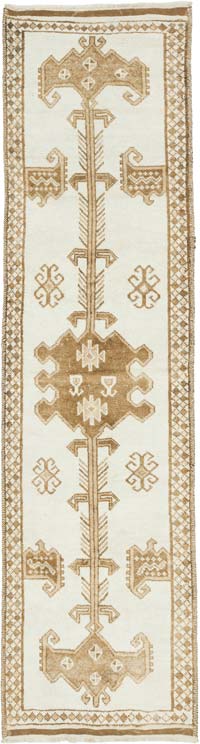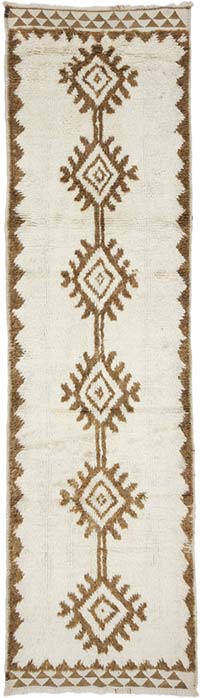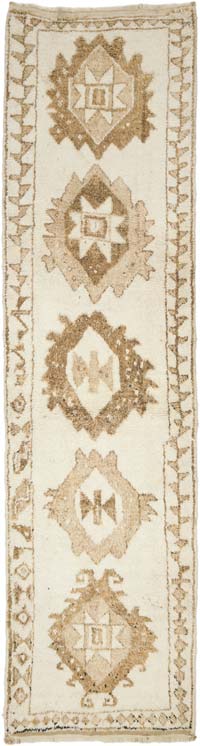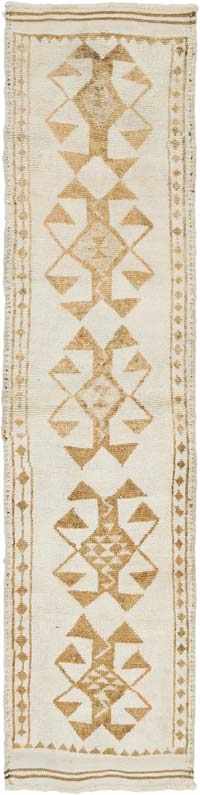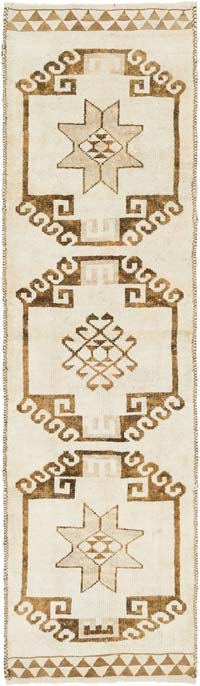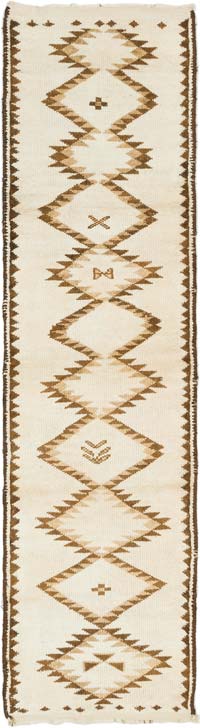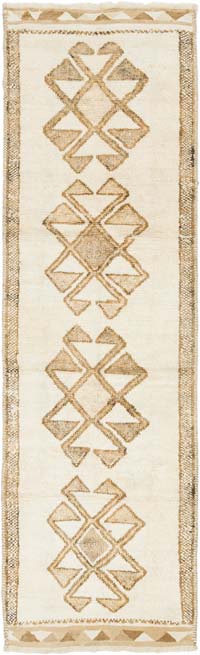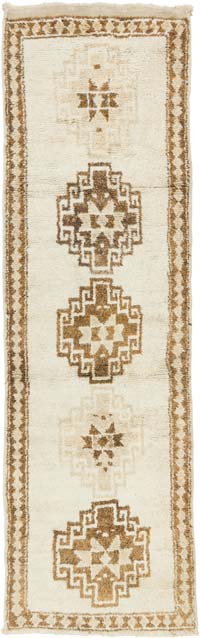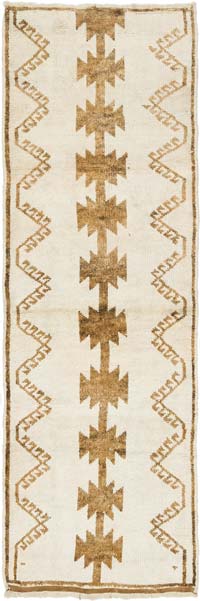
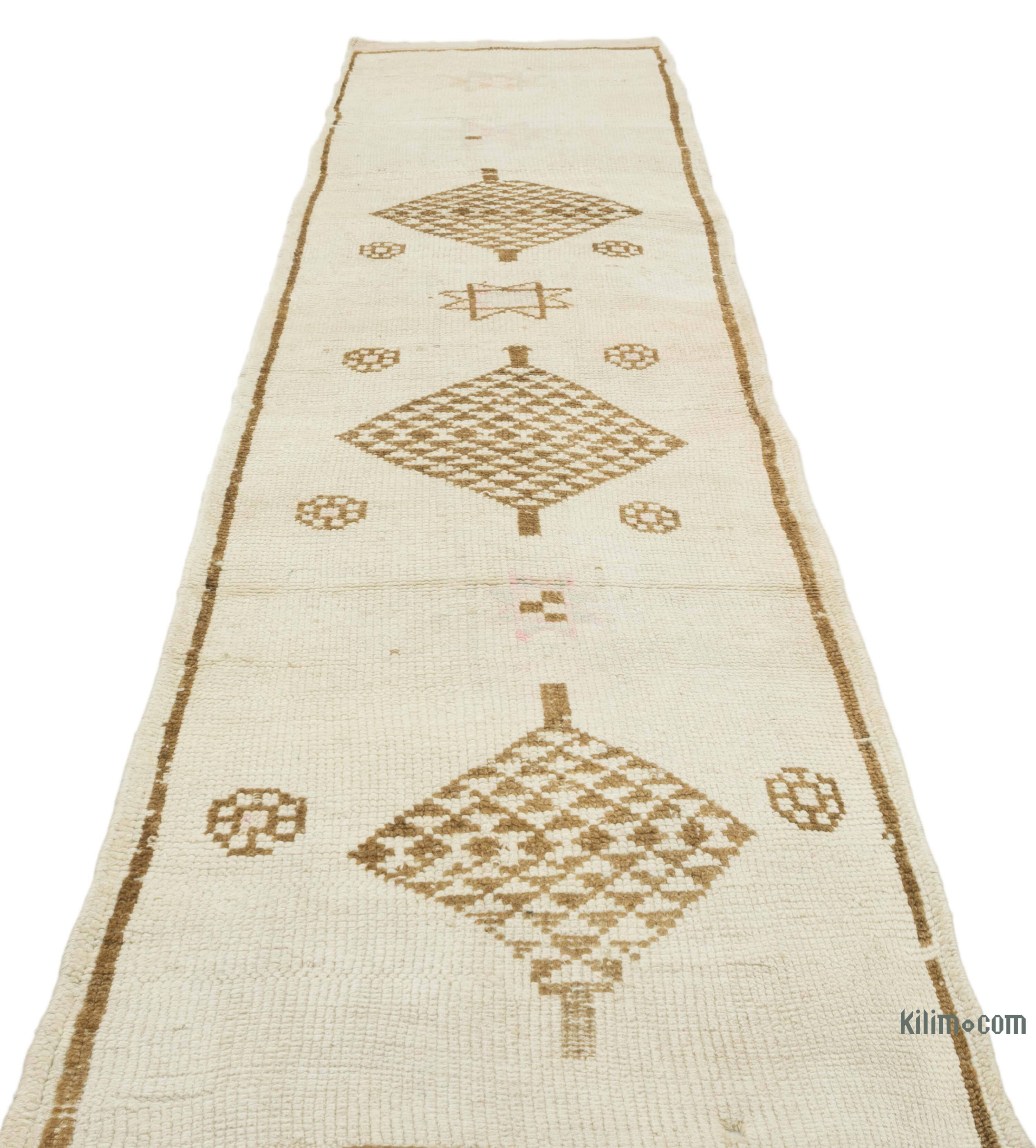

Vintage Tribal Runner Rug 3' 3" x 12' 6" (39" x 150")
Type:
Hand-Knotted RugsCollection:
Tribal RunnersStyle:
TribalID:
K0077811Size:
Material:
- Ships in 2-5 business days
- All of our rugs are professionally cleaned; gentle wear from age and natural irregularities are inherent features of these one-of-a-kind handwoven vintage rugs.
- Only one in stock, handmade, unique
- Free shipping via FedEx Express. Returns & exchanges
- Contact us or add a note to your order if you want us to delay your shipping.
- Request more info if you want this rug shorter or narrower
The designs often feature geometric patterns, symbolic motifs, and a harmonious blend of colors, reflecting the natural landscapes and cultural heritage of the area. These runners not only serve as functional pieces but also as a testament to the enduring legacy of tribal craftsmanship, adding a touch of history and elegance to any space.
Indulge in vintage charm and bring a piece of Anatolian patterns into your living space with this attractive runner that measures 3' 3" x 12' 6" (39" x 150").
Design and Motifs of the Rug
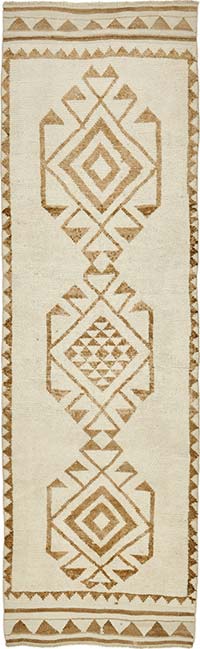
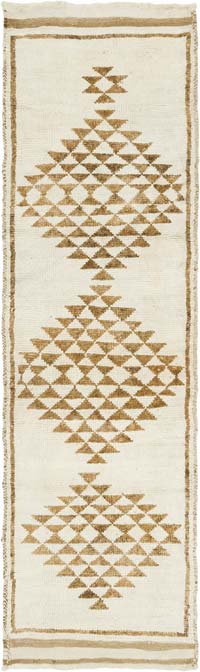
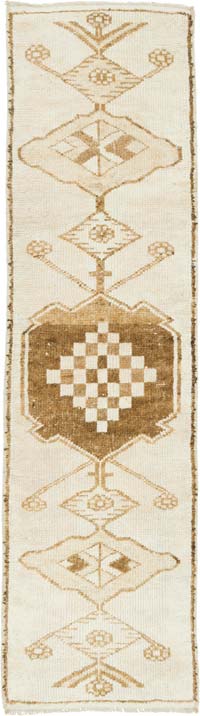
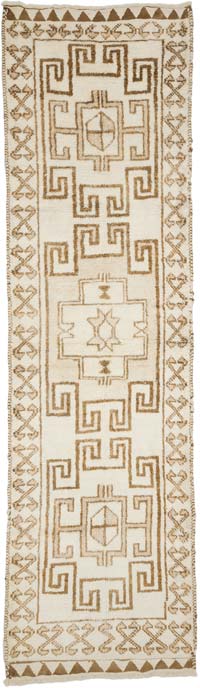
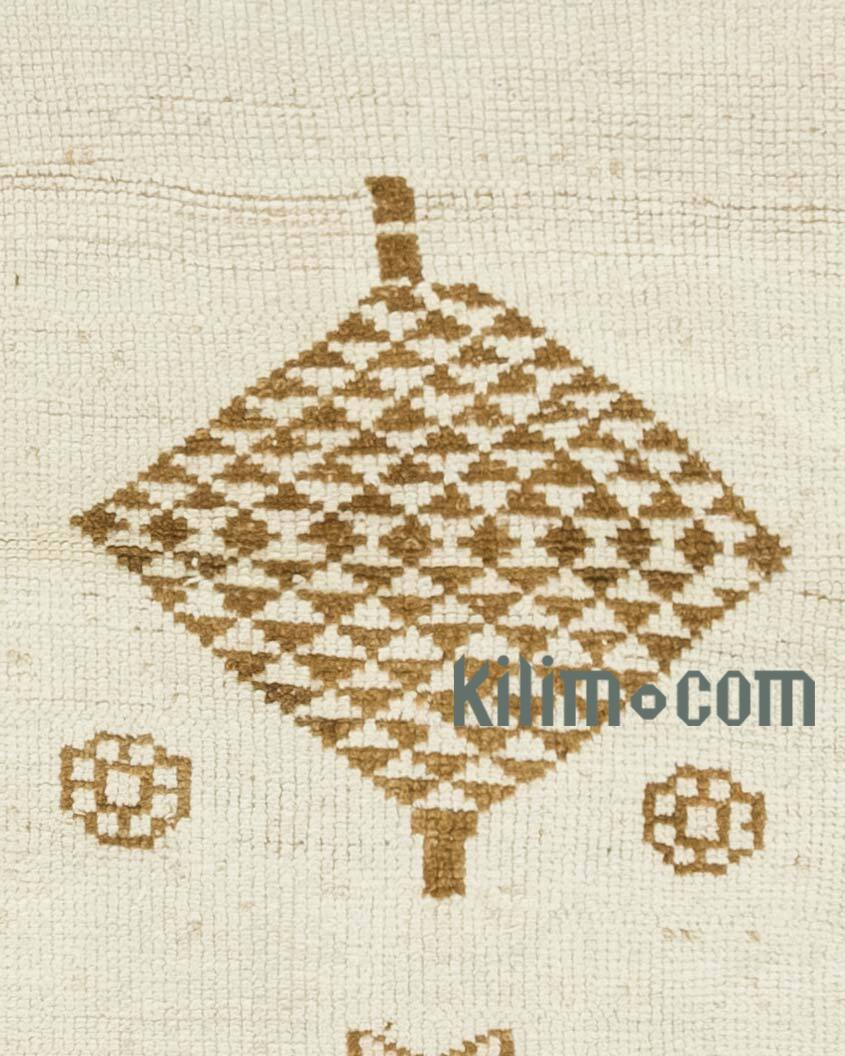
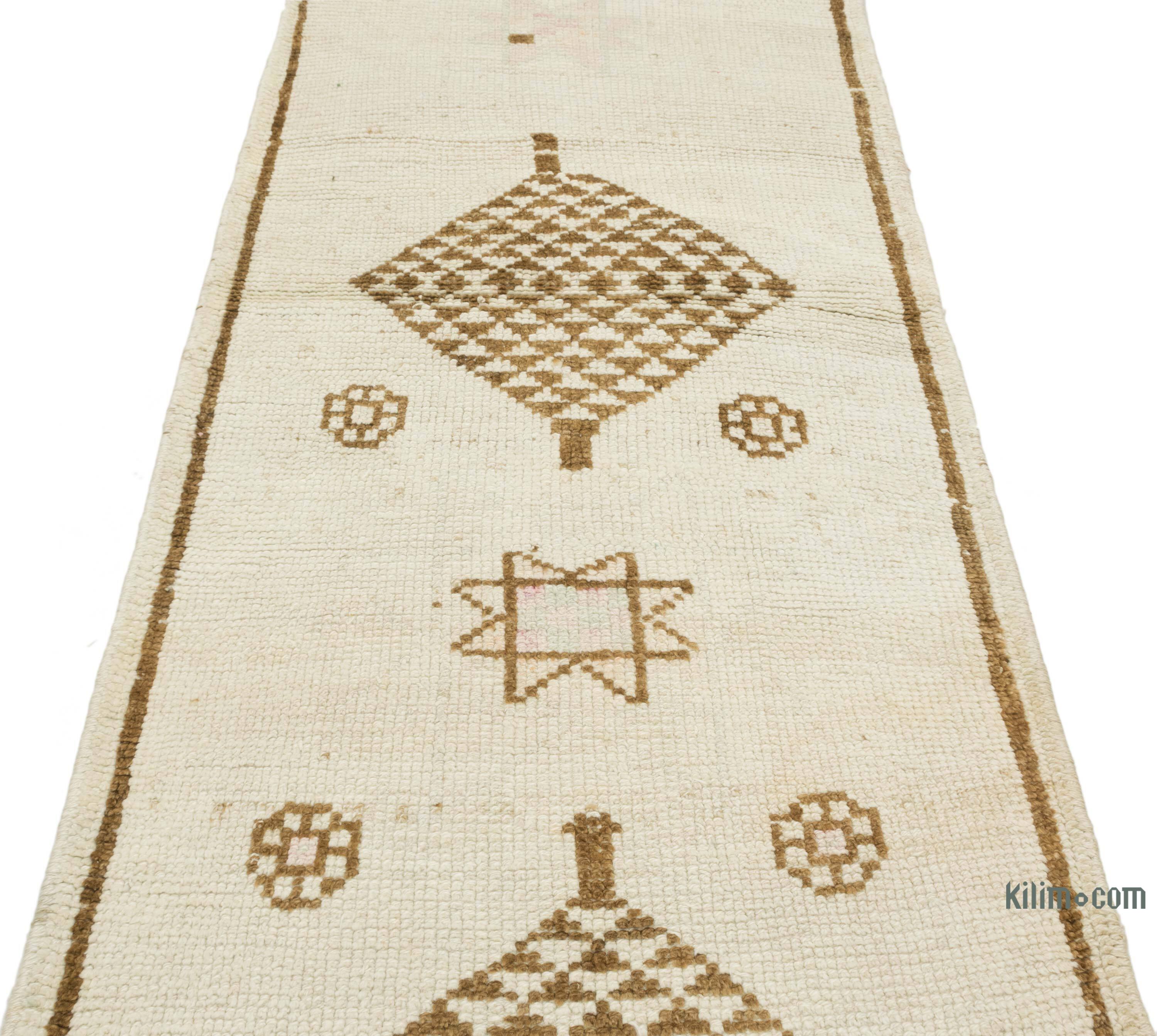
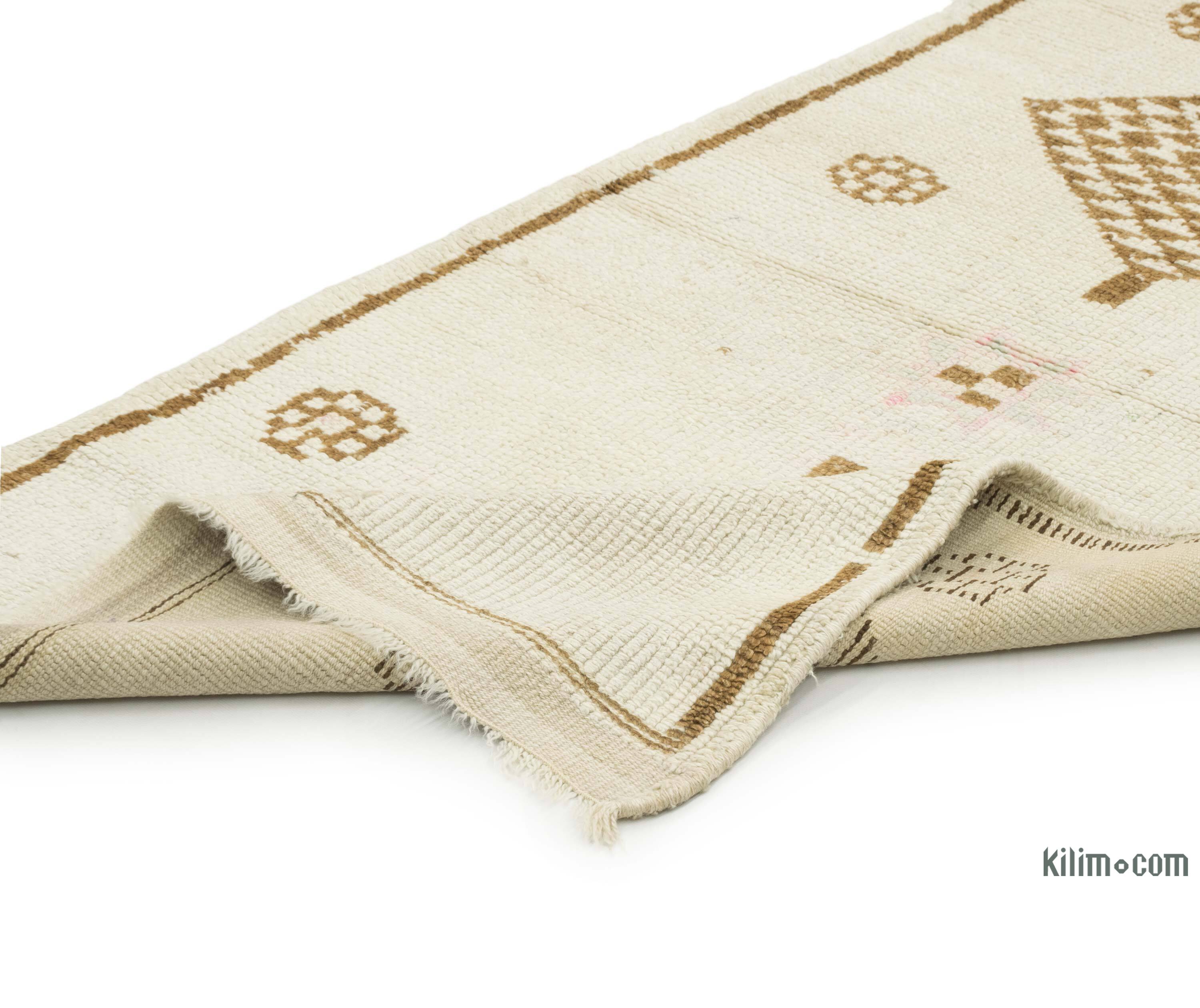
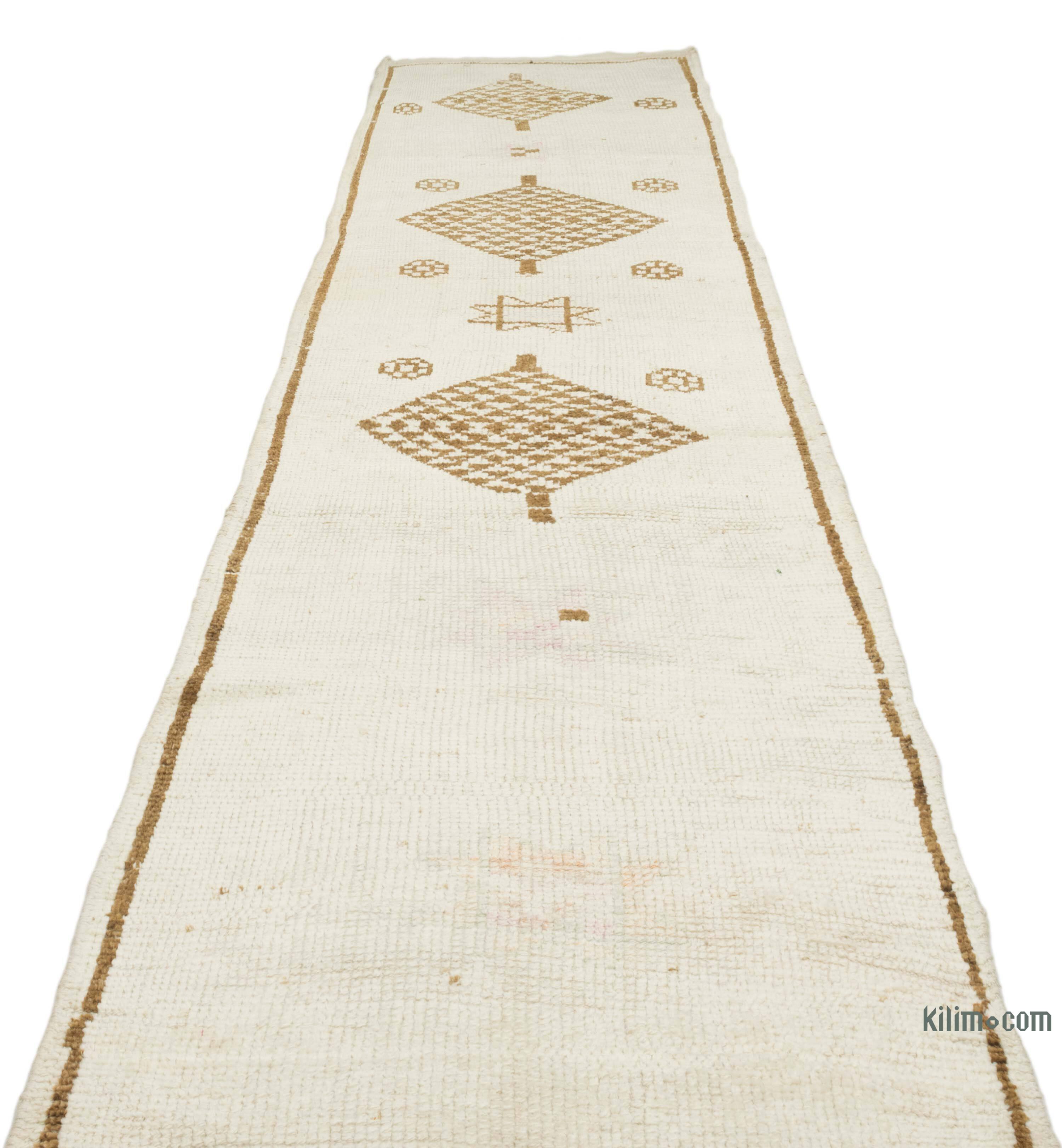
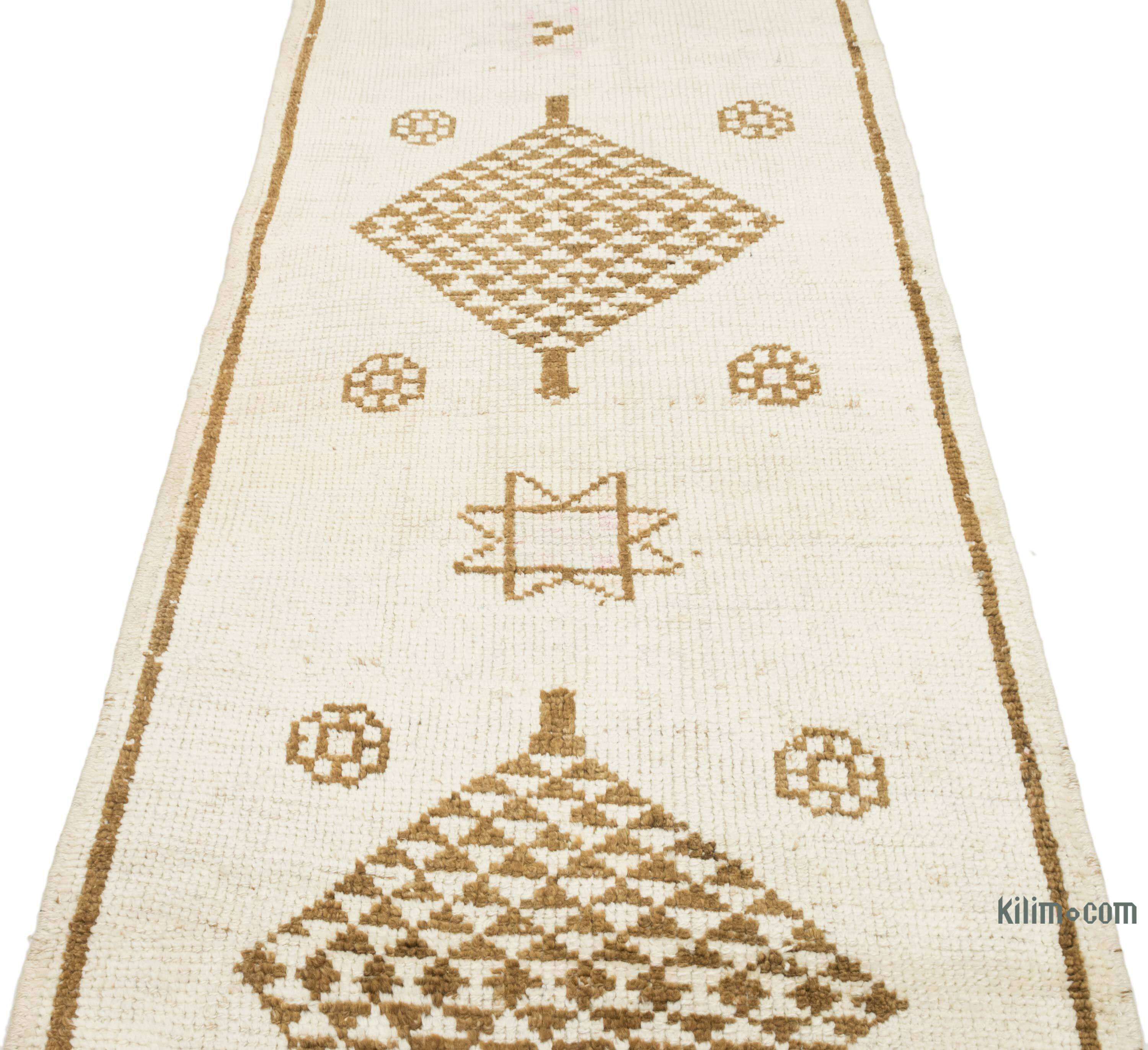
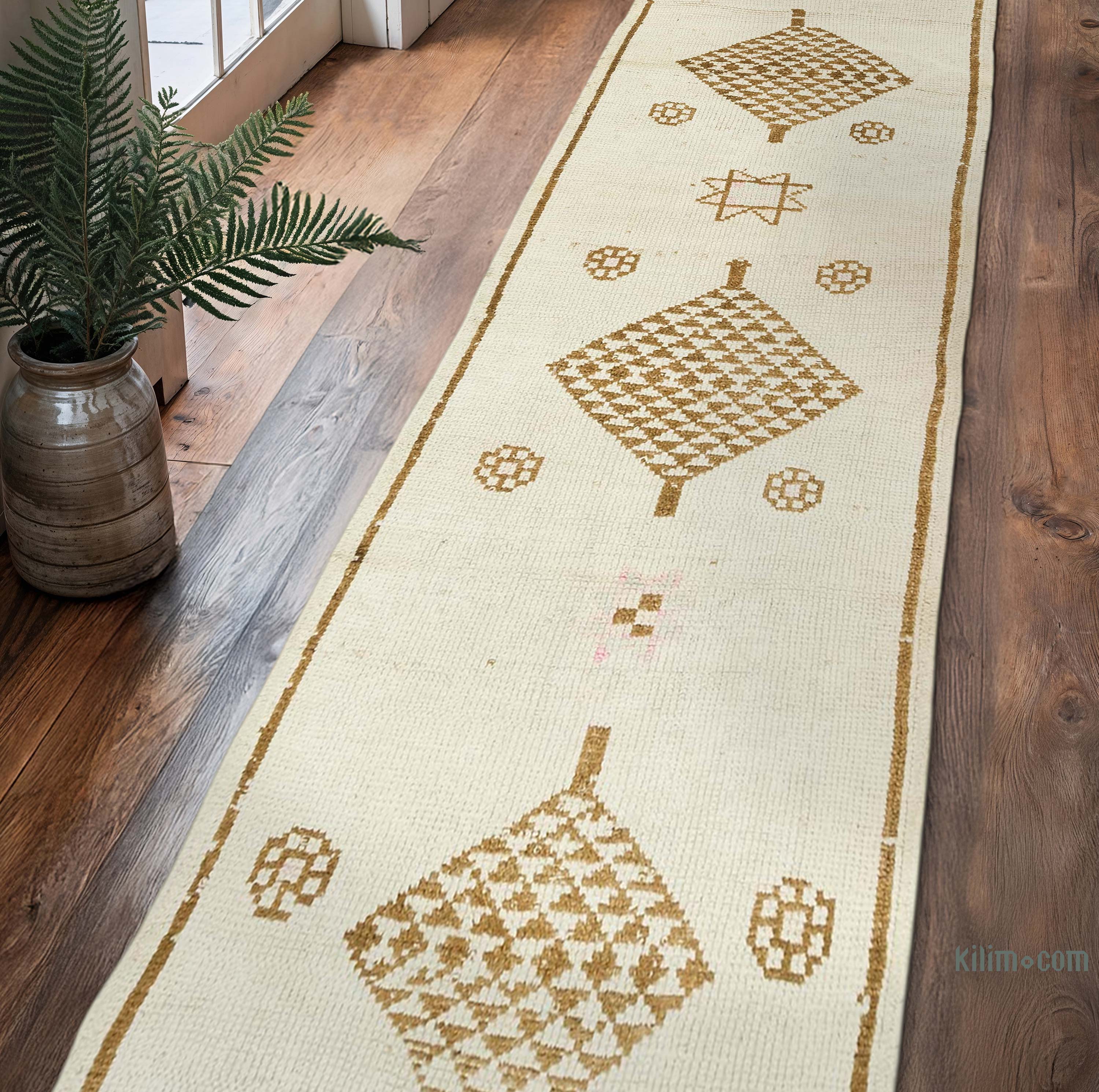
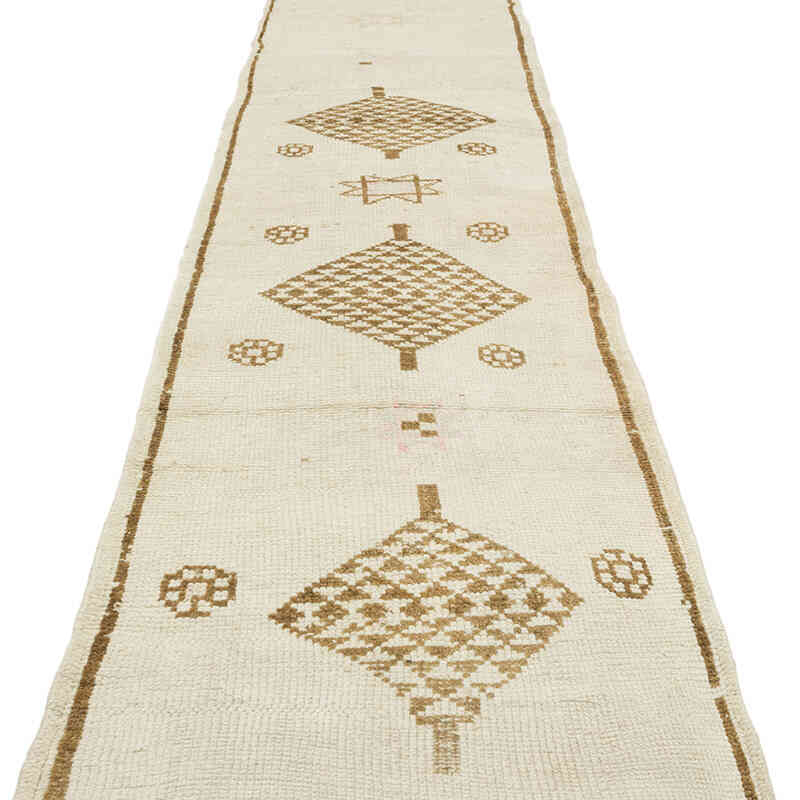
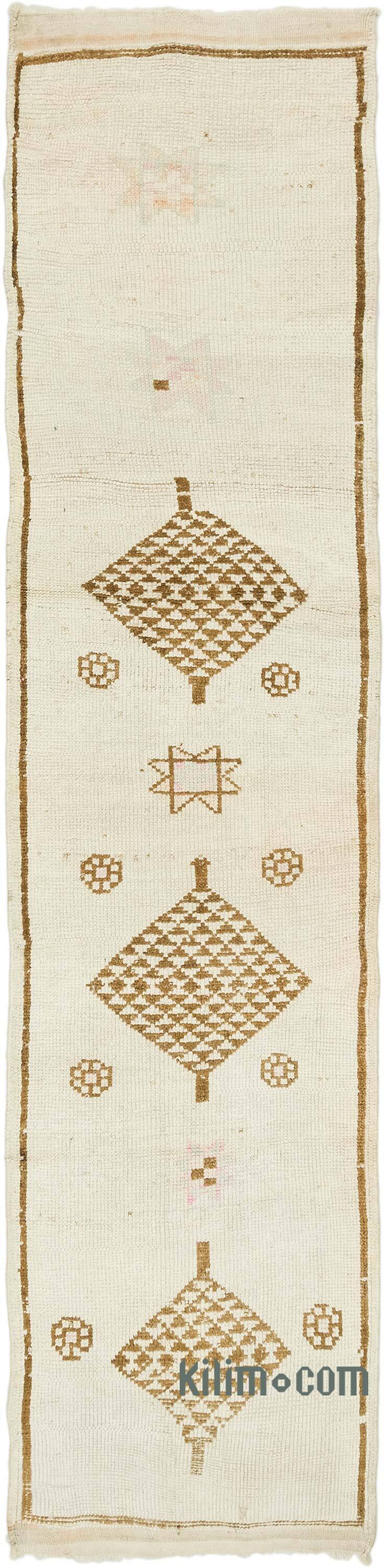
This Anatolian kilim showcases a subtle yet captivating design, centered around a series of three large diamond-shaped motifs, each rendered in a warm, earthy brown against a creamy, off-white background. These diamonds are detailed with a geometric checkered pattern, which creates a dynamic visual texture, almost inviting the eye to move across the rug.
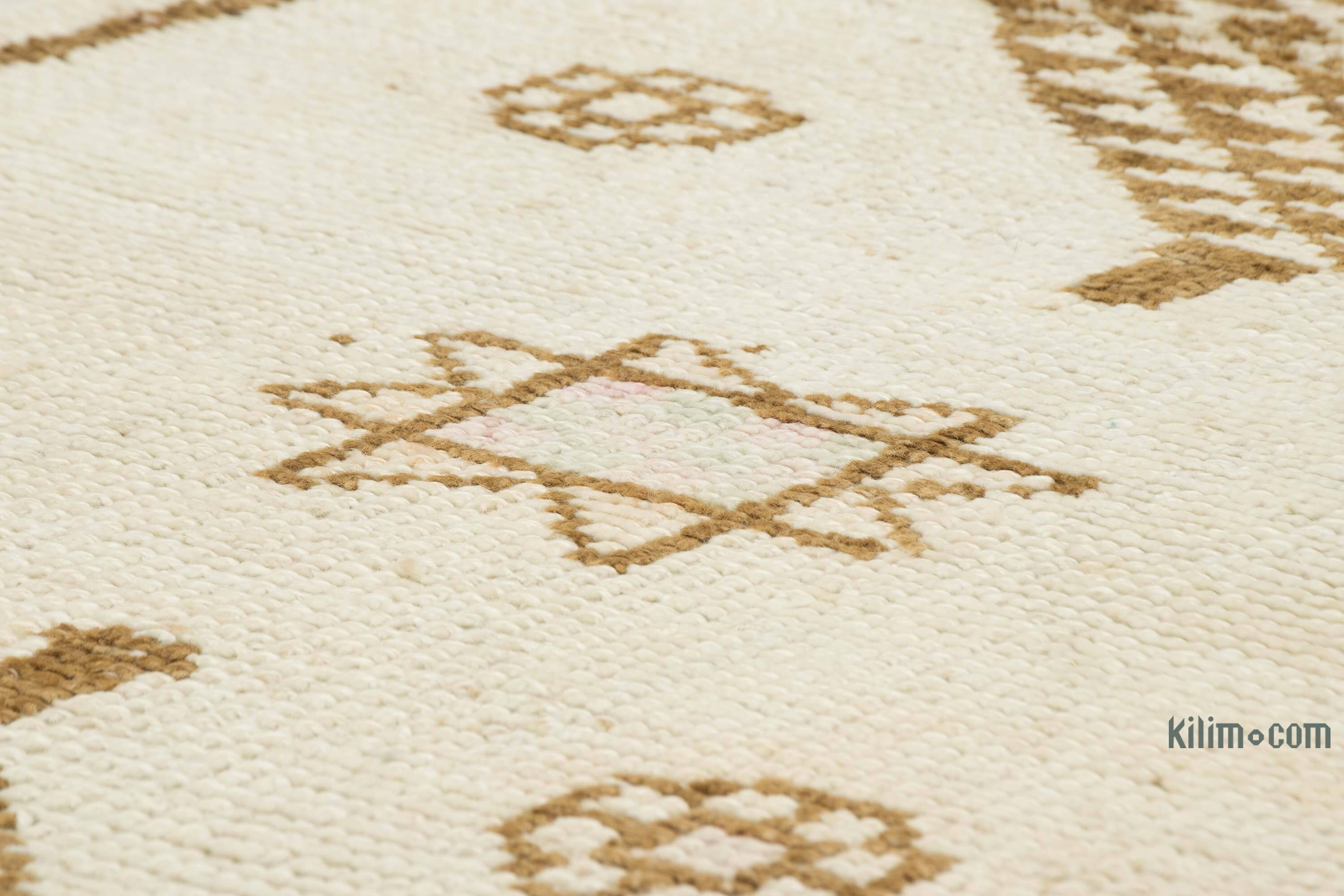
Interspersed between and around the diamonds are smaller circular motifs, adding a delicate balance to the overall composition. Additionally, a lone eight-pointed star shape appears in the middle, symbolizing completeness and cosmic harmony in many traditional kilim weavings.
The border is simply outlined in the same brown hue, framing the rug elegantly without overwhelming the spaciousness of the central design elements.
Symbolism Behind the Motifs
- Diamond Motif: Frequently representing protection and the female fertility symbol in Anatolian culture, diamonds are a visual prayer for safety and abundance. Their repetitive placement here communicates continuity and resilience.
- Eight-Pointed Star: This star motif often stands for balance and cosmic order, guiding the household with harmony and spiritual insight.
- Small Circles: These can be symbols of fertility and the cycle of life, gently complementing the main motifs and enriching the narrative of growth and nurturing.
Each motif reflects the weaver’s connection to the earth, family, and the universe, transforming the rug into a vessel of stories and hopes.
Integration with Interior Design Styles
- Minimalist Spaces: The rug’s understated palette and open design make it perfect for minimalist interiors. It adds warmth and texture without competing for attention, enhancing clean lines and simple shapes.
- Bohemian and Eclectic: Integrate this kilim with colorful cushions and varied patterns to ground the look. Its natural tones offer a soothing counterbalance to bolder textiles.
- Scandinavian: The rug fits seamlessly into Scandinavian decor with its neutral base and geometric simplicity, complementing light woods and airy spaces.
- Wabi-Sabi or Japandi: The natural fibers, subtle irregularities, and muted hues suit designs focused on authenticity and imperfection, blending beautifully with raw materials and handcrafted elements.
- Rustic or Farmhouse: Adds a layer of artisanal elegance that enhances rustic wood and vintage pieces, introducing a narrative of heritage and craftsmanship.
The neutral color palette of this kilim makes it adaptable, while its meaningful motifs invite a deeper appreciation of tradition and artistry, whether laid beneath a coffee table or running along a hallway.
Explore Kilim Motifs and Symbols to learn more about the rich storytelling woven into rugs like this.
Rolling Up
- The design features three prominently checkered diamond motifs spaced vertically, accented by smaller circular elements and a central eight-point star.
- Motifs express themes of protection, fertility, cosmic balance, and life cycles, deeply rooted in Anatolian weaving traditions.
- This rug harmonizes well with minimalist, bohemian, Scandinavian, Japandi, and rustic interiors, serving as a versatile aesthetic anchor.
- Its muted palette allows it to add warmth and texture without overshadowing other decor elements.
- Discovering the symbolism behind each element transforms the rug from a decorative object to a meaningful cultural artifact.
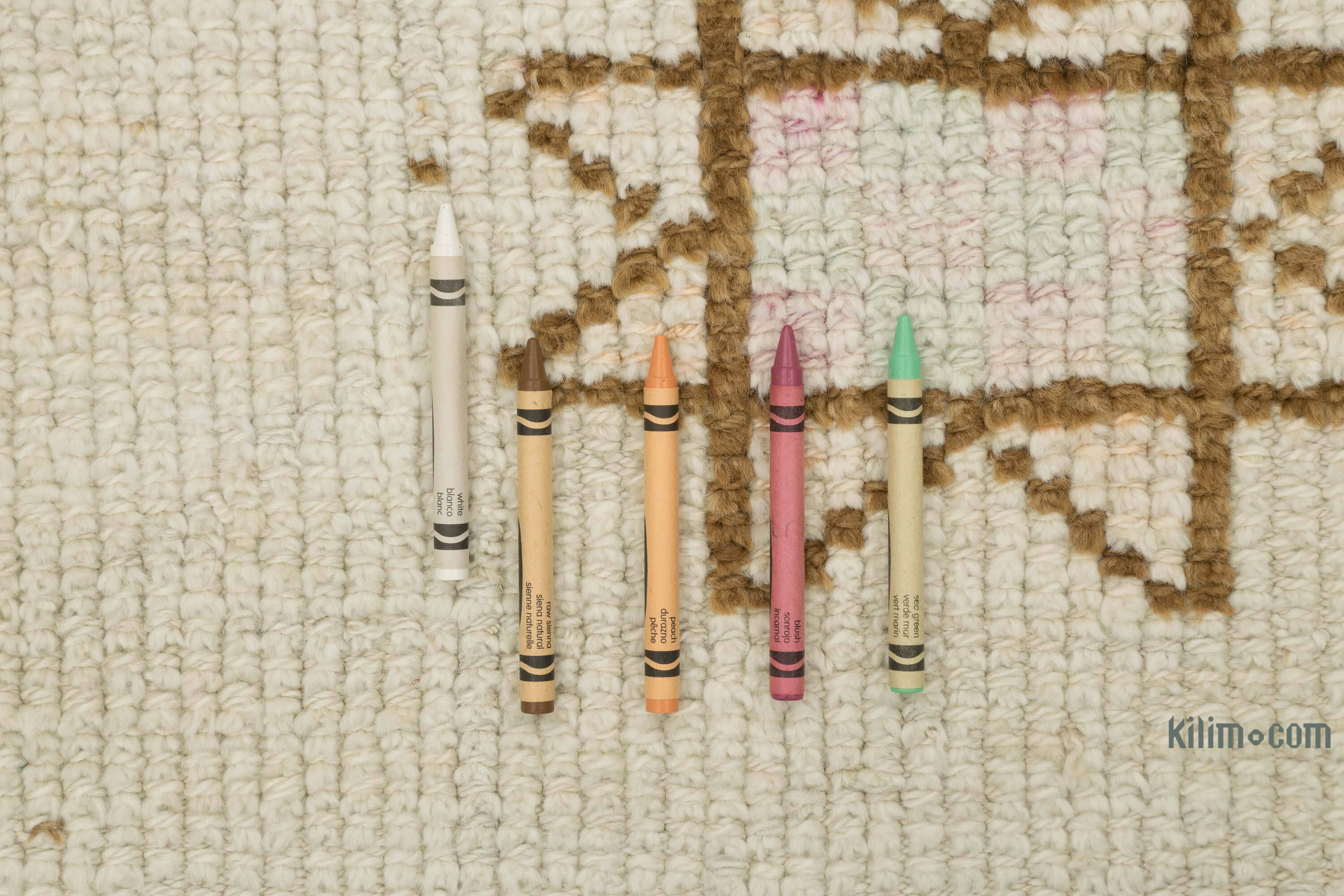
Colors may appear slightly different across various monitors due to screen settings device differences, and external lighting conditions. If color accuracy is important for your space, we recommend viewing the rug on multiple devices or contacting us for a detailed color description. We can provide detailed photos and references using Sherwin-Williams, Benjamin Moore, Pantone, or even Crayola crayons.
You can also visualize most of our products in your own room with AR (augmented reality) on an iPhone or iPad.
Return Policy
Need a rug pad? We recommend RugPadUSA